

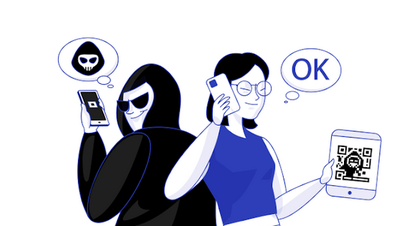
Impersonation scams are becoming increasingly sophisticated and unpredictable.
Over the past week, many Vietnamese Facebook users have encountered fake Samsung brand advertisements on the 'SamCenter Vietnam' fanpage, which posted content about the opening of a new facility and information about a promotional program - selling 5,000 Buds 2 Pro headphones at a discount of up to 70% off the original price.
In the following days, the same fake fanpage continued to post information stating , "Thanks to the enthusiastic support of customers, sales reached 5,000 units in just 2 hours, officially breaking the company's all-time record," with the aim of luring more users to participate in the program.
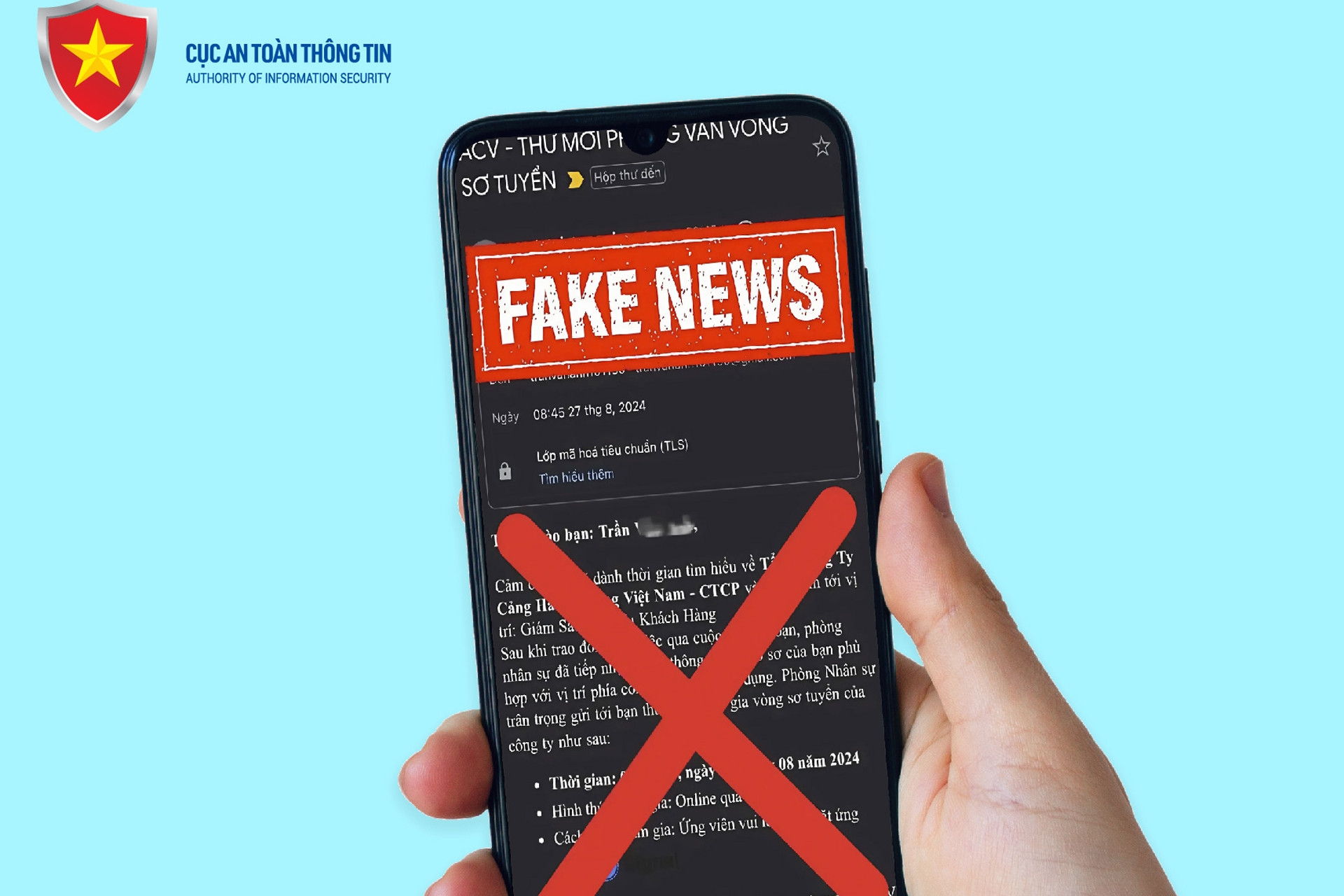
Clearly stating that the aforementioned promotional program is fictitious and created by individuals impersonating major brands to scam users, the Cybersecurity Department also noted: The fake fanpages are professionally designed, and the perpetrators even create numerous comments with the content "received the goods" along with product quality reviews under the posts on the fake fanpage to increase credibility with users.
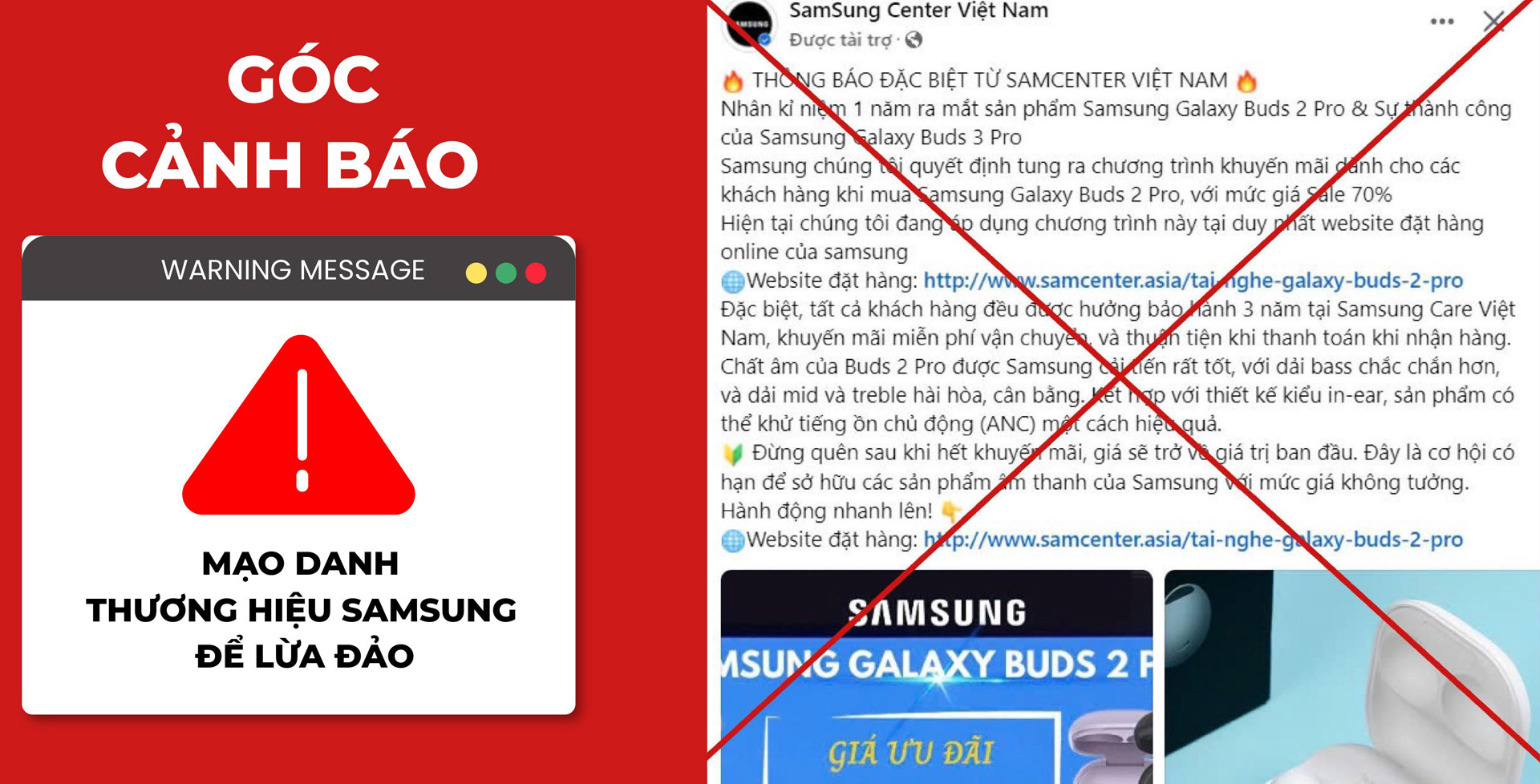
It's worth noting that cases of individuals creating fake fan pages and websites, impersonating major brands, and offering fraudulent promotions to scam people, as in the specific case mentioned above, are not isolated incidents; in fact, they have appeared quite frequently on the Vietnamese internet recently.
For example, also in September, some social media users received messages saying "receive gifts from Adidas to celebrate the company's 70th anniversary" along with a link for users to log in; or in June, a series of similar messages inviting people to join the "Coca-Cola Welfare Fund" to receive gifts, such as Rolex watches as prizes on the company's anniversary, were also sent to many social media users.
Furthermore, according to the Information Security Department, taking advantage of the recent natural disasters in the northern provinces, fraudsters not only launched fake promotional programs but also solicited purchases for charitable donations, thereby appropriating people's assets.
Specifically, these individuals create websites similar to those of well-known brands or charities, providing information about promotional products to solicit donations. They also use fake social media accounts to post advertisements for promotions, encouraging people to buy products and promising to donate a portion of the revenue to people affected by the disaster; however, the real purpose of these promotions is to profit.
8 tips to avoid becoming a victim of brand impersonation scams targeting major brands.
Warning the public to be more vigilant when participating in cyberspace, experts from the Department of Information Security emphasized: Currently, fraudsters use many tricks to impersonate brands and businesses to deceive people.
The common tactic used by scammers is to send links containing attractive promotions or giveaways, and then ask consumers to enter their personal Facebook login information, or even more dangerously, their personal bank account passwords, after which they steal the victims' accounts.
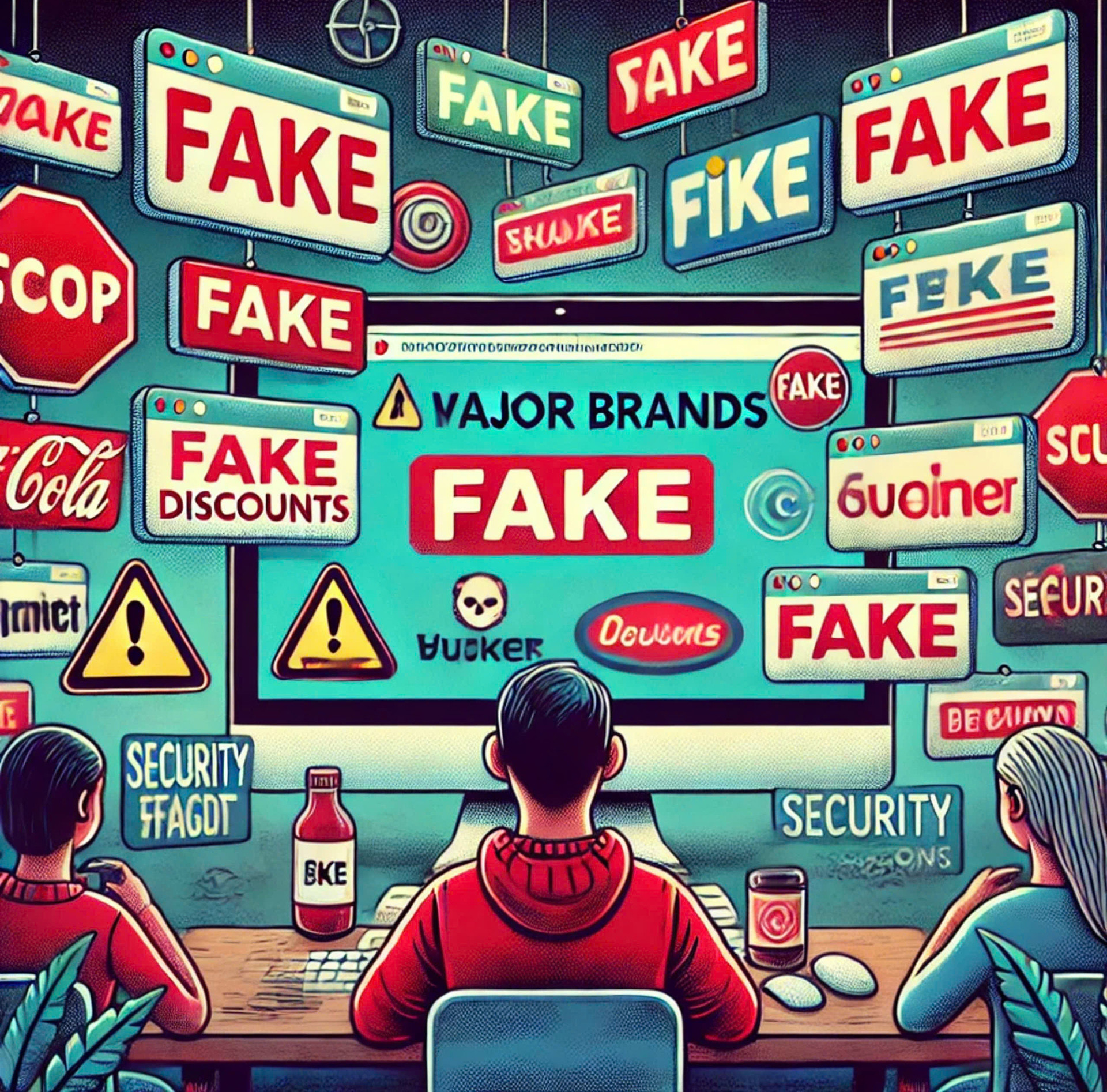
To avoid becoming a victim of scams impersonating major brands, the Information Security Department has issued eight important notes for users.
First and foremost, consumers need to be cautious when purchasing discounted products from tech companies advertised on Facebook, as these discount programs are usually announced on the company's official website.
When in doubt about the authenticity of a promotional offer, users should contact the brand's customer service department directly for verification. "Promotions that are too good and too attractive are often a sign of scams," the Information Security Agency commented.
Users should also avoid clicking on links sent via text messages, emails, or social media if they are unsure of their authenticity. This will help prevent malicious actors from gaining control of their devices and stealing their assets.
One of the things users are advised to do is not provide personal or financial information. This is because reputable brands will not ask users to provide sensitive information such as passwords, credit card numbers, or OTP codes in order to receive promotions.
At the same time, people need to remain vigilant and avoid sending donations or support money to accounts of unknown origin to those affected by the disaster.
When receiving online information calling for donations or sales of goods to support flood relief efforts, people need to carefully verify the content; and at the same time, monitor official media outlets to find out about legitimate organizations and reliable addresses that accept money and goods to support people in localities severely affected by natural disasters.
People should absolutely not transfer donations to individuals or organizations acting on their own initiative without clear identities; donations should only be made through official accounts belonging to state agencies or reputable organizations and individuals.
"Furthermore, when encountering a situation that you suspect is a scam, report it immediately to the authorities or the brand being impersonated so they can take timely action," the Cybersecurity Department recommends.
Source: https://vietnamnet.vn/mao-danh-cac-thuong-hieu-lon-tao-khuyen-mai-gia-de-lua-nguoi-dung-viet-2325519.html

![[Photo] Prime Minister Pham Minh Chinh receives the Governor of Tochigi Province (Japan)](/_next/image?url=https%3A%2F%2Fvphoto.vietnam.vn%2Fthumb%2F1200x675%2Fvietnam%2Fresource%2FIMAGE%2F2025%2F12%2F16%2F1765892133176_dsc-8082-6425-jpg.webp&w=3840&q=75)
![[Live] 2025 Community Action Awards Gala](/_next/image?url=https%3A%2F%2Fvphoto.vietnam.vn%2Fthumb%2F1200x675%2Fvietnam%2Fresource%2FIMAGE%2F2025%2F12%2F16%2F1765899631650_ndo_tr_z7334013144784-9f9fe10a6d63584c85aff40f2957c250-jpg.webp&w=3840&q=75)
![[Image] Leaked images ahead of the 2025 Community Action Awards gala.](/_next/image?url=https%3A%2F%2Fvphoto.vietnam.vn%2Fthumb%2F1200x675%2Fvietnam%2Fresource%2FIMAGE%2F2025%2F12%2F16%2F1765882828720_ndo_br_thiet-ke-chua-co-ten-45-png.webp&w=3840&q=75)
![[Photo] Prime Minister Pham Minh Chinh receives Lao Minister of Education and Sports Thongsalith Mangnormek](/_next/image?url=https%3A%2F%2Fvphoto.vietnam.vn%2Fthumb%2F1200x675%2Fvietnam%2Fresource%2FIMAGE%2F2025%2F12%2F16%2F1765876834721_dsc-7519-jpg.webp&w=3840&q=75)























































![[Video] Independence and self-reliance linked with international integration through 40 years of reform](https://vphoto.vietnam.vn/thumb/402x226/vietnam/resource/IMAGE/2025/12/16/1765899635777_1-1-8054-png.webp)


















Comment (0)