

I am 45 years old and have stage two gout. I really like eggs, but I don't know if I can eat them and how many I should eat. (Manh Tuan, Hanoi )
Reply :
In gout, excess uric acid accumulates in the body, forming crystals in the joints and causing acute gout attacks. A balanced, healthy diet for gout sufferers includes all the necessary nutrient groups, but limits foods high in purines such as red meat, seafood, and organ meats, because when purines are broken down, they produce uric acid. These foods are also high in protein, leading to increased uric acid levels in the blood, thus causing gout.
Eggs are a good source of protein for people with gout because they are low in purines. Eggs are a complete protein, containing all nine essential amino acids that the human body needs. They also contain fats, vitamins, minerals, and other beneficial nutrients. Boiled eggs are generally considered healthier than other egg preparation methods because they are cooked without oil or butter. How you cook and eat eggs can affect their nutritional value.
For example, egg whites have a higher protein and vitamin B3 content but fewer calories, cholesterol, vitamins, and minerals than egg yolks. One egg white contains approximately 3.6 grams of protein, 0 grams of fat, and 18 calories. On the other hand, egg yolks have a higher fat and calorie content. They also have a higher vitamin content, containing all vitamins except vitamin C. One egg yolk provides approximately 2.8 grams of protein, 4.9 grams of fat, and 56 calories.
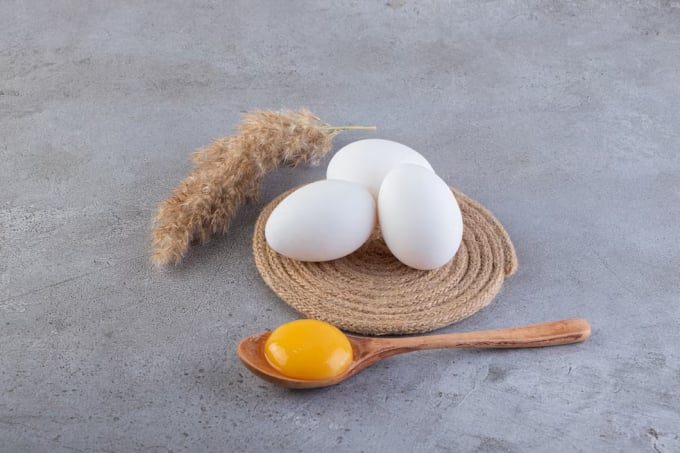
People with gout can still eat eggs in moderation. Photo: Freepik
According to the U.S. Department of Agriculture (USDA) Nutrient Database, hard-boiled eggs have slightly more protein and contain 13 fewer calories than scrambled eggs. Overall, the nutritional content of the two is still very similar.
Managing your purine intake is key to preventing future gout attacks. Low-purine foods that pair well with eggs include: low-fat dairy products (milk, cheese, yogurt); fruits and juices; potatoes; vegetables; bread; and healthy fats and oils (olive oil, butter).
There are no official recommendations on the number of eggs a person with gout should eat. Eating up to 12 eggs per week is generally considered safe and does not negatively impact health. Additionally, the American Heart Association recommends eating one whole egg or two egg whites daily as part of a healthy diet.
Based on current research, most healthy adults can safely eat one to two eggs per day. If you have heart disease, high cholesterol, or other health problems, consider discussing the appropriate egg intake with your doctor or a nutritionist.
If you experience digestive problems such as nausea, bloating, or abdominal pain after eating eggs, you may have an intolerance to this food and should immediately consult your doctor for appropriate testing or dietary adjustments to determine if eggs are causing those symptoms. If you are allergic to eggs, avoid eating eggs and foods containing eggs to prevent a potentially life-threatening allergic reaction. If you are allergic to chicken eggs, you should also avoid eggs from other poultry such as goose, turkey, quail, and duck.
MSc. Resident Doctor Nguyen Thi Phuong
Department of Musculoskeletal Disorders, Tam Anh General Hospital, Hanoi
Source link


![[Photo] General Secretary To Lam receives the Special Envoy of General Secretary and President of China Xi Jinping](/_next/image?url=https%3A%2F%2Fvphoto.vietnam.vn%2Fthumb%2F1200x675%2Fvietnam%2Fresource%2FIMAGE%2F2026%2F01%2F30%2F1769759383835_a1-bnd-5347-7855-jpg.webp&w=3840&q=75)


![OCOP during Tet season: [Part 3] Ultra-thin rice paper takes off.](/_next/image?url=https%3A%2F%2Fvphoto.vietnam.vn%2Fthumb%2F402x226%2Fvietnam%2Fresource%2FIMAGE%2F2026%2F01%2F28%2F1769562783429_004-194121_651-081010.jpeg&w=3840&q=75)

![OCOP during Tet season: [Part 2] Hoa Thanh incense village glows red.](/_next/image?url=https%3A%2F%2Fvphoto.vietnam.vn%2Fthumb%2F402x226%2Fvietnam%2Fresource%2FIMAGE%2F2026%2F01%2F27%2F1769480573807_505139049_683408031333867_2820052735775418136_n-180643_808-092229.jpeg&w=3840&q=75)





Comment (0)