

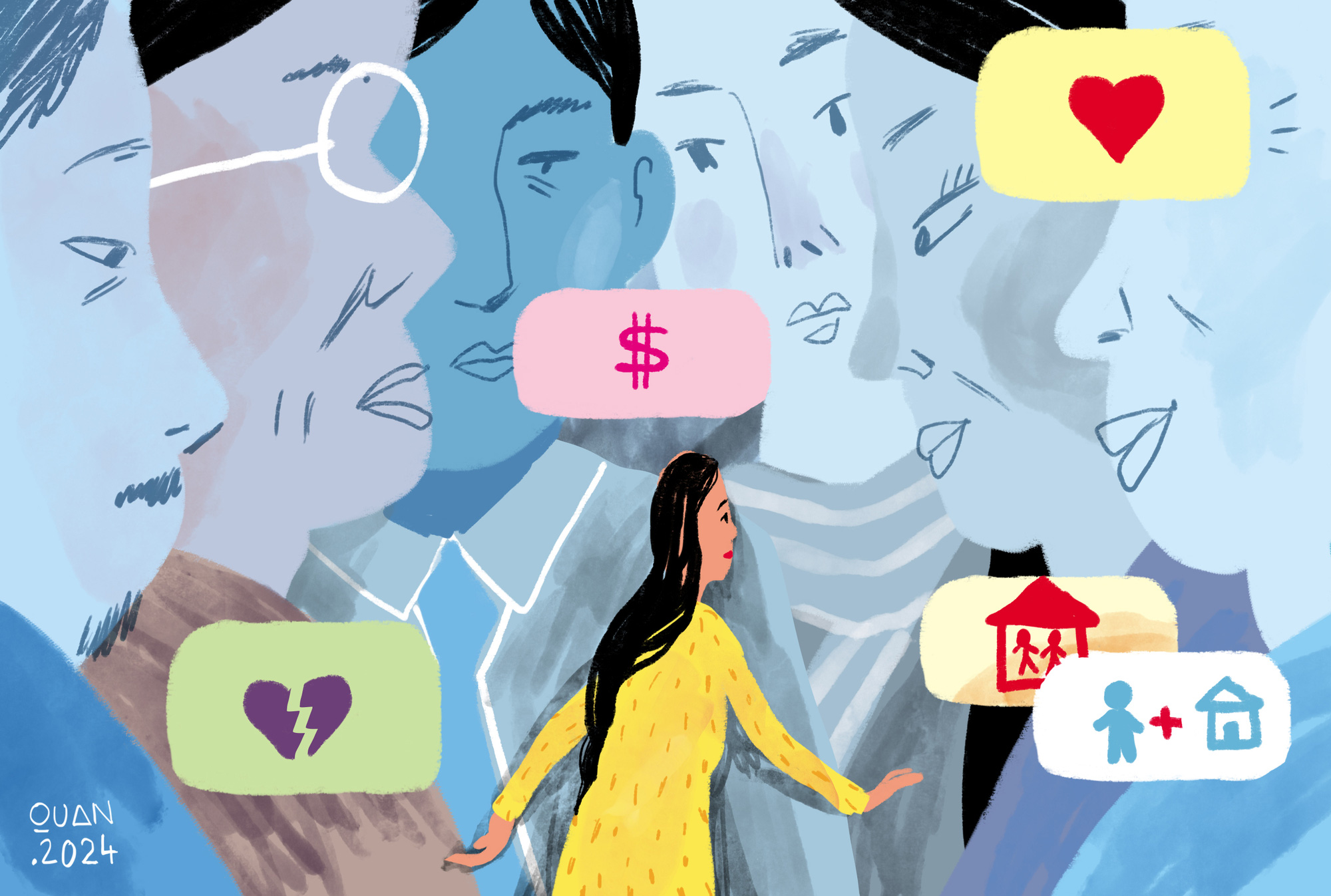
Illustration: DANG HONG QUAN
Normally, the conversations in the group are just about happy things related to children, how to raise healthy and intelligent children... but today the topic has taken a different turn, focusing on someone going through a failed marriage.
This question isn't new, but it's probably always a "hot" topic in everyone's mind, and even if it's not their own situation, people still offer their opinions. Of course, there are always two "sides": those who think it's okay and those who think it's not. Everyone has their own reasons.
For example, a father in Quang Binh shared: "A breakup inevitably involves unpleasant experiences. Why would the two of you continue to meet? Let each of you have a new life; happiness or sadness are personal matters for that person."
Ms. Thuy, a single mother in Da Nang , believes: "I think it's still possible to be friends. That's a civilized way of behaving between two people who once loved each other, were once engaged, and wished to walk the path of happiness together until the end of their lives."
According to Ms. Thuy, there are countless reasons why marriages can break down, but those involved shouldn't turn their backs on each other, become strangers, or harbor hatred and resentment just because they no longer live together.
Opposing this, Mr. Thang from Ho Chi Minh City stated his opinion: "It's not always civilized to remain friends after the end of a marriage. That's actually a sign of weakness, an inability to be decisive, or perhaps regret. If possible, I think there should be certain boundaries in the relationship between two former spouses after divorce to avoid awkwardness and fatigue."
The discussion and opinions were extended by personal stories shared by members of the group, who wanted to offer advice to Hang. I paused for a few moments and asked more in-depth questions about the reality of her relationship with her ex-husband after their separation. They have a 5-year-old child together.
When children arrive, many problems arise in life, and conflicts emerge between them that are not resolved in time, or transformed before new conflicts arise. Exhaustion piles up, and everyone is stressed because they think, "the other person doesn't understand me."
Sadly, they divorced. But Hang and her husband's situation didn't really warrant the end of their marriage; they just needed to sit down, listen, and work things out together. If both had betrayed each other or behaved rudely, causing deep pain and hurt, then separation was inevitable.
If you haven't found common ground when your married life is fraught with disagreements and you haven't had enough time or opportunities to reconnect, then taking a break can serve as a period of reflection and consideration.
They could become friends afterward to co-parent the child, so the child feels they still have both parents. And if possible, "falling in love again" is also a good option, in Hang's specific case.
In reality, civilized behavior after divorce only exists when, throughout the marriage, whether in joy or sorrow, happiness or sadness, both partners maintained civility and respect for each other. Conversely, when either party or both have behaved beyond acceptable limits, divorce becomes inevitable, and the path to becoming friends afterward is likely difficult, if not impossible.
In cases where the trauma is so severe that one is forced to leave, the only way is to heal, forget, and rebuild a happier life in a different environment, with new people who are a better fit.
Source: https://tuoitre.vn/ly-hon-roi-co-lam-ban-duoc-khong-20241013112139833.htm































































































Comment (0)