


The number of contestants and viewers for major, long-standing beauty pageants like Miss Universe, Miss America (USA), and Miss Hong Kong decreases every year.
After the winner of Miss USA 2024 relinquished her title in May, many beauty websites analyzed the decline of beauty pageants. NPR There is an interview with Amy Argetsinger - editor of The Washington Post - with the theme: "Is this the beginning of the end for beauty pageants?".
"These pageants have lost the appeal they had in the 1990s. What led to this? Is it due to poor quality or the organizers' inability to maintain the standards they once had, when beauty queens were considered representatives of a nation's beauty?" establishedPost Ask a question.
In the US and Europe, beauty pageants, from large to small, are losing their appeal. Forbes, Miss America (first held in 1921) was once considered a "must-see" show. In 1954, the finals attracted approximately 27 million viewers – even though not every family owned a television at the time. By 2017, the show's audience had dropped to just 5.6 million.
In 1984, Miss Universe attracted 35 million viewers in the US; by 2023, this had dropped to only 819,000 viewers aged 18-49 and 301,000 viewers aged 18-34, according to... Nielsen . Miss World is not broadcast during prime time in the UK - where the organization is headquartered.
India is considered a beauty pageant powerhouse, with six Miss World titles and three Miss Universe titles. But ALLstan Times Commentators noted that Indians are not as enthusiastic about beauty queens as they were when Sushmita Sen and Aishwarya Rai were crowned Miss Universe and Miss World, respectively, in 1994.
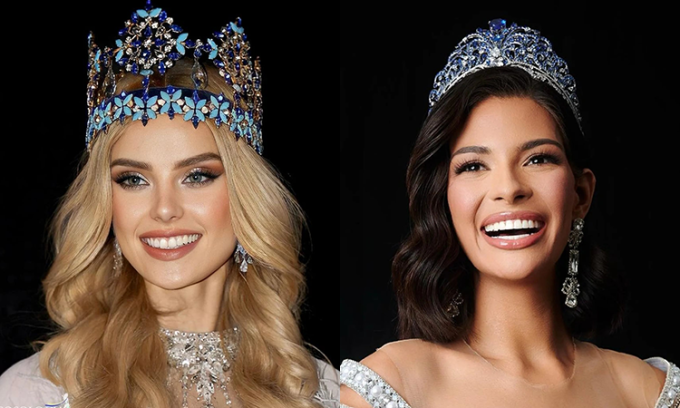
Hong Kong used to be a hub for beauty pageants, with competitive competitions such as Miss Hong Kong, Miss Asia, and Miss Chinese International Pageant. However, currently only Miss Hong Kong is held annually; Miss Chinese International Pageant ceased operations after 2019, and Miss Asia is held sporadically.
According to The Corpse, Despite its continued existence, Miss Hong Kong has significantly lost its appeal compared to its peak in the 1980s and 1990s. During that period, each competition attracted thousands of contestants, while in recent years, only over 100 people have registered to participate, with the quality being a subject of debate.
The rising tide of feminism and the growth of the #MeToo movement have changed public perceptions of beauty pageants. Many argue that these pageants are outdated, following beauty stereotypes set by commercialists. Instead of portraying independent, capable, and creative women, most organizers focus solely on promoting physical appearance. Experts believe that beauty pageants create a negative image of women and, by familiarizing the public with the pleasure of viewing women's bodies, indirectly reinforce patriarchal ideology.
In the past, opportunities for women were limited, and they relied on their beauty to attract attention and change their destiny. Today's beauty pageant contestants are mostly educated and professionally qualified. They have increasingly more choices and opportunities to change their lives. In Hong Kong, besides beauty pageants, women now have many other platforms to showcase themselves. Therefore, "considering the flow of history, it is understandable that Miss Hong Kong is no longer as popular," commented Chinese social commentator Liang Hongda. Liaoning TV.
According to New Weekly In China, for over 10 years, no prominent entertainment star has emerged from beauty pageants. "The nature of beauty contests is gradually shifting towards commercialization, so it's not surprising that these competitions are losing attention."
Miss Universe was founded by Pacific Knitting Mills, a company specializing in clothing and accessories. Thanks to the growth and influence of the competition, they became a large corporation. In 1951, when Yolande Betbeze was crowned Miss America, she demonstrated feminist ideals by refusing to wear a swimsuit for a photoshoot with sponsors.
Today, contestants are still required to constantly wear sponsored clothing and participate in promotional photoshoots with various brands and companies during side events. Professor Lee Young Ja of the Catholic University of Korea analyzes the nature of beauty pageants as a business, aimed at generating significant profits for the organizers. She calls it "exploitation through the commercialization of women."
Many beauty pageants have deteriorated and become embroiled in scandals. In April, Miss USA Noelia Voigt, 24, and Miss Teen USA UmaSofia Srivastava, 17, simultaneously won the titles. return the crown. After eight months in office, UmaSofia Srivastava announced her resignation, stating that she felt her "personal values no longer aligned with the organization's direction."
Fans believe there's something fishy behind the incident involving the two beauty queens. In Noelia Voigt's post, fans discovered that if you combine the capital letters in the first 11 sentences, the message "I am Silienced" appears.
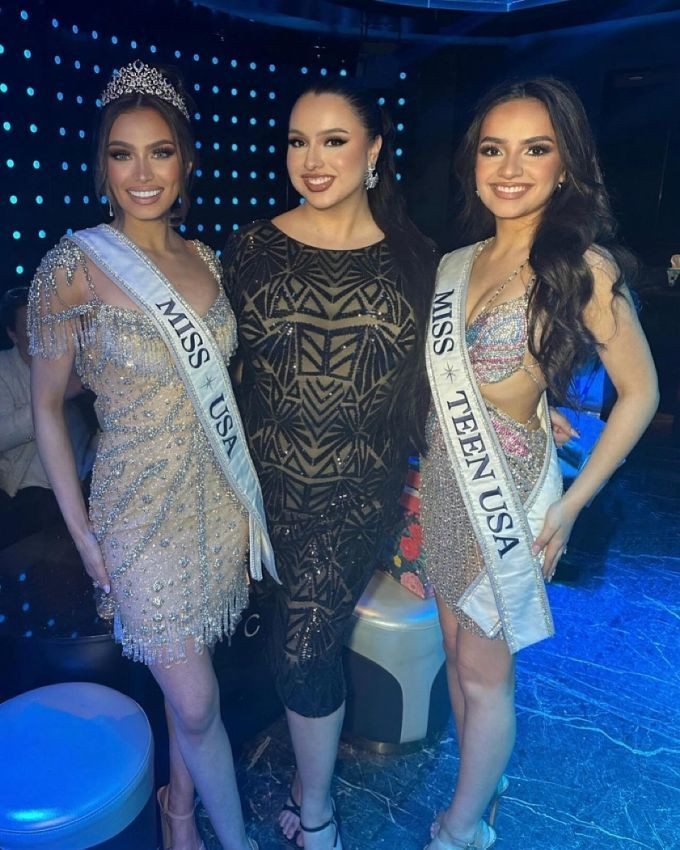
Before Noelia Voigt returned her crown, Miss USA communications director Claudia Michelle also announced her resignation, citing a toxic work environment and the organization's financial difficulties.
In 2023, a Miss Universe contestant from Indonesia accused someone of peeping at her during the anthropometric measurements. The organizers of Miss Grand International 2022 were accused of exploiting contestants, leaving them exhausted by the demanding schedule. Miss Venezuela 2018 was also suspended due to contestants accusing each other. "Selling oneself".
According to Hindustan Times When the British and Americans lost interest in Miss World and Miss Universe, these organizations brought the competitions to new markets in Asia, Africa, and Latin America.
Beauty pageants once opened a path out of poverty in Venezuela, often dubbed the "homeland of beauty queens" with six Miss World titles and nine Miss Universe titles. In a country with high inflation and widespread famine, many girls see beauty contests as a "ticket" to emigration and a better life. However, according to AP Beauty pageants in Venezuela are becoming increasingly difficult, as investors tighten their belts due to economic hardship.
In her memoir published in 2015, Patricia Velasquez, a Miss Venezuela contestant, wrote that she had to have sex with an older man to afford rent in Caracas, breast augmentation, and the dresses she wore for the competition. "Not everyone needs to go to that extent, but that was my reality," she wrote.
Amy Argetsinger, lifestyle editor of The Washington Post and the author of the book about beauty pageants, said in an interview with NPR In May: "The viewership for these shows on television has declined over the past 20 years. But there are all sorts of smaller beauty pageants you've never heard of that still exist out there. It's possible that larger competitions like Miss America and Miss USA could continue to operate in the same way."
Source

![[Photo] Standing Committee member of the Party Central Committee Tran Cam Tu inspects preparations for the 14th Party Congress.](/_next/image?url=https%3A%2F%2Fvphoto.vietnam.vn%2Fthumb%2F1200x675%2Fvietnam%2Fresource%2FIMAGE%2F2026%2F01%2F06%2F1767695749033_image1122-1262-jpg.webp&w=3840&q=75)

![[Photo] Prime Minister Pham Minh Chinh attends the Conference on the Implementation of Tasks for the Finance Sector in 2026](/_next/image?url=https%3A%2F%2Fvphoto.vietnam.vn%2Fthumb%2F1200x675%2Fvietnam%2Fresource%2FIMAGE%2F2026%2F01%2F06%2F1767699638245_ndo_br_dsc-0196-jpg.webp&w=3840&q=75)
![[Photo] Prime Minister Pham Minh Chinh receives Canadian Minister of International Development Randeep Sarai](/_next/image?url=https%3A%2F%2Fvphoto.vietnam.vn%2Fthumb%2F1200x675%2Fvietnam%2Fresource%2FIMAGE%2F2026%2F01%2F06%2F1767708661052_image123-3433-jpg.webp&w=3840&q=75)
![[Image] Fifth meeting of the Steering Committee for National Projects in the Railway Sector](/_next/image?url=https%3A%2F%2Fvphoto.vietnam.vn%2Fthumb%2F1200x675%2Fvietnam%2Fresource%2FIMAGE%2F2026%2F01%2F06%2F1767712857541_ndo_br_dsc-0581-jpg.webp&w=3840&q=75)



















































































Comment (0)