For five years, Vietnam has been under a "yellow card" from the European Commission (EC) regarding illegal, unreported, and unregulated (IUU) fishing. In just over two months, an EC inspection team will visit Vietnam for the fourth time to check compliance with IUU regulations. The results of this inspection will be crucial in determining whether Vietnam can have its fisheries "yellow card" lifted.
Ships are still violating foreign waters.
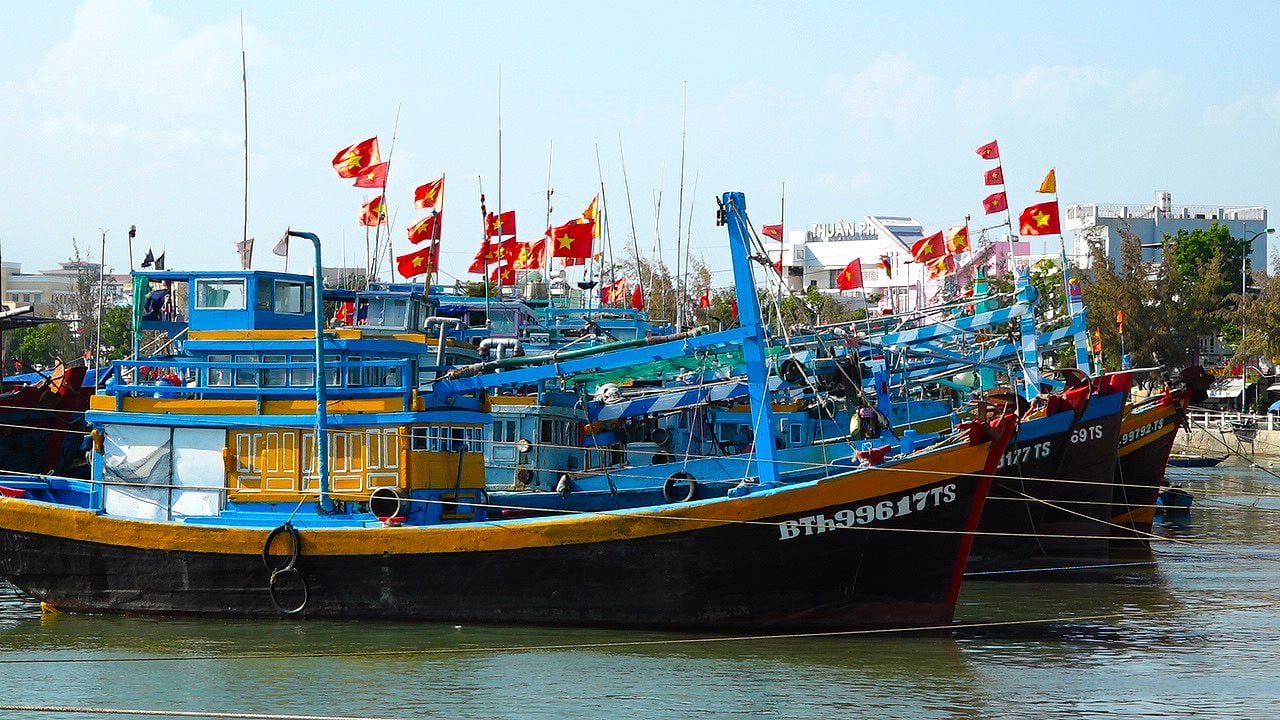
Like other coastal provinces and cities nationwide, Binh Thuan has, in recent years, implemented many comprehensive and decisive measures to prevent fishing vessels and fishermen from violating foreign waters. These measures include strengthening the dissemination of laws and regulations to fishermen, strictly managing, inspecting, and controlling fishing vessels entering and leaving ports and operating at sea, as well as reviewing and compiling a list of high-risk fishing vessels for special management and monitoring, requiring owners and captains of offshore fishing vessels to sign commitments not to violate foreign waters, and vigorously implementing the installation of vessel tracking systems (VMS) on fishing vessels and using VMS data to monitor and supervise fishing vessels operating at sea. However, the incident involving a fishing vessel from Ham Tan district violating foreign waters in early 2023 shows that this situation still poses a very high risk.
Vice Chairman of the Provincial People's Committee Nguyen Hong Hai during an inspection of the Provincial Fishing Vessel Data Monitoring Center.
According to the Provincial Fisheries Department, in the first six months of 2023, the Fishing Vessel Data Monitoring Center detected and called back five fishing vessels that had crossed maritime boundaries to Vietnamese waters; and issued four notices, requests, and reminders to ship owners and captains to check and rectify VMS connection issues at sea. However, the frequent loss of VMS connection at sea by fishing vessels still poses difficulties in control and a potential risk of fishing vessels violating foreign waters.
Most recently, in Ca Mau province, authorities discovered a fishing vessel concealing 10 VMS (Vehicle Monitoring System) devices. During questioning, the vessel owner admitted that 7 VMS devices had been installed on a Ca Mau fishing vessel and 3 on a Kien Giang fishing vessel. After leaving the port, these vessels removed the VMS devices and hired the squid fishing vessel to guard them, paying them 30-60 liters of fuel per vessel. According to the task force handling violations of the Steering Committee against IUU (Illegal, Unreported, and Unregulated) Fishing in Ca Mau province, fishing vessels that removed their VMS devices are at high risk of violating foreign waters. Furthermore, fishing vessels under 15 meters, which are not required to install VMS and are only permitted to operate in coastal waters, have also committed violations in offshore waters. In Binh Thuan province, this situation is no exception, and authorities are facing difficulties in managing the situation. Regarding fishing vessels violating foreign waters, to date, no fishing vessel has been penalized under Government Decree No. 42/2019/ND-CP.
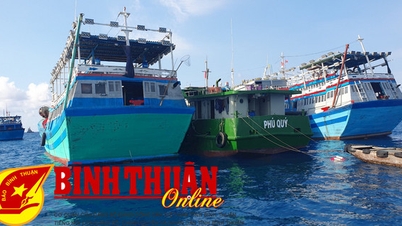
Only 6 vessels in the entire province have yet to install VMS equipment. Photo: N. Lan.
Take strong measures.
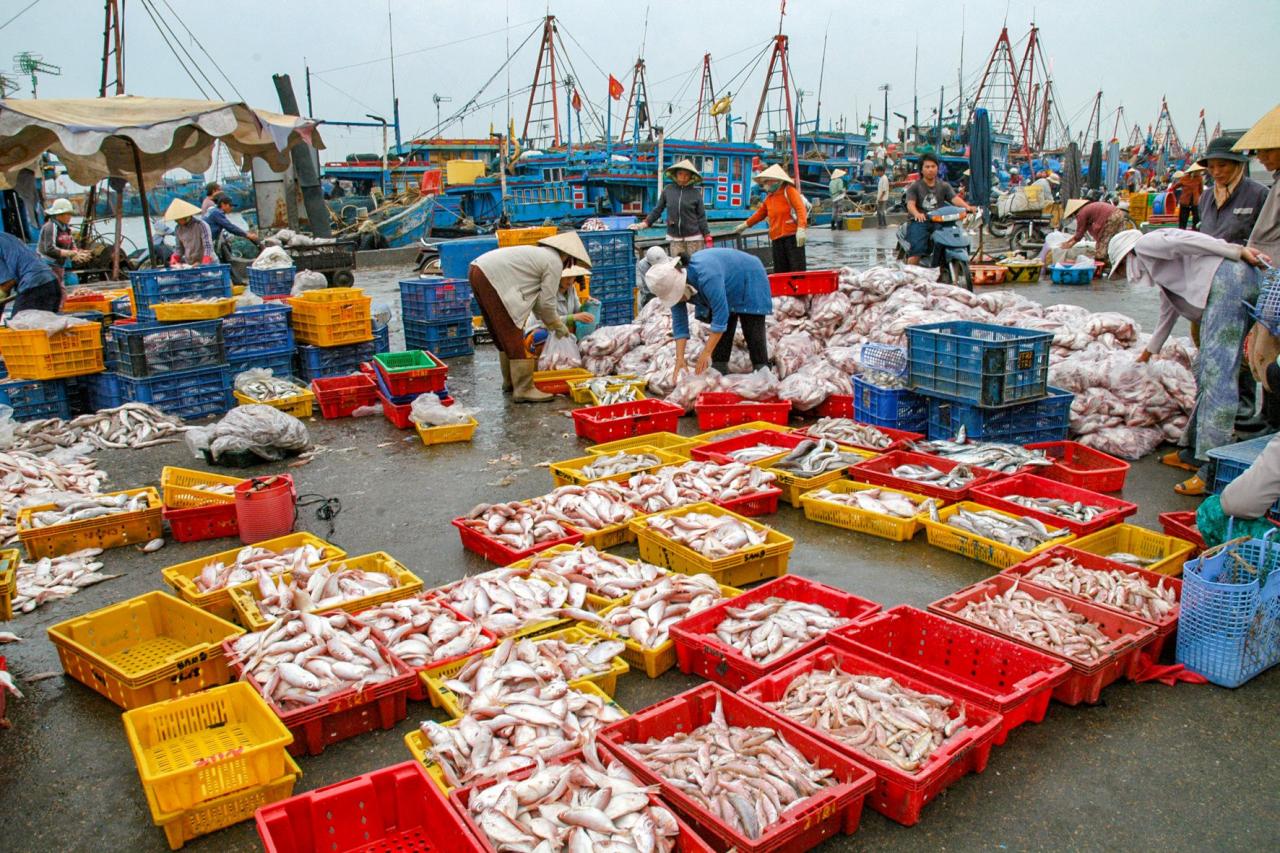
Regarding other fishing vessels violating IUU (Illegal, Unreported, and Unregulated) fishing practices, the situation remains complex. Since the beginning of the year, authorities have intensified patrols and inspections, resulting in penalties for 133 violations, totaling over 1.4 billion VND in fines. The main violations include: fishing vessels operating without registration (26 cases); fishing vessels 15 meters or longer failing to dock at designated ports to unload their catch (23 cases); possessing and using tools, electric shock devices, and poisons for fishing (21 cases); failing to notify port management organizations before entering ports as required (21 cases); and using prohibited fishing gear and methods (16 cases)...
Other IUU fishing violations remain complex and evolving.
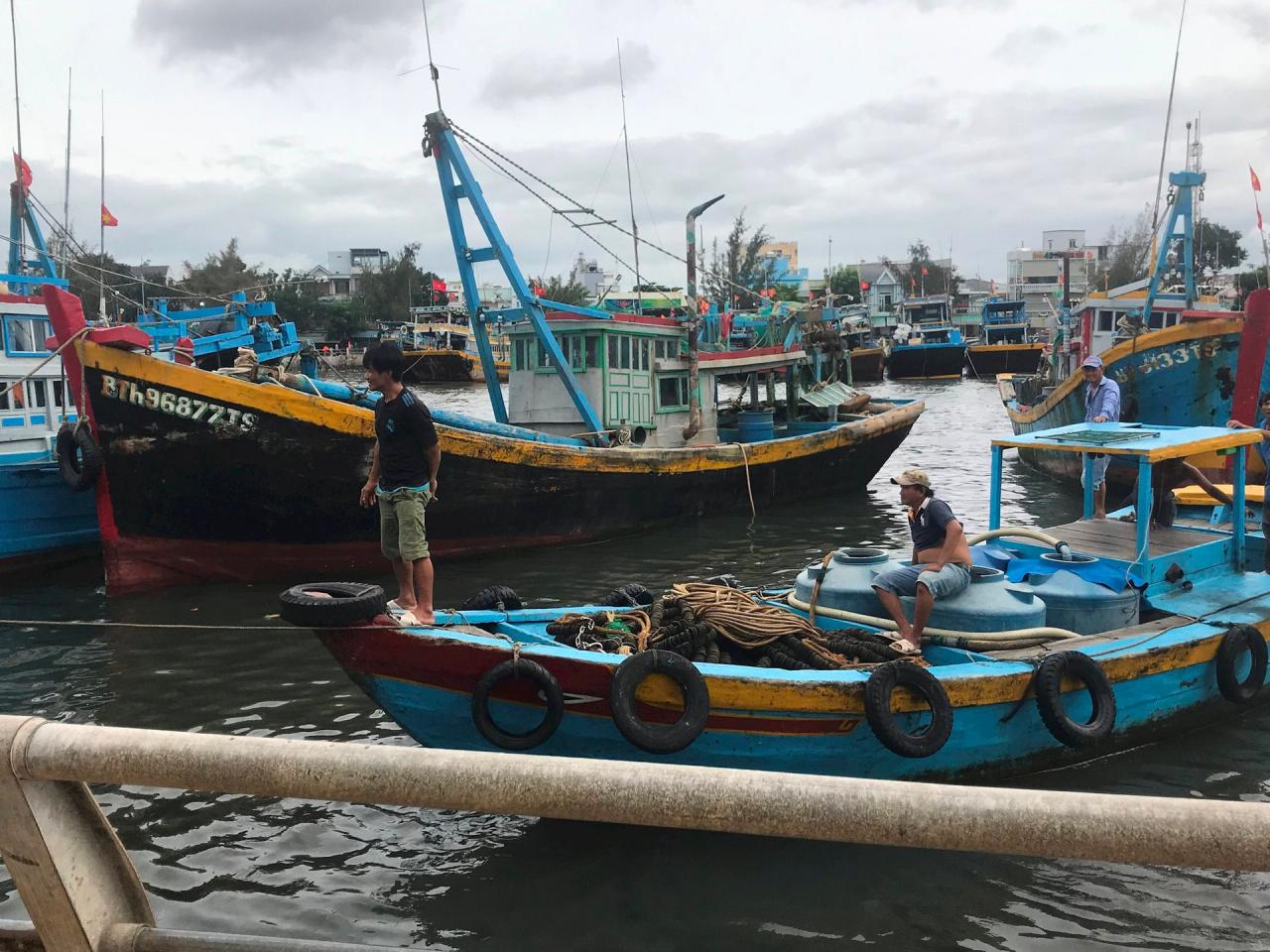
This shows that some fishermen have poor awareness of the law, prioritizing their own and their families' economic interests and disregarding warnings from authorities and local governments, deliberately violating the law and engaging in illegal fishing in foreign waters. In addition, the management of fishing vessels reveals many shortcomings, with slow progress in addressing the issue of fishing vessels operating without the required licenses (despite weekly announcements from the Department of Agriculture and Rural Development, 1,023 fishing vessels still lack licenses). The management of fishing vessels within the province that frequently operate, stay, and depart from other provinces also reveals many limitations and a lack of strict control. The exchange, coordination, and processing of information on fishing vessels at both the departure and arrival points, according to the inter-provincial coordination regulations, is not effective and lacks efficient methods and measures...
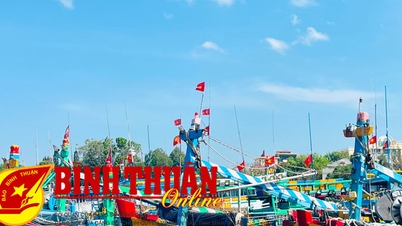
The management of fishing vessels in the province that frequently operate, stay, and depart from ports outside the province reveals many shortcomings. Photo: N. Lan.
Regarding key solutions until October 2023, the Provincial Steering Committee for Combating IUU Fishing requested localities to implement strong and resolute measures to prevent fishing vessels from illegally exploiting marine resources in foreign waters. They also requested increased inspection and strict control of fishing vessels entering and leaving ports in accordance with regulations; and resolutely preventing fishing vessels that do not meet the requirements from leaving port to fish. Furthermore, they called for continued investigation and decisive handling of cases involving fishing vessels from the province that were seized by foreign countries in 2022 and 2023. Finally, they requested criminal investigation and prosecution of organizations and individuals involved in brokering or facilitating the illegal exploitation of marine resources by Vietnamese fishing vessels and fishermen in foreign waters, as well as brokering the illegal repatriation of seized fishing vessels and fishermen.
To date, only 20 fishing vessels 15 meters or longer in Binh Thuan province have not yet installed VMS equipment (out of 1,941/1,961 fishing vessels); of which 14 are damaged and docked ashore, unable to operate, or are awaiting enforcement of judgments or civil disputes. Regarding the 6 vessels that have not yet installed the equipment, the provincial leadership has directed relevant authorities and local governments to work with the vessel owners, requiring them to install the equipment this August, and to resolutely prevent them from leaving port for fishing.
Removing the "yellow card" on Vietnamese fisheries this year is a firm commitment of Vietnam in general and Binh Thuan province in particular. This task is not about appeasing the EC inspection team, but about transforming Vietnam's fisheries sector towards greater sustainability. Therefore, it's not just about individual fishermen changing their mindset; relevant authorities must work together and implement appropriate policies to ensure fishermen can confidently and legally exploit marine resources, contributing to job creation and improving people's livelihoods.
Strengthening propaganda against IUU fishing.
Since the beginning of the year, the Fisheries Sub-Department, in coordination with local authorities, has organized 7 training sessions for 526 fishermen, distributed 1,816 leaflets and 2,500 keychains to raise awareness among fishermen, focusing on offshore fishing vessels and fishing groups at high risk of violating IUU (Illegal, Unreported, and Unregulated) fishing regulations. In addition, the Provincial Border Guard Command organized 208 awareness sessions with 21,514 fishermen participating, requiring 452 boat owners and captains to sign commitments not to violate IUU fishing regulations. Furthermore, the fishing port management boards regularly (3 times/week) disseminate information through loudspeaker systems, distribute fishing logbooks and leaflets to boat owners, captains, and marine workers; and publish numerous articles on provincial newspapers, radio stations, and local public address systems.
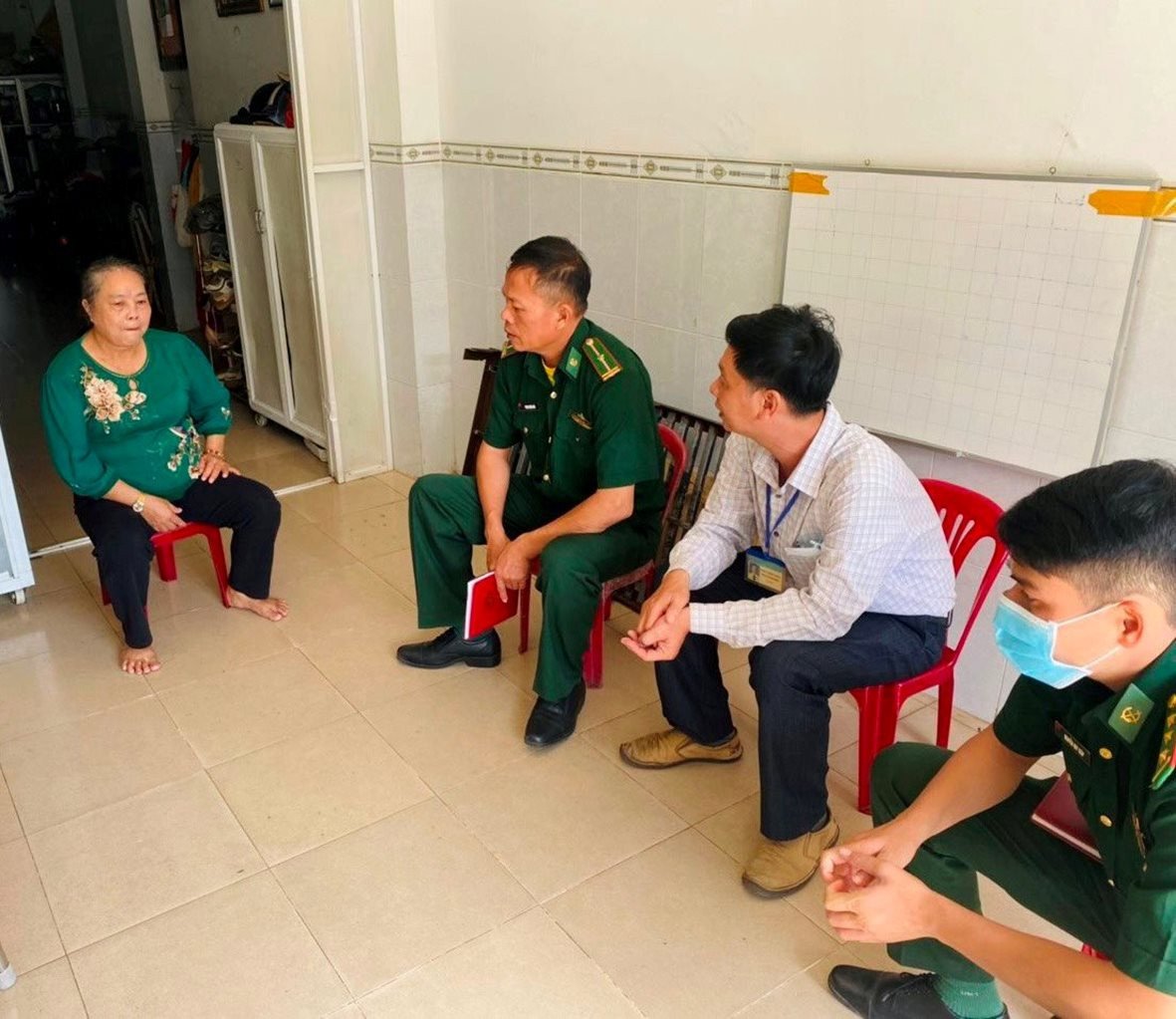
Going door-to-door to persuade fishermen and their relatives not to engage in illegal fishing in La Gi.
Some localities, especially wards and communes in La Gi town, have implemented many effective methods and measures in disseminating legal information on combating IUU fishing, such as: establishing propaganda teams to go to each boat owner's house to distribute leaflets and promote awareness against IUU violations. Simultaneously, they coordinate with religious leaders and priests to educate and encourage fishermen not to violate foreign waters; display billboards along main roads with content on combating IUU fishing and ending violations by fishing vessels and fishermen in foreign waters; broadcast messages through wireless and mobile broadcasting systems to every alley and street corner in the neighborhood...




![[Photo] Prime Minister Pham Minh Chinh presides over a meeting on private sector economic development.](/_next/image?url=https%3A%2F%2Fvphoto.vietnam.vn%2Fthumb%2F1200x675%2Fvietnam%2Fresource%2FIMAGE%2F2025%2F12%2F20%2F1766237501876_thiet-ke-chua-co-ten-40-png.webp&w=3840&q=75)


















































































Comment (0)