

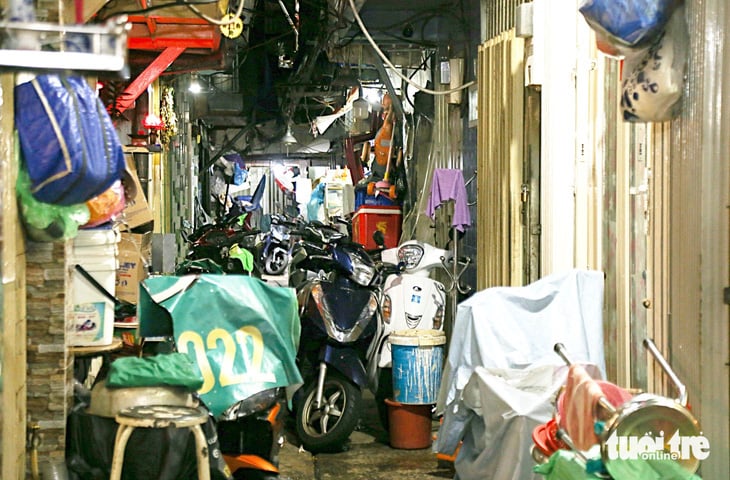
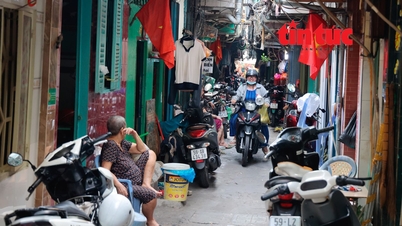
The narrow alleyways in the Chicken Market - Rice Market area serve as passageways, parking spaces, and even places for laundry, cooking, and other daily activities for the residents - Photo: PHUONG NHI
These were small houses, only 2-4 square meters, with just enough space for a toilet and a small table, yet crammed with over a dozen people from 2-3 generations, who had to take turns sleeping, bathing, and doing laundry...
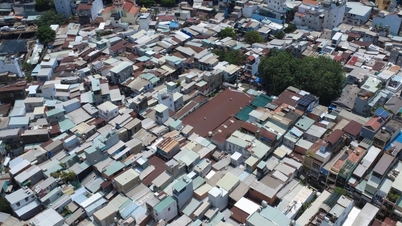
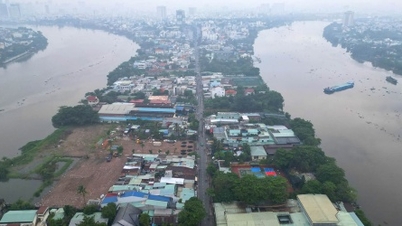
This situation has existed for decades in the Ma Lang area, Nguyen Cu Trinh ward, and the Chicken and Rice Market area, Cau Ong Lanh ward.
The ward, district, and city authorities throughout different periods have recognized that this situation cannot be allowed to continue and have expressed strong political resolve in their resolutions, because it is located right in the core area of the city...
These areas attract particular attention from businesses because they are "diamond" land with very high profit margins.
The government wants it, businesses want it, and of course the people want it too, but why is it just stalling like this?
The problem lies in the scale of the construction project. With a very small area of only about 0.6 hectares (6,000 m2), located within a 930-hectare area, known as the core zone, it is subject to restrictions on building height, population, and density.
According to regulations, the Chicken and Rice Market area is only allowed to be built with a density of 50% (the remaining 50% is for traffic, public facilities and public spaces...) with a maximum height of 50m, equivalent to 10-12 floors.
Under this regulation, only 600 apartments can be built, with a limited population of approximately 1,800 people, of which 300 apartments must be reserved for the resettlement of residents in the area.
Therefore, no investor dared to jump in because it was certain to result in losses, even huge losses. Investors calculated that if they wanted to make a profit, the building density would have to be 60-70%, the height would have to be increased to 80-100m, equivalent to 24-30 floors, the number of apartments would have to be over 1,000, and the population would increase to over 3,000 people.
The city government understands, investors know, and the people know. But how can we change this? At the 31st meeting of the Ho Chi Minh City Party Committee on June 13th, when this issue was raised...
Party Secretary Nguyen Van Nen stated that Ho Chi Minh City needs a special solution to resolve the issue decisively, and that the people cannot be allowed to suffer any longer.
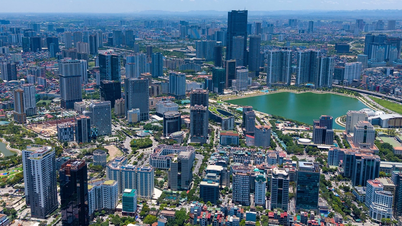
Here, we can also refer to a practical example from Hanoi . Hanoi is facing a deadlock in renovating old apartment buildings, one of the reasons being that the demolition of old buildings to construct new ones is constrained by rigid construction regulations that have been in place for decades.
And the Hanoi People's Committee has taken a groundbreaking step by issuing a new plan for renovating old apartment buildings in the city with a very decisive spirit.
On January 19, 2024, the plan was officially issued, and one important provision was that Hanoi granted autonomy to districts and counties to implement the program; the city provided the policy, while the districts and counties took action.
The most important thing here is that districts and counties have the right to establish standards, criteria, and technical requirements for each apartment building in each specific location in a way that is attractive to investors.
After the Hanoi People's Committee announced this program, more than 100 investors registered to participate with the districts in building new apartment buildings. This project has received public support and investor interest, thus opening the door for investment.
If Ho Chi Minh City applies Resolution 98 and learns from Hanoi's experience, the cases of Ma Lang residential area, Ga-Gao area, and many other places will be quickly and definitively resolved.
Source: https://tuoitre.vn/lam-sao-xoa-nha-ca-moi-20240630084618824.htm




![[Photo] General Secretary and President To Lam and the President of the Philippines hold talks.](https://vphoto.vietnam.vn/thumb/1200x675/vietnam/resource/IMAGE/2026/06/01/1780283481955_vna-potal-tong-bi-thu-chu-tich-nuoc-to-lam-va-tong-thong-philippines-hoi-dam-8797519-1429-jpg.webp)

















































































Comment (0)