

Hanoi – A 21-year-old girl went to the hospital for examination due to glomerulonephritis and liver enzymes 13 times higher than normal, the cause of which was her habit of drinking alcohol constantly.
Holding the girl's test results, Dr. Nguyen Van Thanh, from the Department of General Internal Medicine at Hanoi Medical University, was surprised by the alarming levels of liver and kidney function. However, the patient appeared quite calm, saying she had known this from previous examinations. She refused to answer any of the doctor's questions, only stating, "The reason is that I drink alcohol every day and I request treatment."
"Amidst the pressures and temptations of life, many young people lack the resilience and direction, paying the price with their own health," the doctor said, recounting the above case, adding that an increasing number of young people are suffering from chronic kidney disease, even in the end-stage. At this point, patients are forced to undergo dialysis despite their young age.
Like a 17-year-old female student, she did not have regular health checkups. About three months before hospitalization, she experienced joint pain in both hands and significant hair loss, followed by progressively increasing generalized edema, decreased urination, fatigue, cough, and shortness of breath. Upon admission, the patient was diagnosed with severe renal failure due to an acute exacerbation of systemic lupus erythematosus (a common autoimmune disease in young women) accompanied by heart failure, pneumonia complications, and severe anemia.
Doctors had to administer blood transfusions, antibiotics, emergency dialysis, and plasma exchange to slow disease progression. However, the patient responded poorly to medication, requiring supportive dialysis and prolonged use of immunosuppressive drugs. This situation could not be sustained for long, and the patient had to undergo periodic dialysis to maintain life or wait for a kidney transplant.
In another case, a 20-year-old man sought medical attention due to fatigue, paleness, and nausea after eating. The diagnosis revealed end-stage renal failure due to chronic glomerulonephritis, requiring the insertion of an intravenous catheter for emergency dialysis. Subsequently, doctors performed an arteriovenous fistula in his wrist to provide cyclical hemodialysis, forcing him to become completely dependent on a "machine kidney" until a kidney transplant was possible.
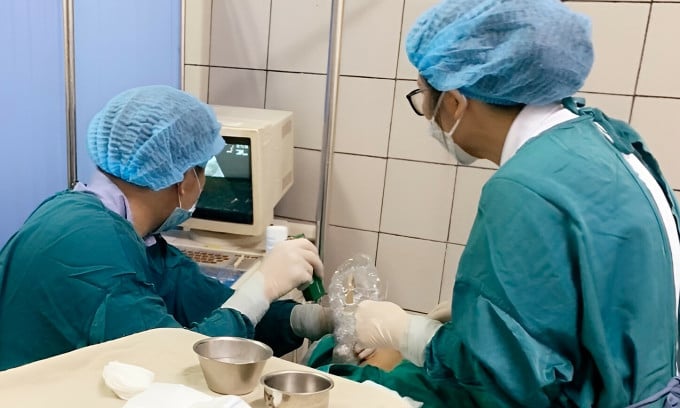
Doctors perform kidney biopsies and check kidney function for patients. Photo: Provided by doctors .
Kidney disease and chronic renal failure are a burden on the healthcare system as well as the families of those affected. An Inside CKD survey across 11 countries revealed that annual costs for chronic kidney disease amount to billions of USD, accounting for 2.4-7.5% of annual healthcare spending. The cost of managing end-stage chronic kidney disease, particularly for dialysis and kidney transplantation therapies, is particularly high.
Statistics from the World Society of Nephrology estimate that approximately three million people are currently relying on dialysis (including hemodialysis or peritoneal dialysis) and kidney transplants to sustain their lives. Notably, the proportion of young people, those still in their working age, suffering from this disease is high and trending upwards.
Vietnam has over 10 million people suffering from chronic kidney disease. The annual incidence of new chronic kidney disease cases is approximately 8,000, with 800,000 patients requiring dialysis, representing 0.1% of the population. However, Vietnam only has 5,500 dialysis machines serving 33,000 patients. This disease ranks eighth among the top ten causes of death.
Dr. Nguyen Van Tuyen, Head of the Nephrology and Urology Department at Duc Giang General Hospital, said that in the last 5 years, the rate of young patients with end-stage chronic kidney disease requiring periodic dialysis has increased by about 5-10%. Many cases are discovered incidentally from subtle symptoms such as fatigue, loss of appetite, and nausea.
"When they went for a check-up, they were found to have severe kidney failure, even end-stage renal failure, requiring dialysis to survive," the doctor said.
Currently, this facility treats approximately 130 patients undergoing dialysis, divided equally into 4 groups. Of these, 30-40% are under 40 years old, some even 30 years old, or young, healthy individuals who are not addicted to alcohol or drugs and tend to be sedentary.
"This is the opposite of what happens in developed countries, where the main causes of chronic kidney disease are hypertension and diabetes," said Dr. Thanh. In Vietnam, however, the causes of kidney failure are often glomerulonephritis, urinary stones, infections, misuse of medication, or an unhealthy lifestyle. Therefore, the average age of people with chronic kidney disease in Vietnam is much lower than in developed countries.
Furthermore, chronic kidney disease progresses silently, often without symptoms, so patients in the early stages may not show any symptoms. By the time symptoms appear, the disease is usually in the later stages, making treatment difficult and less effective.
In particular, unhealthy lifestyles such as lack of exercise, insufficient sleep, poor hygiene, and not drinking enough water are also contributing factors. Frequently holding back urine, abusing alcohol and tobacco, eating salty foods, consuming too much meat, eating too much sugar and sweets, eating fatty foods, consuming processed foods, obesity, and indiscriminate use of medication can also cause kidney failure.
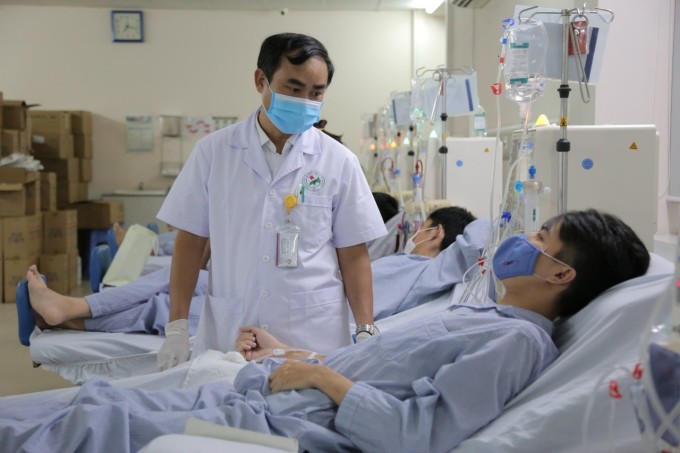
Many young people are developing end-stage renal disease of unknown cause, putting strain on the healthcare system and society. (Photo: Provided by the hospital)
To prevent disease, people need to adopt a healthy lifestyle. Everyone, including young people, needs to have a balanced diet, drink enough water, avoid salty foods, limit fast food, and avoid excessive alcohol consumption.
Avoid smoking and engage in daily exercise according to your individual health condition. Avoid the indiscriminate use of medication, especially over-the-counter drugs and herbal remedies of unknown origin.
Individuals with acute conditions such as respiratory infections, skin infections, and urinary tract infections, as well as those with well-controlled chronic conditions such as hypertension, diabetes, dyslipidemia, malignancies, autoimmune diseases, and urinary stones, should monitor their health for disease prevention.
According to Dr. Thanh, a blood test to check kidney function, a complete urinalysis, and an ultrasound of the urinary system are sufficient for screening and early detection of chronic kidney disease. People should proactively undergo regular health checkups and kidney disease screenings at least once a year, especially high-risk groups such as the elderly, overweight or obese individuals, those with diabetes, hypertension, cardiovascular disease, or autoimmune diseases like systemic lupus erythematosus, scleroderma, and rheumatoid arthritis.
Currently, there is no cure for chronic kidney failure. In the later stages, patients are forced to undergo dialysis or kidney transplantation.
"Right now, patients' lives are almost entirely tied to the hospital and the costs are enormous," the doctor said.
Thuy An
Source link


![OCOP during Tet season: [Part 1] Ba Den custard apples in their 'golden season'](/_next/image?url=https%3A%2F%2Fvphoto.vietnam.vn%2Fthumb%2F402x226%2Fvietnam%2Fresource%2FIMAGE%2F2026%2F01%2F26%2F1769417540049_03-174213_554-154843.jpeg&w=3840&q=75)





Comment (0)