

Ho Chi Minh City - A female patient was admitted to the hospital in an agitated state, with suicidal thoughts, and was treated with a technique involving magnetic stimulation through the skull.
Ms. Dang Ngoc Minh (20 years old, District 3) was brought by her family to Tam Anh General Hospital in Ho Chi Minh City for examination in early May. Her family shared that recently, Minh had exhibited strange behaviors such as frequently talking about death, feeling depressed, wanting to be alone, being uncooperative, and lacking interest in daily activities. Minh also self-harmed to alleviate negative emotions.
Dr. Nguyen Phuong Trang (Department of Neurology, Neurological Center, Tam Anh General Hospital, Ho Chi Minh City) conducts clinical examinations, assessments, and diagnoses patients with severe depression. If left untreated, other parts of the body (heart, blood pressure, stomach, etc.) can also be affected. Patients also experience prolonged insomnia, inability to control emotions and negative thoughts, and are prone to self-harming behavior and harming others.
Patients are treated with medication and transcranial magnetic stimulation (TMS) for faster results and reduced dependence on medication. According to Dr. Trang, this new technique is non-invasive, painless, and generates electromagnetic waves that penetrate the skull (with a power of 3,000 to 8,000 amperes). These waves stimulate nerve cells and alter the electrical neuronal function in the corresponding brain region, yielding effective results.
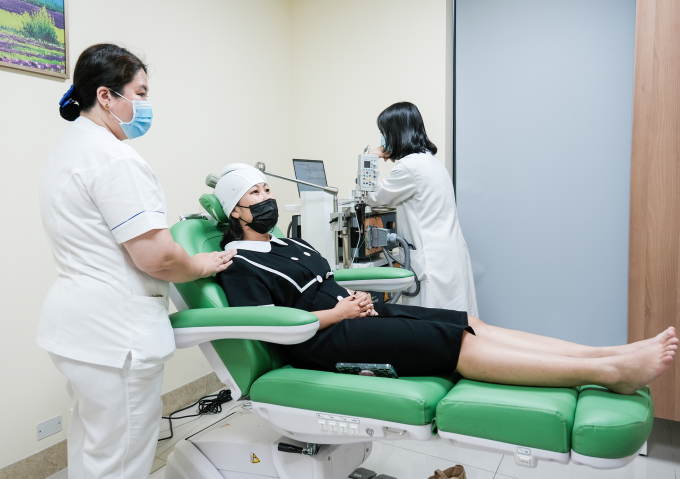
The patient is being treated with transcranial magnetic stimulation. Photo: Provided by the hospital.
The patient underwent six consecutive treatment courses. Each course lasted five days, once a day. Afterward, treatments were spaced out to one to two times a week until symptoms subsided. Following the first course, doctors assessed that the symptoms had improved by over 50%, with a good prognosis. Currently, Ms. Minh is in her fourth and fifth courses, with almost no symptoms; she sleeps well and is happier.
"Initially, hearing about transcranial magnetic stimulation, I was afraid of the pain and hesitated. However, the first time, the procedure was quick, painless, and didn't cause any discomfort, so I felt very reassured," the patient said.
Dr. Trang further shared that, in addition to treating anxiety and depression, transcranial magnetic stimulation (TMS) is also used to treat headaches, migraines, and neurodegenerative disorders such as Parkinson's disease, amyotrophic lateral sclerosis (ALS), multiple sclerosis, cognitive decline, and Alzheimer's disease. This technique also supports rehabilitation after stroke or brain injury, and helps with smoking, nicotine, and alcohol addiction treatment. This is an outpatient treatment method, allowing patients to return home and resume normal activities.
Dung Nguyen
The patient's name has been changed.
Source link































































































Comment (0)