

TPO - The issue of university admissions in Vietnam continues to spark controversy as the Ministry of Education and Training (MOET) proposes limiting the number of early admissions slots to no more than 20% and requiring the conversion of scores between different admission methods.
TPO - The issue of university admissions in Vietnam continues to spark controversy as the Ministry of Education and Training (MOET) proposes limiting the number of early admissions slots to no more than 20% and requiring the conversion of scores between different admission methods.
The Ministry of Education and Training has just announced a draft Circular amending and supplementing several articles of the Regulations on university and college-level admissions for Early Childhood Education, with many new points such as raising the entrance standards for teacher training and health-related fields, controlling the quota for early admissions, requiring the use of grades from the entire 12th grade year for admission consideration, and requiring all admission methods to be standardized to a common scoring scale for fair selection. According to the draft, schools are allowed to conduct early admissions to select candidates with outstanding abilities and academic achievements. However, the quota for early admissions cannot exceed 20%, and the admission score cannot be lower than the standard score for the admission round as planned by the Ministry of Education and Training . The draft has attracted attention and sparked much debate... Tien Phong Newspaper would like to present an article sharing the views of Dr. Hoang Ngoc Vinh - former Director of the Department of Professional Education (Ministry of Education and Training).
Although presented with the goal of ensuring fairness, the regulations in the Draft Admission Regulations show administrative imposition, lack of clarity, and inadequacy to the current reality of higher education . Notably, the Draft contains several provisions that disregard the core admission philosophy: selecting suitable candidates and helping them to learn and succeed.
In recent years, the spirit of autonomy seems to have "gone too far," leading to too many admission methods and attempts to "snatch" enough students to meet quotas, creating considerable chaos in the admissions process. In particular, early admissions based on academic transcripts or other methods have created unfairness and inequality in opportunities for candidates, causing those admitted early to take places that could have been taken by other applicants. In this draft, the Ministry's desire to restore order in university admissions is therefore understandable.
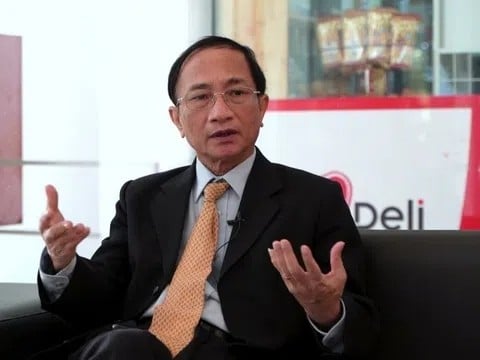 |
Dr. Hoang Ngoc Vinh |
The pressure to meet enrollment quotas stems from universities prioritizing recruitment targets, sometimes regardless of the quality of incoming students. Many universities focus on "easy" admission methods such as academic transcript review or early admission, regardless of whether these methods are truly suitable for the chosen field of study. This has led to consequences such as universities not clearly disclosing the enrollment rates for each method, leaving students and parents without sufficient information to make informed choices. Top-tier universities easily attract talented students through early admission, while lower-tier universities rely on the high school graduation exam, creating unfair competition. This also creates pressure, such as students having to apply to multiple institutions, potentially distracting them from their final year of study.
Instead of focusing on filling vacancies, schools need to ensure that admissions are not just about students "getting to learn," but also about students "learning effectively"—matching their abilities and desired field of study.
The 20% early admission quota – A rigid and illogical regulation.
The regulation limiting early admissions to 20% was introduced under the pretext of "ensuring fairness," but it lacks flexibility and is not based on scientific principles. This limit is unsuitable for the diverse range of academic disciplines and higher education institutions.
Some fields, such as engineering or technology, may need to select 50-60% of applicants early to attract suitable talent, while fields like medicine or education may require a lower percentage, as some schools have already done. Imposing a single 20% selection rate on all is unreasonable and goes against the modern educational trend worldwide, where selection based on academic transcripts and aptitude tests is preferred and aligns with a holistic education philosophy.
Restricting the rate of early admissions is a step backward, reducing creativity and flexibility in admissions and potentially violating the academic autonomy of universities. Ultimately, the diversification of admission methods to select suitable candidates will be undermined because the percentage of early admissions methods will be limited to 20%.
In reality, there are no statistics or studies proving that the 20% figure is optimal for all schools and disciplines; it may simply be a subjective and biased number. Such regulations seem to be put in place to control rather than fundamentally address the issue of diversity.
Is equivalent conversion feasible?
Furthermore, the draft proposes converting scores from different admission methods to a common scale to ensure fairness. However, this is not feasible due to the fundamental differences between these methods. Academic transcripts reflect learning progress aligned with the goals of the 2028 General Education Program, the high school graduation exam tests basic knowledge, and aptitude tests measure critical thinking and analytical skills. Achievements such as Olympic awards or national-level academic excellence focus on specialized abilities. These differences make it impossible to establish a standard for equivalent conversion.
On the other hand, with over 100 admission combinations and numerous different methods, building a conversion system requires massive amounts of data and extensive research, which has not yet been done. Inaccurate conversions would lead to unfairness and negatively impact the quality of incoming students.
Regulations such as the 20% limit or the conversion of scores reflect an outdated administrative control approach: "if you can't manage it, ban it," instead of finding other options to ensure fairness, equality, and quality in admissions that are consistent with both the 2018 general education program and the numerous academic fields with different characteristics and requirements.
What the Ministry and universities need to do now is to publicly and transparently disclose the enrollment ratios for each method so that all candidates have sufficient information to make informed choices. The Ministry of Education and Training needs to play an overall coordinating role, requiring universities to base their admissions decisions on actual data from the past three years for each field of study, instead of imposing a fixed ratio for all. Universities should be encouraged to be creative in their admissions methods, adapting them to their specific characteristics, and avoiding overly complex admission combinations, as long as quality is ensured – students are admitted and able to study.
The regulation limiting early admissions to 20% and requiring score conversion are administrative control measures lacking scientific basis and unsuitable for practical application. Instead of imposing unnecessary barriers, the Ministry of Education and Training should develop admissions policies based on scientific research, real-world data, and the autonomy of universities. Only then will the admissions system be truly transparent, fair, and serve the right educational goals.
* This article reflects the author's personal views.
Source: https://tienphong.vn/du-thao-quy-che-tuyen-sinh-moi-dung-khong-quan-duoc-thi-cam-post1695523.tpo


































![[Photo] Tran Cam Tu, Standing Member of the Secretariat of the Central Committee, presides over the first meeting of the Central Steering Committee on the Development of Vietnamese Culture.](https://vphoto.vietnam.vn/thumb/1200x675/vietnam/resource/IMAGE/2026/03/19/1773895004549_ndo-br-bnd-1195-2-jpg.webp)
![[Photo] The General Secretary and the Prime Minister attend the groundbreaking ceremony for multiple-level boarding schools in border areas.](https://vphoto.vietnam.vn/thumb/1200x675/vietnam/resource/IMAGE/2026/03/19/1773888999705_vna-potal-tong-bi-thu-va-thu-tuong-du-le-khoi-cong-dong-tho-dong-loat-cac-truong-noi-tru-lien-cap-bien-gioi-8649904-3885-jpg.webp)



















































Comment (0)