


On July 28, Venezuelan voters went to the polls to elect a president for the 2025-2031 term. There were a total of 10 candidates in this Venezuelan presidential election.
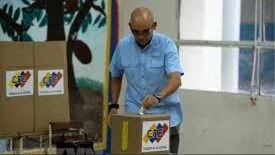
However, according to assessments, this will only be a confrontation between incumbent President Nicolas Maduro, representing the ruling United Socialist Party of Venezuela (PSUV), and diplomat Edmundo González Urrutia, representing the Democratic Unity Roundtable (MUD) – an alliance of liberals, Christian socialists, socialists, and conservatives.
Venezuela is holding presidential elections amidst ongoing economic sanctions imposed by the United States, which continue to have serious and far-reaching consequences for the lives of its citizens, such as shortages of medicine and food, a decline in quality of life, and a wave of migration.
In recent days, Maduro has traveled throughout Venezuela, inaugurating hospital departments and highways, and visiting remote rural areas. President Maduro's speeches have focused on economic security, emphasizing entrepreneurship through narratives, and mentioning a stable exchange rate and lower inflation.
Venezuela's economy is beginning to recover after the Covid-19 pandemic, with the International Monetary Fund forecasting 4% growth in 2024 – one of the fastest-growing economies in Latin America – after contracting by 71% from 2012 to 2020. Maduro has promised a government that will create enough jobs to entice Venezuelans living abroad to return home.
The latest opinion poll by the Venezuelan Center for Measurement and Statistical Data shows that 56.8% of respondents said they would vote for Nicolás Maduro; meanwhile, 76% believe Maduro will be re-elected president, and 13% think the opposition will win.
If re-elected, Maduro would serve a third consecutive term as president of Venezuela, bringing his total time in power to 18 years.
HUY QUOC
Source: https://www.sggp.org.vn/cu-tri-venezuela-di-bau-tong-thong-post751457.html
![[Photo] National Assembly Chairman Tran Thanh Man visits and works with the National Assembly Committees and the State Audit Office.](https://vphoto.vietnam.vn/thumb/1200x675/vietnam/resource/IMAGE/2026/02/23/1771848141941_ndo_br_bnd-6798-jpg.webp)



















































Comment (0)