

Hanoi, at midnight, the phone rang at the Institute of Mental Health. Dr. Cam answered and heard from a colleague at the Poison Control Center that a pregnant woman was planning to jump from a building.
Dr. Vu Thy Cam, 52, Head of Clinical Psychology Department, Institute of Mental Health, immediately went to the Poison Control Center at Bach Mai Hospital. The patient, seven months pregnant, had previously attempted suicide by taking pills and was brought to the hospital's emergency room. After regaining consciousness, she tried to jump from the building. "The patient was very agitated," said the on-duty team at the Poison Control Center, Bach Mai Hospital, requesting assistance from the psychiatric specialists.
The medical team assessed the patient as exhibiting "intense suicidal behavior." The poisoning from the attempted suicide didn't significantly affect the patient's life; the main issue was her mental health. After being counseled by the doctors, the pregnant woman calmed down and shared her feelings of fatigue and stress during pregnancy, but also mentioned her husband's lack of support and frequent verbal abuse.
The conversation was interrupted when the husband appeared, and the patient, in a fit of agitation, rushed towards the door, attempting to jump from the building. Doctor Cam said that the team had to work together to prevent the patient from committing the dangerous act, while also advising the husband to stay away.
"This is a really difficult case," the doctor said, adding that patients with agitated mental health are often treated with injectable tranquilizers in combination with physical and psychological therapy. But this patient is pregnant, so the use of medication must be carefully considered to avoid affecting the unborn baby.
A few days later, the patient fortunately calmed down and was discharged at the family's request. The doctor instructed the husband to provide emotional support to his wife and to seek prompt hospitalization if any unusual symptoms appeared.

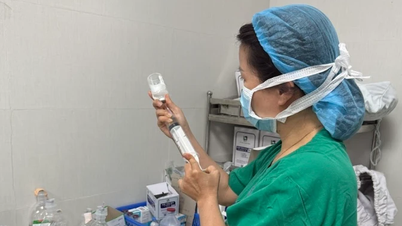
Doctor Vu Thy Cam. Photo: Thuy Quynh
The pregnant woman is one of thousands of patients whom Dr. Cam has successfully treated in her nearly 30 years of healing the mentally ill. Initially, the doctor chose psychiatry because it was "easier to get a job than other specialties." However, after a period of dedication, she realized it was her life's destiny.
Psychiatrists are specialists in diagnosing and treating mental disorders. They receive six years of general education at a medical university, followed by further specialized training and clinical practice at the postgraduate level.
In 1994, after graduating from university, Ms. Cam began working at a provincial-level psychiatric hospital. Sympathizing with the plight of patients, who were very poor and a vulnerable group in society, she longed for a stable career to best assist them. In mid-2009, she transferred to the Institute of Mental Health, Bach Mai Hospital.
Mentally ill patients are a special group; they lack control over their emotions and behavior, and are often unaware of their illness, making interaction with them challenging. For example, while other specialties can use clinical tests for diagnosis, psychiatry relies solely on the examiner's knowledge and skills to determine the illness. Each case has its own unique psychological characteristics and circumstances. Therefore, doctors must be attentive and empathetic to effectively treat mental health issues.
Psychiatrists are frequently subjected to verbal abuse and physical attacks from patients. Dr. Cam recalls a 20-year-old female student who suffered from chronic insomnia and behavioral disorders. She was admitted with severe psychosis, experiencing frequent hallucinations, hearing strange voices in her head, and panic. On the day of admission, she stripped off her clothes, cursed, and attacked medical staff. It took nearly a week of treatment before the doctors could interact with her. After a month, her condition improved, and she was discharged, continuing her studies while taking her medication.
Many of Dr. Cam's cases required years of follow-up, especially during key life stages such as graduating from university, applying for jobs, getting married, and having children – periods when the disease could relapse.
Like Ms. Mai, 31 years old, from Bac Giang , who escaped death thanks to the help of Dr. Cam. Before getting married, Ms. Mai showed signs of depression and received treatment. After giving birth, the illness relapsed, and she intended to commit suicide. Fortunately, when Ms. Mai was trying to hang herself with her sleeve, Dr. Cam discovered her, advised her, and brought her back to the ward. "If it weren't for Dr. Cam, I can't imagine what life would be like for my two children without their mother," she said.

Doctor Cam (in white coat) during an emergency treatment of a psychiatric patient. Photo: Thuy Quynh
In recent years, the number of psychiatric patients admitted to hospitals has tended to increase. On average, Bach Mai Institute of Mental Health receives more than 300-400 patients for examination each day, and its more than 200 inpatient beds are always fully occupied.
Late last year, Deputy Minister of Health Tran Van Thuan stated that nearly 15 million Vietnamese people are suffering from mental disorders; the most common being depression and anxiety. Of these, schizophrenia (commonly known as madness) accounts for 0.47%; depression and anxiety account for a high percentage, approximately 5-6% of the population, while the remainder are other disorders such as bipolar disorder, and mental disorders related to alcohol, drug, and other addictive substances.
Mental illness is a sensitive issue and is often subject to discrimination. Many mental health patients are ostracized, confined to their homes, or placed in long-term specialized facilities. Most patients have a negative perception of treatment and are afraid to tell colleagues or family about their illness for fear of judgment. For example, many students come to the hospital in a psychotic state or exhibit self-harming behavior, but are unwilling to let others know, even hiding it from their parents.
"People with mental illnesses still face stigma from the community," Dr. Cam said, adding that there are now many effective methods for treating mental illness such as chemotherapy, psychotherapy, brain modulation, etc., so the chances of recovery are high.
The number of people suffering from anxiety disorders and depression has increased by approximately 25%, leading to a rise in suicides. Many people with mental disorders do not have access to effective care services. Only 29% of people with mental disorders and one-third of people with depression receive mental health care. "This is a direct consequence of underinvestment, in which the budget for mental health is very low," Deputy Minister Thuan said.
This situation worries many psychiatrists like Dr. Cam, as many patients are being left behind. "I hope there will be more new, more affordable psychotropic drugs, and that mental health patients will have early access to medical care to receive comprehensive treatment," the doctor said, adding that each patient's successful reintegration into life is a source of happiness that keeps her in the profession.
Thuy Quynh
Source link
![[Photo] A vibrant celebration of generations of Nhan Dan Newspaper staff](https://vphoto.vietnam.vn/thumb/1200x675/vietnam/resource/IMAGE/2026/03/11/1773228432744_cb-75-nam-7-7034-jpg.webp)











































































































Comment (0)