

A newborn's umbilical cord usually falls off after 1-2 weeks. Before and after the cord falls off, parents need to take proper care to avoid infection and other complications.
Dr. Nguyen Do Trong, a specialist in Cardiovascular and Pediatric Surgery at Tam Anh General Hospital in Ho Chi Minh City, explains that when a baby is born, obstetricians use sterile instruments to clamp and cut the umbilical cord, leaving only a small section called the umbilical stump. Normally, the umbilical stump will dry and fall off within 7-14 days after birth. However, improper hygiene can cause the baby's umbilical cord to become damaged, swollen, red, and discharge fluid. These are warning signs that the baby may develop infection, inflammation, umbilical granuloma, umbilical hernia, umbilical necrosis, etc.
Infections of the umbilical cord and surrounding tissues after the cord falls off typically present with symptoms such as: discharge, swelling, redness, pus, and sometimes only slight oozing or bleeding.
Umbilical inflammation is a common condition that occurs after the umbilical cord falls off in newborns. Infants often experience symptoms such as: swelling and yellow discharge from the umbilical area, fever, and fussiness.
Umbilical granulomas in infants manifest as a small, reddish tissue fragment remaining on the umbilical stump after the umbilical cord falls off. If left untreated, the granuloma will ooze fluid and cause prolonged inflammation. Treatment methods include topical medication or electrocautery performed in a minor surgery room.
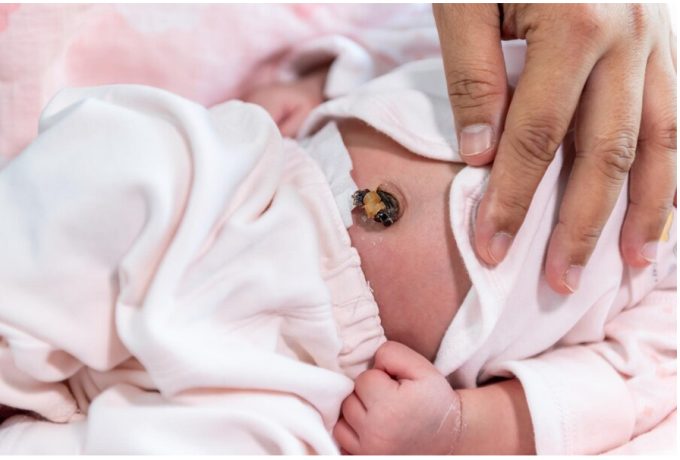
Parents need to pay attention to proper umbilical cord hygiene for their babies to avoid infection and other umbilical cord-related diseases. Photo: Freepik
Umbilical hernia is a condition that affects 10-20% of newborns. After the umbilical cord falls off, the baby has a partial defect in the abdominal wall muscles, and a loop of intestine protrudes through the defect, creating a bulge. The bulge is larger when the baby cries or twists and smaller when the baby lies still. Umbilical hernias are painless, do not rupture, and usually resolve spontaneously after age 4. However, if the hernia is larger than 2.5 cm or persists after age 2, surgery is necessary.
Umbilical necrosis often occurs after an umbilical infection in infants. Typical symptoms include fluid or blood discharge from the umbilical cord, redness or bruising of the surrounding tissue, and foul-smelling discharge.
Another possible scenario is the persistence of the umbilical-urinary duct or the umbilical-intestinal duct. After the umbilical cord falls off, up to one year of age or even later, the baby's navel may remain constantly wet. This could be due to a "communication" between the navel and the urinary or digestive system, leading to frequent leakage of urine or digestive fluids. The child needs to be examined and treated by a pediatric surgeon to avoid complications such as infection, abscess, or malignancy.
According to Dr. Trong, umbilical cord-related illnesses in children can have various causes and varying degrees of severity. Common symptoms include digestive disorders, fussiness, refusal to feed, bloating, and generalized swelling and redness. More severe cases can lead to neonatal sepsis, a rare but highly fatal complication. Additionally, the condition can cause neonatal tetanus if the child is unvaccinated.
Parents should pay attention to proper umbilical cord hygiene for their babies to reduce the risk of infection and related diseases by:
Before bathing and cleaning the baby's umbilical cord, parents should wash their hands thoroughly with hand sanitizer to minimize the risk of bacterial infection; always keep the baby's umbilical cord dry and clean; and daily use a gauze pad or cotton swab dampened with a small amount of antiseptic alcohol to clean the base of the umbilical cord.
When putting on diapers, avoid placing them directly on the umbilical cord stump. After each bowel movement or bath, the umbilical cord stump can become damp, so parents should change the dressing. The process should be sterile, gentle, and the dressing should not be tightened too much. Additionally, the living environment should be clean, free from dust, chemicals, and cigarette smoke. The baby's clothes, blankets, and pillows should be changed daily.
Some babies may have their umbilical cord fall off later. In these cases, parents should not worry too much and should not pull or tear the umbilical cord.
After the umbilical cord falls off, parents should observe and recognize symptoms of infection. If the child shows these symptoms, they should be taken to the hospital for examination, diagnosis, and timely treatment.
Hoai Thuong
Source link




































































































Comment (0)