

"Come in, come into the village! Come and listen to the gongs, the ta lê, pa chanh, cha kit, listen to the genuine and warm heart of the Gié Triêng people." Elder A Brôl Vẻ, 80 years old, is still strong and healthy, playing his horn to invite guests. On the occasion of the Lunar New Year 2025 (Year of the Snake), a delegation from the Committee for Ethnic Minorities Affairs (CEMA), led by Deputy Minister and Vice Chairman Nông Thị Hà, visited and extended New Year greetings to collectives with achievements and contributions to ethnic affairs, influential figures, and ethnic minority communities in Bảo Lạc, Hà Quảng, and Nguyên Bình districts of Cao Bằng province. On January 30, 2025 (the second day of the Lunar New Year 2025), at the United Nations headquarters in New York (USA), Ambassador Đặng Hoàng Giang, Head of the Permanent Mission of Vietnam to the United Nations, held a working session with UN Secretary-General António Guterres to exchange views on issues of mutual interest and Vietnam-UN cooperation in 2025. Along with the attention, investment, and support of the Party and State, the efforts to strive forward... The advancement of ethnic minority communities is a necessary condition for the rapid and sustainable development of ethnic minority and mountainous regions. In the context of the entire nation confidently entering an era of self-improvement, paying attention to investment and promoting communication and propaganda work is crucial to further fostering the spirit of self-reliance and self-strength among ethnic minority communities. “Come here, come to the village! Come and listen to the gongs, listen to the ta lê, pa chanh, cha kit, listen to the genuine and warm heart of the Gié Triêng people.” Elder A Brôl Vẻ, 80 years old, is still strong and healthy, playing his horn to invite guests. Quick to grasp information and creative in their propaganda methods, the team of young influential figures, along with the "veterans" in the villages of Dak Lak, have played their role in grassroots emulation movements, contributing to the comprehensive development of ethnic minority areas, worthy of being a "bridge" between the Party's will and the people's hearts. On the morning of January 31st (the 3rd day of the Lunar New Year), at Dinh Tien Hoang Emperor Square, Hoa Lu City, Ninh Binh Province, General Secretary To Lam attended the launching ceremony of the "Planting Trees in Remembrance of Uncle Ho" Spring 2025. In the atmosphere of celebrating the Party and the Spring, on the morning of January 31st (the 3rd day of the first lunar month, Year of the Snake), at the Hoa Lu Ancient Capital National Special Relic Site, Truong Yen Commune, Hoa Lu City, Ninh Binh Province, General Secretary To Lam... Offering incense to commemorate the ancestors who contributed to the nation at the Temple of King Dinh Tien Hoang and the Temple of King Le Dai Hành. The Ethnic and Development Newspaper. This afternoon's news bulletin, January 23, 2025, includes the following noteworthy information: The "Planting Trees in Gratitude to Uncle Ho" Spring of the Year of the Snake. Sweet pomelos from Dien Bac Son. The soul of the mountains and forests in the green banh chung (traditional Vietnamese rice cake). Vietnamese Tet, amidst the vicissitudes of time, from the inevitable intermingling of old and new, remains intact in the consciousness of each person, with old traditions that are difficult to change. Tet remains a heartfelt promise, a joyful reunion, a feeling of excitement… On the road to Khoan La San Border Gate, Sin Thau commune, Muong Nha district, Dien Bien province, just a short distance from the Vietnam-China-Laos border junction. On a late afternoon at the end of the year, the air is thick with fog, like a white veil covering the mountain slopes and rooftops, softening the passionate melody of the Lhapadi epic echoing somewhere... Vietnam ranks second in exporting fruits and vegetables to China with a turnover of over 4 billion USD, surpassing Chile and narrowing the gap with Thailand. With box office revenue reaching over 56 billion VND in just 1.5 days after its release, Tran Thanh's "The Four Vengeful Spirits" set a record as the fastest film to reach the 50 billion VND mark. The warm, sunny weather created a bustling flow of people heading to Lang Son for spring excursions. Many tourists from all over visited temples, pagodas, and shrines to worship and pray for wealth, good fortune, and peace.
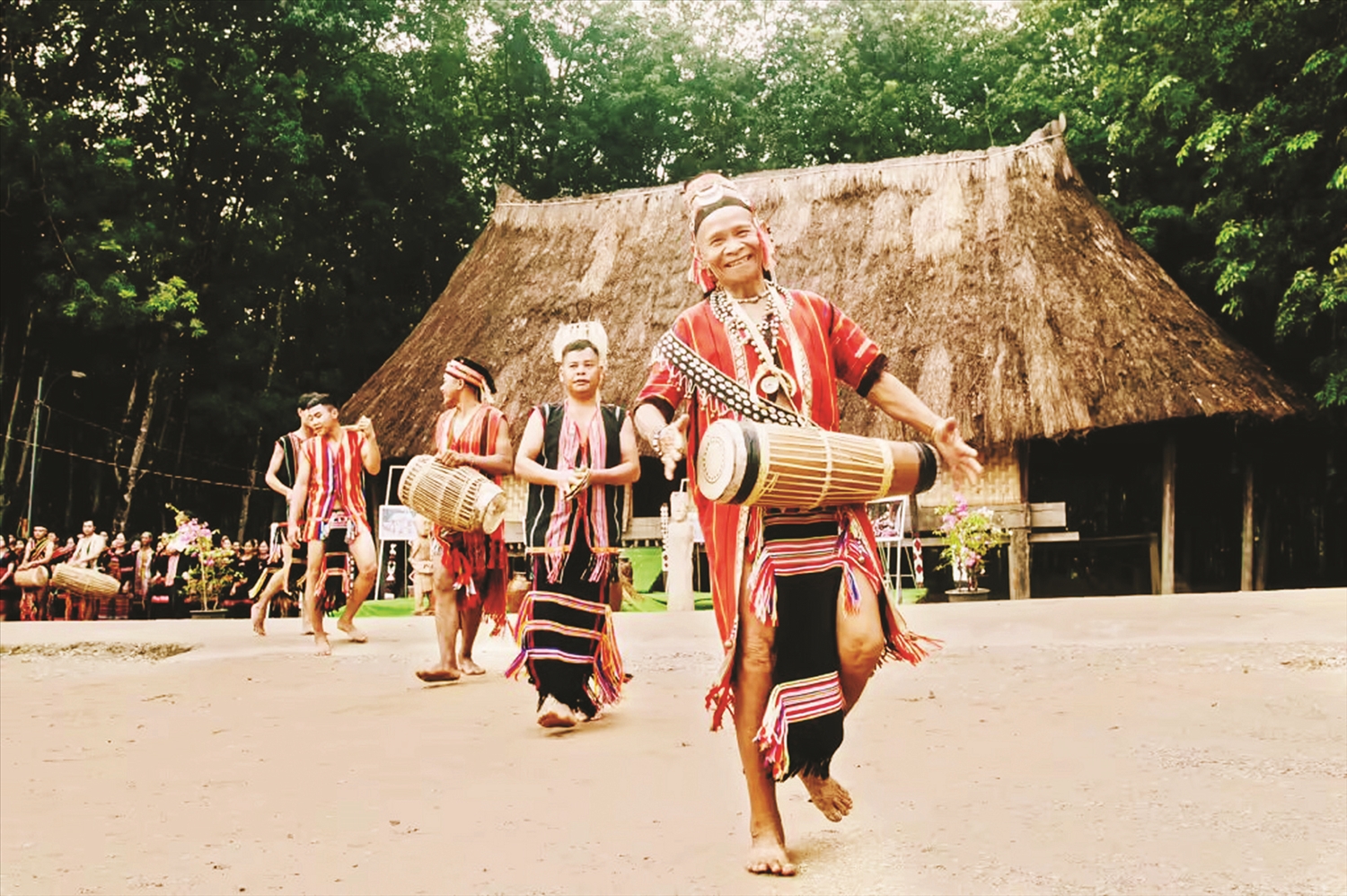
The old man's simple wooden house has a spacious room used to display traditional musical instruments and welcome visitors from near and far. Stepping through the doorway, you'll find a neatly arranged t'rưng instrument. On a small, time-worn wall, more than 20 instruments are lined up. All of them were created and mastered by the village elder, A Brôl Vẻ, who creates those captivating sounds that enchant many visitors.
Elder A Brôl Vẻ said that during the war years, he participated in the battles of Đắk Pét and Đắk Sút in Đắk Glei district, Kon Tum province. After 1975, he returned to his village and held positions in the commune police, militia, and the Fatherland Front, earning the trust of the villagers and being elected as a respected village elder. At 80 years old, with nearly 40 years of Party membership, Elder A Brôl Vẻ is like a kơnia tree providing shade for the villagers. He is also diligently researching, preserving, and passing on to the villagers and future generations all the valuable heritage of the Gié Triêng people.
Amidst the melancholic sounds of the talul and talêh horns, the old man recounts his story, the story of his village, his ancestors, and the generations of the Gié Triêng people on this land. As a young boy, A Brôl Vẻ often followed his grandfather and father to learn singing and crafting musical instruments. His father and grandfather were talented singers and instrument makers. Night after night, in the fields, by the warm fire, he would intently watch his father make instruments and listen to him sing folk songs. As he grew up, the ancient stories, folk songs, and his father's instrument-making skills gradually seeped into his blood and became a passion. And so, whenever the village held a festival, A Brôl Vẻ was present and played a very important role in the village's performing arts troupe.
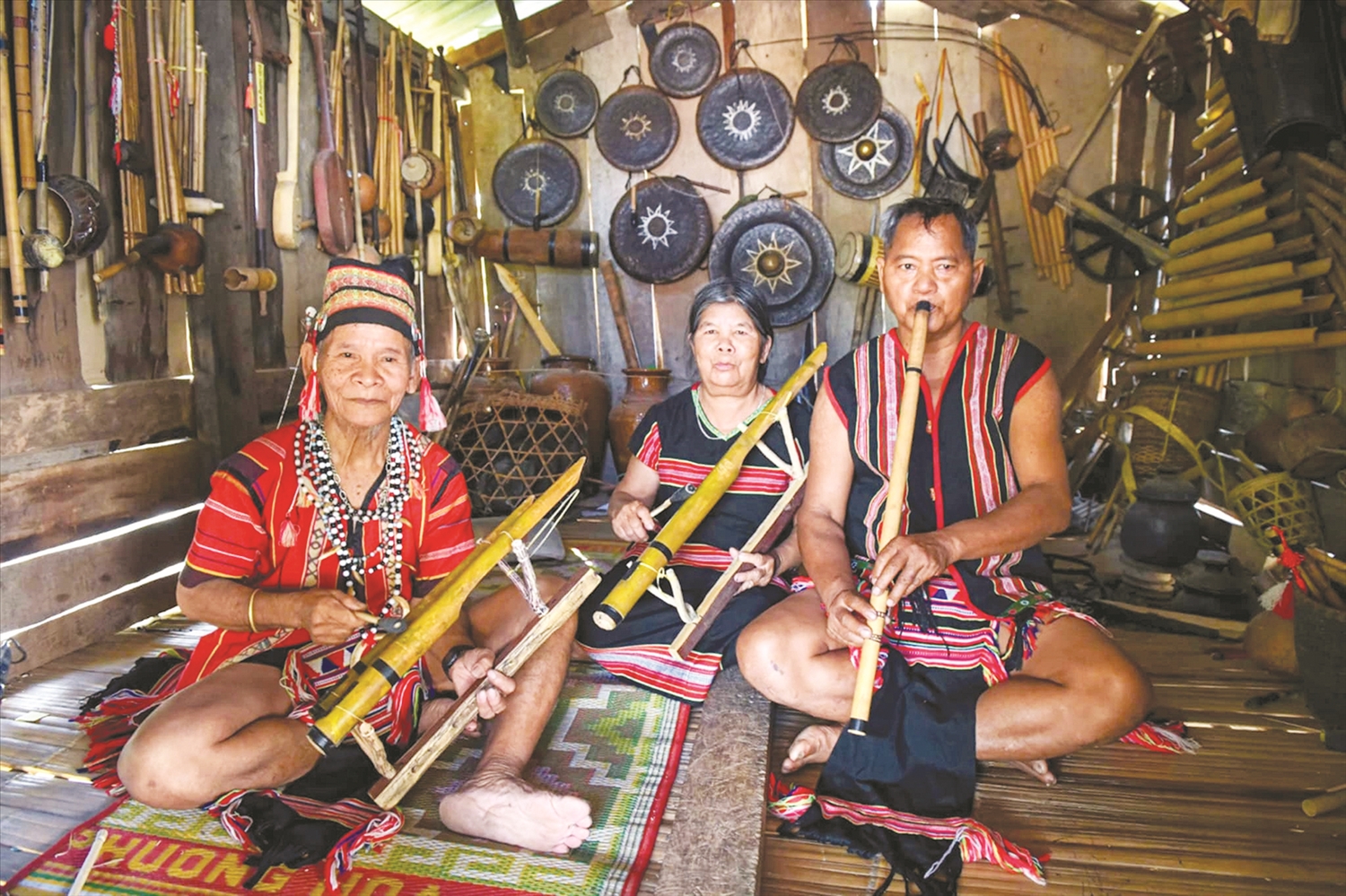
As a village elder, a respected figure, and an Outstanding Artisan, Elder A Brôl Vẻ uses and crafts over 20 different musical instruments. Whenever his flute plays, listeners feel as if they are hearing the gentle murmur of a stream, the echo of a waterfall, sometimes like the wind of the vast forest, and at other times as deep and majestic as the reverberations of ancient times.
Pointing to the wall where various musical instruments made by the old man himself were hanging, old man A Brôl Vẻ "boasted" that the Gié Triêng people have many types of musical instruments such as ta lê, pa chanh, cha kit, din goror, bin, ta lil, dêl do, pil pôi… With these simple instruments, the players use their hands, lips, and tongue to produce sounds that are sometimes low, sometimes high, sometimes leisurely, sometimes lively and spontaneous, as if urging people on.
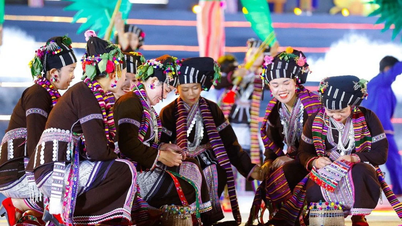
The village of Dak Rang, located in this border region, is home to over 200 households with nearly 700 people of the Gie Trieng ethnic group. Amidst the flow of modern life, the Gie Trieng people still preserve their ancient cultural traditions. The young men and women of the village diligently make rice wine, weave brocade, and craft traditional musical instruments. They maintain cultural activities such as gong music, Xoang dance, and several traditional festivals like the Cha Chah Festival (Charcoal Eating Festival) and the Buffalo Eating Festival.
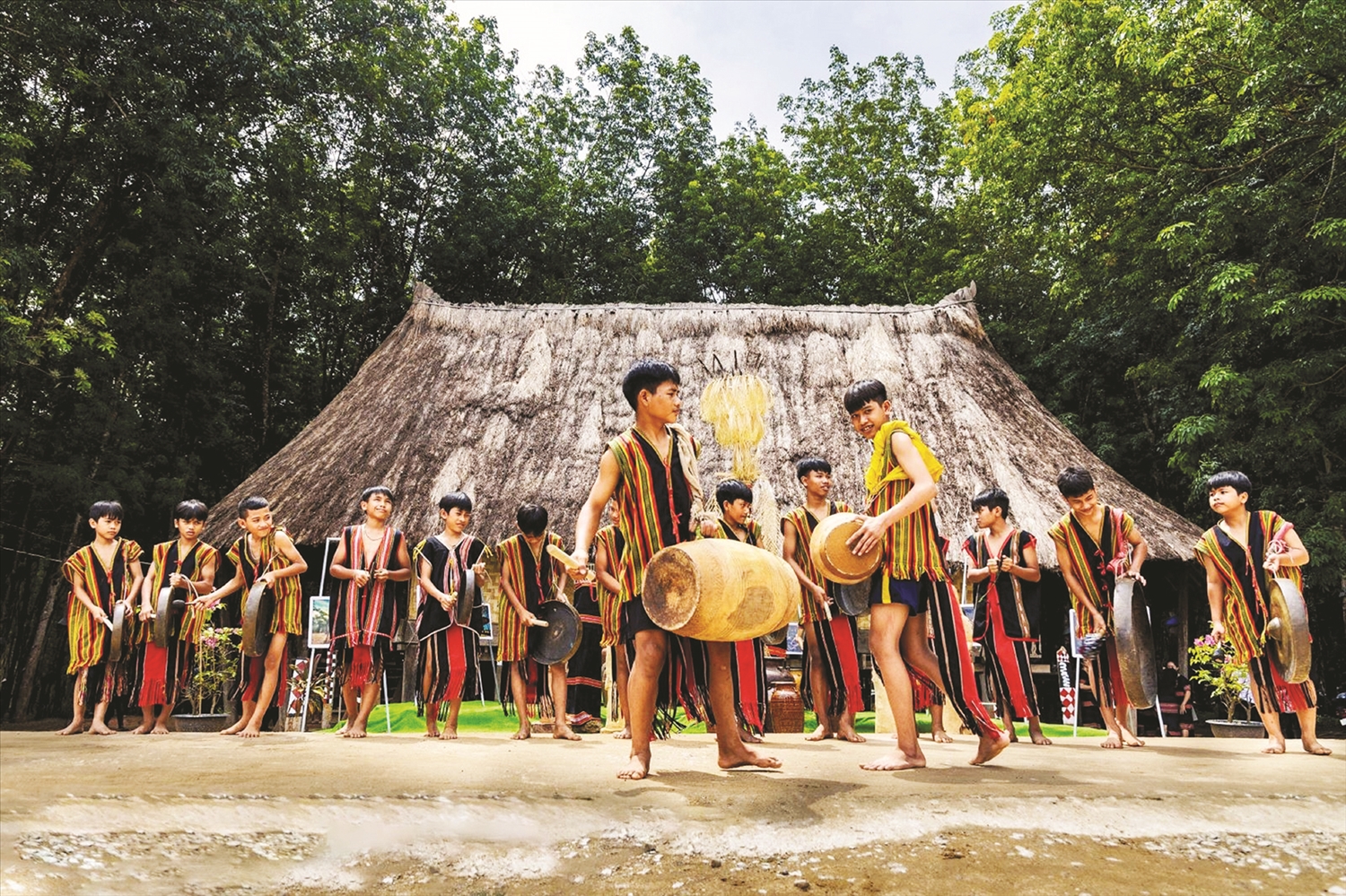

Elder A Brôl Vẻ has a diligent and serious work ethic in preserving and spreading the beauty of traditional music . He is always dedicated to teaching the beautiful cultural traditions of the Gié Triêng people to succeeding generations, creating the identity of the land and people of Đăk Răng in the traditionally rich North Central Highlands. Thanks to the dedicated efforts of the elder, the love for traditional musical instruments is being preserved and spread throughout the community.
Mr. Hieng Lang Thang, Chairman of the People's Committee of Dak Duc Commune
In the mind of Elder A Brôl Vẻ, the traditional culture of the ethnic group is always the root that needs to be preserved and promoted. Therefore, Elder A Brôl Vẻ always upholds a sense of responsibility, mobilizing artisans in the village to practice and participate in activities to preserve and promote ethnic culture. Through this, he promotes the traditional culture of the Gié Triêng people in this border region to friends and tourists.
Source: https://baodantoc.vn/bong-ca-o-lang-dak-rang-1737516049252.htm


![[Photo] Prime Minister Pham Minh Chinh attends the Conference on the Implementation of Tasks for 2026 of the Industry and Trade Sector](/_next/image?url=https%3A%2F%2Fvphoto.vietnam.vn%2Fthumb%2F1200x675%2Fvietnam%2Fresource%2FIMAGE%2F2025%2F12%2F19%2F1766159500458_ndo_br_shared31-jpg.webp&w=3840&q=75)






















































































Comment (0)