

Delegates assessed that the draft law amending four laws in the investment sector addressed the most pressing issues. In particular, the addition of special investment procedures is expected to attract major investors.
One law amends four laws in the investment sector: Adding special investment procedures to attract "big players" (large investors).
Delegates assessed that the draft law amending four laws in the investment sector addressed the most pressing issues. In particular, the addition of special investment procedures is expected to attract major investors.
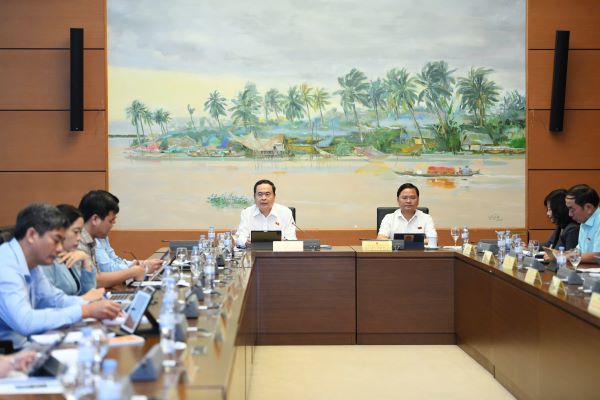 |
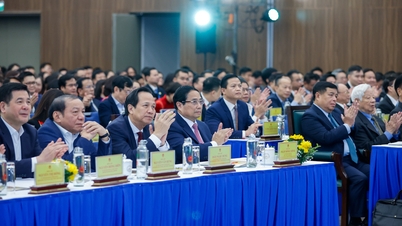
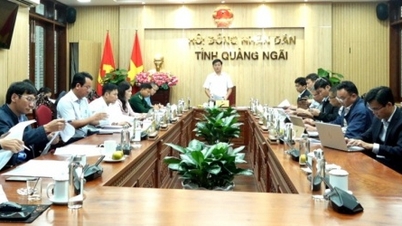
| The National Assembly held group discussions on the draft law amending and supplementing several articles of the Planning Law, the Investment Law, the Law on Investment under the Public-Private Partnership (PPP) method, and the Bidding Law. Photo: Nhu Y. |
Shift strongly from pre-inspection to post-inspection, and promote decentralization and delegation of authority.
On the morning of October 30th, the National Assembly held group discussions on the draft law amending and supplementing several articles of the Planning Law, the Investment Law, the Law on Investment under the Public-Private Partnership (PPP) method, and the Bidding Law.
In this draft law, the government focuses on amending conflicting and problematic regulations to create favorable conditions for investment, production, and business activities.
Regarding amendments to the Planning Law, the Government proposes simplifying the planning process; and adding a streamlined procedure for adjusting plans, based on the principle of not changing the objectives, ensuring consistency, continuity, and systematization among plans to promptly meet socio-economic development requirements. In addition, the authority to approve provincial planning implementation plans, previously held by the Prime Minister, will be delegated to provincial People's Committees to enhance responsibility and proactiveness in plan implementation. The regulation on "List of projects" will be amended to "List of proposed projects" for nationally important projects and priority projects of national, regional, and provincial plans to accurately reflect the directional nature of the plans and ensure flexibility in implementation.
Regarding amendments to the Investment Law, the draft law proposes provisions to strengthen the decentralization of authority from the Prime Minister to the People's Committees of provinces for investment projects in the construction and operation of industrial park and export processing zone infrastructure; investment projects in the construction of special seaports with a scale of less than VND 2,300 billion; and projects located in protected areas of national monuments and special national monuments.
Simultaneously, special investment procedures will be added for investment projects in the fields of innovation, semiconductor industry, and high technology in industrial parks, export processing zones, high-tech zones, and economic zones, shifting from "pre-approval" to "post-approval." Investors will register for an Investment Registration Certificate within 15 days; commit to implementing the project according to standards and regulations on construction, fire prevention and fighting, and environmental protection; and will not have to go through certain procedures to obtain permits in these fields (expected to shorten project implementation time by approximately 260 days).
Regarding amendments to the Law on Investment under the Public-Private Partnership (PPP) method, the Government proposes removing restrictions on investment sectors under the PPP method and not specifying minimum capital requirements for these projects; restoring the application of the BT contract type; increasing the State capital ratio to more than 50% but not exceeding 70% of the total investment for projects with land clearance costs exceeding 50% of the total investment; projects implemented in economically and socially disadvantaged areas; and projects requiring the transfer of high technology; and promoting decentralization, delegation of authority, and simplification of procedures.
Regarding amendments to the Law on Bidding, the Government proposes simplifying bidding procedures for packages using ODA funds and preferential loans from donors to accelerate the signing of international treaties and foreign loan agreements, contributing to unlocking preferential loan funds from donors. At the same time, it proposes adding packages that can apply special contractor selection methods, and decentralizing the authority to decide on the application of these methods to facilitate the implementation of packages with specific requirements that cannot be implemented using other methods stipulated in the Law on Bidding. In addition, it proposes allowing multiple direct procurements for the purchase of retail medicines at hospital pharmacies to promptly meet the treatment needs of patients and ensure the proactive operation of hospital pharmacies…
The draft law amending four laws in the investment sector was highly appreciated by the delegates. Delegate Tran Hong Nguyen (Binh Thuan) said that the drafting agency had seriously considered and selected the most urgent issues to include in the draft law.
Meanwhile, speaking from the perspective of a business owner, delegate Huynh Thanh Chung from Binh Phuoc province expressed his delight that the draft law immediately addresses urgent practical issues, particularly the simplification of procedures and the promotion of decentralization and delegation of power. Mr. Huynh Thanh Chung hopes the draft law will be passed at this session to resolve difficulties and bottlenecks for businesses, and also to prepare well for the upcoming term.
The criteria and list of projects eligible for special investment procedure incentives need to be reviewed.
Commenting on the draft revised Investment Law, delegate Le Quang Huy (Binh Thuan) strongly agreed with the addition of special investment procedures for projects in the fields of innovation, semiconductor industry, and high technology in industrial parks, export processing zones, and high-tech zones. However, according to Mr. Huy, adding special incentive procedures is not enough; additional special incentives are needed to attract large investors. Of course, these special incentives should only apply to certain projects that meet specific criteria.
The draft law adds special investment procedures for investment projects in the fields of innovation, semiconductor industry, and high technology in industrial parks, export processing zones, and high-tech zones. Investors can register for an Investment Registration Certificate within 15 days; commit to implementing the project according to standards and regulations on construction, fire prevention and fighting, and environmental protection; and will not have to go through some procedures to obtain permits in these fields (expected to shorten project implementation time by approximately 260 days).
Also related to this issue, delegate Nguyen Quoc Luan (Yen Bai) argued that the scope of entities eligible for special investment procedures as outlined in the draft law is too broad, including businesses with a high risk of environmental pollution. Therefore, the delegate suggested that the drafting agency review the list and remove high-risk businesses. He also proposed adding regulations on capital to prevent unqualified investors from establishing projects solely to receive incentives.
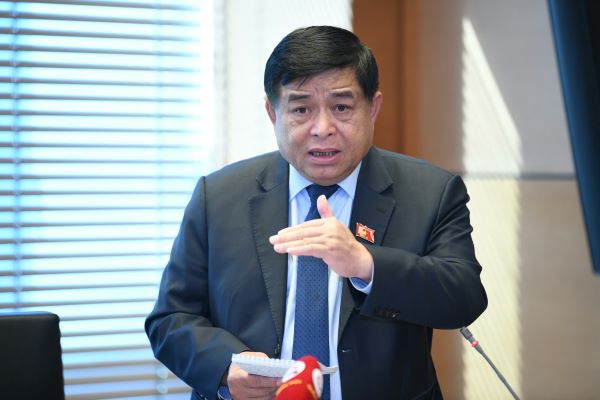 |
| Minister of Planning and Investment Nguyen Chi Dung speaks at today's group discussion (October 30). Photo: Nhu Y |
Representative Do Van Yen (Ba Ria-Vung Tau) highly appreciated the regulations on decentralization and delegation of power in the draft amendment and supplement to the Investment Law, which both help reduce the burden on the central level and enhance the proactive role of localities. However, regarding investment procedures, especially in industrial parks, export processing zones, and high-tech zones, the representative recommended adding criteria for applicable projects to prevent abuse of power and lack of transparency in the management of large projects by industrial parks and export processing zones.
Regarding the draft amendments to the Planning Law, many delegates welcomed the addition of a simplified planning adjustment procedure and suggested allowing for localized planning adjustments.
According to Representative Le Quang Huy (Binh Thuan), not allowing adjustments to local planning will cause many projects to encounter obstacles (for example, currently, a number of projects are being halted due to planning conflicts related to mineral resources). Therefore, the representative proposed that the drafting agency allow adjustments to planning in conjunction with specialized laws, on the basis of not changing the overall planning objectives.
Citing a vivid example from his own company, delegate Huynh Thanh Chung (Binh Phuoc) stated that, in order to attract FDI enterprises, industrial parks are required to invest in transformer substations to supply electricity. However, due to the lack of transformer substations in the planning, even though the substations only "take up a few square meters," the issue has remained unresolved for several years.
Regarding special investment procedures, Mr. Chung believes that the regulations as drafted will greatly support industrial parks and export processing zones. Currently, some FDI enterprises are willing to invest tens of millions of USD in the industrial parks under his management, but require completion within 10 months. This is very difficult because the fire safety and environmental impact assessment procedures alone take 8 months. In reality, many businesses have already accepted penalties to expedite project progress.
Regarding the draft amendments to the PPP law, delegates unanimously agreed on removing restrictions on investment sectors as well as minimum capital limits for PPP projects. Delegate Hoang Van Cuong (Hanoi) argued that removing these restrictions would help attract investment capital from society, especially in the fields of culture, social affairs, sports, and healthcare.
According to Mr. Cuong, raising the state's capital contribution ratio from under 50% to a maximum of 70% as proposed in the draft is reasonable, because for projects with large land acquisition costs or complex technical works requiring large investment capital, if the state contributes less than 50%, it will not be attractive to investors.
Regarding the draft Law on Bidding, Representative Do Van Yen (Ba Ria-Vung Tau) argued that allowing pre-bidding would shorten project implementation time and provide flexibility for investors. However, the provision allowing investors to cancel bids without compensation if the project is not approved could negatively impact the rights of contractors. Therefore, it is necessary to consider adding specific regulations on the investor's responsibility when canceling bids, as well as the conditions under which contractors can have their legitimate rights protected in such cases.
Regarding regulations on purchasing medicines for retail sale within public hospitals (amendment to Clause 2, Article 55), the draft allows for multiple direct purchases of medicines for retail pharmacies within public hospitals. This regulation aims to address the shortage of medicines and medical supplies and ensure continuous supply. However, according to Representative Yen, a strict inspection and monitoring mechanism is needed to ensure transparency and prevent abuse of the multiple direct procurement policy, thereby ensuring the best possible service for patients.
Overall, in their comments on the draft law, the delegates expressed high levels of agreement, supporting most of the proposals put forward by the Government. The main comments requested a thorough review and further clarification…
During discussions with delegates in group sessions regarding the adjustment of local planning, Minister of Planning and Investment Nguyen Chi Dung stated that the draft law already allows for this. Regarding special investment procedures, the Minister said that introducing this regulation is essential in the context of increasingly fierce competition to attract FDI, a sharp decline in foreign investment flows worldwide, and a growing trend towards protectionism. Countries are constantly innovating to compete for investment, and if Vietnam remains stagnant, it will lose opportunities.
Source: https://baodautu.vn/mot-luat-sua-bon-luat-linh-vuc-dau-tu-bo-sung-thu-tuc-dau-tu-dac-biet-de-thu-hut-dai-bang-d228737.html





















































































Comment (0)