

With the involvement of Party committees at all levels, Party development work in non-state enterprises (NSOEs) has yielded clear results. However, an overall, realistic, and objective assessment shows that this remains a difficult task with many challenges. These difficulties are not unique to Quang Ninh , but are also a reality in many provinces and cities nationwide.
The “gaps”
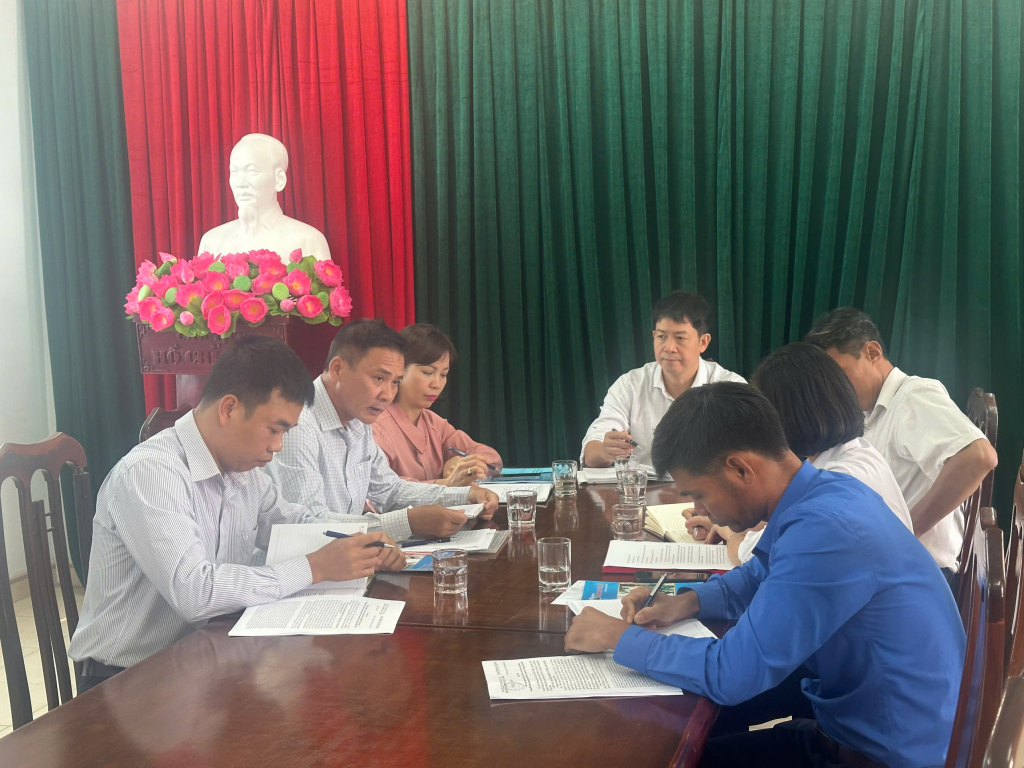
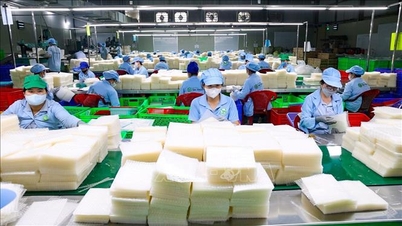
The Vietnam-Japan Cai Lan Paper Raw Materials Manufacturing Company Limited (Cai Lan Industrial Park) is a foreign-invested enterprise established in 2004 with the mission of processing and purchasing wood chips for export and planting raw material forests for the Japanese market. On February 1, 2012, the Party Branch of the Vietnam-Japan Cai Lan Paper Raw Materials Manufacturing Company Limited was established. However, from 2019 to the present, the Party development work of the branch has remained stagnant. For nearly six years, the branch has not admitted any new Party members. The enterprise, agencies, and organizations have spent many years persistently pursuing, campaigning, and persuading, but without achieving the desired results.
Nguyen Duc Quang, Secretary of the Party Branch and Director of Viet Nhat Cai Lan Paper Raw Materials Production Co., Ltd., stated: Currently, the company has 61 cadres, workers, and employees aged 40-55, who have been with the company since its establishment. For many years, the company has not recruited new workers. The large number of older workers is one of the biggest difficulties affecting the Party development work of the branch. In addition, difficulties from the economy , epidemics, natural disasters, especially the recent Typhoon No. 3, which caused the company to suffer estimated losses of approximately 15 billion VND, have seriously affected production and business activities. Some positions have had to temporarily cease operations, and workers' wages have decreased, leading to a lack of enthusiasm or desire among employees to join the Party. In 2023, the branch completed the training and finalized the dossier for one outstanding individual to recommend for Party membership, but this individual subsequently transferred to another job.
Mr. Le Trong Thanh is the director of Thanh Dat Uong Bi Co., Ltd. Although Mr. Thanh has 35 years of experience as the Party Branch Secretary of Thanh Dat Uong Bi Co., Ltd., the branch has faced obstacles in developing new Party members. The company has 120 employees, including 43 Party members. Currently, the branch is finalizing the application for one new Party member.
Party branch secretary Le Trong Thanh frankly shared: The Party branch always pays attention to, nurtures, and creates conditions for employees in the company to develop into Party members. Besides providing maximum time and assigning them to important positions in the workshop and company to enable them to develop their abilities, the Party branch and specialized departments also research and develop incentive schemes to encourage outstanding individuals to strive to join the Party. However, the high-pressure working conditions have somewhat affected the psychology and needs of a portion of the employees. After working hours or overtime, employees often want to spend time resting, and many are not enthusiastic about participating in social, organizational, or political activities. Furthermore, some employees have not yet grasped revolutionary ideals and are hesitant to join organizations, reluctant to participate in Party activities, and reluctant to pay Party and union dues...
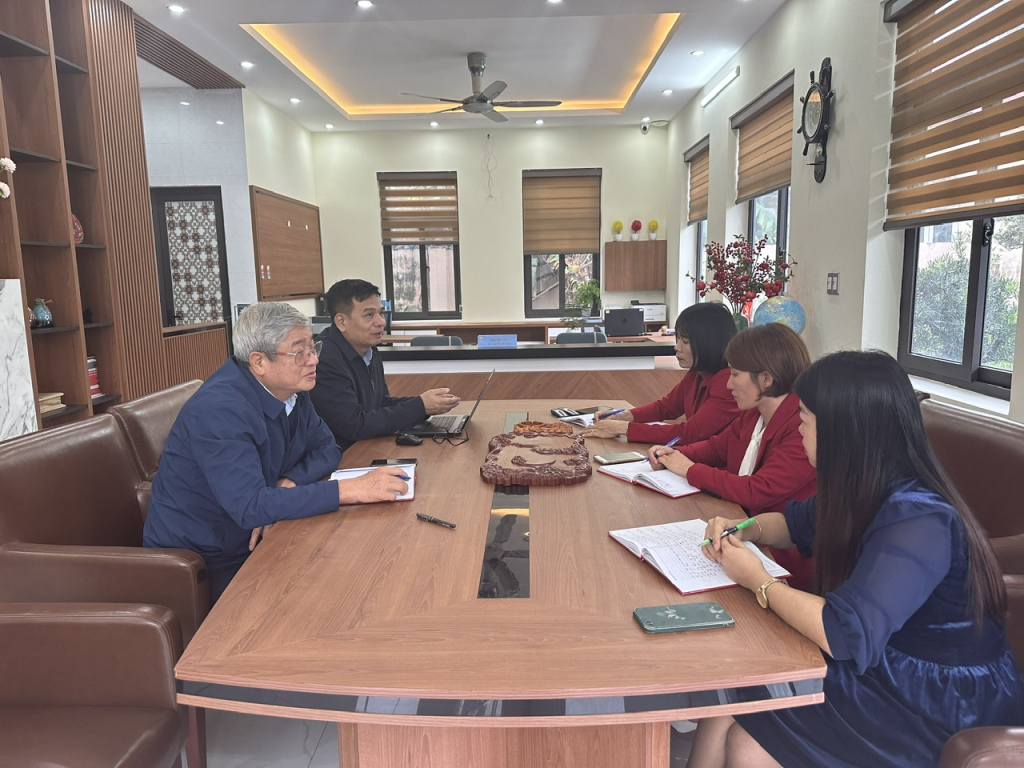
Not only the Party Branch of Thanh Dat Uong Bi Co., Ltd., but also other Party branches in Uong Bi City are facing difficulties in leading mass organizations to promote, mobilize, and introduce outstanding individuals for Party membership training; some businesses are experiencing declining revenue, unstable employment for workers, and long-standing debts for wages, taxes, and social insurance... Therefore, for many years, the Party Committee of the city's private economic units has failed to meet its target for Party member development. As of the end of September, the Party Committee had only admitted 16 new members, completing 64% of the 2024 plan.
Maintaining the operation and development of Party organizations and members is already difficult, but recently, some Party branches in state-owned enterprises in the province have had to dissolve due to the companies ceasing production and business activities, Party members retiring or leaving their jobs, or transferring their Party membership to their places of residence. In Cam Pha City, from the beginning of 2024 until now, due to shrinking production and business conditions and lack of work, many Party members of the Party branch of Cam Pha Housing Development Joint Stock Company and the Party branch of Phu Cuong Enterprise have requested termination of their labor contracts and transfer to new units, or have resigned, and wish to transfer their Party membership to their places of residence. The Standing Committee of the Party Committee of Private Economic Units in Cam Pha City has reported and sought the opinion of the Party Committee to dissolve these two Party branches, and at the same time transfer all Party members to their places of residence according to their individual wishes.
Similarly, Ba Chẽ district currently has 78 enterprises and enterprise branches; however, from the beginning of the year to September 2024, the district Party Committee only admitted one Party member in a small and medium-sized enterprise, who participates in village Party branch activities. To date, Ba Chẽ has no Party organization in any small and medium-sized enterprise. According to the general assessment of localities, the development of Party organizations and Party members still faces difficulties, because most enterprises are small and micro-sized, employing few or seasonal workers, are family-run, and pay little attention to political tasks…
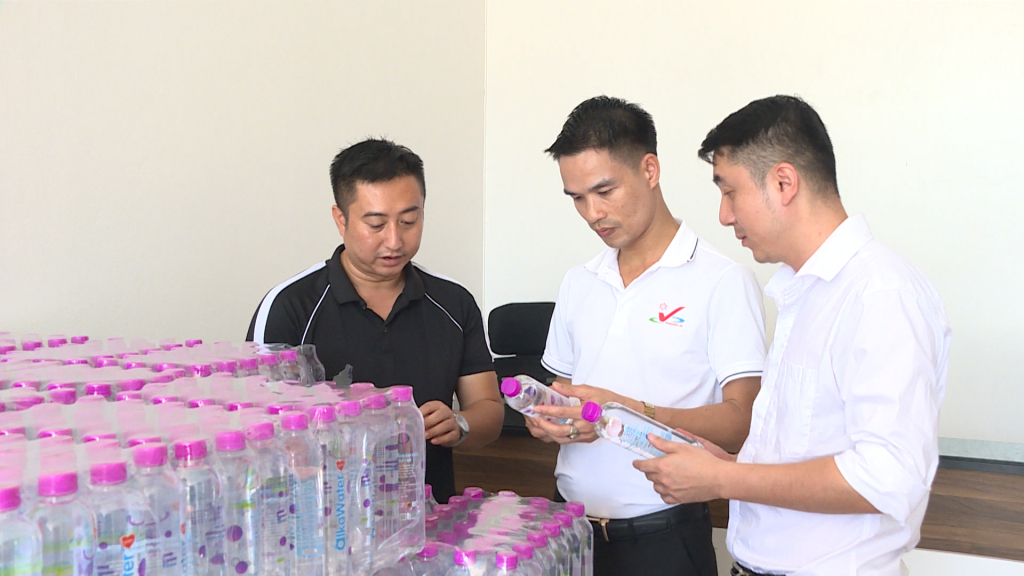
At the expanded Executive Committee meeting summarizing the results of the first nine months and outlining tasks for the last three months of 2024 of the Party Committee of Private Economic Units in Ha Long City, delegates pointed out the following: Difficulties remain in promoting the leading political role of the Party organization within private enterprises, especially in affiliated Party branches and those with Party committee members not within the company's leadership structure; reporting and information sharing are sometimes untimely; inspection and supervision have been strengthened, but some units still lack adequate attention. Furthermore, the self-cultivation, training, and adherence to Party regulations and State laws by some Party members are not rigorous, leading to violations requiring disciplinary action; the guidance on consolidating and improving the effectiveness of political and social organizations within enterprises remains limited; and recruiting new Party members in some units remains challenging.
The province currently has 11,574 enterprises, including state-owned enterprises and foreign-invested enterprises. However, there are only 30 grassroots Party committees with 410 subordinate branches and 13 grassroots Party branches, comprising a total of 5,482 Party members. This indicates that the development of Party organizations and members within enterprises in general, and state-owned enterprises in particular, still has many "gaps".
The core reason
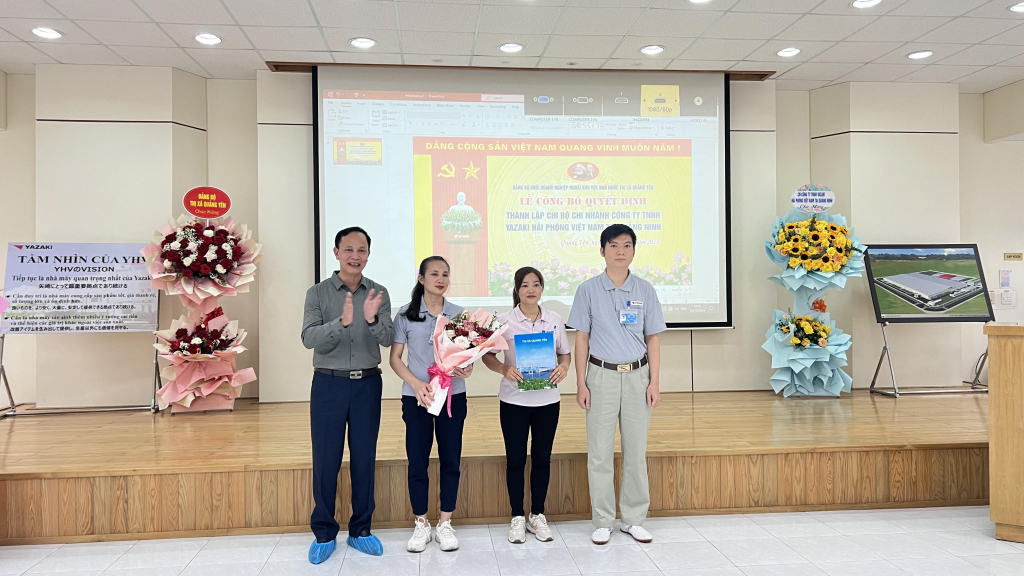
According to Nguyen Duc Tho, Deputy Head of the Provincial Party Committee's Organization Department: Developing Party organizations and Party members in state-owned enterprises in the province still faces many difficulties, resulting in the number, quality, and effectiveness of Party organizations and members in some establishments not being commensurate with the scale and development of the enterprises. Based on observations, this is a common situation in many provinces and cities nationwide.
The fundamental cause identified is that the regulations and guidelines issued by the Central Committee and Party committees at all levels regarding Party building work in private economic units have not been strong enough or consistent. The content and methods of leadership of Party organizations and mass organizations in private economic units have been slow to innovate.
The number of permanent employees in small and micro-enterprises is not large, mainly consisting of seasonal contracts with unstable working hours. The majority of Party members in these enterprises are unskilled laborers, rarely participating in boards of directors, management teams, or technical staff, thus lacking true exemplary status and prestige. Furthermore, some private enterprise owners, especially those in FDI businesses, are not enthusiastic about establishing Party organizations. Party and mass organization officials in private economic units mostly hold dual roles, resulting in insufficient time allocated to professional duties and responsibilities in some private economic units.
Some local Party committees have stated that currently, most business owners are not Party members, therefore their understanding of the position and role of Party organizations and socio-political organizations is not yet fully developed. They still have concerns about political and organizational constraints, and therefore have not taken many steps to facilitate the development of Party members and the establishment of Party organizations.
According to Do Duc Hong, Deputy Secretary of the Standing Committee of the Party Committee of Private Economic Units in Cam Pha City, the Party Committee of Private Economic Units in Cam Pha City currently has 28 branches with 461 party members. However, only 19 of them are business owners, participating in 15 branches. Most owners of private enterprises are not party members, so they generally focus more on business profits and have not created conditions for establishing socio-political organizations or party organizations for employees to participate in. In some enterprises, there are workers who are party members, but because there is no party branch, they have to participate in activities at their place of residence.
Political and social organizations such as trade unions, youth organizations, and women's organizations are considered important foundations contributing to the development of strong and high-quality Party organizations and Party members. However, many state-owned enterprises in the province currently lack these organizations, or their activities are ineffective, leading to certain difficulties in establishing Party organizations. Besides the fact that many business owners are not enthusiastic and have not reformed the content and methods of Party activities to suit the specific characteristics of their enterprises, there is currently no mechanism or policy to create conditions, support, and encourage businesses to care about and support the establishment and operation of Party and mass organizations within their enterprises.
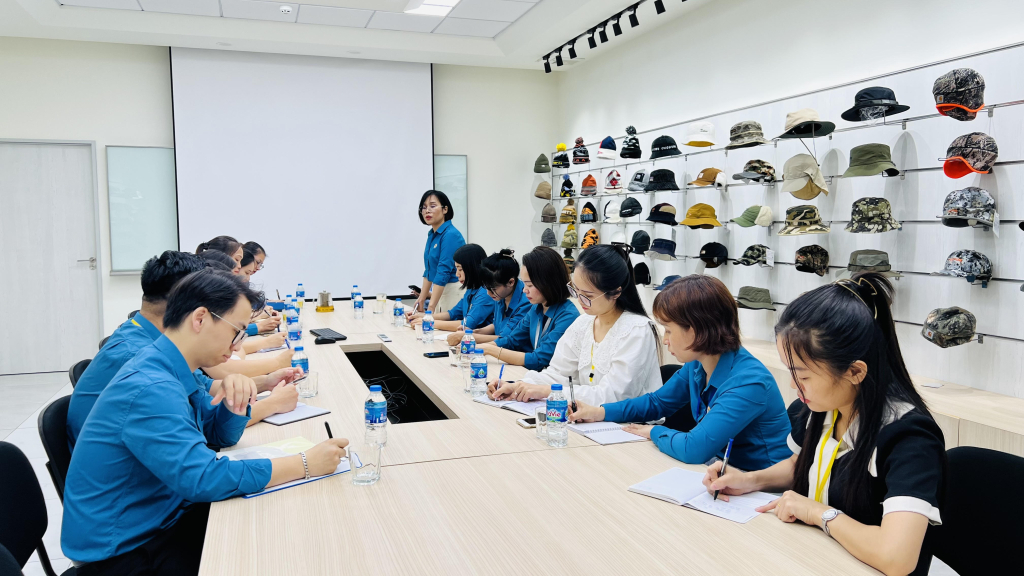
According to statistics, the province currently has 1,121 grassroots trade union organizations with 81,278 members in state-owned enterprises (SOEs) (accounting for 9.63% of the total number of enterprises in the province). Of these, private enterprises have 1,056 grassroots trade union organizations with 39,299 members; foreign-invested enterprises have 65 grassroots trade union organizations with 41,979 members. Besides trade union organizations, the number of SOEs with youth union organizations is modest, with 61 organizations and 6,095 members. This has been a concern for leaders at all levels, departments, and localities in the province in recent times.
According to Duong Dinh Quan, Chairman of the Quang Yen Town Labor Union: The establishment of trade union organizations in enterprises has always received the attention and guidance of the Party Committee, the government, and the Provincial Labor Union. However, to date, there are only 57 grassroots trade union organizations in enterprises in Quang Yen Town, including 19 trade union organizations in foreign-invested enterprises in industrial parks. The establishment of trade union organizations faces many obstacles, as there is currently no specific statistical data on the number of enterprises in the province. Many enterprises register for business but do not operate, or operate but have few workers. Many enterprises lease land, factories, and infrastructure in one location but operate in other units, so the establishment of trade union organizations has not received adequate attention and lacks rigor. Reaching out to enterprises also presents many difficulties. This makes the work of propaganda, mobilization, and building trade union and Party organizations a significant challenge.
The aforementioned difficulties and obstacles have significantly affected Party development work within the state-owned enterprise sector. This reality demands a synchronized and decisive effort from the entire political system to gradually remove these "bottlenecks," encouraging enterprises to be more open and determined in establishing Party branches and developing Party members within their units.
Lesson 3: A solid foundation, a strong base
Source





































![[Image] Ho Chi Minh City simultaneously commences construction and breaks ground on 4 key projects.](https://vphoto.vietnam.vn/thumb/1200x675/vietnam/resource/IMAGE/2026/01/15/1768472922847_image.jpeg)


































Comment (0)