

On the sidelines of the VSMCamp & CSMOSummit 2023 event in Ho Chi Minh City, Le Quoc Vinh, Chairman of Le Bros and Vice President of CSMO Vietnam, spoke with VTC News about the changes in the marketing market amidst the development of artificial intelligence (AI).
- The Vietnamese economy , and the global economy in general, are still in an extremely difficult phase. Businesses are struggling to survive in the market and find new avenues for growth. At this time, what are some effective marketing solutions, sir?
When the economy is struggling, consumers are less likely to spend money on purchases. This forces marketers to develop clear strategies to create "demand" among customers.
Marketers need to thoroughly understand their customers, analyzing and explaining why they like a particular product and why they need to buy it.
AI will play a crucial role in collecting and analyzing data, creating solutions to meet these customer "needs." Understanding this will make it easier for brands to reach users and improve marketing effectiveness.
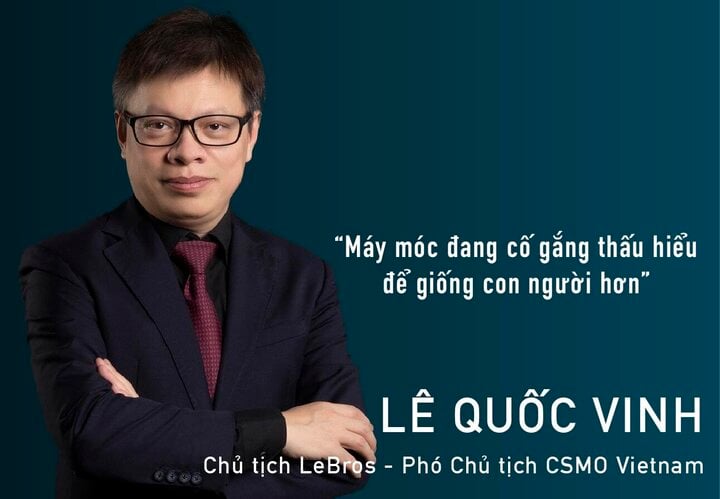
Mr. Le Quoc Vinh - Chairman of Le Bros, Vice Chairman of CSMO Vietnam. (Photo: TK)
So, does this mean that "AI is best at improving the relationship between companies and consumers"?
Do you see a huge paradox today? While human communication is becoming increasingly inhuman, lacking emotion, becoming dry, and indifferent to the feelings and needs of the other person, machines are trying to emulate human communication and understanding more closely.
Scientific advancements such as the internet, social media, OTT services, and then voice technology, automated support staff, virtual assistants, and automated website chat... create more connections, but also increase the distance between companies, brands, and customers as human beings.
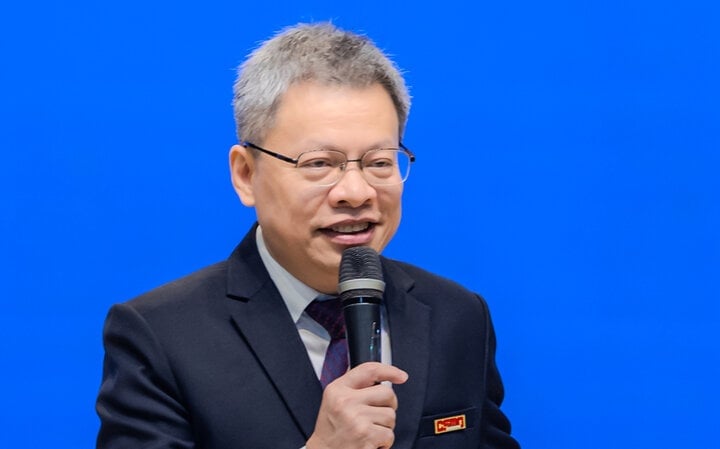
le quoc vinh 1.jpg
Machines are trying to mimic human-like communication and understanding more closely.
Chairman of Le Bros, Le Quoc Vinh
For example, many salespeople make telemarketing calls without knowing who they're talking to or what their needs are. They speak like machines. People are increasingly overusing technology for connection, forgetting their own unique characteristic: emotional communication.
But AI has the potential to bridge that gap by helping marketers, in the process of collecting and analyzing behavioral data, to better understand and identify the needs, expectations, pain points, and psychology of each media audience. AI can scale up customer personalization and accuracy in ways never before possible.
AI has helped businesses behave like humans. Interestingly, this advanced technology has caused marketers to change their perspective and thinking about how they should communicate with their customers.
Therefore, we need to re-evaluate the capabilities of AI. It can do so much, freeing us from work so we have the time and energy to reconnect with one another. AI will handle all the simple tasks and operations. But when it comes to changing the world , humans will do it better.
Given AI's power, will it soon become a threat to those in the marketing field?
Technology doesn't create itself; it's created by humans, and humans remain the masters of technology. Therefore, it can be asserted that, overall, artificial intelligence is unlikely to replace humans in general and the marketing industry in particular.
Currently, AI is being developed in a controlled and gradually optimized manner, aiming to become a useful tool to serve humanity rather than a "force" to replace humans. However, AI can replace humans in certain fields and jobs. For example, in the marketing industry, there are people who do creative intellectual work, and others who only perform purely information processing tasks.
Currently, in some marketing strategy development processes, AI can occupy several positions and even handle tasks better, such as simple, repetitive tasks, and tasks that only require data processing like reporting or research through document reading and translation.
On the one hand, AI is a powerful "assistant," providing full support to marketers; on the other hand, it significantly diminishes the role of marketers, sometimes making them feel redundant. Specifically, instead of needing a team of 6 or 7 people to create content for advertising, now only 1 or 2 people are needed to create content and one person to review the data collected and processed by the AI.
Therefore, marketing professionals face many challenges and pressures when AI is involved in their work. They must learn how to master AI tools, rather than just learning what AI can do.
So how can we use AI technology most effectively? Selective or integrated development?
Current AI is still not fully developed in terms of emotional intelligence and cultural assimilation. AI can assist in gathering information and providing specific solutions, but when it comes to discerning whether a problem presents a challenge or an opportunity, humans remain the deciding factor.
Furthermore, businesses cannot replace all of their customer service with AI. Humans tend to work with people they like, creating a sense of humanity. Machines cannot achieve this emotional aspect.
On the other hand, we can express empathy, while AI cannot. And AI cannot think outside of programs and algorithms, so it cannot find creative ways to solve various new problems because the collected data is insufficient and its accuracy has not been verified.
Overall, given current trends, AI is an effective way for businesses to keep up with market developments and fully meet customer needs. However, over-reliance on AI should be avoided, as human resources remain the core element.
However, people must always improve their understanding and update their knowledge to be able to master smart tools in the future.

Mr. Le Quoc Vinh emphasized that AI is a method for businesses to keep up with market developments and fully meet customer needs. (Photo: Provided)
- In the Vietnamese market right now, where AI hasn't yet dominated purchasing behavior too much, Key Opinion Consumers (KOCs) are emerging as a trend. What are your thoughts on this phenomenon?
Key Opinion Leaders (KOCs) have a limited scope of influence, targeting only a specific customer group. While KOCs are a good sales solution, they don't change customers' emotions towards the brand. Building rapport and connection with customers ultimately remains the responsibility of the brand manager.
Brands need to understand that they cannot rely solely on KOCs (Key Opinion Leaders) because KOCs do not represent product quality. Each KOC has a specific community group, and they are only strong and profitable within that limited group.
Therefore, KOC is merely a channel creator for communication within a specific target audience, and cannot replace other professional marketing solutions.
In reality, as long as people are still conforming and their purchasing decisions are willingly influenced by others, then Key Opinion (KOC) will still be effective. But that's not always true, especially during a recession. People will be more cautious when making purchasing decisions.
KOC is a "tool" with a limited lifespan; it will be replaced when something better comes along, and it cannot be used indefinitely.
I believe that KOC is a temporary phenomenon; only philosophy and solutions have lasting value.
Thank you for the conversation!
Trinh Trang
Source






















































































Comment (0)