


In recent years, the private healthcare system has grown significantly, investing in infrastructure, equipment, personnel, and specialized techniques, attracting a considerable number of patients seeking medical examination and treatment.

Tam Anh General Hospital in Ho Chi Minh City performs erector spinae plane (ESP) block anesthesia during painless cardiac surgery, a cutting-edge technique used worldwide.
In particular, when the State needs it, it mobilizes the private healthcare system to participate, as during the Covid-19 pandemic, the private healthcare system in Ho Chi Minh City joined hands with the city government in vaccinating, caring for, and treating Covid-19 patients. Thus, it can be affirmed that the private healthcare system has played a positive role in the healthcare of the people.
Private healthcare has advanced techniques.
According to Associate Professor Dr. Tang Chi Thuong, Director of the Ho Chi Minh City Department of Health, there are currently 66 private hospitals in Ho Chi Minh City with over 4,684 beds, accounting for 12% of the total number of beds in the city's healthcare system (38,966 beds). This shows that private healthcare makes a significant contribution to the health care of people in Ho Chi Minh City. The number of beds in the private healthcare system needs to continue to increase, as in wealthy countries, the number of beds in the private healthcare system accounts for 40-50% of the total.

Tam Anh General Hospital in Ho Chi Minh City can perform various advanced techniques in a single surgery to treat breast cancer and perform immediate breast reconstruction.
According to the head of Ho Chi Minh City's health sector, the private healthcare system participates in medical examinations and treatment, reducing the burden on public hospitals. However, private healthcare also invests in areas that generate quick revenue, which is also a natural consequence. Therefore, the private healthcare system needs guidance and mechanisms to encourage specialized development and meet the local disease patterns and needs that the public healthcare system is lacking. Developing specialized healthcare requires not only the efforts of the public healthcare system but also the participation of the private healthcare system, as state resources and budgets cannot keep pace with the development of specialized techniques.
According to Resolution 20 (dated October 25, 2017) of the Central Committee of the 12th Party Congress on strengthening the work of protecting, caring for and improving people's health in the new situation.
"Five to ten years ago, when private hospitals had seriously ill patients, they would often transfer them to public hospitals. But now, private hospitals can treat severe and complex cases such as cardiovascular, neurological, stroke, obstetric, and neonatal conditions... Private healthcare has equipment and technology that are even more modern than public healthcare. This also helps to reduce the number of patients seeking treatment elsewhere, especially abroad. That's a good sign," said Associate Professor Dr. Tang Chi Thuong.
In addition to establishing hospitals, the private healthcare system needs to participate in other forms of healthcare for the people, such as public-private partnerships to establish high-tech screening centers. Future plans include opening nursing homes, investing in health insurance coverage (beyond state insurance), and participating in medical tourism .
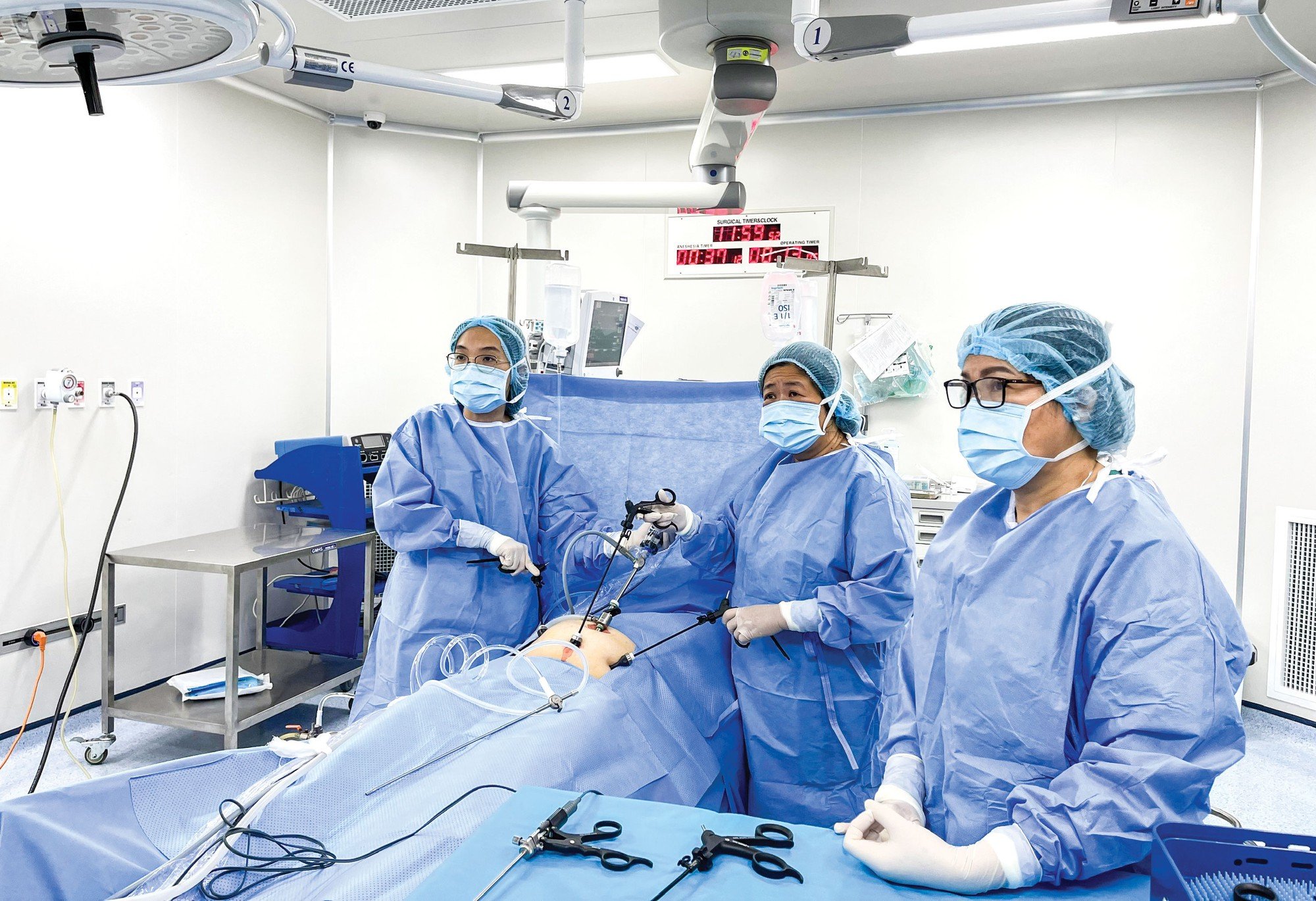
Laparoscopic surgery in the treatment of gynecological and obstetric diseases is one of the strengths of Tam Anh General Hospital in Ho Chi Minh City.
Furthermore, according to Resolution 31 of the Politburo, Ho Chi Minh City aims to soon become a healthcare hub for the ASEAN region. Ho Chi Minh City is investing in its healthcare system and encouraging reputable hospitals and universities worldwide to establish facilities in the city, bringing their expertise and technology. This fosters healthy competition among hospitals.
"Ho Chi Minh City aspires to have a large-scale public-private partnership model. In this model, the city's health sector could coordinate with the trade and investment promotion agency to attract investment in a high-tech screening center. Accordingly, Ho Chi Minh City would provide the land (location) and encourage private investment in high-tech equipment," the head of Ho Chi Minh City's health sector further shared.
Creating favorable conditions for the development of private healthcare.
Speaking to Thanh Nien newspaper, Associate Professor Dr. Luong Ngoc Khue, Director of the Department of Medical Examination and Treatment Management (Ministry of Health), said that there are currently 336 private hospitals nationwide. Besides helping to reduce the burden on public hospitals, the private healthcare system has met the basic medical needs of the people, especially the need for high-quality and comprehensive medical care.
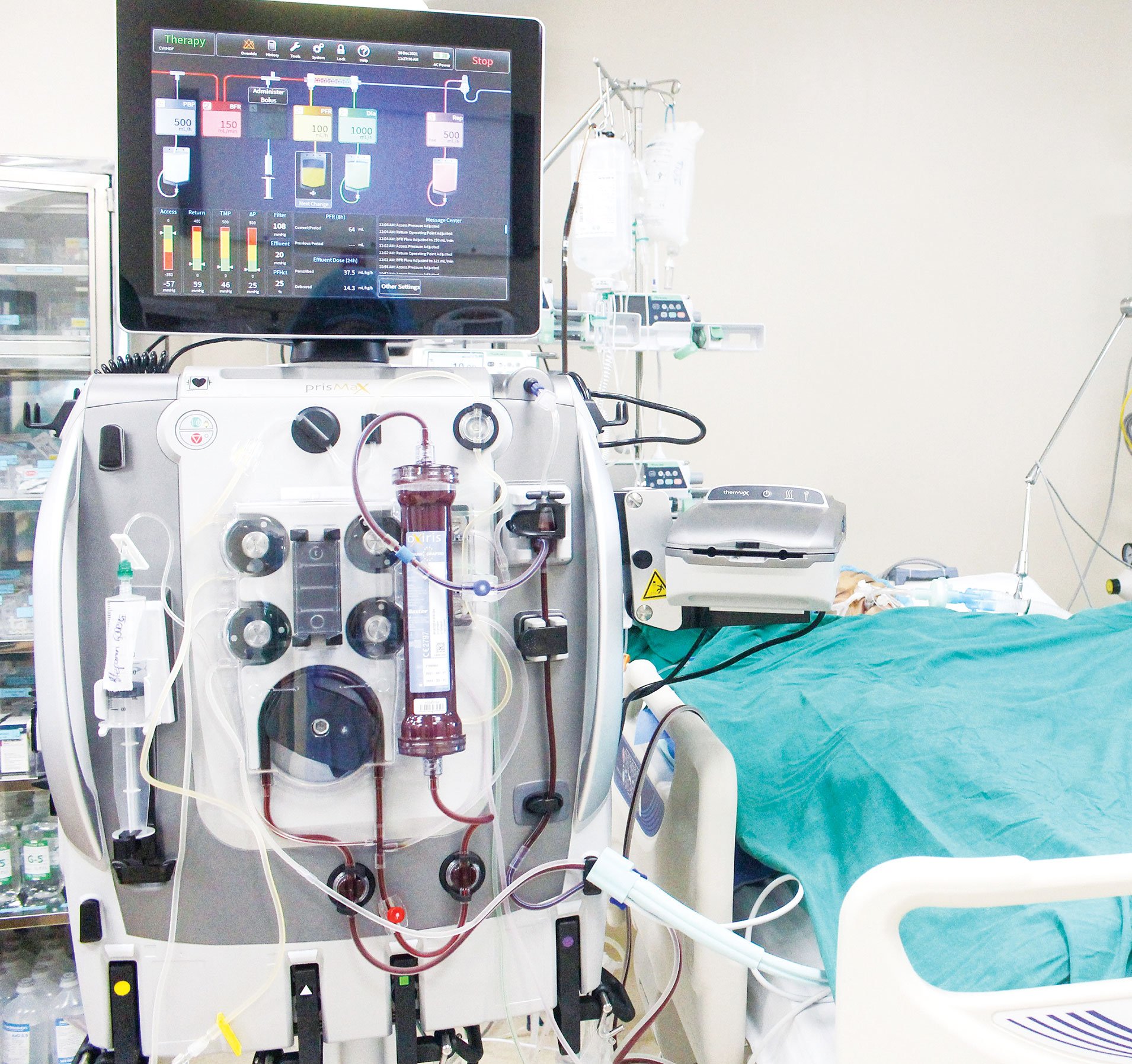
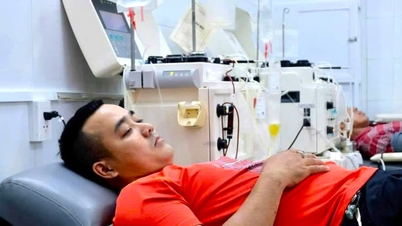
Using modern, US-made continuous renal replacement therapy (CRRT) machines for kidney failure patients at Tam Anh General Hospital in Ho Chi Minh City.
According to Associate Professor Dr. Luong Ngoc Khue, investing in the establishment of high-quality private medical facilities is necessary and in line with the direction of the Government and the Ministry of Health to effectively serve the needs of the people in medical examination and treatment. Private healthcare is gradually increasing its scale, making efforts to invest; improving professional capacity as well as increasing investment and modernization to attract foreign patients and overseas Vietnamese. This also contributes to gradually making Vietnam a country that attracts health, medical, and wellness tourism in the coming years, contributing foreign currency to the national budget, and most importantly, providing impetus to upgrade the hospital system nationwide.
"The Ministry of Health always supports and creates all favorable conditions for domestic and international investors to invest in establishing private medical facilities in Vietnam on the principle of equality, healthy competition, and in accordance with Vietnamese law. The Ministry of Health always supports and guides the investment research process and the operation of private medical facilities," said Associate Professor Dr. Luong Ngoc Khue.
Associate Professor Dr. Luong Ngoc Khue stated that the Ministry of Health encourages foreign private investors to actively cooperate and exchange experiences, knowledge, and skills in medical examination and treatment with Vietnamese medical facilities... However, during operation, private medical facilities also need to study and comply with Vietnamese laws, the law on medical examination and treatment, and other relevant regulations.
"The Ministry of Health highly appreciates the non-public medical facilities for their active contributions of human resources, material resources, and intellectual resources to the prevention and control of the Covid-19 pandemic during the months when the whole country was struggling to fight the epidemic," Associate Professor Dr. Luong Ngoc Khue shared.
The policy does not discriminate between public and private sectors.
According to a representative from the Ministry of Health, Resolution 20 dated October 25, 2017, of the Central Committee of the 12th Party Congress on strengthening the protection, care, and improvement of people's health in the new situation, clearly states: "After 25 years of implementing Resolution 4 of the 7th Party Congress and the Party's guidelines, policies, and laws of the State, the work of protecting, caring for, and improving people's health has achieved great results, making an important contribution to the cause of building and defending the Fatherland."
Resolution 20 also points out the need to "develop synchronously, create an equal environment in terms of support and transfer of technical expertise between public and private healthcare facilities; promote socialization and mobilize resources to develop the healthcare system. Diversify forms of public-private cooperation, ensuring transparency, openness, equal competition, and no discrimination between public and private sectors in providing healthcare services."
Resolution 20 encourages organizations and individuals to invest in the construction of medical facilities (including primary healthcare), focusing on providing high-quality, on-demand services. Non-profit medical facilities and elderly care facilities are exempt from or eligible for tax reductions as stipulated by law.
"The Ministry of Health does not discriminate between practitioners working in public or private facilities when they share the same mission and purpose of serving and caring for the health of the people. Vietnamese law is always fair between public and private sectors; it rewards, encourages, and protects those who operate in accordance with the law. However, they must be held accountable under the law according to the principle of equality between public and private sectors," said Associate Professor Dr. Luong Ngoc Khue.
Associate Professor Dr. Luong Ngoc Khue also stated that, according to the Law on Medical Examination and Treatment (No. 15/2023/QH15), many new provisions of the law demonstrate progress in approaching and perfecting the legal framework to address major issues in the current health sector with comprehensive, strict, public, transparent regulations that harmonize the interests of the state, investors, patients, and the community.
The Law on Medical Examination and Treatment also creates an important legal framework for the field of medical examination and treatment based on the principles of patient-centeredness, fairness, efficiency, quality, and development. Currently, the Ministry of Health is drafting a decree guiding this law and will soon submit it to the Government for consideration and promulgation, opening up many advantages for practitioners and medical examination and treatment facilities.
STANDARD ORIENTATION
Dr. Nguyen Huu Tung, Permanent Vice President of the Ho Chi Minh City Private Healthcare Association, believes that public healthcare receives state investment in infrastructure, management, and personnel to meet the low cost of health insurance, thus giving patients the opportunity to receive medical treatment at public hospitals. In addition, the autonomy (or partial autonomy) of public hospitals has transformed them to some extent into private-level facilities. Public healthcare also receives policy and administrative support, creating a strong morale boost for doctors and medical staff, and this strength is intangible.
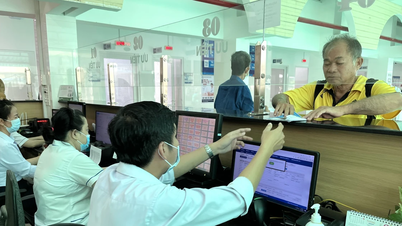
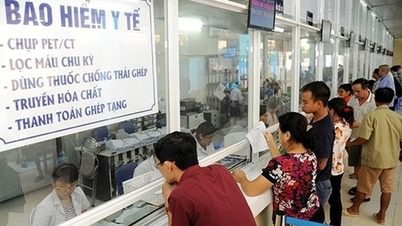
Therefore, the difficulty for private healthcare is the intense competition in the health insurance patient market, as the main source of revenue for many hospitals still comes from health insurance. To compete with public hospitals, private hospitals must compete on hospital fees (reduce costs) to attract patients and generate revenue, and must improve expenditure management; along with increasing the quality of professional expertise and services.
Regarding the in-depth development of private healthcare, according to Dr. Nguyen Huu Tung, investing in high-tech equipment is a strategic service, not an economic one. This means having resources, and more importantly, human resources that are trained systematically and over the long term. "If a technique is developed but there is a shortage of personnel in certain positions, private healthcare will revert to relying on public healthcare, which is only temporary development," Dr. Tung said.
On the other hand, Dr. Nguyen Huu Tung also argued that the state invests in advanced techniques for public healthcare. Therefore, when private healthcare develops advanced techniques, it must determine who it serves, who it competes with, where the personnel will come from, and how it will be done; because the costs will certainly be higher than public healthcare to recoup the investment. This is because high-tech healthcare is not an advantage for private healthcare (high prices - PV), so patients "endure" staying in public healthcare.
"Currently, the government has policies to strongly promote the development of both public and private healthcare. Public-private competition is good, and patients will benefit. Associations and the government need to provide guidance and help the private sector choose the right direction. In reality, many private hospitals are currently being put up for sale. Furthermore, the development of private healthcare must have standards to reduce risks for patients," Dr. Nguyen Huu Tung further analyzed.
SPECIAL NEED FOR HUMAN RESOURCE DEVELOPMENT
According to Associate Professor Dr. Tang Chi Thuong, when private healthcare systems open new facilities, they often recruit experienced personnel from public hospitals. This somewhat impacts public hospitals. However, in addition to public hospitals needing to adapt to this (having to train personnel with more than one specialist), private healthcare systems also need policies regarding personnel training.
"Private healthcare needs to develop in depth, which means developing human resources by recruiting newly graduated doctors, training them, and creating conditions for them to commit to private hospitals. This is something the Ho Chi Minh City health sector strongly supports. To achieve this, private healthcare needs to focus on investing in training within hospitals or sending them abroad for training; further still, they should open health universities," Associate Professor Dr. Tang Chi Thuong shared, adding that hospitals need to establish research centers to develop and invite reputable experts from around the world to participate, something that some units have already done. Ho Chi Minh City strongly encourages innovation in all fields, especially healthcare.
Source link


![[Photo] Standing Committee member of the Party Central Committee Tran Cam Tu inspects preparations for the 14th Party Congress.](/_next/image?url=https%3A%2F%2Fvphoto.vietnam.vn%2Fthumb%2F1200x675%2Fvietnam%2Fresource%2FIMAGE%2F2026%2F01%2F06%2F1767695749033_image1122-1262-jpg.webp&w=3840&q=75)
![[Photo] Prime Minister Pham Minh Chinh receives Canadian Minister of International Development Randeep Sarai](/_next/image?url=https%3A%2F%2Fvphoto.vietnam.vn%2Fthumb%2F1200x675%2Fvietnam%2Fresource%2FIMAGE%2F2026%2F01%2F06%2F1767708661052_image123-3433-jpg.webp&w=3840&q=75)
![[Image] Fifth meeting of the Steering Committee for National Projects in the Railway Sector](/_next/image?url=https%3A%2F%2Fvphoto.vietnam.vn%2Fthumb%2F1200x675%2Fvietnam%2Fresource%2FIMAGE%2F2026%2F01%2F06%2F1767712857541_ndo_br_dsc-0581-jpg.webp&w=3840&q=75)
![[Photo] Prime Minister Pham Minh Chinh attends the Conference on the Implementation of Tasks for the Finance Sector in 2026](/_next/image?url=https%3A%2F%2Fvphoto.vietnam.vn%2Fthumb%2F1200x675%2Fvietnam%2Fresource%2FIMAGE%2F2026%2F01%2F06%2F1767699638245_ndo_br_dsc-0196-jpg.webp&w=3840&q=75)
























































































Comment (0)