I don't know when xu xoa first appeared, but it's a familiar, refreshing treat from my childhood summers. Back then, not many houses in my village had electric fans, so on hot summer afternoons like this, nothing could compare to a glass of xu xoa. The cool, delicate taste of the sea in each spoonful of xu xoa has stayed with me to this day.
"Xu xoa" has many names, sometimes "xoa xoa," sometimes "xu xa," and whatever it's called, it's a snack that many coastal families know how to cook. The main ingredient for making xu xoa is a type of seaweed that usually grows on the rocky shores around Cu Lao Cham Island (an island commune of Hoi An). The best quality seaweed for xu xoa is mature seaweed with long, firm stems, with little black algae and sand. Nutritionally, seaweed has cooling properties, helps to clear heat, detoxify, and promote bowel movements…
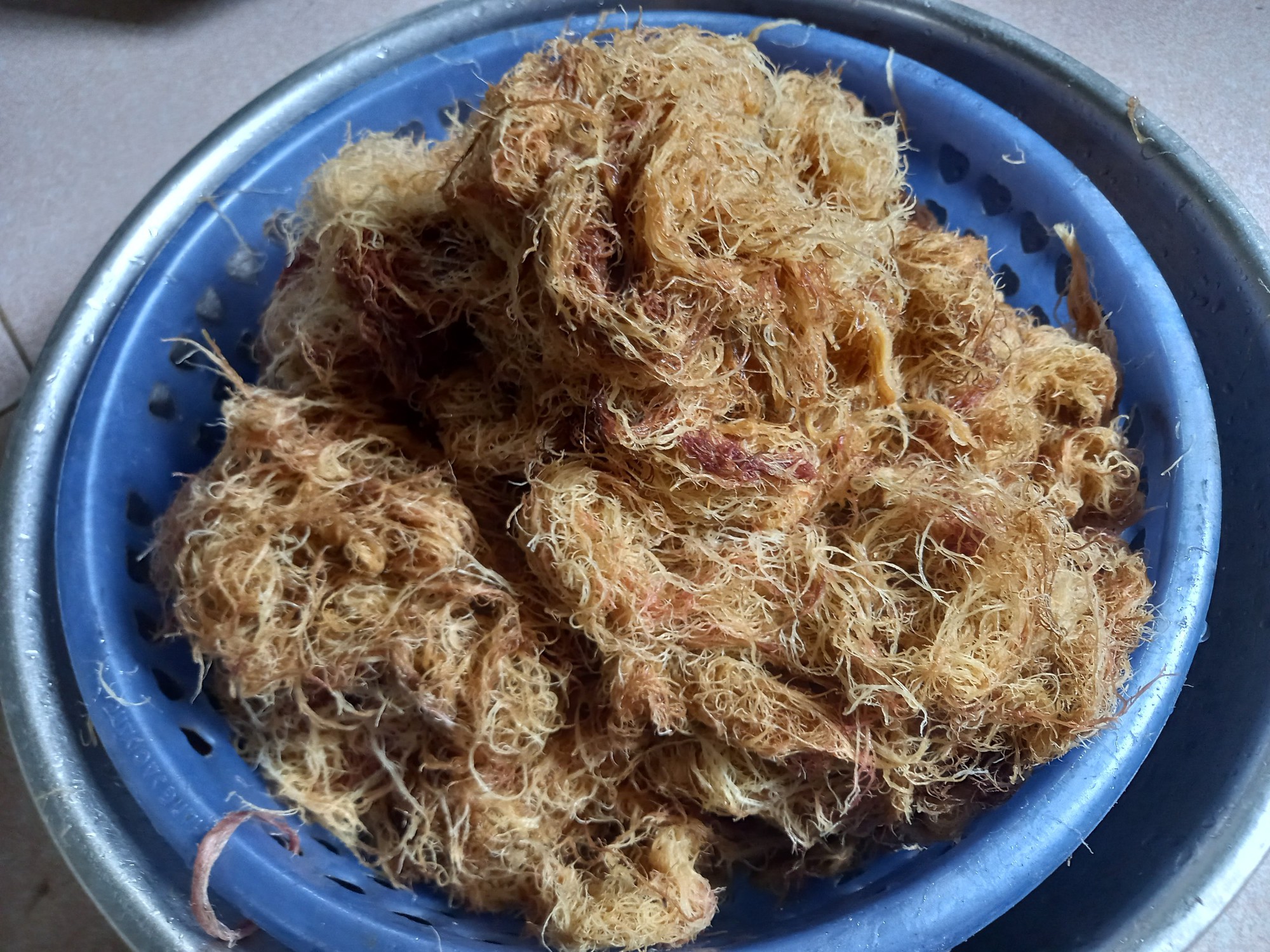
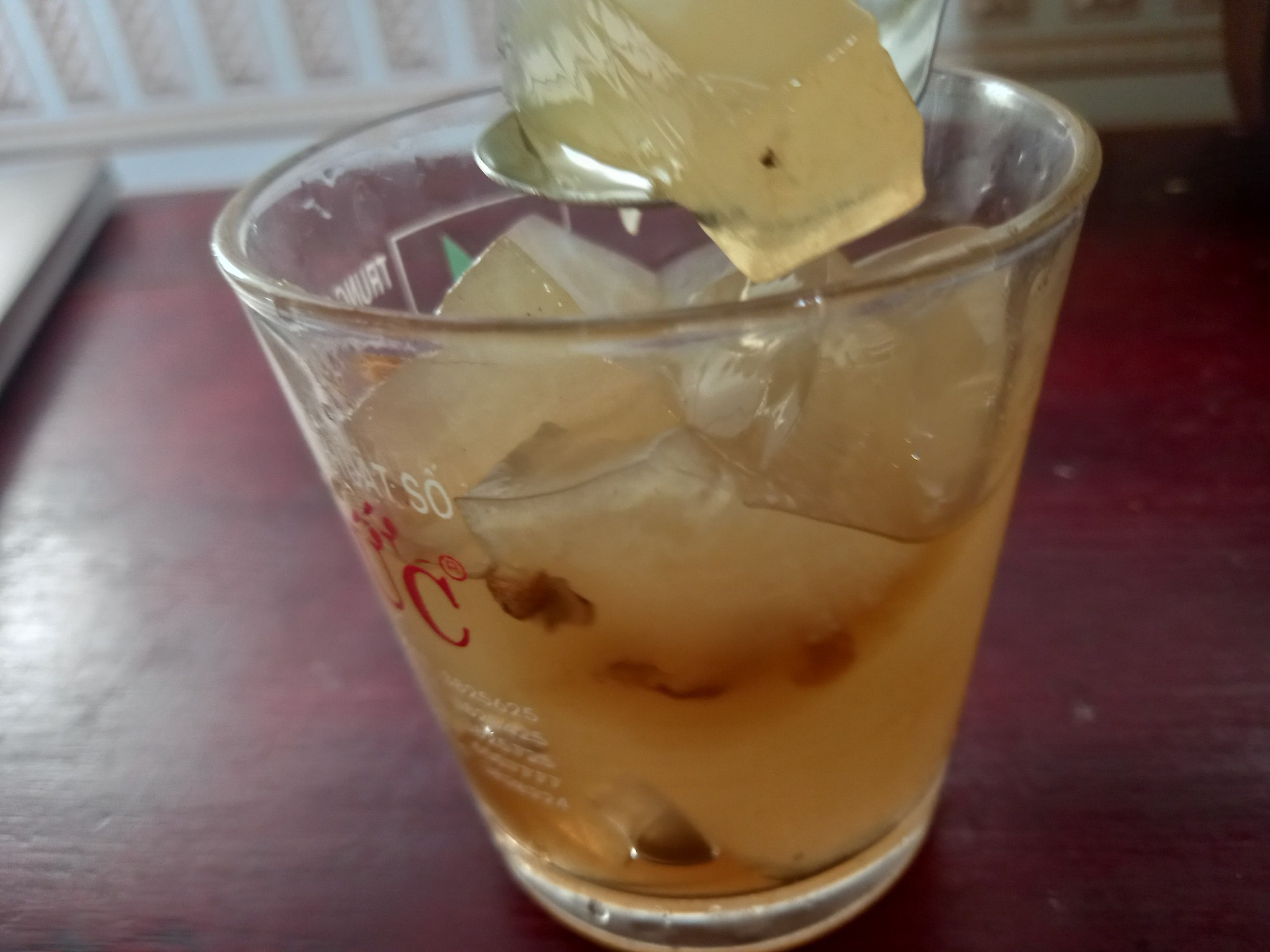




Seaweed, cooked into a jelly dessert.
Seaweed jelly is a great way to cool down after sun exposure or strenuous work, and it also helps to dispel dampness and relieve wind-related ailments. However, making seaweed jelly requires a lot of free time, as it's not like pre-packaged agar-agar powder. Cleaning the seaweed strands before cooking is a laborious process that takes a whole afternoon.
After harvesting, the seaweed is rinsed with seawater to remove dust and also to filter out stones, sand, and coral clinging to it. Then, it's rinsed again with fresh water, and more sand and grit are removed. This cleaning process is repeated many times until the seaweed turns white, at which point it's dried in the sun and then formed into cakes for later use. The seaweed harvesting season only begins in early summer and ends at the end of August in the lunar calendar. Therefore, seaweed vendors usually stockpile seaweed throughout the season to use for year-round cooking.
Before cooking the seaweed jelly, the seaweed needs to absorb more water.
After four hours, the seaweed is thoroughly washed and cleaned before being placed in a pot with the right amount of water. Once the seaweed starts boiling, lemon juice is added, and after about 40 minutes, the seaweed dissolves. The next step is filtering the seaweed. The seaweed is placed in a cloth bag, and then a clean, sharpened bamboo stick is used to press it tightly to extract the seaweed juice. After a few hours, the seaweed juice solidifies into a dark green color. The solidified seaweed can be cut into chunks and stored in a bowl for later consumption. Only cut into smaller, bite-sized pieces when needed.



The deliciousness of xu xoa (a type of Vietnamese dessert) largely depends on the syrup. My mother carefully selects the right kind of cane sugar, caramelizing it to the perfect consistency – thick, intensely sweet, but not burnt. Adding a few drops of lemon juice and some slices of ginger during cooking further enhances the flavor. Every time I see my mother's skillful hands spreading the syrup in winding circles over the small, delicate pieces of xu xoa nestled in a glass, I immediately want to sip it.
This afternoon, a gentle southerly breeze carried away the summer heat, stirring a feeling of nostalgia as my mother bent over in the kitchen, beginning to prepare her familiar seaweed jelly dessert. Savoring a cool, refreshing glass of seaweed jelly, each piece melting in my mouth, blended with the sweet, fragrant syrup my mother had made, the oppressive heat of the summer momentarily vanished…
Source link











































































![[INFOGRAPHICS] Can Tho implements the Strategy for Ethnic Affairs until 2030, with a vision to 2045](https://vphoto.vietnam.vn/thumb/402x226/vietnam/resource/IMAGE/2026/06/28/1782658308447_1782658217.webp)