

Mobile homes (or mobihomes) are currently very popular among travel enthusiasts. Compared to regular personal vehicles, mobile homes have a shorter inspection cycle.
The Construction Newspaper's hotline received a question from a reader who recently purchased a 2020 mobile home vehicle whose registration expires in April 2025. The reader asked about the vehicle's registration cycle.
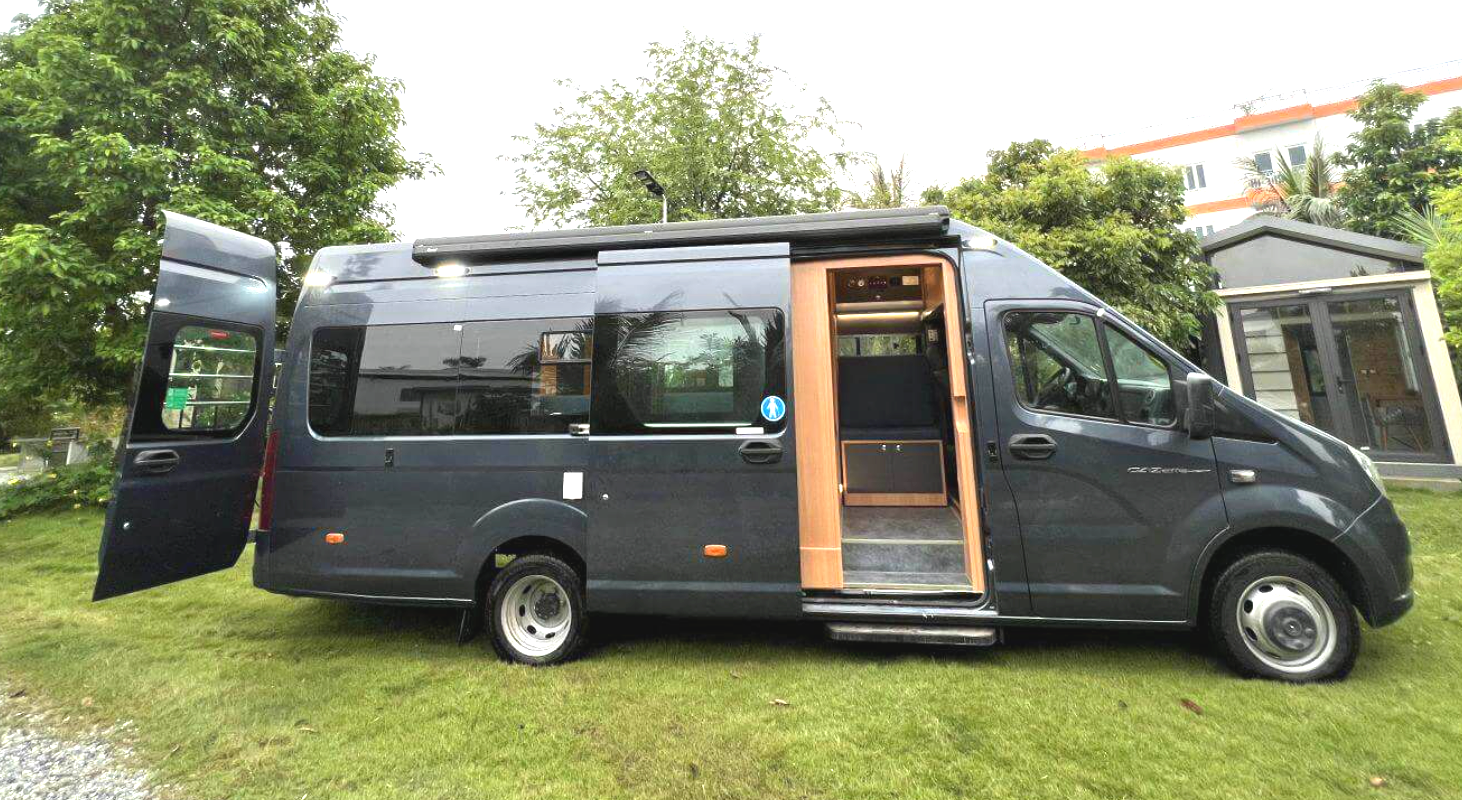
Mobile homes (mobile homes) are classified as specialized passenger vehicles, with an initial inspection cycle of 24 months for vehicles that have not undergone modifications (illustrative image).
Regarding this issue, a representative from a vehicle inspection facility in Hanoi stated that, according to Circular 53/2024 of the Ministry of Transport (now the Ministry of Construction ) regulating the classification of road transport vehicles, mobile homes are classified as specialized passenger vehicles.
Circular 47/2024/TT-BGTVT clearly stipulates the vehicle inspection cycle for each type of motor vehicle, including specialized passenger cars.
Accordingly, mobile homes with an initial inspection cycle of 24 months are exempt from initial inspection if they are original vehicles (not modified from other vehicles) and the year of manufacture to the year of initial inspection certificate issuance is less than 3 years (year of manufacture plus 2 years).
After this cycle, mobile homes manufactured up to 5 years ago have an inspection cycle of 12 months; those manufactured more than 5 years ago have an inspection cycle of every 6 months.
In cases of modifications (for example, converting a regular passenger vehicle or van into a mobile home), the initial inspection cycle is 12 months, after which the vehicle will be inspected every 6 months.
In the case of the reader of Construction Newspaper, for a mobile home manufactured in 2020, meaning it has been in production for 5 years, if it is an original vehicle from the manufacturer without any functional modifications, the inspection cycle is 12 months. If the vehicle has been modified or its function converted, the inspection cycle is every 6 months.
However, representatives from the vehicle inspection facility also noted that most modified mobile homes in Vietnam previously were illegal, because before 2025 there were no technical safety and environmental protection standards for this type of vehicle, and modification facilities often arbitrarily designed and modified them based on experience.
Converting passenger cars or vans into mobile homes requires significant changes to the electrical system and vehicle design, and very few current mobile homes meet the regulations for technical safety and environmental protection.
Therefore, owners buying modified mobile homes should request that the seller provide the modification certificate, vehicle inspection certificate, inspection sticker, vehicle registration certificate, etc., to compare with the actual vehicle, to ensure the vehicle meets traffic requirements and to facilitate the inspection process.
From January 1, 2025, QCVN 09:2024/BGTVT has added specific regulations on technical safety and environmental protection for mobile homes, providing a basis for automobile manufacturers to produce new or import this type of vehicle.
On the other hand, it also serves as a basis for mobile home renovation facilities to consider and research renovations to ensure they are appropriate and meet technical safety and environmental protection requirements.
According to Circular 53/2024/TT-BGTVT, a mobile home is a specialized passenger vehicle with space to accommodate the stay and living of people when the vehicle is stationary (at rest) and has the following minimum equipment: Table and chairs; Sleeping area (which can be converted from seats); Cooking equipment; Storage space (including: Cabinets or drawers for storing items, food storage area, storage for cooking utensils, etc.).
The equipment and fixtures must be securely fastened to the floor or sides of the vehicle (tables, however, can be designed to be easily detachable).
The number of sleeping spaces arranged in the vehicle when stationary must accommodate the permitted number of passengers, including the driver. The electrical system for household appliances must be independent of the vehicle's electrical system.
The vehicle may be additionally equipped with: Tanks for clean water, used water, and dirty water; a water pump; and a sanitary area including: toilets, showers, and washing facilities.
Source: https://www.baogiaothong.vn/xe-nha-o-luu-dong-co-chu-ky-dang-kiem-ra-sao-192250312090616704.htm

































































































Comment (0)