

Initial results

Do Luong District recently held the first OCOP product ranking assessment for 2023, in accordance with Decision 148/QD-TTg, for 10 products. Of these, one product was upgraded to 4 stars, and nine products received new assessments. Based on the council's evaluation, eight products in the district met the 3-star OCOP criteria in this round.
Ms. Nguyen Thi Hang (Hamlet 2, Lam Son Commune, Do Luong District), the owner of two products that were evaluated and ranked 3-star OCOP at the district level this time, said: “The delegation of authority to the district to evaluate and rank OCOP products helps businesses like us save costs and time by not having to go to the province to participate in the evaluation; at the same time, psychologically, participating in the OCOP ranking competition at the district level is more comfortable. This year, we participated in the evaluation of two products and both products achieved 3 stars.”

Also participating in this OCOP product ranking assessment, Mr. Bui Dinh Hoi (Nghi Hung commune, Nghi Loc district), who recently received a 3-star OCOP certification from the district for his Hung Long cantaloupe product, said: “For households like ours participating in the product assessment for the first time, we find it very convenient. Firstly, the district directly guides and evaluates the application process, so any errors or omissions can be promptly supplemented or corrected. Secondly, it eliminates one step in the evaluation process, saving costs and time by not having to go to the province multiple times.”
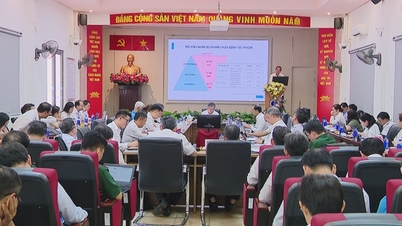
By the end of July 2023, Nghi Loc district had successfully organized the first phase of the district-level OCOP product selection conference. Based on the general criteria stipulated by the Central Government, the district-level council recognized an additional 5 OCOP 3-star products: shallots, Hoang Gia cantaloupe, Hung Long cantaloupe, Ong Ly roasted peanuts, and Nghi Long yellow cantaloupe.

Mr. Tran Nguyen Hoa, Head of the Agriculture and Rural Development Department and a member of the OCOP Product Selection Council of Nghi Loc district, said: “Having been given the authority, when conducting the selection of OCOP products according to Decision 148/QD-TTg, the members of the district-level OCOP product selection council have been more proactive in all aspects. District leaders and departments do not have to travel to the province multiple times to participate in the evaluation rounds. The businesses themselves also find it more convenient as they don't have to travel as much, reducing one evaluation round…”
According to Decision 148/QD-TTg, the evaluation and ranking process is implemented at four levels: commune, district, province, and central government, covering six product groups. At the commune level, the People's Committee of communes, wards, and towns (commune-level People's Committees) organizes the evaluation of several aspects of the product dossiers submitted for OCOP product evaluation, including criteria such as: product origin/local raw materials; use of local labor; origin of the product idea; and local identity/intellectual property.
At the district level, the district council organizes the evaluation and ranking of products participating in the OCOP Program; issues decisions approving the evaluation results and certificates for products that achieve 3 stars, and organizes the announcement of the results.
The People's Committee at the district level forwards dossiers of products scoring from 70 to 100 points (4 stars or higher) to the People's Committee of the province or centrally-governed city (provincial-level People's Committee) for evaluation, classification, and recognition as OCOP products.
Obstacles and shortcomings

As of the end of October 2023, only 8 districts in the province had implemented the evaluation and classification of OCOP products according to Decision 148/QD-TTg, including: Hung Nguyen, Nam Dan, Do Luong, Vinh City, Nghi Loc, Yen Thanh, Dien Chau, and Quynh Luu.
This demonstrates the delay in implementation due to numerous obstacles at the local level. Ms. Nguyen Thi Hanh, Deputy Head of the Agriculture and Rural Development Department of Do Luong District, said: “Do Luong just completed the evaluation and ranking of OCOP products in mid-October 2023. During the process of decentralizing the evaluation of OCOP products, as a specialized officer, I noticed some obstacles such as: Firstly, there is no specific and clear guidance document on how to implement it, so the council members are still confused; secondly, the district leaders who are members of the council all hold other positions, so they cannot be as closely involved as the provincial-level members from specialized departments and agencies.”

Furthermore, according to regulations, the district-level evaluation council must include representatives from the Departments of Agriculture and Rural Development, Science and Technology, and Natural Resources and Environment, as well as specialized management departments. Therefore, the district's participation depends on the time and work schedules of the professional staff from these departments and agencies.
From the perspective of the entities participating in the evaluation and ranking of OCOP products, they still prefer provincial recognition over district recognition. "Even though they're both 3-star OCOP products, I personally believe that provincial recognition is more prestigious than district recognition. Consumer preferences are similar; for the same type of product, a 3-star OCOP product at the provincial level will be more widely accepted than a 3-star OCOP product at the district level, even if all the criteria and scoring are the same," shared one OCOP product owner.

Furthermore, according to Decision 148, the evaluation and ranking of products with 3 stars or less is currently assigned to the district level. Meanwhile, Clause 4, Article 3 of Resolution 25/2020/NQ-HĐND dated December 13, 2020, which stipulates some policies to support the implementation of the One Commune One Product program in Nghe An province for the period 2021-2025, only OCOP products with provincial-level certification are eligible for support. This raises concerns for localities, as they wonder if the requirement for district-level certification needs to be amended.
From the perspective of the management agency, Mr. Nguyen Ho Lam - Deputy Head of the Rural Development Sub-Department - believes that decentralizing the evaluation and ranking of OCOP products according to Decision 148/QD-TTg is a correct policy, reducing inconvenience for stakeholders; the decentralization will enhance the role, responsibility, and proactiveness of district and commune levels in supporting product development and organizing inspection and supervision of OCOP products.

At the same time, it helps to improve the capacity of OCOP management officials at the district and commune levels to support businesses; creating motivation for businesses to continue developing and upgrading their products to meet the standards.
However, according to Mr. Nguyen Ho Lam's analysis, the implementation of Decision 148 still raises certain concerns. These include: The staff in charge of OCOP at the district level lack in-depth expertise, leading to certain limitations in the application review and evaluation process. Although the evaluation council includes representatives from the Departments of Agriculture and Rural Development, Health, Science and Technology, and Industry and Trade, these departments are only council members, limiting their critical feedback.
At the district level, assessments indicate that if the process is not carried out seriously and according to standards, it can easily lead to a focus on achievements, a short-term perspective, and parochialism when recognizing OCOP products in different localities.

Furthermore, when evaluating and ranking products at the district level, the number of products is small and only within the district, so there is not much competition with similar products. Therefore, if the evaluation is not thorough and impartial, substandard products that lack distinctiveness, differentiation, and competitiveness may be allowed to receive OCOP "stars".
Source

![[Image] Close-up view of the interchange connecting the two expressways and Long Thanh Airport.](https://vphoto.vietnam.vn/thumb/1200x675/vietnam/resource/IMAGE/2026/05/25/1779703378210_ndo_br_z7863716673926-224453a31600126cce10622af6290afd-4549-jpg.webp)
![[Image] Hanoi's urban life under the challenge of a "scorching hot" environment](https://vphoto.vietnam.vn/thumb/1200x675/vietnam/resource/IMAGE/2026/05/25/1779706979265_nang-nong-t5-2026-minh-duy-7-4636-jpg.webp)
























































































Comment (0)