

The question is: how do we cultivate that inherent strength? Reporters from the Journalists & Public Opinion newspaper met with several experts and National Assembly representatives to discuss this issue.
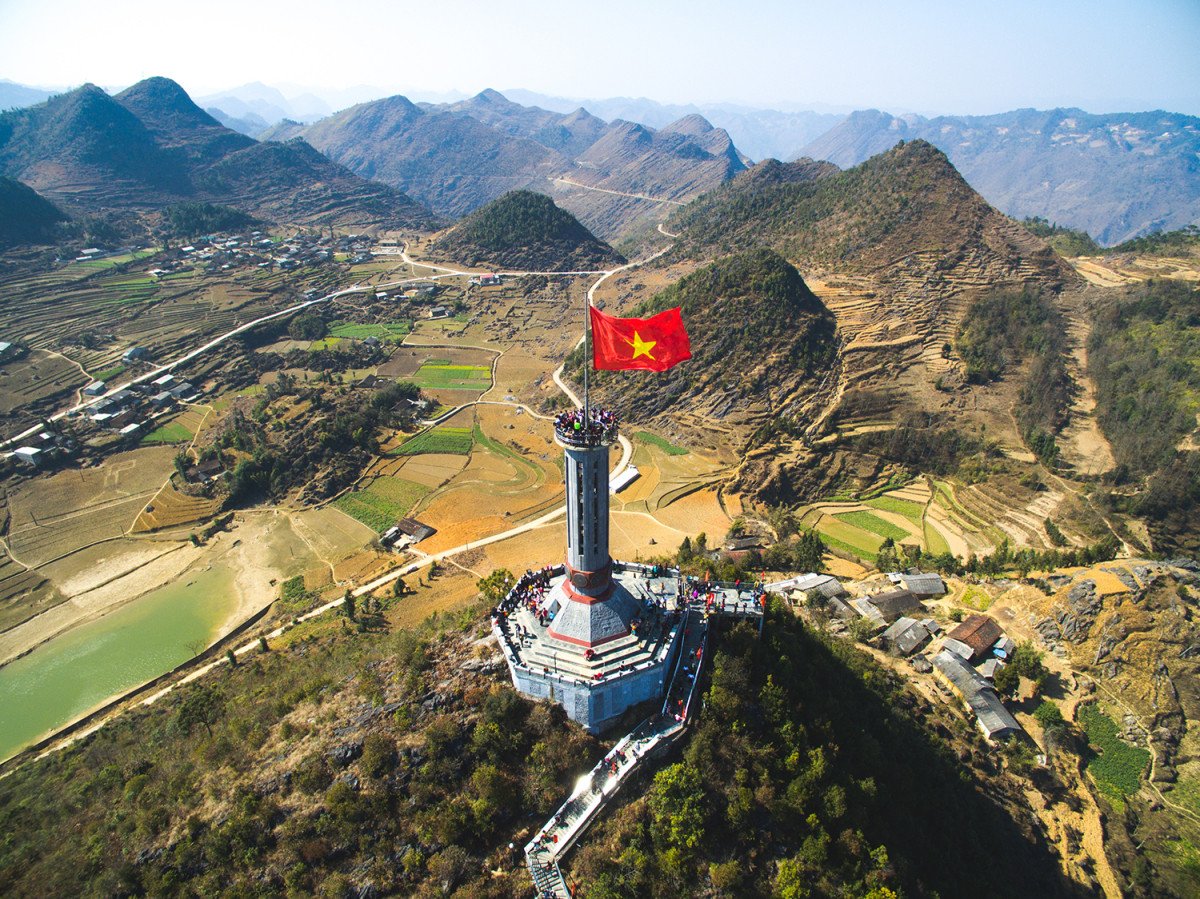
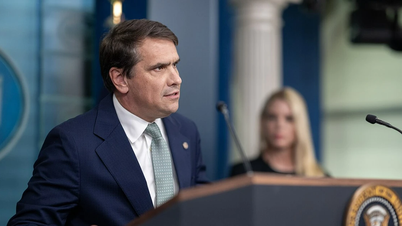
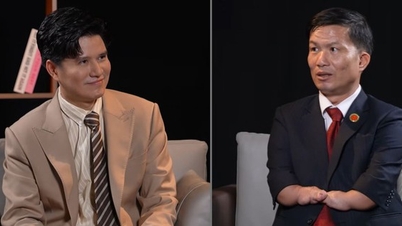
Dr. Nghiêm Vũ Khải, Member of the National Assembly for the 11th, 12th, and 14th terms; former Deputy Chairman of the National Assembly's Committee on Science, Technology and Environment; former Deputy Minister of Science and Technology :
The Vietnamese people have always upheld their traditions, remaining steadfast and loyal, but they have also always innovated and created "to create something new and better."
+ Doctor, in today's era of deep integration, a nation's intrinsic strength has become a crucial factor in determining its success and position in global competition. So, in your opinion, what is Vietnam's intrinsic strength? How can this strength help the country seize development opportunities amidst global changes and fluctuations?
- The concept of "a nation's intrinsic strength" has a very broad meaning and has always been the most important factor helping our nation overcome countless challenges and dangers to survive and develop throughout its thousands of years of history. A nation's intrinsic strength is determined by three main groups of factors, including:
Firstly , natural factors: Favorable geographical location, abundant natural resources, and a land area that meets development requirements.
Secondly , socio-economic factors: population size, economic potential, political and social stability, national defense strength, and national spirit.
Thirdly , the cultural factor, which is "soft power," is fundamentally determined by the national image and cultural appeal.
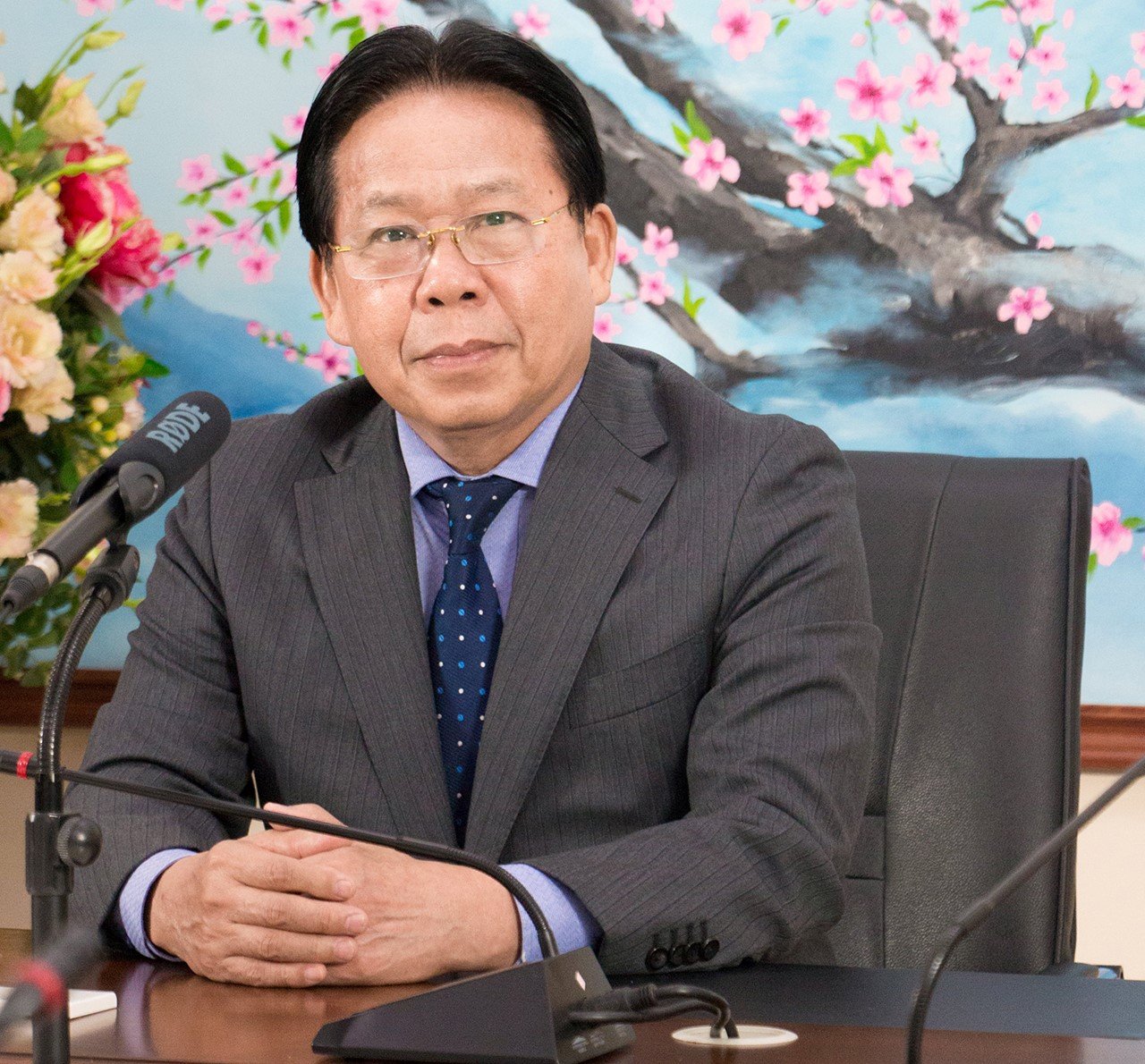
Dr. Nghiêm Vũ Khải.
Vietnam possesses a rich and diverse culture with invaluable traditional values such as patriotism, solidarity, perseverance, and resilience. Honoring, promoting, and enriching these cultural values will help enhance national pride and strengthen the people's confidence and power.
However, we also need to frankly acknowledge the existing shortcomings, inadequacies, and the deterioration of social morality in order to cultivate and create new, better cultural values.
President Ho Chi Minh once taught: "In the task of national reconstruction, there are four issues that must all be given equal attention and importance: politics, economics, society, and culture." More importantly, he pointed out the close relationship between culture and other fields. "Culture cannot stand outside, but must be within economics and politics" ; conversely, economics and politics are also "within culture."
The economy is the material foundation, and culture is the spiritual foundation of society. In Ho Chi Minh's thought, both the economy and culture ultimately serve the political task of building a prosperous, strong, democratic, just, and civilized society. The harmony between economic, political, cultural, and social development creates the basis for sustainable development. Culture must serve the political task, promoting economic construction and development. At the same time, the economy, politics, and society must be guided by culture to truly bring lasting prosperity and happiness to all members of society, ensuring that no one is left behind.
Besides its cultural "soft power," Vietnam also possesses a favorable geographical location with rich geographical and geological potential, biodiversity, and climate that can be exploited to serve national development and people's lives. When discussing natural resources, we need to avoid the mindset of dependence and reliance on finite resources.
Many countries around the world, despite not being rich in resources and even being very poor, have risen to become developed or emerging nations, such as Japan, South Korea, and Israel. We must preserve and rationally exploit our country's renewable resources for sustainable development.
Vietnam's inherent strengths are crucial in today's era of global integration – they are one of the core elements for economic development, improving the quality of life for its people, and enabling it to cope with challenges and difficulties from the external environment. When these inherent strengths are properly nurtured and developed, Vietnam will be able to enhance its competitiveness, attract foreign investment, and elevate its position on the international stage.
+ What foundations should be used to cultivate and develop Vietnam's inherent strengths, sir?
- When we talk about endogenous strength, it also means that exogenous strength exists alongside it. Exogenous strength, in my opinion, refers to regional and international factors that provide opportunities to enhance a nation's overall strength. Much has been discussed, with arguments and evidence presented, demonstrating how it's possible to turn challenges into opportunities; or conversely, how some nations have let golden opportunities slip away.

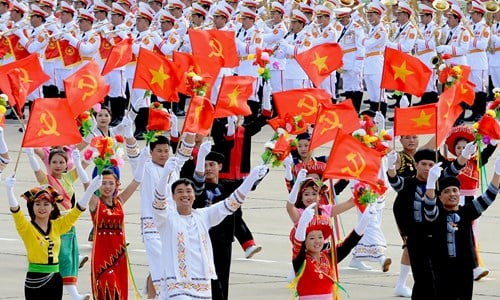
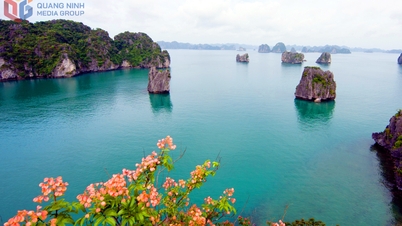
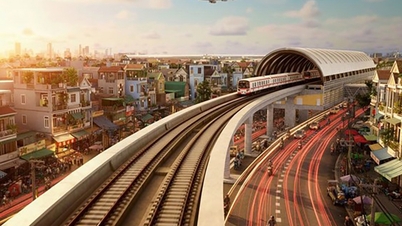
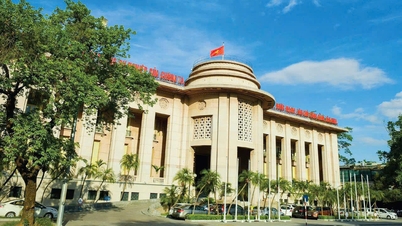
When its inherent strengths are properly nurtured and developed, Vietnam will continue to enhance its position on the international stage. (Image from the internet, for illustration purposes only).
The Platform and Strategy for National Development set forth by the 13th National Congress of the Communist Party of Vietnam affirmed the strategic tasks and breakthroughs. In that spirit, we need to emphasize the following directions:
Firstly , strengthen human resource training and development. Improving the qualifications, knowledge, skills, and qualities of the people will help enhance competitiveness and create a high-quality workforce to serve the country's development.
Secondly , develop physical and soft infrastructure; create the most favorable conditions for the development of economic sectors with advantages and the ability to compete in the international market, based on taking advantage of the opportunities that the Fourth Industrial Revolution has brought and is bringing.
Thirdly , science, technology, and innovation are the most important driving forces and invaluable tools for socio-economic development, enhancing the strength and competitiveness of the Vietnamese economy, as well as its products and brands.
Fourth , culture is the foundation for developing national spirit and building an equal, transparent, civilized, and happy society. Investing in education, science, innovation, and the development of Vietnamese culture should be prioritized.
Fifth , the people are the center of national strength. Caring for the material and spiritual well-being of the people, protecting their legitimate rights, and especially creating conditions for them to exercise their democratic rights and directly participate in the nation-building process, is absolutely essential for our nation to confidently move towards the future alongside humanity.
Thank you very much, Doctor!
(*): A phrase from President Ho Chi Minh's Testament
Nguyen Huong (Editor)
Associate Professor Bui Hoai Son, Standing Member of the National Assembly's Committee on Culture and Education:
Our greatest weapon is patriotism, our national spirit.
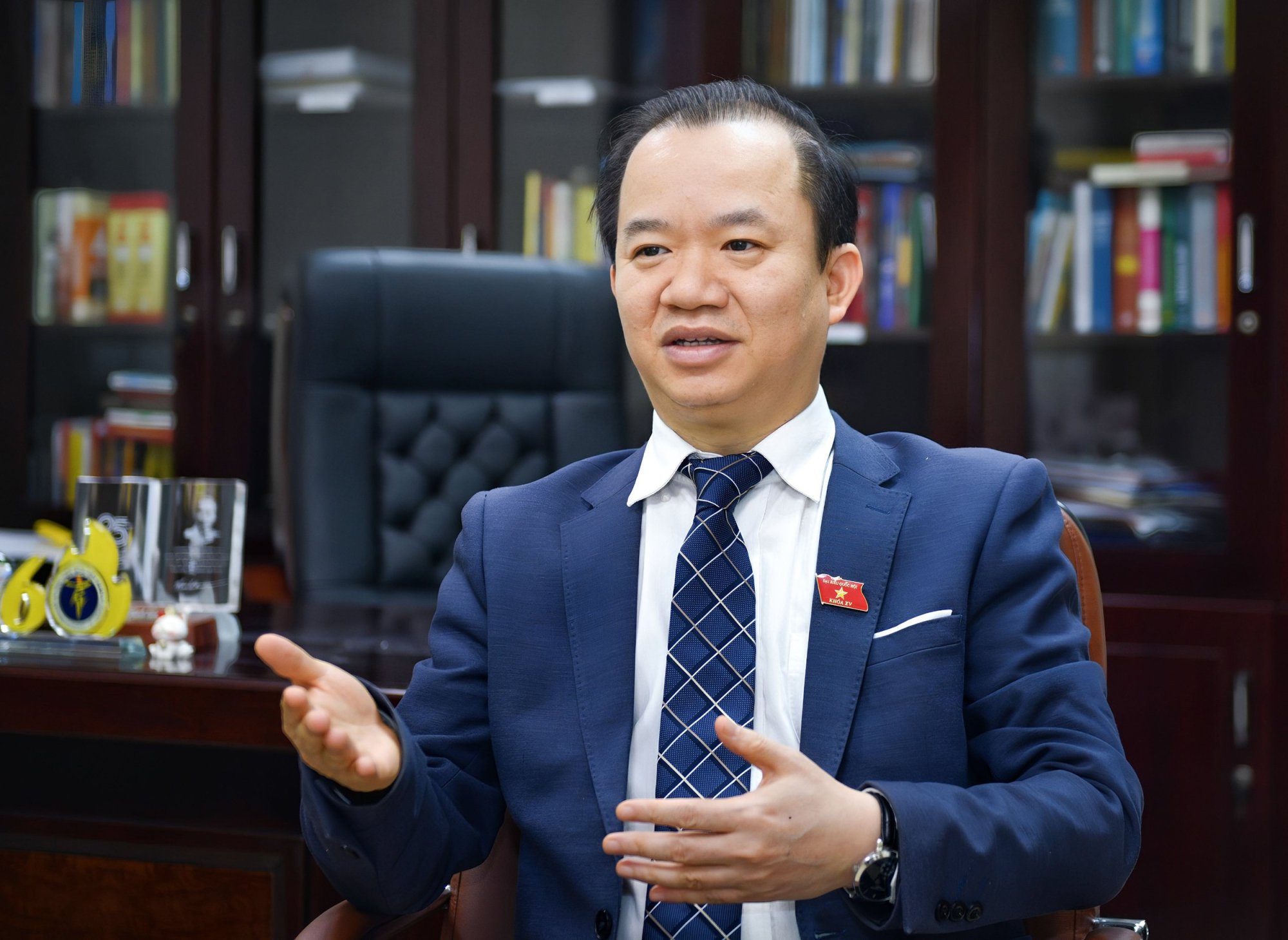
Associate Professor Bui Hoai Son believes that intrinsic strength stems from national cultural values, accumulated and refined over thousands of years of history, and becoming an important asset of our nation.
Inner strength stems from national cultural values, accumulated and refined over thousands of years of history, becoming an important asset of our nation.
To develop internal strength, it is a long process of struggle, selection, preservation, and promotion of cultural values. With national interests at its center, our country has created many miracles. In the 1943 Vietnamese Cultural Outline, our Party emphasized: "The cultural front is one of the three fronts (economic, political, and cultural), where communists must operate."
In the current context, cultural development needs to have a ripple effect on other areas of social life, including politics and economics. The policy of developing cultural industries is one of the breakthrough tasks, implemented in accordance with the trends and circumstances of the country. Cultural industries, relying on creative talent, cultural resources, technology, and business skills to create cultural products and services, not only incorporate cultural values into economic products to create competitive advantages and material benefits, but also tell beautiful images and compelling stories about Vietnam, its culture, and its people, thereby helping us to form the soft power and intrinsic strength of the nation.
Currently, we are in a very complex social context. The negative impacts of the market economy, international integration, and the rapid development of the scientific and technological revolution, as well as new media such as the internet and social networks, have made cultural development more difficult than ever before. The principle of cultural development must avoid conservatism in order to select the best of world culture, and avoid eccentricity, pessimism, mysticism, and idealism, so as to create a positive, civilized environment conducive to national development.
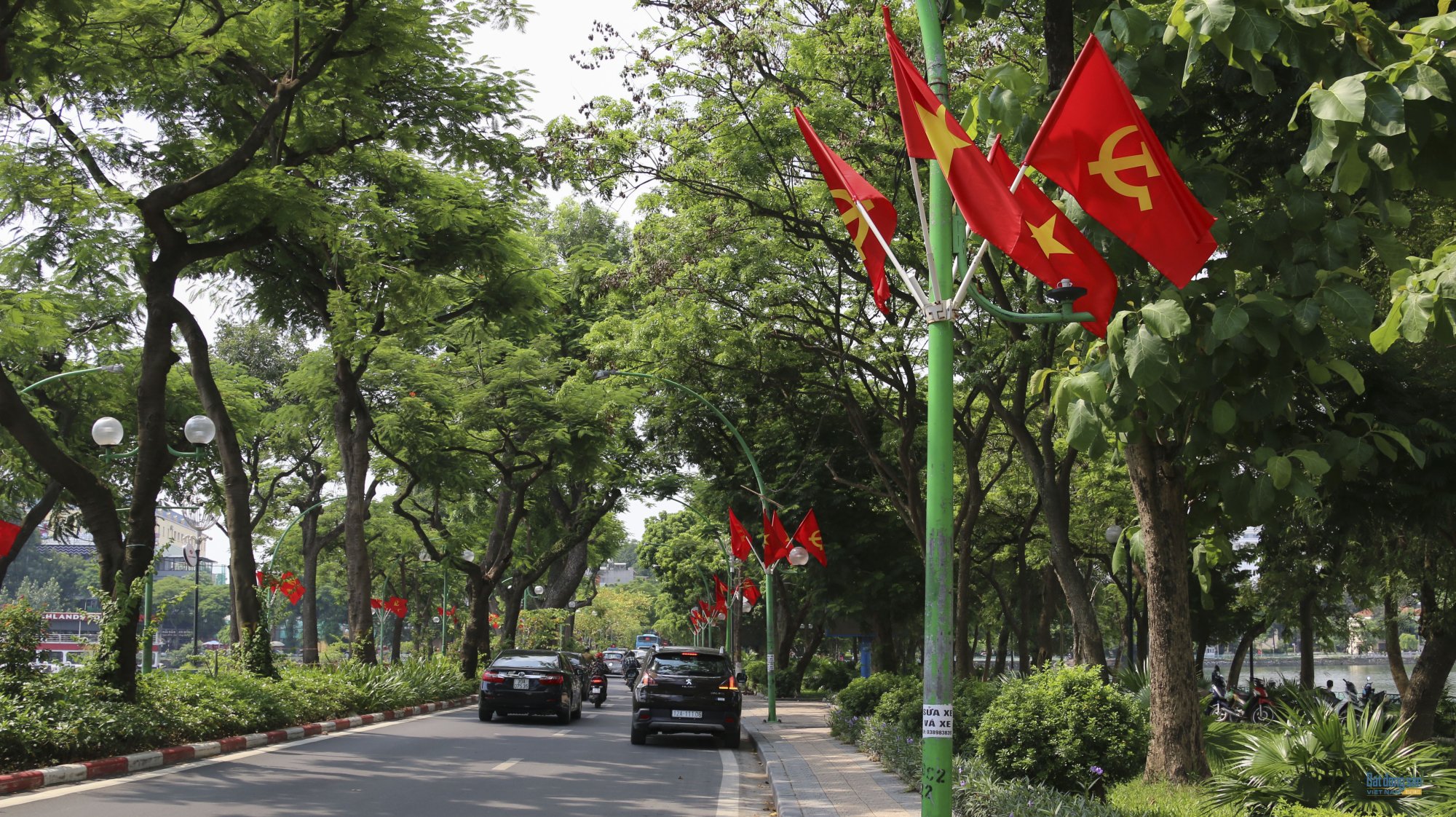
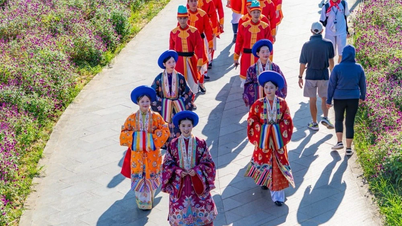
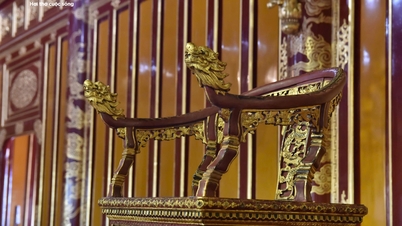
When the country is at peace, culture takes on a new mission in building an independent, free, and happy nation. (Illustrative image - source: TL)
Nationalization is one of the three principles of cultural development (Nationalization, Popularization, and Scientification) defined in the Vietnamese Cultural Revolution Outline of 1943. It is the first and most important principle in forming an independent culture, creating conditions for national self-reliance and national liberation. The principle of nationalization is understood as "combating all enslaving and colonial influences to ensure the independent development of Vietnamese culture."
After 80 years, this principle remains valid, and the development of the nationalization principle has added new content, creating conditions for unleashing the combined strength of the country. Nationalization is the way we mobilize patriotism through awareness of shared values and common ancestral origins, thereby forming the strength of solidarity. Our country has gone through many wars.
As a result, we have all triumphed over every invading enemy. Our greatest weapon is not modern military equipment, but patriotism and national spirit. Everyone knows and understands the content of the songs "Nam Quoc Son Ha," "Hich Tuong Si," or "Binh Ngo Dai Cao," folk songs and proverbs about patriotism, and stories that connect people to the country through the stories of Hung Vuong, the Trung Sisters, Ngo Quyen, Tran Hung Dao, Quang Trung…
It is no coincidence that in 1954, before returning to the capital, President Ho Chi Minh visited Hung Temple and left behind an inspiring statement that instilled faith in the entire nation: " The Hung Kings built the nation. We, their descendants, must together preserve it." Songs praising the homeland, the country, and the leader are a natural result of nationalist ideology.
Songs with lyrics like "The road to the battlefield is so beautiful this season," "We proudly march forward, oh Vietnam," "The Party has given us the spring of our lives. The Party instilled in us faith in the future" ... have inspired generations of young volunteers to happily go to war; Songs about President Ho Chi Minh such as "Ho Chi Minh, the most beautiful name," "The country bows its head. Forever grateful. His name lives on with the Vietnamese land" ... to this day remain a source of encouragement and motivation for everyone regarding his moral example, always bringing so much emotion to the hearts of the people throughout the country. This is the important spiritual strength for the cause of building and liberating the country later on, so that culture becomes a "milestone" of national sovereignty.
Placed in relation to the other two principles, popularization and scientification, we can see even more clearly the significance of the principle of nationalization. A strong nation must be based on the strength of its masses. Caring for the people, fostering national unity, and relying on the development of science and education will help our nation become more steadfast and confident in the struggle for national liberation and nation-building. When the country is at peace, culture takes on a new mission in building an independent, free, and happy homeland…
Human values are a tremendous intrinsic resource for national development.Writer Le Hoai Nam observes: Culture plays a very important role in expressing the identity and characteristics of a nation. In this context, people are the embodiment of many facets and contents of Vietnamese value systems. Vietnamese people possess many admirable qualities such as patriotism, responsibility, perseverance, diligence, creativity, solidarity, and a desire for development… These qualities are invaluable assets of the country! Promoting the values of Vietnamese people is a tremendous endogenous resource for development and building a bright future for the nation and the people. |
Nguyen Huong (Recorded)
Source



























![[Video] Sunset at Lap An Lagoon – Where the sun sets over the fishing nets](https://vphoto.vietnam.vn/thumb/1200x675/vietnam/resource/IMAGE/2026/05/31/1780192137701_beach-landscape-sea-water-nature-grass-745871-pxhere-com.jpeg)




















Comment (0)