The exemplary models of traditional Vietnamese opera that remain
According to documents from the Center for Scientific Research, Professor and People's Artist Tran Bang was born into a family with a tradition of art in Hai Phong. His father, writer Tran Tieu, had many famous works about rural life. He also had access to Western learning through studying foreign languages, as well as reading the works of his father and his uncle, writer Khai Hung.
These literary "advantages" later helped him become a member of the Central People's Performing Arts Troupe, established in Tuyen Quang in 1951. The troupe had many renowned artists such as: The Lu, Song Kim (drama group); Nguyen Xuan Khoat, Luu Huu Phuoc, Doan Man, Thai Ly (music and dance group); Nam Ngu, Dieu Huong, Ca Tam (traditional opera group). When the Party set out the policy of restoring the nation's traditional heritage, each member of the troupe had to learn traditional opera under the guidance of artisans such as Nam Ngu, Ca Tam, Dieu Huong... People's Artist Tran Bang's connection with traditional opera began from there.
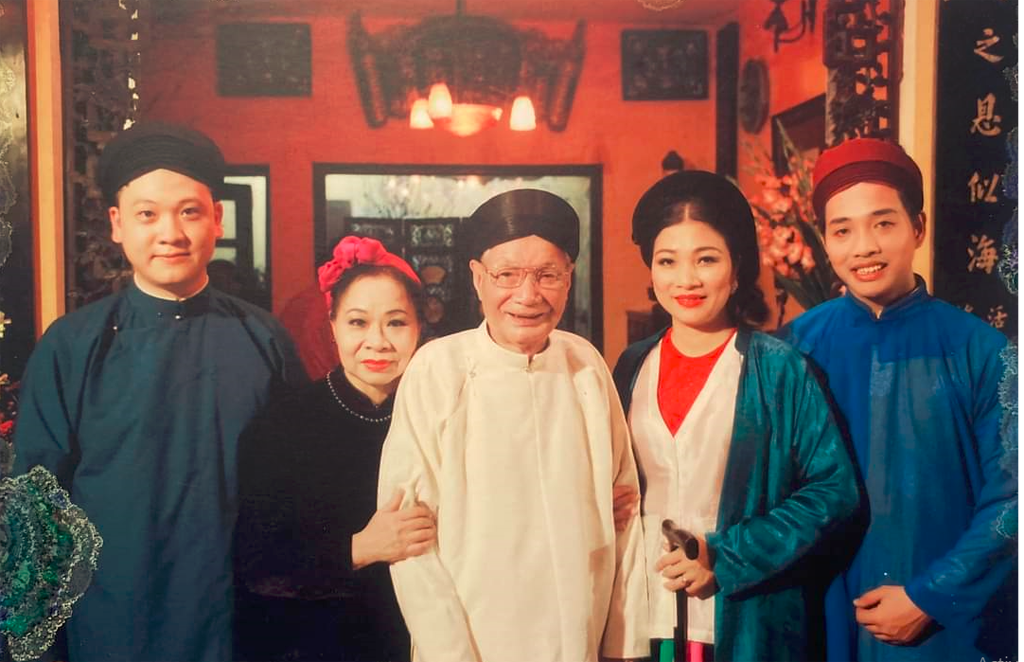
People's Artist Tran Bang (in the middle) and generations of his students.
In 1952, Mr. Tran Bang, along with the Cheo (traditional Vietnamese opera) artists Nam Ngu and Dieu Huong, wrote and staged the play "Sister Tram ," about a woman who worked as a servant for a landlord and was later liberated by the revolution. This play was chosen to be performed at the 1953 Central Committee Conference in the Thai Nguyen safe zone. President Ho Chi Minh, along with Mr. Truong Chinh, Mr. Hoang Quoc Viet, and Mr. Pham Van Dong, attended the performance. President Ho Chi Minh personally went on stage to give candy to the artists, and Mr. Tran Bang was later honored to be invited to dinner by President Ho Chi Minh.
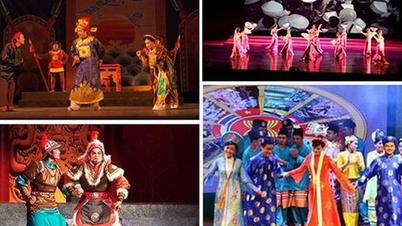
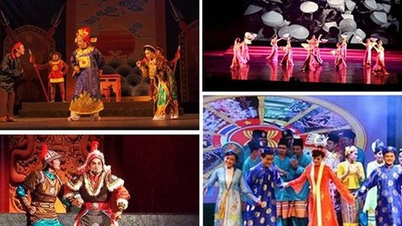
From then on, People's Artist Tran Bang's theatrical career became even more closely associated with Cheo (traditional Vietnamese opera). He was one of the directors in the first generation of modern Cheo directors, along with Tran Huyen Tran, Cao Kim Dien, Long Chuong, etc. In that role, he simultaneously revived traditional Cheo and wrote new modern Cheo scripts. Therefore, he has achieved significant milestones in both traditional and modern Cheo. In revival, he produced works such as Suy Van (1961); Quan Am Thi Kinh (3 versions performed in 1957, 1968, and 1985); Tu Thuc (1990), Nang Thiet The (2001)... In modern Cheo, he produced: Con Trau Hai Nha (1956); Duong Di Doi Nga (1959); Mau Chung Ta Da Chay (1962); Tinh Rung (1972); Chuyen Tinh Nam 80 (1981)...
One of Professor-People's Artist Tran Bang's contributions to the traditional Vietnamese opera (cheo) was his search for and "adjustment" of new messages for cheo plays. In 1960, he and director Han The Du worked on adapting the cheo play Suy Van from the classic play Kim Nham . He proposed this adaptation because the classic play had a "dilemma" between male chauvinism (criticizing Suy Van for escaping marriage to seek happiness with another couple) and considering it a humane liberation. He and the Cheo Research Committee at the time wanted to support Suy Van's "rebellion." Therefore, Suy Van defied convention but wanted to be loved and receive more support from the audience.
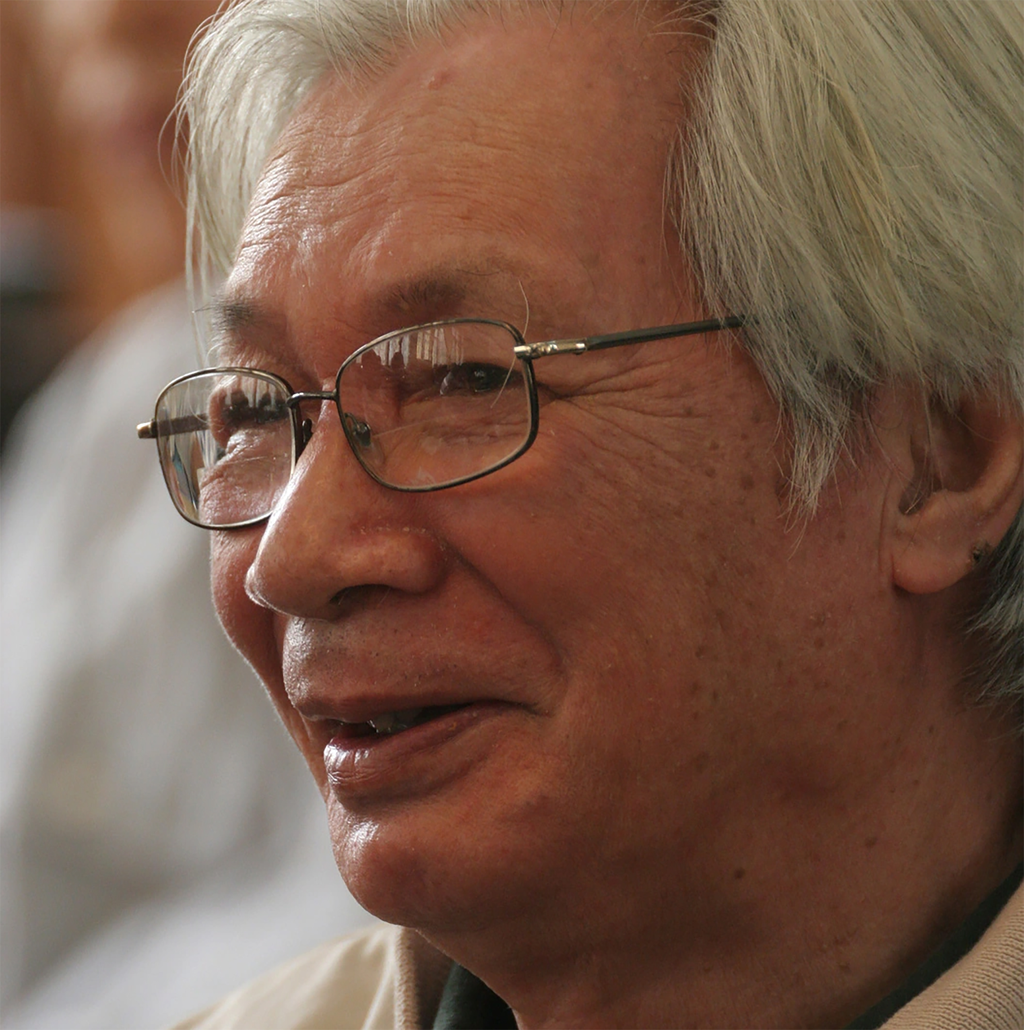
Professor and People's Artist Tran Bang (1926 - 2023)
Passing on the torch of rowing
Not only did Professor and People's Artist Tran Bang revive and create new plays, but he also left behind research on Cheo (Vietnamese traditional opera). While alive, he was always concerned that Cheo, a performance art passed down orally, would easily fade away in the absence of widespread video recording. Therefore, in 2004, he began summarizing his creative experiences over 50 years as a Cheo director. In it, he wrote about the art of Cheo, its staging, the conventional expressions on stage, the methods of character creation, and how to ensure that Cheo remained Cheo and not a blend of spoken drama and Cheo. He titled the book " Tran Bang - Cheo Director," which was published in 2006.
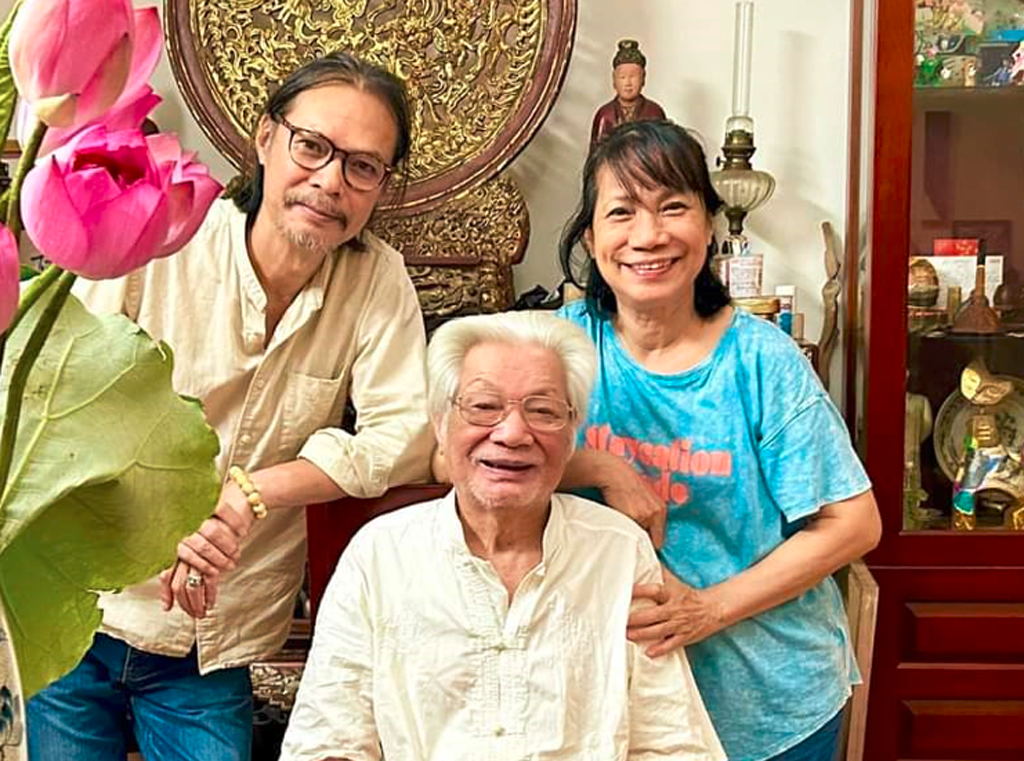
People's Artist Tran Luc, People's Artist Tran Bang (from left to right)
Now, with the passing of Professor and People's Artist Tran Bang (6:00 AM, July 19, 2023), his love for Cheo (traditional Vietnamese opera) remains alive in the generations that continue to preserve it. His son, People's Artist Tran Luc, has always incorporated Cheo stage techniques into the plays he directs. People's Artist Tran Luc shared that the conventions that People's Artist Tran Bang practiced in Cheo plays impressed him from a young age, and now he wants to emulate them.
Cheo playwright Mai Van Lang shared: "Professor and People's Artist Tran Bang was one of the founders of the Central People's Performing Arts Troupe, and he was one of the pioneers in building the Vietnam Cheo Theatre. When the Vietnam Cheo Theatre was established, People's Artist Tran Bang was the first Head of the Troupe, and then the first Director. He was the head of the Cheo Research Committee, responsible for revising, adapting, arranging, and staging the seven classic Cheo plays that the theatre has today. People's Artist Tran Bang was a sincere and affectionate person, valuing his colleagues and loving his students."
People's Artist Tran Quoc Chiem, former Deputy Director of the Hanoi Department of Culture, Sports and Tourism, said: "The passing of People's Artist Tran Bang is a great loss to Cheo (traditional Vietnamese opera). He was a Cheo teacher, and also someone who understood and had a vast love for Cheo. I remember when he was over 70, he still judged amateur theater festivals in Hanoi. The Hanoi festivals had plays and Cheo, but mainly Cheo. He told me that Cheo originates from the people, from the masses. Therefore, Cheo in these festivals is just as important as Cheo in professional festivals."
Source link