

The 2nd Innovation Forum in the Healthcare Sector, themed "Innovating Approaches to Elevate Vietnamese Healthcare," was organized by Pharma Group today, October 18th, in Hanoi and connected online with international experts.
At the forum, managers and researchers in the fields of medicine and pharmaceuticals discussed experiences, research trends, inventions, and practical contributions to realizing the goals of developing Vietnam's medical and pharmaceutical industry.
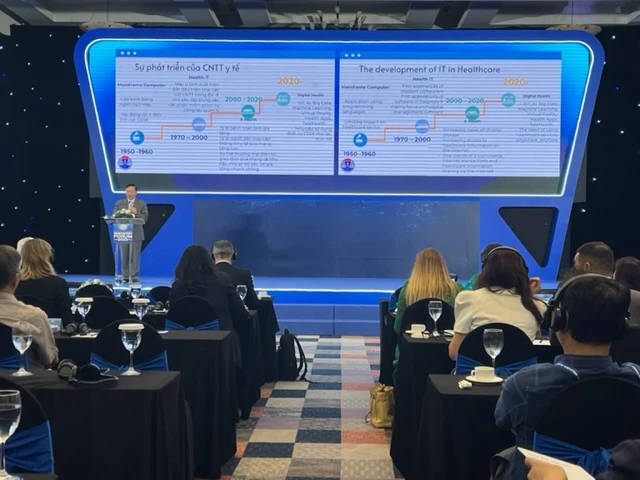
At the forum, speakers recommended digital transformation and the application of information technology to help Vietnam's healthcare sector develop more strongly and increase opportunities to adopt new pharmaceutical technologies.
Mr. Emin Turan, Chairman of Pharma Group, shared that with its existing potential and by drawing on lessons learned from international experiences, Vietnam can absolutely aim to elevate its healthcare system and become a center of science and innovation in the region.
In the context of the growing demand for healthcare in Vietnam, innovation in the healthcare sector plays a crucial role in improving the quality of healthcare, enhancing the ability to diagnose and treat diseases, and promoting progress in medical research.
In addition, advanced technologies such as artificial intelligence, data analytics, virtual reality, blockchain, and robotics have been widely applied in healthcare, helping to save time and costs, and improve people's quality of life and health.
The Chairman of Pharma Group highly appreciated the National Strategy for the Development of Vietnam's Pharmaceutical Industry to 2023, with a vision to 2045, approved by the Government, believing that the policies issued and amended will increase opportunities for accessing new medicines and treatment methods in healthcare in Vietnam.
A faster approval process would allow for the expansion of clinical trials.
Sharing more about clinical trials and opportunities to access new drugs and treatment methods, Associate Professor Dr. Dao Van Tu, Director of the Clinical Trial Center (National Cancer Hospital), said that clinical trials play an important role in bringing research results to be applied to humans.
Based on his 15 years of professional experience working with cancer patients, Dr. Dao Van Tu shared that about 5-6 years ago, many patients and not a few doctors believed that participating in clinical trials meant being a "guinea pig." But this misunderstanding has changed.
In Vietnam, clinical trials are currently only conducted on products that are eligible for use in humans, not on hazardous materials research. Participating in clinical trials is an opportunity to access new treatment methods, and in fact, some cancer patients have experienced remission after participating in these studies.
Dr. Tú also shared that clinical trials in cancer treatment are increasing rapidly in many countries, but there are still some limitations in Vietnam. This is because the percentage of patients participating in clinical trials in Vietnam is currently only 1-2%, while in many countries, this rate is at least 10%.
Domestic units still lack the personnel to conduct clinical trials. Furthermore, a faster domestic approval process is necessary for clinical trials in Vietnam to be expanded.
According to the Ministry of Health, Vietnam is focusing on improving its research capacity and applying existing technologies to produce original branded drugs and new, modern dosage forms, aiming to become a manufacturing and technology transfer center for original branded drugs in the ASEAN region.
The goal is to develop the domestic pharmaceutical industry to level 4 – the highest level, according to the World Health Organization's classification. By 2030, 100% of medicines will be supplied proactively and promptly to meet the needs of disease prevention and treatment; ensuring drug security, meeting the requirements of national defense and security, disease prevention and control, overcoming the consequences of natural disasters, public health incidents, and other urgent drug needs.
Domestically produced medicines are striving to meet approximately 80% of the demand and 70% of the market value; and continue to strive to achieve the goal of producing 20% of the raw materials needed for domestic drug production...
Source link

























![[Image] Close-up of the newly discovered "sacred road" at My Son Sanctuary](/_next/image?url=https%3A%2F%2Fvphoto.vietnam.vn%2Fthumb%2F1200x675%2Fvietnam%2Fresource%2FIMAGE%2F2025%2F12%2F13%2F1765587881240_ndo_br_ms5-jpg.webp&w=3840&q=75)





























































Comment (0)