

On March 13th, the Vietnam Institute of Educational Sciences organized a seminar titled "Helping Vietnamese Children Grow Up with a Pressure-Free Childhood." The seminar aimed to create a forum for sharing the current situation regarding factors that cause pressure on primary school students, with the goal of building a healthy living environment that allows children to be themselves, live innocently, and without pressure.
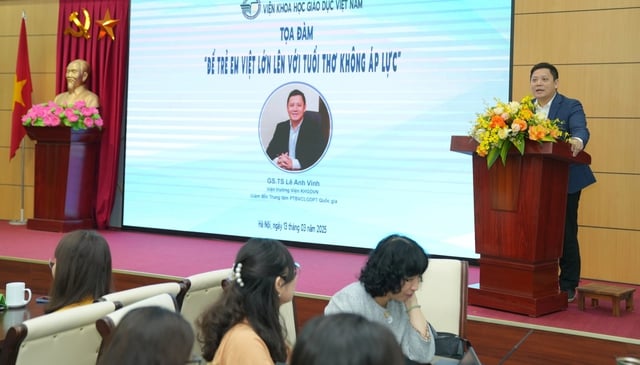
Professor Le Anh Vinh shared this at the seminar "Ensuring Vietnamese children grow up with a stress-free childhood."
PHOTO: HS
At the seminar, Professor Le Anh Vinh, Director of the Vietnam Institute of Educational Sciences , shared a story that made him think a lot about the pressure his students are under: "In the 10 years I've led the national team to the International Mathematical Olympiad, there was one time when I took my students out to eat before the competition, and a very stressed team member told me, 'Teacher, there are only two days left and I'll never have to take a math competition again.'"
"A seemingly ordinary statement, yet uttered by one of the most outstanding math students, surprised me greatly," Professor Le Anh Vinh shared, adding that he immediately told the student that he had no pressure on the team, and that he himself felt no pressure regarding the team's performance, to help the student reduce stress before the exam.
Back then, to help his students balance their emotions, Professor Vinh recounted that he said: "Enter the exam room like a primary school child and tackle the IMO problems as if they were the best problems of your life, not for the score or the prize."
Later, that student succeeded in mathematics at a top American university. However, the question of why students are under such pressure remains a concern for Professor Le Anh Vinh.
Parents only care about how many points their children get.
Regarding student assessment, especially for elementary school students, Professor Le Anh Vinh also shared a story about a child who came home from school and proudly told his father that he got a 9, but that was the lowest in the class, and the father was upset. Conversely, when the child got a 6 but that was the highest in the class, the parents were still happy and praised him, saying, "You're so smart!"
Professor Le Anh Vinh also recalled the changes in the assessment of primary school students since Circular 30, which abolished regular grading, and how schools and teachers subsequently faced immense pressure because they were unsure whether their comments could accurately and adequately assess students.
Therefore, despite its very progressive and humane evaluation principles, this circular had to be adjusted many times before it could be implemented in practice.
Director Le Anh Vinh said, "We often think that more is better, and combining both grading and feedback is better than relying on just one method. Teachers praising students is good, but parents still want them to give grades of 9 or 10."
However, according to Mr. Vinh, a research study has shown that grading or a combination of grading and comments does not bring about significant changes in students' learning outcomes; only grading with comments brings about the expected changes.
"Simply because once grades are given, nobody cares about feedback and the true nature of what's happening in the classroom. We have too many students with high grades, lots of perfect scores, but they also have many problems... Grades aren't everything," Mr. Vinh said.
Emphasizing the importance of ensuring children are happy and carefree when they go to school, especially at the primary level, Professor Vinh recalled a previous proposal to extend the number of years of primary school from 5 to 6 years, which sparked much debate.
Many countries have adopted this model because they want children to have a longer learning period and experience less pressure during their primary school years. Primary school is not about knowledge, achievements, or grades, but rather about cultivating character, personality, and attitudes so that children can confidently navigate life.
Source: https://thanhnien.vn/vien-truong-giao-duc-giat-minh-tu-cau-noi-cua-hoc-sinh-thi-olympic-toan-quoc-te-185250313164207978.htm


![[Image] Leaked images ahead of the 2025 Community Action Awards gala.](/_next/image?url=https%3A%2F%2Fvphoto.vietnam.vn%2Fthumb%2F1200x675%2Fvietnam%2Fresource%2FIMAGE%2F2025%2F12%2F16%2F1765882828720_ndo_br_thiet-ke-chua-co-ten-45-png.webp&w=3840&q=75)
![[Live] 2025 Community Action Awards Gala](/_next/image?url=https%3A%2F%2Fvphoto.vietnam.vn%2Fthumb%2F1200x675%2Fvietnam%2Fresource%2FIMAGE%2F2025%2F12%2F16%2F1765899631650_ndo_tr_z7334013144784-9f9fe10a6d63584c85aff40f2957c250-jpg.webp&w=3840&q=75)
![[Photo] Prime Minister Pham Minh Chinh receives the Governor of Tochigi Province (Japan)](/_next/image?url=https%3A%2F%2Fvphoto.vietnam.vn%2Fthumb%2F1200x675%2Fvietnam%2Fresource%2FIMAGE%2F2025%2F12%2F16%2F1765892133176_dsc-8082-6425-jpg.webp&w=3840&q=75)
![[Photo] Prime Minister Pham Minh Chinh receives Lao Minister of Education and Sports Thongsalith Mangnormek](/_next/image?url=https%3A%2F%2Fvphoto.vietnam.vn%2Fthumb%2F1200x675%2Fvietnam%2Fresource%2FIMAGE%2F2025%2F12%2F16%2F1765876834721_dsc-7519-jpg.webp&w=3840&q=75)







































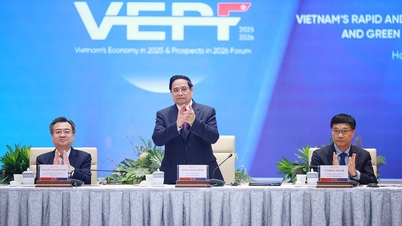
![[Photo] Prime Minister Pham Minh Chinh attends the Vietnam Economic Forum 2025](https://vphoto.vietnam.vn/thumb/402x226/vietnam/resource/IMAGE/2025/12/16/1765893035503_ndo_br_dsc-8043-jpg.webp)





















Comment (0)