

The value of a "no drama" politician
In 2020, Keir Starmer took over the Labour Party, which was in turmoil under the leadership of Jeremy Corbyn, a radical socialist who supported the nationalization of parts of the UK economy , was anti-Semitic, and even allowed activists to regularly wave Palestinian flags at party meetings.
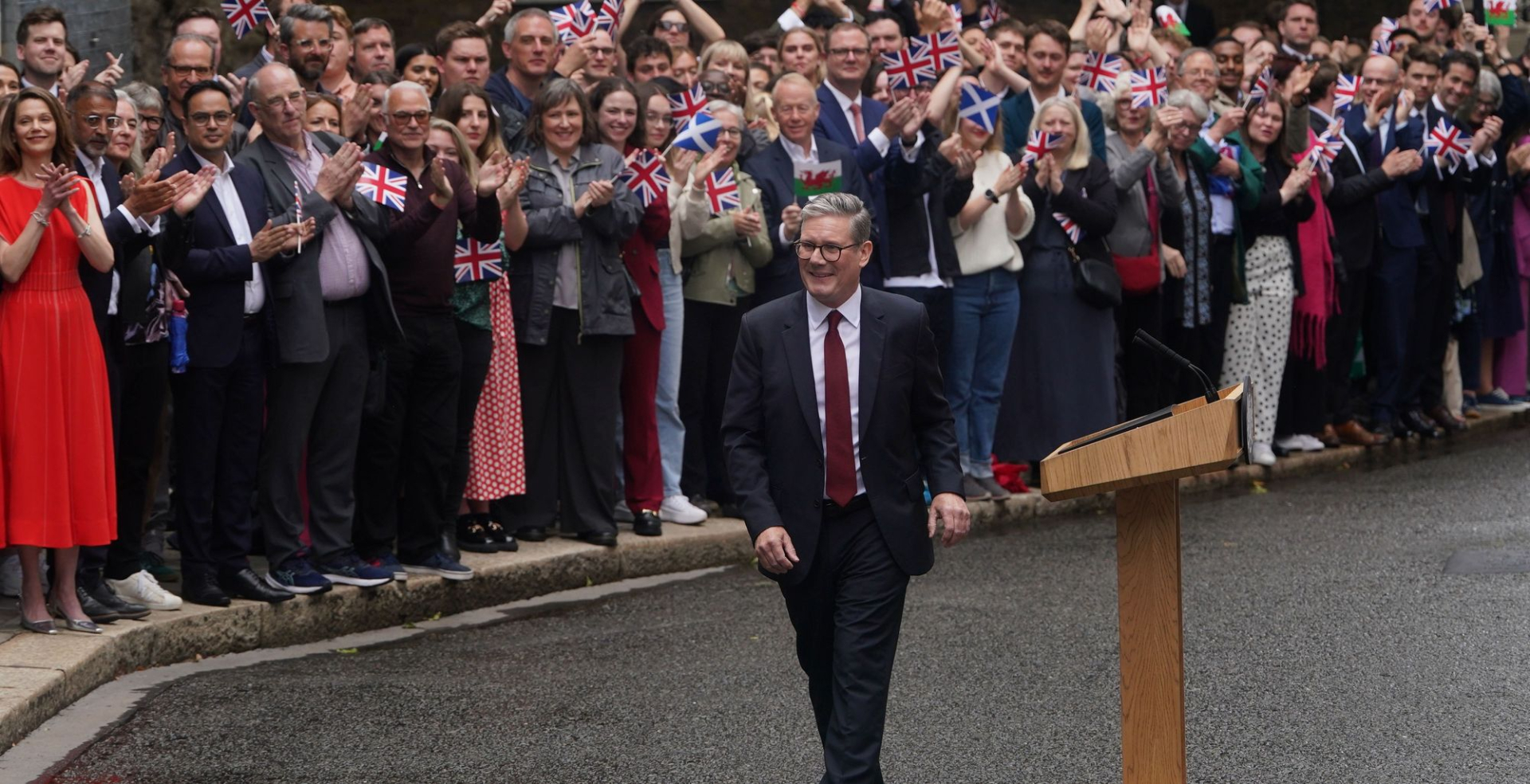
Newly elected British Prime Minister Sir Keir Starmer speaks outside 10 Downing Street following the Labour Party's resounding victory. Photo: Zuma Press.
Keir Starmer, a former prosecutor, put an end to all of that. He steered the party toward neutrality, removing members with anti-Semitic views. And, two years after taking power, he required Labour members to sing the national anthem, “God Save the King,” at the annual meeting. The only flags in the hall were the Union Jack.
Now, eight years after the UK voted to leave the European Union and entered the era of political and economic turmoil after Brexit, British voters have asked the politician dubbed the "No-Drama Starmer" to stabilize the country with his dry, emotionless approach.
Starmer became Prime Minister of the UK after his Labour Party won one of the largest parliamentary majoritys in history. Meanwhile, the Conservative Party's seat count plummeted to its lowest level in modern history.
The scale of this resounding victory is only slightly smaller than the Labour Party's previous biggest win in 1997 under Tony Blair, who also ended the Conservative Party's long reign by bringing his party into the centrist zone, ushering in a 13-year period of rule, the longest Labour Party has ever held.
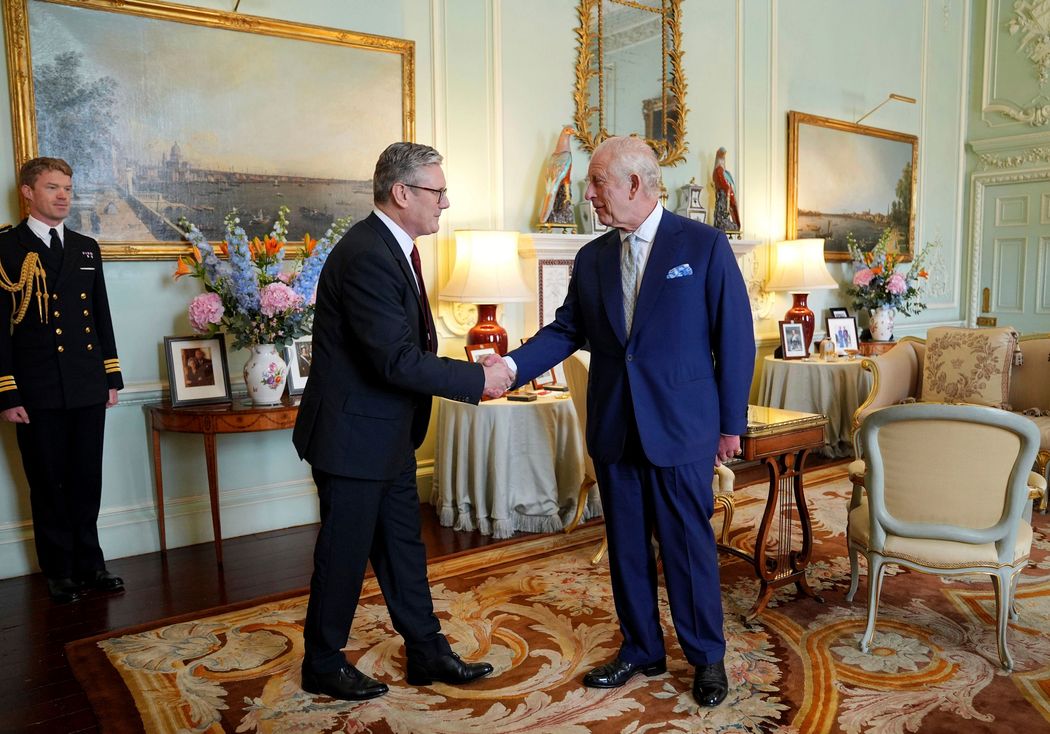
King Charles III of Britain invited Starmer to become Prime Minister and form a new government on Friday (July 5). Photo: AP
However, unlike Blair, Starmer lacked charisma, offered no vision of radical change, and wasn't even widely popular. Polls consistently showed more voters disapproving of him than approving. Even his most ardent supporters argued that his victory stemmed largely from the collapse of the Conservative Party.
But everything has its reasons. British voters flocked to Starmer as an antidote to the post-Brexit chaos. In the first five months of 2022, the country had three different prime ministers and a financial race on the pound sterling. Former Prime Minister Boris Johnson was even ousted by his own party after numerous scandals, including hosting a party at 10 Downing Street during the pandemic lockdown.
At a time when far-right populist parties are rising in Europe, and American politics is dominated by the presence of Donald Trump, Starmer will be a test of whether people can rely on a pragmatic leader instead of being consumed by grandiose rhetoric, empty promises, and populism.
“Politics is full of people who yell very loudly about an issue,” Starmer said a few years ago. “But there’s another kind of passion… which is, ‘What’s the answer to that problem?’”
Discipline and action
As a law student at Oxford University, Starmer imprisoned numerous terrorists when he became Britain's Chief Prosecutor. But when listing his greatest achievements in this role, he mentions the transition of the criminal justice system from paper to digital. As leader of the Labour Party, his first major decision was to adjust the party's cryptic statutes to tighten his control over how policy is set.
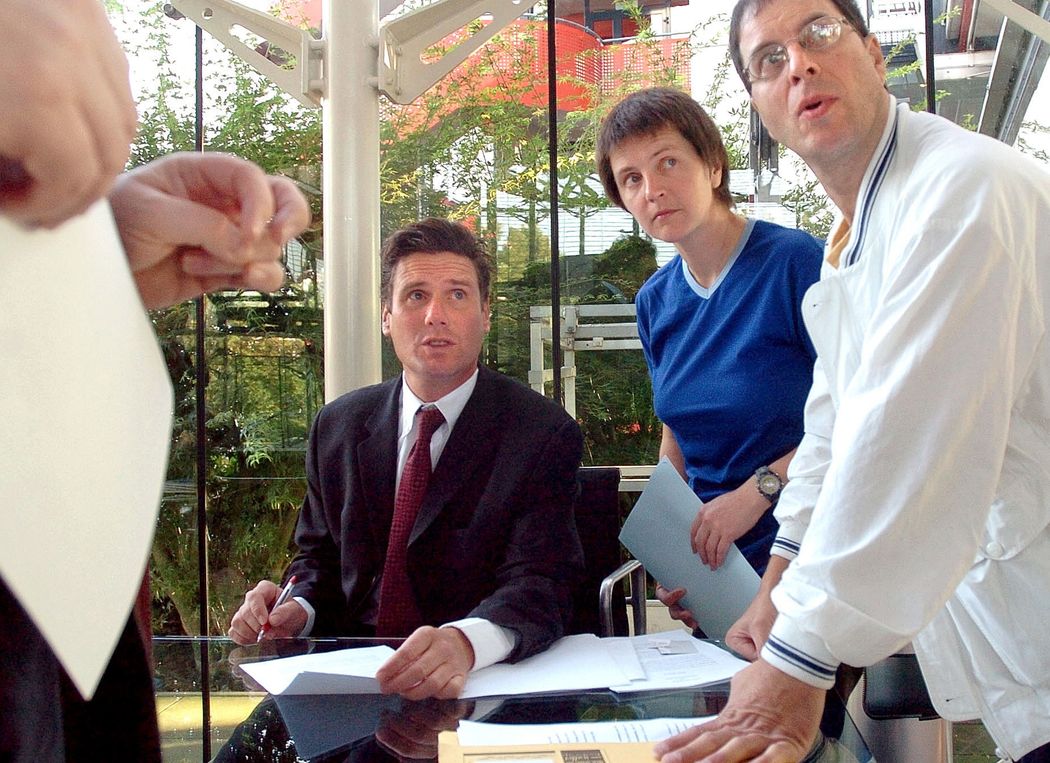
As a human rights lawyer, Starmer (wearing a black vest) has spent nearly a decade defending environmental activists. Photo: AP
Keir Starmer is the opposite of Boris Johnson, the last British leader elected in 2019. Johnson is charismatic, a product of an elite private school, sporting blond hair, quoting Latin, and painting a sweeping vision of "sun-drenched highlands" under Brexit. Starmer, on the other hand, comes from a humble background, wears glasses and has neatly trimmed bangs, has no favorite novels, is a stiff orator, and presents himself as someone capable of making difficult choices in difficult times.
Such a figure arrives at a time when the British are impatiently awaiting change and fed up with empty promises. The British economy has grown by an average of 1.3% in the years since 2016, and real wages have stagnated in recent years. The country has 6.3 million people waiting for treatment at the state-run National Health Service (NHS). Public finances are constrained after distributing billions of pounds to the public during the pandemic and the energy crisis caused by the Russia-Ukraine conflict. Prisons are so overcrowded that criminals can be released early.
Mr. Starmer spent much of his campaign emphasizing what he would not do: widespread tax increases or drastic increases in spending, which he argued the UK could not afford. His commitments were a five-point plan that included cutting bureaucracy to build more housing, reducing immigration, creating funds to accelerate the construction of green energy infrastructure, and making it easier for people to book appointments in the health system.
Regarding foreign policy, Starmer also expressed a view that continues the work of previous administrations in keeping the US close to and supporting Ukraine. He supports businesses and wants to mend relations with Europe but will not reverse Brexit. What needs stability, Starmer will maintain. What needs reform, will be reformed. All of this is based on pragmatism, not on empty promises.
Starmer is not a politician.
Keir Starmer is a peculiar case at Westminster (the British Parliament building). He's not known for his oratorical skills. Robert Hayward, a pollster and Conservative member of the House of Lords, says he's almost never heard of a British politician with so little political experience winning a general election. Yet Starmer has only been in politics for nine years. “Starmer doesn’t know much about the Labour Party. He’s an outsider,” Hayward says.
Interviews with dozens of people who worked with Starmer paint a picture of a politician who uses meticulous deliberation to achieve results. He doesn't rely on fame to get what he wants. During the campaign, when a voter asked Starmer why he was so dry, Starmer made everyone laugh when he replied, "...thank you!" Those who know Starmer will say that he can make ruthless decisions and doesn't hesitate to abandon allies or reverse deeply ingrained policies.
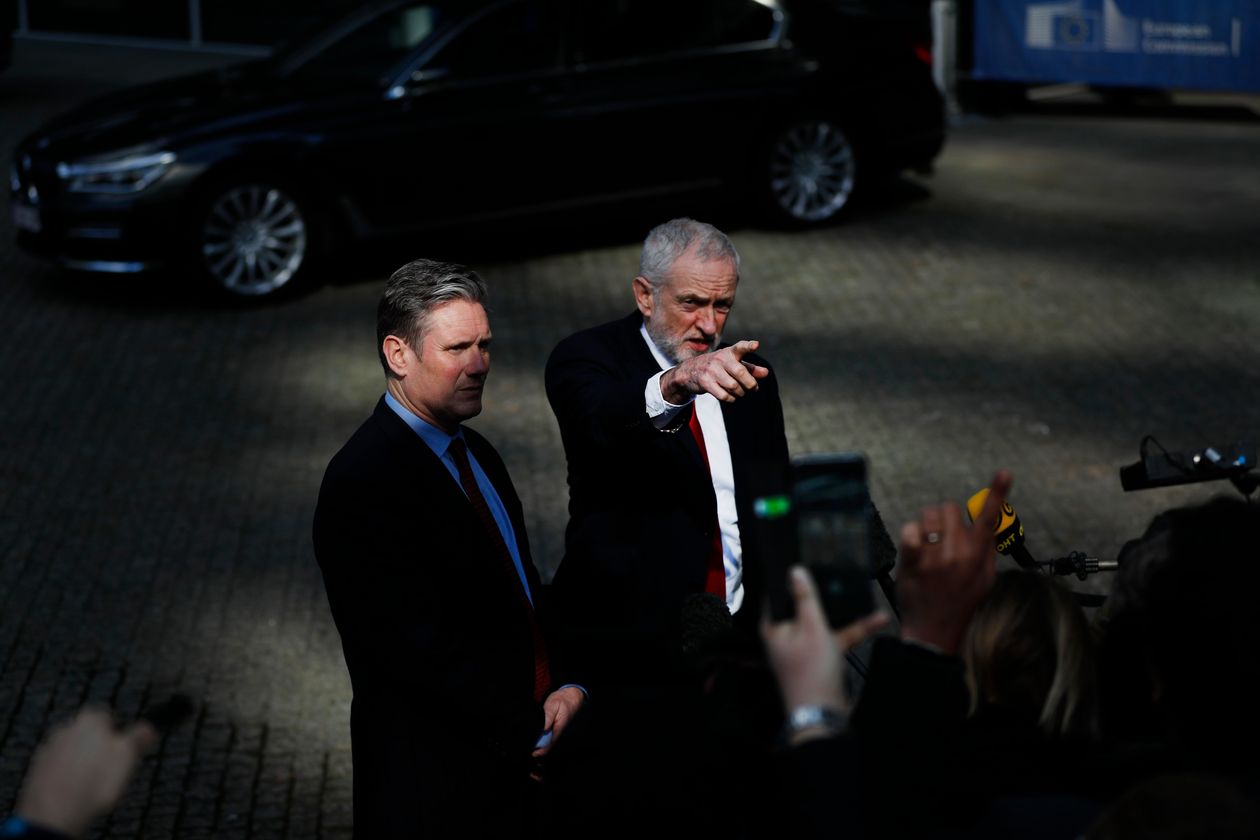
Starmer served under former Labour Party leader Jeremy Corbyn (right), but was later suspended from the party. Photo: AP
When running for Labour Party leader in 2020, he positioned himself as an ally of the left, pledging to nationalize the UK's energy sector and abolish university tuition fees. He also called Corbyn a friend. But just months after becoming Labour leader, Starmer reversed those policies, suspended Corbyn from the party, and accepted Brexit despite having previously traveled across the UK campaigning against leaving the EU.
In the past year alone, Keir Starmer has scrapped a long-praised £28 billion-a-year green investment plan and diluted a policy aimed at improving workers' rights. This has made him an unpopular figure within the party's far left and alienated many traditional Labour voters.
Mr. Starmer grew up in modest circumstances just south of London in a place called Oxted, an affluent suburb and a Conservative Party stronghold. His parents named him after the founder of the Labour Party, Keir Hardie. His father was a mechanic and devotedly cared for Starmer's mother, a former nurse who suffered from a rare form of arthritis that made walking difficult. Keir became the first in his family to graduate from university.
After graduating, Keir Starmer began a career as a liberal human rights lawyer. He was lauded for representing those facing the death penalty in the Caribbean and Africa. He won several important cases, including one that overturned mandatory executions in Uganda, and worked for nearly a decade to defend two vegan activists sued by McDonald's for defamation after they distributed leaflets critical of the corporation.
In 2008, Starmer became the UK's Chief Prosecutor. He spent nine months visiting all 42 regional offices of the public prosecutor's office. At that time, the office's budget had been cut by about a third as the ruling Conservative government cut public spending to patch up government finances. Starmer felt the scale of the cuts threatened to damage the foundations of the British welfare state established after World War II. Therefore, at the age of 50, he entered politics as a Labour Party legislator.
And the rest is what we've seen. Cold and rational, Starmer dramatically reformed the party, leading the Labour Party to seize a historic opportunity to regain power after 14 years of Conservative rule.
Nguyen Khanh
Source: https://www.congluan.vn/vi-sao-nguoi-dan-vuong-quoc-anh-bau-sir-keir-starmer-lam-thu-tuong-post302561.html


![[Image] Vietnam's colorful journey of innovation](/_next/image?url=https%3A%2F%2Fvphoto.vietnam.vn%2Fthumb%2F1200x675%2Fvietnam%2Fresource%2FIMAGE%2F2025%2F12%2F14%2F1765703036409_image-1.jpeg&w=3840&q=75)

















































![[Image] Vietnam's colorful journey of innovation](https://vphoto.vietnam.vn/thumb/402x226/vietnam/resource/IMAGE/2025/12/14/1765703036409_image-1.jpeg)






















Comment (0)