


The National Assembly recently discussed what teachers are prohibited from doing, particularly the prohibition against teachers accepting money from students. Many who value the teaching profession are also wondering: Should this be prohibited, and if so, how should it be implemented?
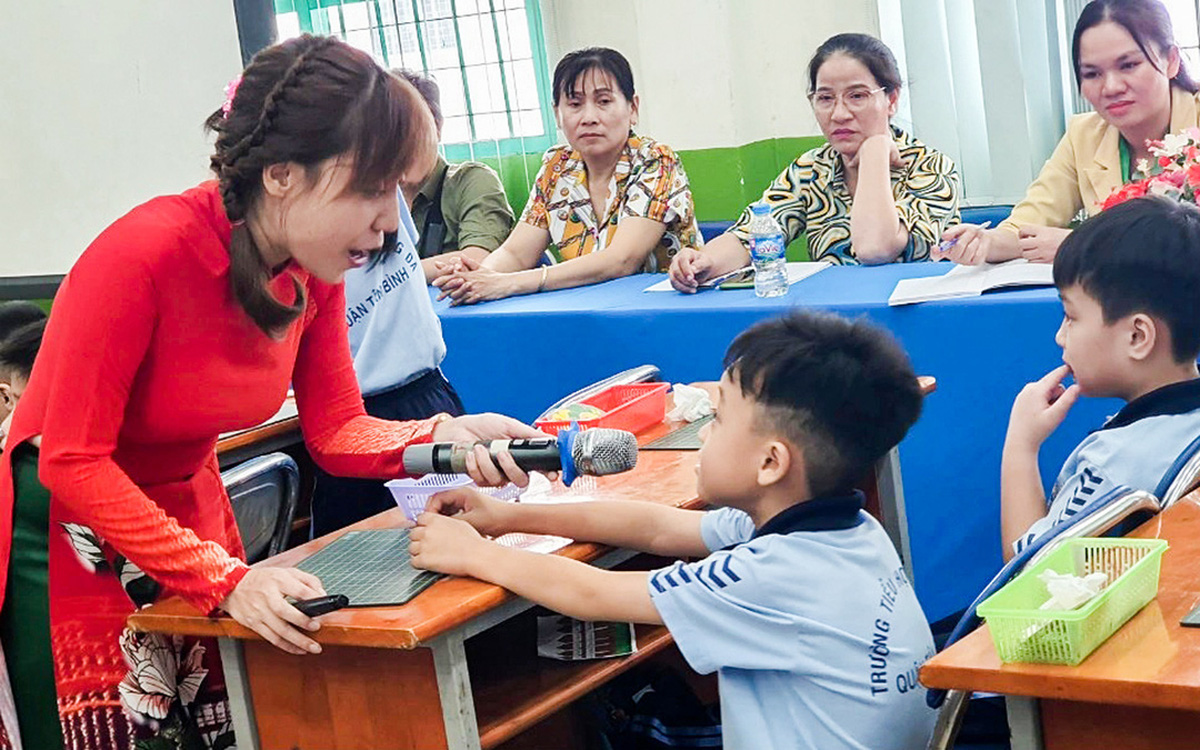
An open lesson (parents are invited to learn alongside their children) at Dong Da Primary School, Tan Binh District, Ho Chi Minh City - Illustration photo: H.HG
In a civilized society, the more legalized a behavior becomes, the more necessary it is, and this should not exclude people in any profession.
Avoiding or vaguely mentioning sensitive issues only complicates implementation and creates numerous precedents. It also becomes unfair across different professions and groups.
The Law on Teachers, in addition to provisions for preferential treatment, honor, and protection, cannot fail to include prohibitions and specific prohibitions.
Understood fully, many genuine educators would not only not feel resentful but would also be pleased that the law could help to distinguish between good and bad, and reduce the number of bad apples spoiling the bunch.
"Forcing students to pay money in any form is prohibited" is one of the most important prohibitions... and should be strictly enforced. It should not only be stipulated in the law, but also specifically codified in the code of conduct for teachers in each school.
Teaching is a unique profession, and therefore it is always subject to stricter scrutiny from society. Others may be allowed to dress casually, but teachers are not.
Others might be forgiven for speaking inappropriately, but not teachers. What is easily accepted in other professions, teachers are easily criticized for. From a certain perspective, this strictness stems from the high status of the teaching profession.
Education is fundamental to human development, and teachers are the ones who provide that foundation. Those entering the teaching profession need to understand this beforehand. And these "forbidden" aspects should be included early and comprehensively in teacher training programs.
However, in reality, enforcing the practice of "receiving money" from students is more difficult than any other prohibition, as it depends on factors beyond the teacher's control. These include the system, the working environment, and the behavior of students and parents.
Many parents today, especially those with children in lower grades, use money to buy peace of mind regarding teachers. Instead of ensuring their children are treated fairly, some issues are resolved through monetary means.
Outraged by the wrongdoing, many parents still invest money in it and, clinging to their love for their children, overlook it. Many play the role of both victim and perpetrator.
They are not blameless. In other words, simply "banning teachers" in the law would be impractical because there are countless ways to circumvent the law. The teaching profession is not only sensitive and stressful but also full of temptations.
Helping teachers overcome temptations also requires a change in mindset from students and their parents. Furthermore, a qualitative change in school administration and teacher management is needed.
Those who do the right thing should be recognized, and those who do wrong must be held strictly accountable for their actions.
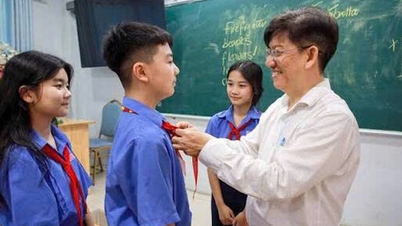
Along with a change in perception regarding the behavior of and respect for teachers, expressing gratitude to teachers on occasions like these will truly be restored to its proper meaning. And no one will feel hurt by this "forbidden" practice.
Source: https://tuoitre.vn/ve-nhung-dieu-cam-chanh-long-20241111082714883.htm

![[Photo] Prime Minister Pham Minh Chinh visits and extends New Year greetings to former Party and State leaders and offers incense to the esteemed predecessors.](https://vphoto.vietnam.vn/thumb/1200x675/vietnam/resource/IMAGE/2026/02/14/1771078465521_dsc-2411-jpg.webp)

![[Photo] The Vietnamese community in France joyfully celebrates the Lunar New Year of the Horse 2026.](https://vphoto.vietnam.vn/thumb/1200x675/vietnam/resource/IMAGE/2026/02/15/1771132773753_tet-baltard-2026-minh-duy-1-jpg.webp)












































![[Photo] Coc Ly market bustling on the eve of Tet](https://vphoto.vietnam.vn/thumb/402x226/vietnam/resource/IMAGE/2026/02/14/1771062261424_baolaocai-br_img-6457-jpg.webp)








Comment (0)