

Paving the way, creating more opportunities.
Gia Lai, like the Central Highlands region, has always prioritized and focused on transportation development for many years in inter-regional development planning. Among the top 10 largest provinces in Vietnam, the Central Highlands has as many as...
The four provinces of Gia Lai, Dak Lak , Lam Dong, and Kon Tum possess undeniable potential in terms of soil and climate. Other resources such as land, water, and wind are also advantages.
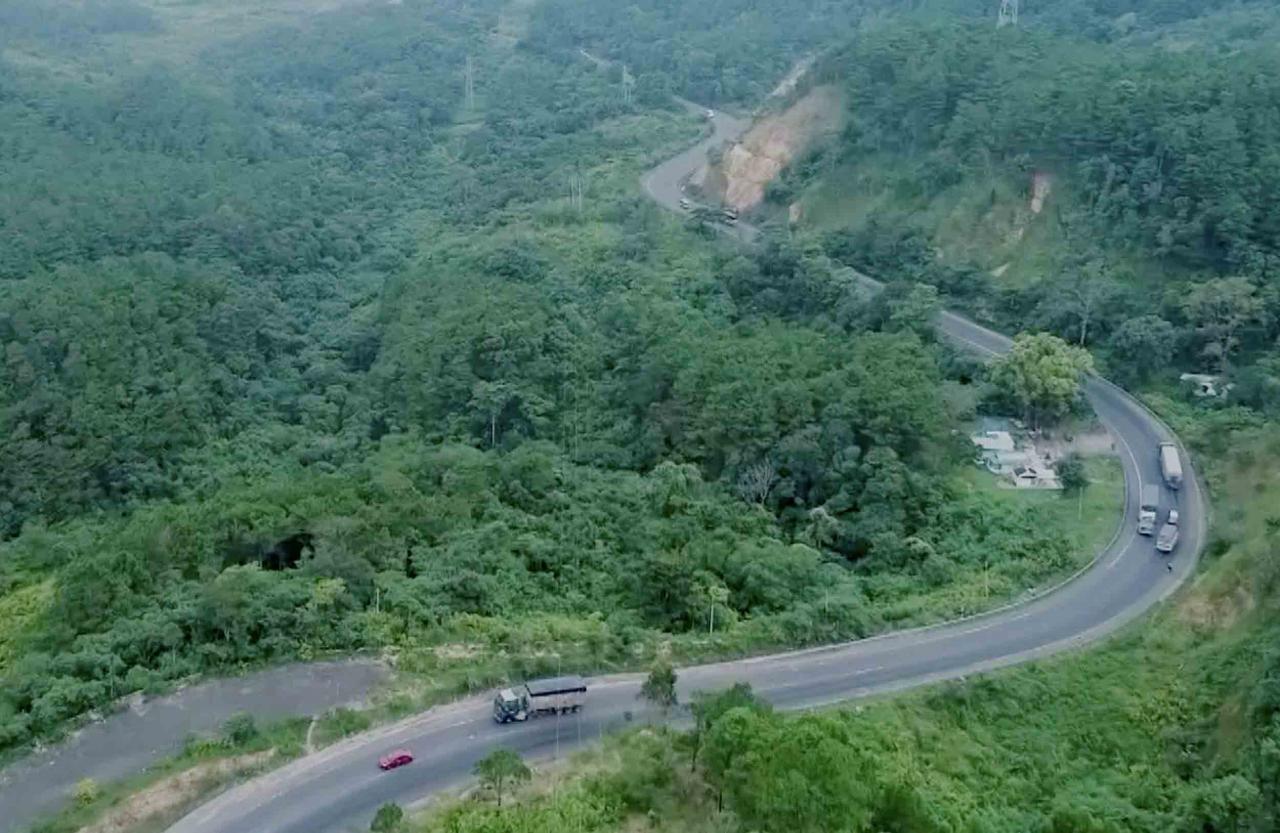
The road through Mang Yang Pass (Gia Lai) has been renovated and is no longer dangerous for vehicles.
However, the situation regarding connectivity and attracting investment to create momentum and boost the development of each locality remains merely a wish. Transportation infrastructure is one of the obstacles. This situation leads to weak logistics operations. Meanwhile, the Central Highlands is a center in the Vietnam-Laos-Cambodia development triangle. Therefore, developing the transportation system from local to inter-regional levels in the Central Highlands is of paramount importance.
I remember 20 years ago, in the early days of our time in the Central Highlands, starting out as journalists, the reality of transportation in remote areas was terrifying. Every time we traveled to the five villages east of the Ayun River in Mang Yang District (Gia Lai Province) during the rainy season, it was a frightening experience. The motorbike would become uncontrollable on slippery dirt roads. We'd be on one side of the road, and suddenly slamming on the brakes would send the bike skidding to the other side, causing a near-fatal fall.
I remember one business trip, in the pouring rain, the car overturned. Our clothes were covered in mud, completely soaked, and we hadn't reached our destination yet. We didn't know what to do, standing in the heavy rain and… crying. Or consider Kon Pne, an "isolated island" in Kbang District, Gia Lai Province. Although only about 200 km from the center of Pleiku City, it felt like an insurmountable distance. Traveling from Kon Pne commune to the center of Kbang District, a distance of 80 km, took two days. Heavy rain would isolate us completely.
During a working visit to Gia Lai in 2002, after hearing Mr. Nguyen Tuan Khanh, Secretary of the Gia Lai Provincial Party Committee, express his concerns about the difficulties in transportation, especially in the "isolated" area, Prime Minister Phan Van Khai quickly decided to allocate 30 billion VND to build a road to Kon Pne commune. 2004 marked an unforgettable milestone for this "isolated area," when the road was inaugurated and put into use, bringing immeasurable joy. Transportation became easier, and goods produced were purchased directly from the farm by traders. Life there changed dramatically.
Furthermore, the opening and upgrading of numerous roads have connected many areas of Gia Lai and the Central Highlands, bringing prosperity to residential areas and providing convenience in all aspects. This demonstrates the crucial importance of developing transportation infrastructure in the socio-economic development of each locality, inter-regional areas, and the nation as a whole.
Connecting with the sea
Although it's only about 200 km from the center of Binh Dinh province, measured from Pleiku City via the single-lane National Highway 19, it still takes nearly 4 hours to travel by car. That's enough to make investors hesitant.
Over the past two years, the project to enhance transportation connectivity in the Central Highlands region, with a total length of over 143 km and a total investment of nearly 156 million USD, has been implemented with the hope of shortening travel time and making travel more convenient. Several sections of the road have been straightened and widened. In particular, the treacherous An Khe pass in Gia Lai province is under construction, with the roadbed lowered and many dangerous curves improved. It is hoped that after the project is completed in 2024, traffic on National Highway 19 will be much smoother.
Despite its strategic location, the Central Highlands region still lacks expressways. Only in mid-2023 did the Khánh Hòa – Buôn Ma Thuột expressway project, approximately 117.5 km long, connecting Khánh Hòa and Đắk Lắk provinces, begin construction. It will have four lanes, a design speed of 80-100 km/hour, and a total investment of nearly 22,000 billion VND.
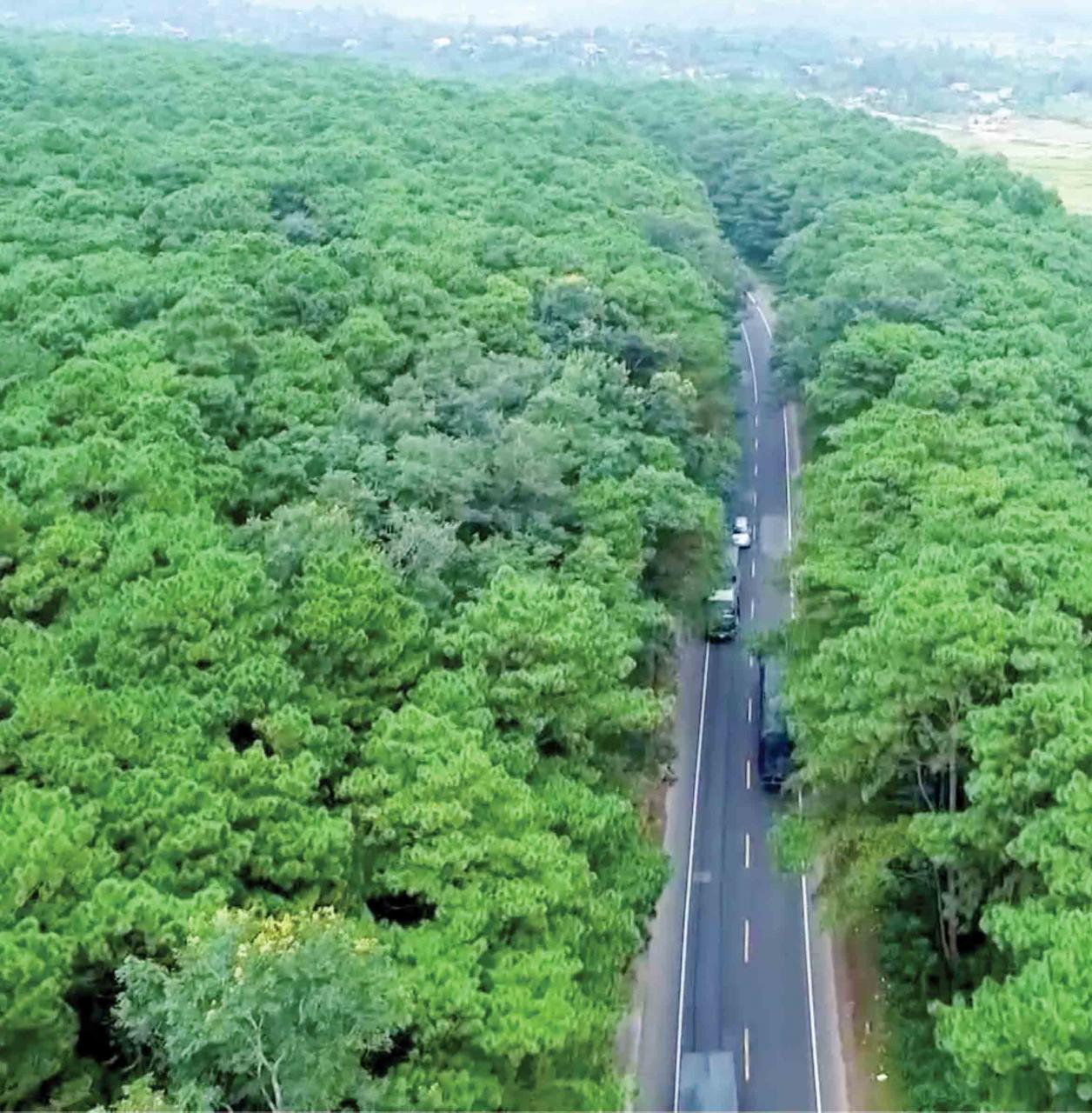
Many roads in Gia Lai have been upgraded, facilitating local socio-economic development.
According to the plan, by 2025, the project will essentially complete several sections with high traffic volume; the entire route will be completed in 2026 and put into operation in 2027. This is the first expressway project implemented in the Central Highlands in an effort to connect this region with the South Central coastal region.
According to the highway system plan approved by the Government, the Ministry of Transport has developed a plan to invest in 8 expressways with a total length of 830 km in the Central Highlands region by 2030. Some of the expressways to be studied and implemented during this period include: Khanh Hoa – Buon Ma Thuot, Gia Nghia – Chon Thanh, Tan Phu – Bao Loc, Bao Loc – Lien Khuong, Quy Nhon – Pleiku, and an expressway connecting Kon Tum with Quang Nam. The total estimated investment capital requirement is approximately 151,900 billion VND.
Mr. Doan Huu Dung, Director of the Gia Lai Provincial Department of Transport, said: “The People's Committees of Gia Lai and Binh Dinh provinces have worked with relevant agencies on the Quy Nhon – Pleiku expressway. We have recalculated and proposed reducing the expressway length from 151 km to 143 km, and the capital scale may be reduced from 44,200 billion VND to over 37,600 billion VND.”
To date, the Standing Committee of the Gia Lai Provincial Party Committee has approved the principle of investing in the construction of the Quy Nhon – Pleiku expressway using public investment instead of the previously proposed public-private partnership method. After receiving feedback from Binh Dinh province, the two provinces will work again with central ministries and agencies and report to the Prime Minister.
The addition of complete and modern transportation infrastructure means more development opportunities for the entire Central Highlands region. This is an opportunity for inter-regional connectivity, providing further impetus for the area to unleash its existing potential, becoming a dynamic economic region of Vietnam and deserving its position as one of the centers of the Vietnam-Laos-Cambodia development triangle in the near future.
Source: https://thanhnien.vn/uoc-mong-dua-bien-len-cao-nguyen-18524061418020387.htm
![[Photo] General Secretary To Lam attends the inauguration ceremony of Si Pa Phin multi-level boarding school.](/_next/image?url=https%3A%2F%2Fvphoto.vietnam.vn%2Fthumb%2F1200x675%2Fvietnam%2Fresource%2FIMAGE%2F2026%2F01%2F31%2F1769840655651_ndo_br_z7486540481209-f37c7e00a962aec2a061c64b7db569ef-jpg.webp&w=3840&q=75)


![[Photo] General Secretary To Lam attends the Inauguration Ceremony of the Ho Chi Minh Memorial House at the E2 Hill historical site.](/_next/image?url=https%3A%2F%2Fvphoto.vietnam.vn%2Fthumb%2F1200x675%2Fvietnam%2Fresource%2FIMAGE%2F2026%2F01%2F31%2F1769831648495_vna-potal-tong-bi-thu-to-lam-du-le-khanh-thanh-nha-tuong-niem-chu-tich-ho-chi-minh-tai-di-tich-doi-e2-8564287-1-2231-jpg.webp&w=3840&q=75)


![[Photo] Prime Minister Pham Minh Chinh presides over the fourth session on private economic development.](/_next/image?url=https%3A%2F%2Fvphoto.vietnam.vn%2Fthumb%2F1200x675%2Fvietnam%2Fresource%2FIMAGE%2F2026%2F01%2F31%2F1769835553414_ndo_br_dsc-7213-jpg.webp&w=3840&q=75)


![OCOP during Tet season: [Part 3] Ultra-thin rice paper takes off.](/_next/image?url=https%3A%2F%2Fvphoto.vietnam.vn%2Fthumb%2F402x226%2Fvietnam%2Fresource%2FIMAGE%2F2026%2F01%2F28%2F1769562783429_004-194121_651-081010.jpeg&w=3840&q=75)


![OCOP during Tet season: [Part 2] Hoa Thanh incense village glows red.](/_next/image?url=https%3A%2F%2Fvphoto.vietnam.vn%2Fthumb%2F402x226%2Fvietnam%2Fresource%2FIMAGE%2F2026%2F01%2F27%2F1769480573807_505139049_683408031333867_2820052735775418136_n-180643_808-092229.jpeg&w=3840&q=75)


Comment (0)