

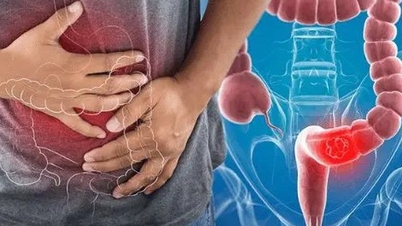
On February 27, Jyvaskyla University in Finland announced that its researchers have developed a new tool, using Artificial Intelligence (AI) technology, to automatically identify colon cancer from the analysis of histopathological tissue samples.
According to Jyvaskyla University, the neural network model developed in this study surpassed all previous analytical methods in classifying tissue samples.
Fabi Prezja, the researcher responsible for developing the method, said the new tool can identify all types of tissue relevant to the diagnosis of colon cancer, with an accuracy of 96.74%.
Typically, tissue analysis requires the pathologist to examine scanned tissue samples and mark each point where cancerous tissue and related tissues are visible.
However, this tool, aided by AI, will analyze a sample and automatically highlight areas containing different tissue types. The accuracy of this tool has the potential to significantly reduce the workload of pathologists, potentially leading to faster diagnosis, prognosis, and clinical understanding.
Notably, the research team at Jyvaskyla University provided the tool free of charge to encourage collaborative research.
Research expert Prezja stated: "The free provision of this tool aims to accelerate future progress by encouraging scientists , developers, and researchers around the world to continue developing the tool and explore new applications for it."
However, the research team from Jyvaskyla University also pointed out that despite the promising results, the introduction of AI tools into clinical examination needs to be done gradually and cautiously.
The tool was developed by researchers at Jyvaskyla University, in collaboration with the Institute of Biomedical Sciences of the University of Turku, the University of Helsinki, and Nova Hospital in Finland.
Source: https://www.vietnamplus.vn/ung-dung-ai-xac-dinh-ung-thu-dai-trang-tu-phan-tich-mau-mo-benh-hoc-post1014882.vnp


































































































Comment (0)