

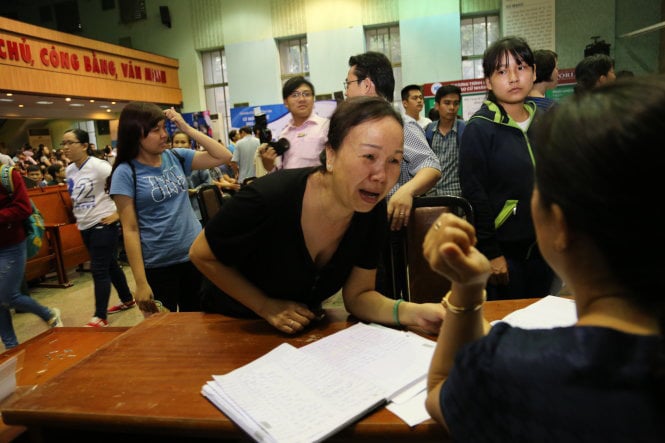
A parent was moved to tears upon hearing the announcement of the expected cut-off scores at the Ho Chi Minh City University of Economics at 3:30 PM on August 20, 2015, knowing that their child had not been removed from the list - Photo: NHU HUNG
In 2015, the Ministry of Education and Training organized the first national high school graduation exam for the purpose of assessing high school graduation and university admissions. At that time, most universities based their admissions on this exam.
I still remember 2015 - the first year of the national high school graduation exam and the opportunity for candidates to withdraw and resubmit their applications within the specified days.
"The bizarre admissions day," "Tears welling up at the last minute of admissions," "Chaos in university admissions at the 89th minute," "First choice ends in tears," "Candidates burst into tears at the last minute," "Shock, chaos and tears," "Breathtaking until the very last minute"... were the prominent articles on the pages of newspapers published on August 21, 2015.
That scene was not repeated in 2016 when the application process was adjusted. Subsequent years saw improvements, with online registration making it more convenient for candidates.
However, the 2022 university entrance exam caused difficulties for many candidates because the application software was difficult to use, and many candidates confused the application method, losing their chance of admission.
In 2023, the Ministry of Education and Training improved the system by eliminating the need for candidates to register their admission method online, thus avoiding confusion and ensuring the rights of candidates.
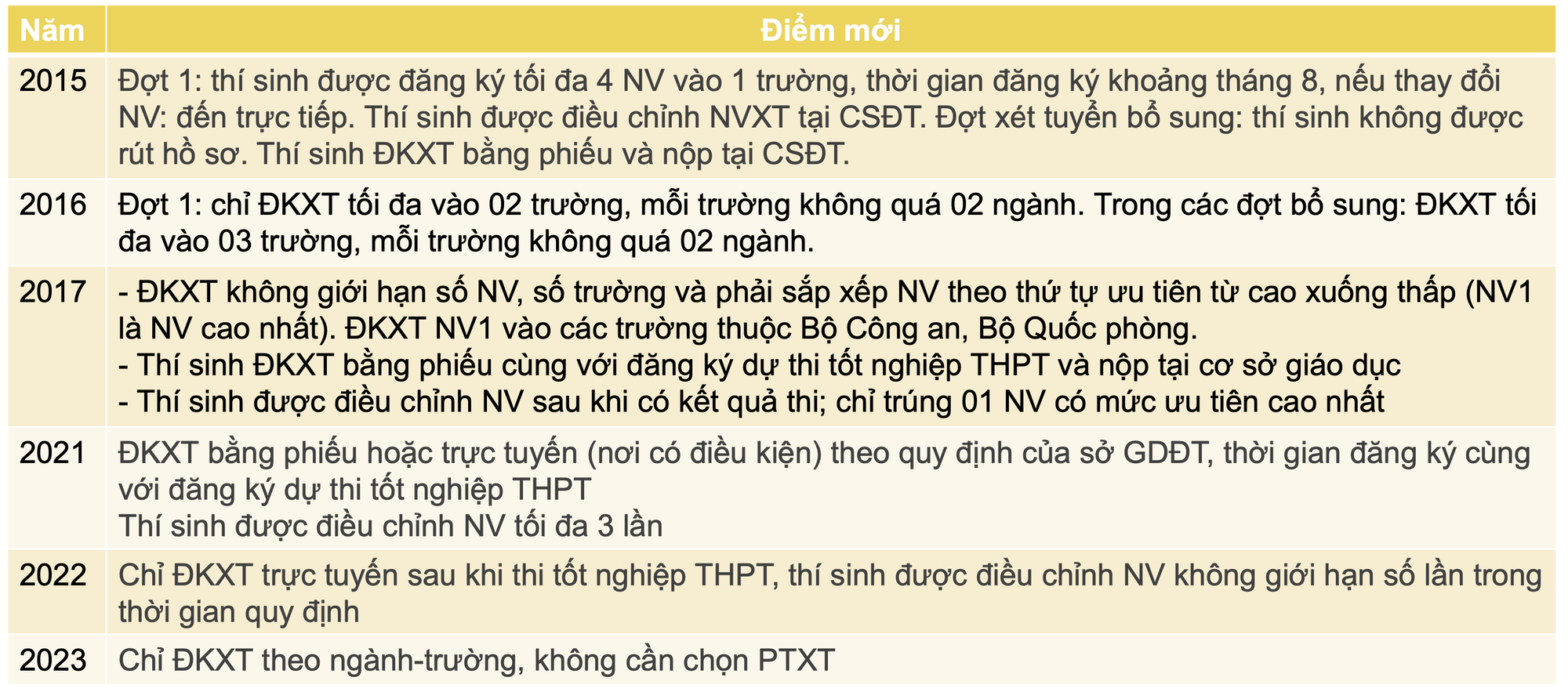
Improvements in the Ministry of Education and Training's admissions process over the years.
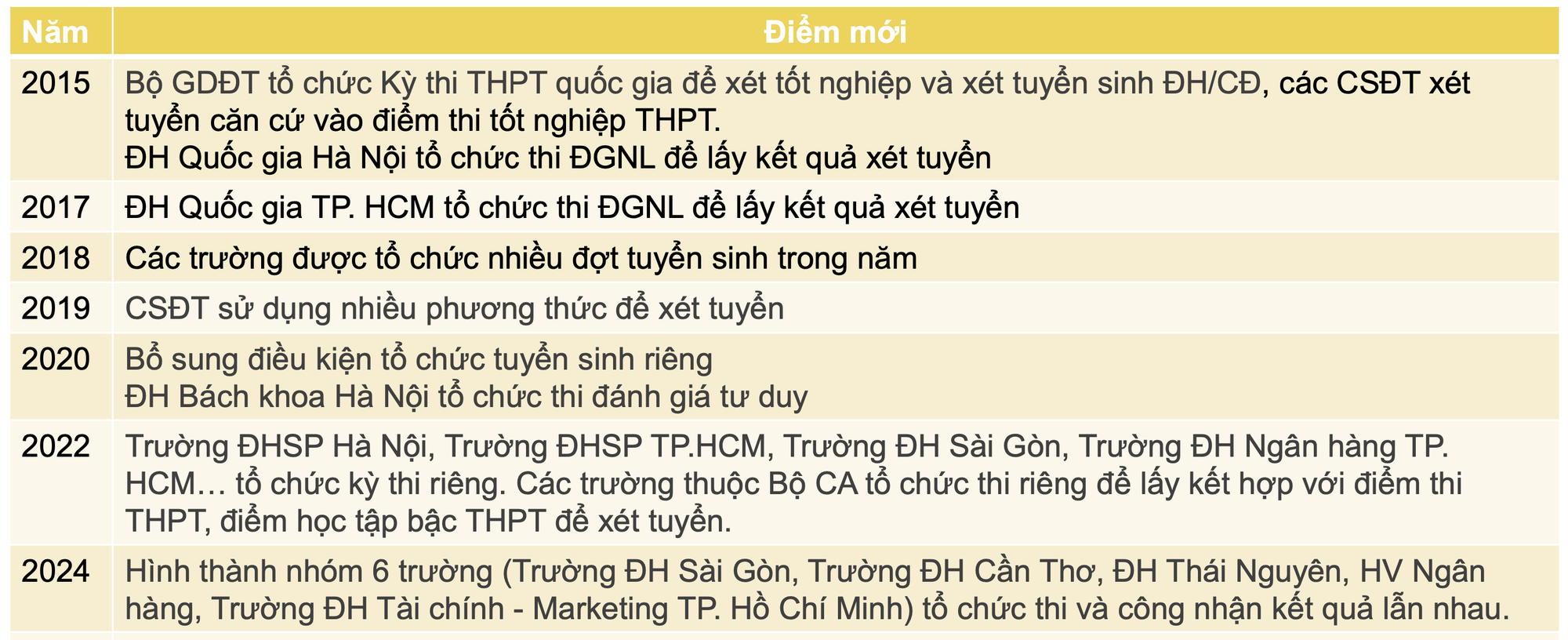
Since the 2015 admissions period, university admissions methods have become increasingly diverse. Admissions policies have also continuously changed over the years.
Changes to the exam organization and admission methods:
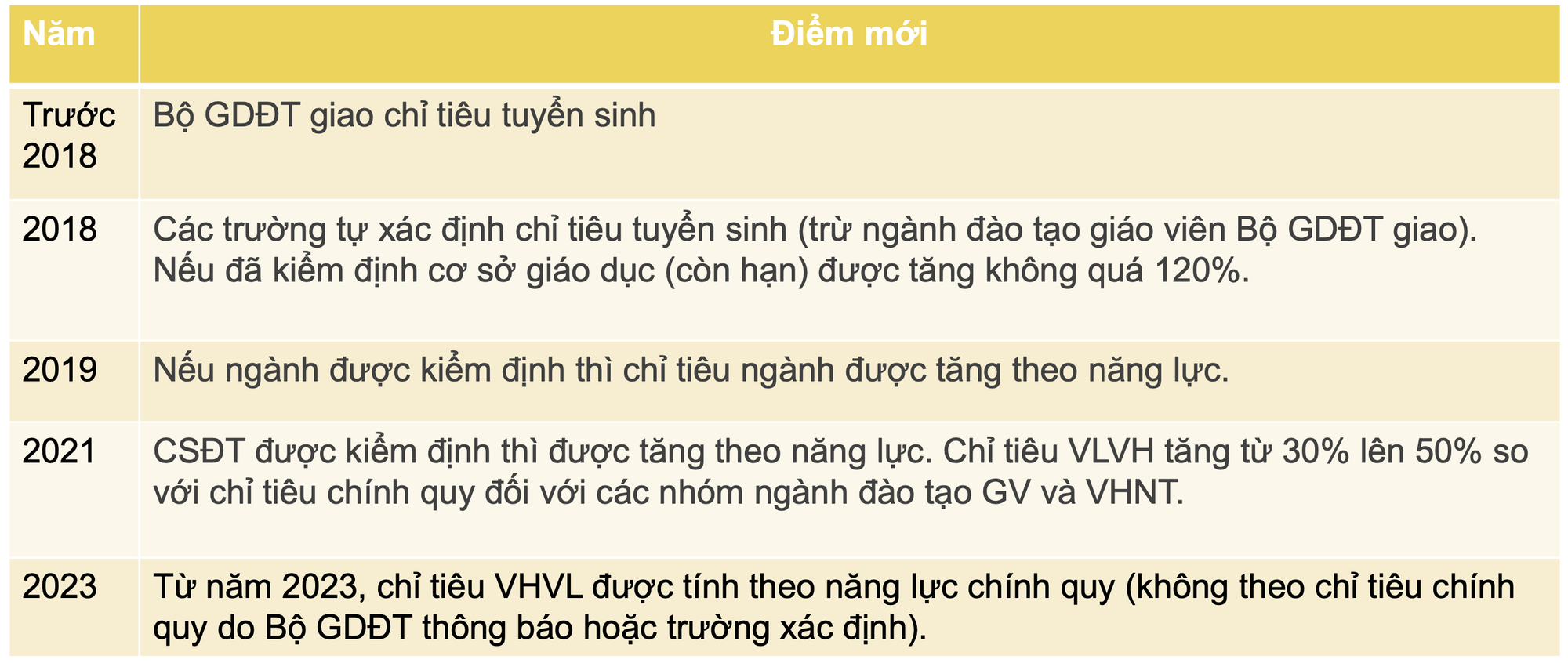
The process of determining university enrollment quotas has also undergone many changes, moving towards increasing the autonomy of universities.
In the initial phase, the ministry set enrollment quotas for the schools, but in later years, the schools independently determined their training capacity, registered their quotas, and the ministry conducted post-audits.
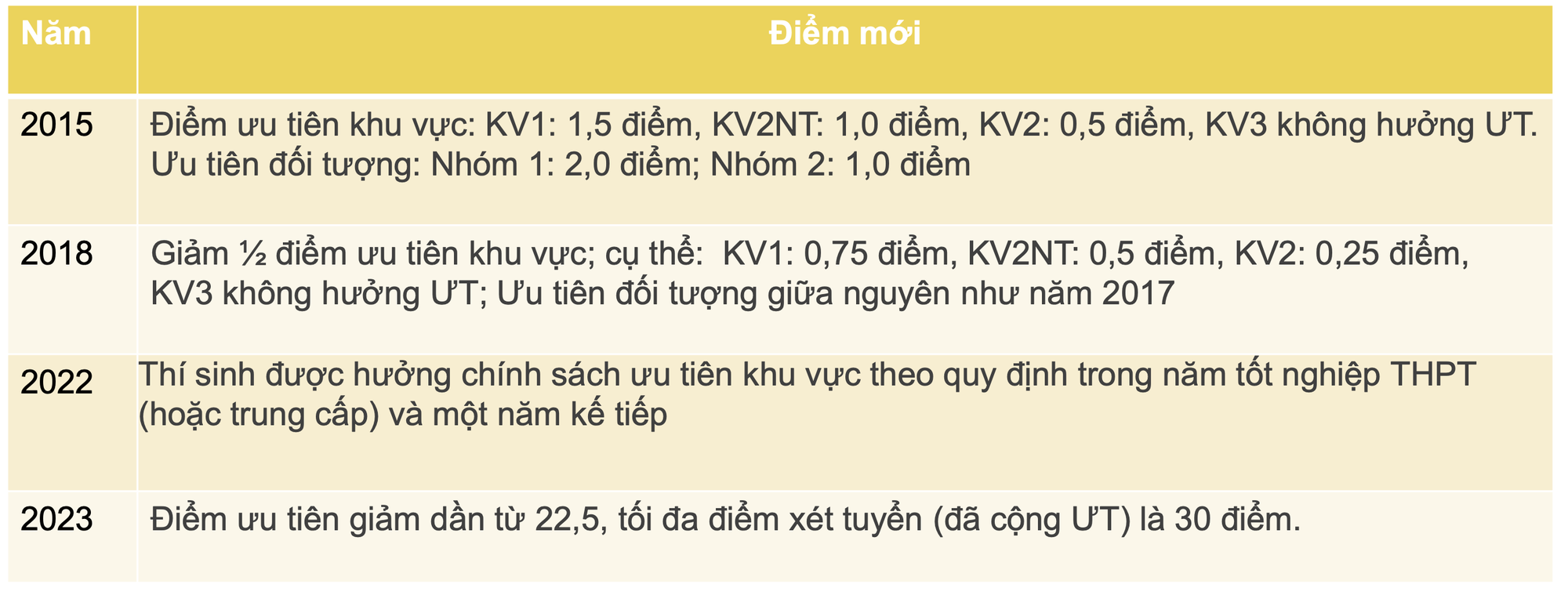
One of the controversies in university admissions is the issue of priority points. Previous preferential policies in university admissions were considered to create inequality, with some candidates even failing to get into university despite having a score of 30. This led the Ministry of Education and Training to revise the regulations, reducing the number of priority points based on region.
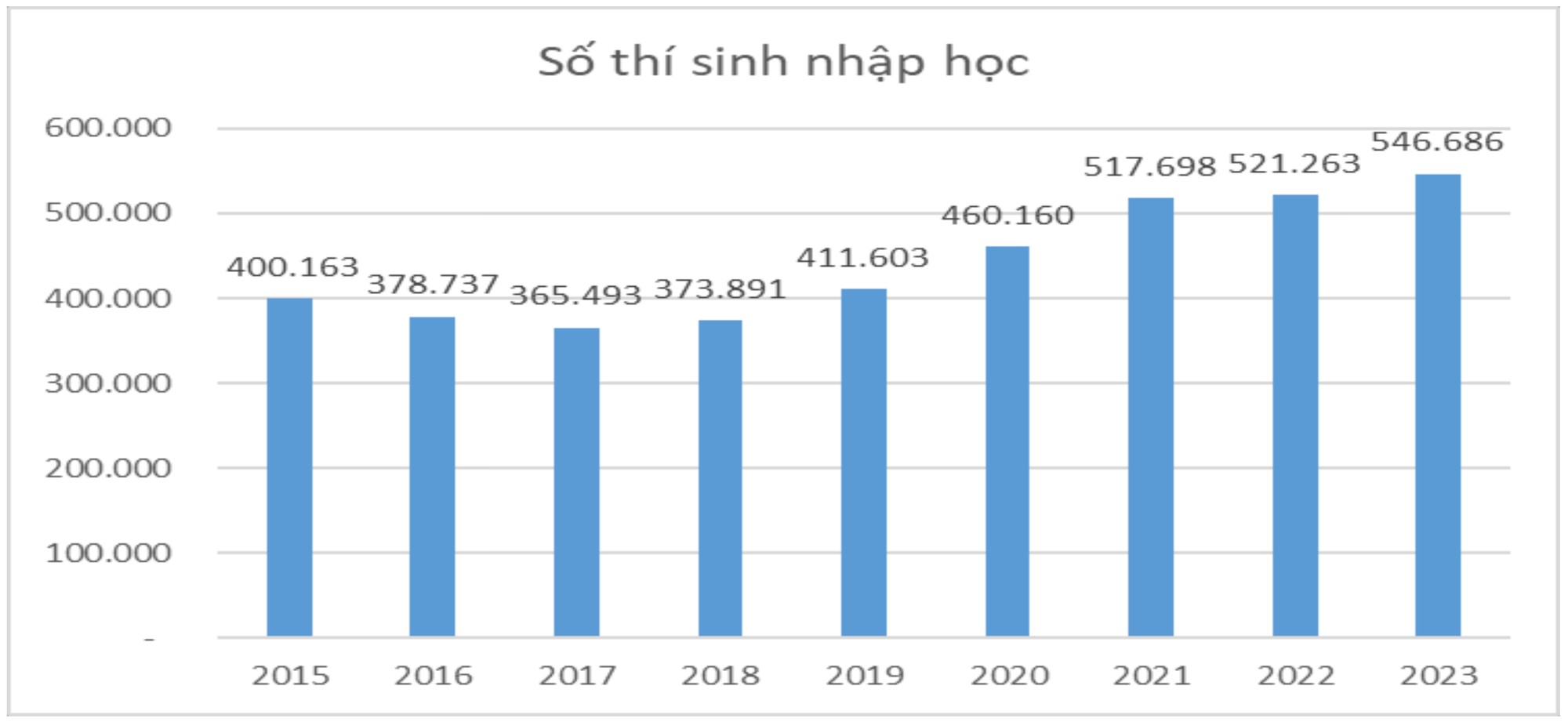
In addition to these adjustments, there are also changes to quality assurance thresholds, admission and filtering processes, and the use of a common database in admissions... The number of students admitted to universities increases continuously every year.
However, 2023 marked a decline as the percentage of admitted students who actually enrolled compared to the schools' quotas was lower than in previous years.
Minor changes are expected in the 2024 admissions process.
Evaluating university admissions over the past years, the Ministry of Education and Training believes that fairness among different admission methods has not been truly ensured.
The early admission process at universities still has many shortcomings, with many universities admitting students regardless of their training capacity. Therefore, the Ministry of Education and Training plans to make minor changes to the regulations to ensure fairness in the 2024 admissions process.
Source











































![[OFFICIAL] MISA GROUP ANNOUNCES ITS PIONEERING BRAND POSITIONING IN BUILDING AGENTIC AI FOR BUSINESSES, HOUSEHOLDS, AND THE GOVERNMENT](https://vphoto.vietnam.vn/thumb/402x226/vietnam/resource/IMAGE/2025/12/11/1765444754256_agentic-ai_postfb-scaled.png)












































Comment (0)