

According to the draft amended Land Law, the current land price list will continue to be used until December 31, 2025, to give localities sufficient time to develop and issue new land price lists.
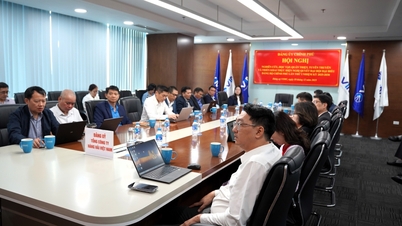
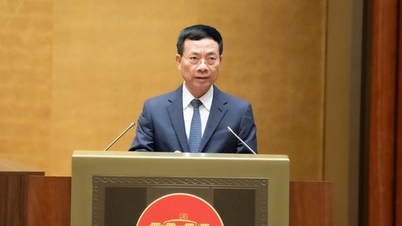
On the morning of June 9th, Minister of Natural Resources and Environment Dang Quoc Khanh presented a report explaining, receiving feedback, and revising the draft amended Land Law.
 |
| The scene at the meeting. |
According to Minister of Natural Resources and Environment Dang Quoc Khanh, the draft law has clarified the principles of land valuation, market land prices, the basis for land valuation, input information for determining land prices, and methods of land valuation; it also adds regulations on land valuation consulting.
Accordingly, land valuation must ensure the following principles: the method of determining land prices must follow market principles; strict adherence to the methods, procedures, and processes of land valuation; ensuring objectivity, openness, and transparency; and ensuring independence in all stages of land price determination, appraisal, and decision-making.
The input information for determining land prices using these methods must ensure: the land price is recorded in the notarized and authenticated land use right transfer contract; the land price won through auction for land use rights is not affected by factors causing sudden price increases or decreases, transactions involving kinship, or other preferential treatments recorded in the national land database.
In cases where land price information is not available in the land database, land price information should be collected through investigations, surveys, and information on revenue, costs, and income from land use according to market conditions.
Specifically, the regulation on land price tables being issued annually continues to ensure that land prices are consistent with market principles. However, a transitional provision is added, allowing the continued use of the current land price table until December 31, 2025, to give localities sufficient time to develop and issue new land price tables in accordance with the new provisions of the Land Law.
Furthermore, according to Minister Dang Quoc Khanh, the draft law also stipulates an extension of the time limit for considering the issuance of land use certificates, resolving outstanding issues, and ensuring the legitimate rights and interests of the people, but without legalizing violations in land use. It also adds regulations for handling cases of land allocation or leasing without proper authority where households and individuals have already paid for the land use rights, thus protecting the rights of the people.
The draft law has reviewed and supplemented the land use term for residential land owned by Vietnamese people residing abroad who own houses in Vietnam, in accordance with the law on housing, for land used for mining activities.
According to Minister Dang Quoc Khanh, the review process revealed that some relevant contents and policies have not yet been institutionalized in the draft Land Law because they fall outside its scope of regulation, such as: Regulations on higher tax rates for those using large areas of land, multiple houses, land speculation, slow land use, and leaving land fallow in tax laws; Regulations on a reasonable and effective mechanism for regulating revenue from land use fees and land lease fees between the central and local governments in state budget laws; regulations on building a real estate market information system linked to land information;...
According to Minister Dang Quoc Khanh, these contents need to be institutionalized in relevant laws. He proposed that the National Assembly direct relevant agencies to plan the development of laws to fully institutionalize the Party's guidelines in Resolution No. 18-NQ/TW in order to create synchronicity and uniformity in the implementation process.
NGUYEN THAO
Source
























![[Video] The craft of making Dong Ho folk paintings has been inscribed by UNESCO on the List of Crafts in Need of Urgent Safeguarding.](https://vphoto.vietnam.vn/thumb/402x226/vietnam/resource/IMAGE/2025/12/10/1765350246533_tranh-dong-ho-734-jpg.webp)













































Comment (0)