


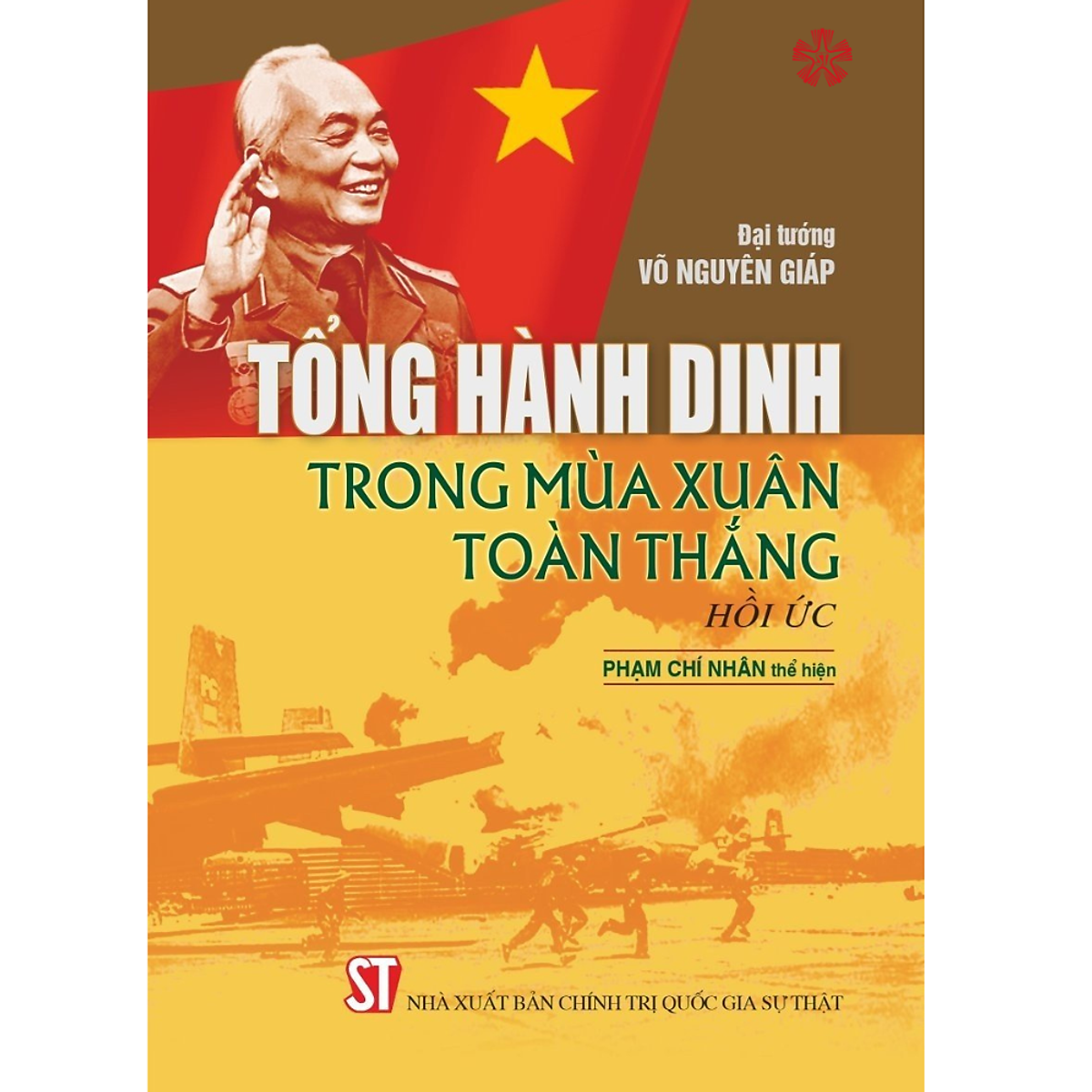
When he began writing his memoir, "General Headquarters in the Spring of Total Victory," General Vo Nguyen Giap was already 90 years old.
The book, 370 pages long, was first published in 2000 by the National Political Publishing House. With its rich source material, the author recounts a heroic and glorious period in the nation's history.
Through the book, the location of the General Headquarters was revealed. It was the single-story D67 building at 9 Hoang Dieu Street ( Hanoi ). It had an underground tunnel system 9 meters deep. Up to 1,000 meetings of the Politburo and the Central Military Commission took place here to make strategic decisions during the war against the US. Despite the tense times, the headquarters continued to function normally, from the commander-in-chief to the generals, officers, and dozens of soldiers.
The headquarters always keeps abreast of current events . After the Paris Agreement was signed, we immediately seized and accelerated the opportunity. Through reconnaissance battles at Thuong Duc (October 1974) and Phuoc Long (January 1975), we demonstrated that our position had grown significantly.
Realizing that the US was no longer capable of intervening, after much deliberation, the Politburo concluded in late 1974 that the strategic opening battle would be at Buon Ma Thuot. The deception and troop concealment had to be kept absolutely secret. This was a skillful and artful combination of tactics.
With the encirclement and division of the enemy forces complete, the General Headquarters decided to open fire simultaneously at 6:30 AM on March 10th. From that point on, the entire system was shaken. In the book, we see that "time" goes hand in hand with "position," and our position always maintains the initiative, accompanied by strength and, consequently, strategic planning . Besides the power of weapons, there is also the strength of the soldiers' spirit and the strength of the people's will. We maximize the power of military mobilization, external attacks, and combine them with internal uprisings...
Reading the General's memoirs, we see the particularly important role of the Supreme Command and the strategic planning agencies of the General Headquarters throughout the fierce and protracted battle of wits and strength between us and the enemy. The General recounted: “In the spring of 1975, the Supreme Command demonstrated its strategic talent, understanding the enemy and ourselves, comprehensively managing the war nationwide, acting urgently, flexibly, cautiously, and with certainty of victory, achieving complete victory in the extremely complex international situation of the 1970s. All campaigns were conducted according to a unified plan of the General Staff, with coordination in both planning and campaign situations, creating prerequisites for each other and together creating the conditions for the final decisive strategic blow.”
Through the memoirs of General Vo Nguyen Giap, we clearly see the courage and wisdom of Vietnam at decisive historical moments: keen insight, creativity, decisiveness, seizing and creating great opportunities, and making strenuous efforts to wipe out the enemy.
These captivating and well-documented writings vividly portray the intellect of a talented collective, a shining first generation of guards at a crucial historical moment, leading our nation to glorious victory.
With his calm and gentle nature, he spoke of the leaders, generals, and officers from the General Headquarters to the leaders of the battlefields—his comrades and fellow soldiers—in a warm, sincere, and deeply respectful manner.
This book is about military affairs, but it also blends political elements, demonstrating a keen analytical perspective on current events, pointing out that in an era where developments in a country cannot be considered without examining regional and global connections.
The book contains pages written in a memoir style, through which readers can gain a very personal understanding of the General's working style and humane conduct. Upon hearing the news that the first B52 had crashed over Hanoi, the General could not contain his emotions when he saw that the B52 was no longer an invincible bogeyman : "I stepped outside the command post. It was bitterly cold and drizzling. But my heart felt unusually warm,...(*)
In the final chapter, "A Few Reflections," the author summarizes an entire historical period significant for the protection and development of the nation, with the most crucial element remaining the issue of national unity, the need to absorb the art of warfare from our ancestors, and to thoroughly understand ourselves and others, always acting in the best interests of the people and the nation.
Despite the complexities of the global and regional situation, those valuable lessons remain just as relevant today in the cause of protecting and building the nation.
NGUYEN VIET THANHSource: https://baohaiduong.vn/tu-long-dat-d67-den-mua-xuan-toan-thang-409029.html


















































Comment (0)