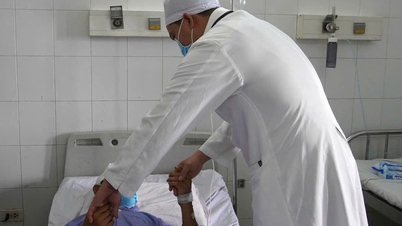
Many argue that the healthcare sector urgently needs a serious policy review to address the issue of autonomy.
A public debt situation involving tens of billions of dong has arisen.
Currently, many public hospitals nationwide are facing financial difficulties as revenue falls short of expenses, leading to unpaid salaries, social insurance contributions, and debts for medicines and medical supplies. Solving these difficulties for district-level hospitals when implementing 100% financial autonomy is a very challenging problem.
For example, in Quang Nam province, healthcare facilities such as the Thang Binh District Health Center, the Quang Nam Provincial Traditional Medicine Hospital, the Dong Giang District Health Center, and the Hiep Duc District Health Center are requesting to stop, adjust, or reduce their level of financial autonomy.
The reason is that after gaining autonomy, these medical facilities faced difficulties in their business operations (the number of patients visiting for examination and treatment decreased sharply), revenue was insufficient to cover expenses, leading to debt, especially prolonged unpaid salaries for staff. This forced many doctors and medical staff to quit or change jobs to make ends meet.
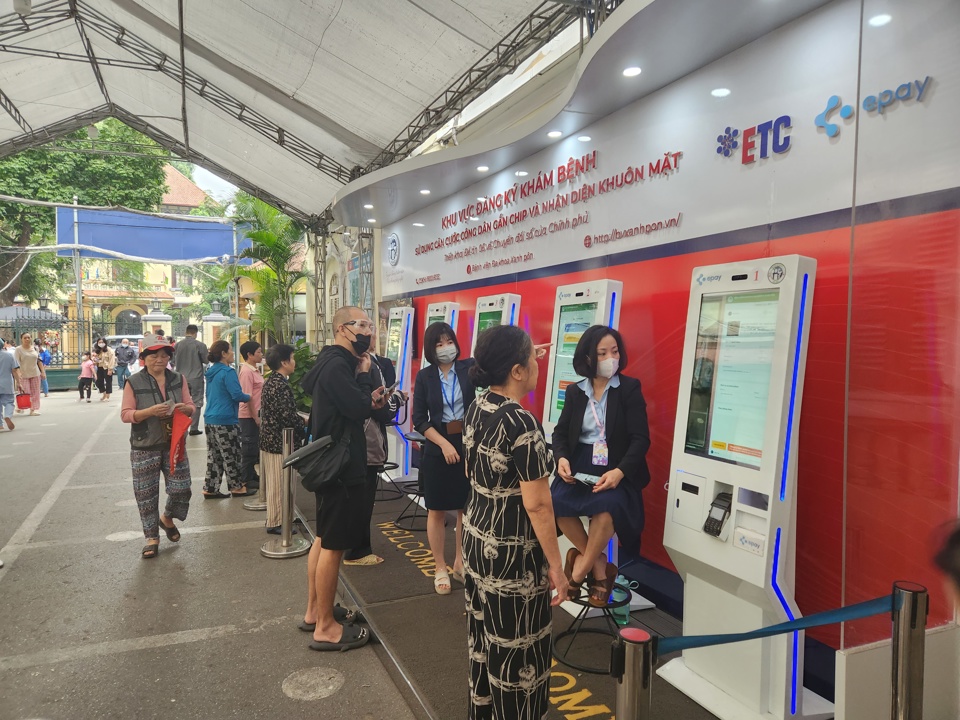
In recent years, hospitals such as Huong Khe District General Hospital, Duc Tho District General Hospital, and Ha Tinh City General Hospital have accumulated public debts amounting to tens of billions of VND. According to the leadership of Huong Khe District General Hospital, the total debt amounts to over 25 billion VND.
Specifically, the outstanding debt for medicines and medical supplies, spanning from 2019 to the present, amounts to over 17.5 billion VND; the debt for on-call duty, surgery, and procedures performed by staff is nearly 2.5 billion VND; and the debt for examination fees at commune health stations in the area is 1.8 billion VND… This situation of business losses leading to debt after achieving autonomy is not only happening in Quang Nam but is also a common problem in many other localities across the country. Provinces like Ninh Binh and Quang Binh have recently been repeatedly featured in the press with similar stories.
In Hanoi, it can be seen that since becoming financially independent, the income of staff and employees at Xanh Pôn General Hospital has increased significantly. However, to achieve this, the unit has faced many difficulties as the prices of medical examination and treatment services are not calculated correctly and adequately. According to the Director of Xanh Pôn General Hospital, Nguyen Duc Long, the prices of medical examination and treatment services applied according to Circular No. 13/2023/TT-BYT of the Ministry of Health (which stipulates the price framework and pricing methods for medical examination and treatment services on demand) have many shortcomings, but are no longer in effect. The hospital is awaiting new guidelines and hopes for early issuance by the Ministry of Health.
Regarding this issue, the Director of Ba Vi General Hospital, Pham Ba Hien, stated that in the past period, the hospital had received requests for transfers and resignations from 27 medical staff, including 14 doctors. One of the reasons for these requests was the lack of guaranteed living conditions for medical staff. The leadership of Ba Vi Hospital hopes that in the future, policies and benefits for workers and medical staff at grassroots healthcare facilities will be given more attention so that they can work with peace of mind.



“The revenue of Long Bien District Health Center is very limited, mainly from health insurance-covered medical examinations and treatments, with prices regulated by the Hanoi City People's Council, the Ministry of Health, and the Ministry of Finance (medical examination and treatment prices are very modest). Every year, in addition to downsizing the staff, the budget allocated to district and county health centers is also cut according to the general plan. Therefore, the lives of medical staff at the health center are extremely difficult,” said Do Thu Ha, Director of Long Bien District Health Center.
Representatives from the Hanoi Department of Health pointed out that, in reality, the establishment of public healthcare facilities in recent years has been largely mechanical, while the number of healthcare personnel at the grassroots level is insufficient, their qualifications are limited, and the remuneration policies are inadequate. Furthermore, there is no mechanism to attract staff to the grassroots healthcare level, especially those with high professional qualifications.
Revenue is insufficient to cover expenses.
Concurring with this view, Associate Professor Dr. Tang Chi Thuong, Director of the Ho Chi Minh City Department of Health, stated that after many years of implementing autonomy, hospitals still face difficulties due to inaccurate and incomplete pricing of hospital fees. Now, they also have the added worry of calculating the necessary funds to increase staff salaries according to regulations. In reality, most hospitals at the district and grassroots levels are facing significant challenges in achieving autonomy. These facilities lack sufficient funding to ensure their operations. Furthermore, the issue of outstanding health insurance debts at the grassroots level remains unresolved.
According to health experts, to address and overcome this issue, health insurance should reimburse hospitals and medical facilities based on the technology and equipment used, taking into account the technology, personnel, and skill level of the facility.
Furthermore, through professional activities, hospitals and medical facilities are recovering funds to implement self-management, which is currently lacking. Analyzing this issue, Professor Nguyen Anh Tri – a member of the 15th National Assembly – argued that the medical service price list of medical facilities, as regulated by local People's Councils, is not in line with the technology, techniques, and skill level of the patients, leading to lower income and insufficient revenue to cover expenses. Therefore, this problem needs to be resolved.
To alleviate difficulties for healthcare facilities, the Ho Chi Minh City Department of Health has proposed that the Ho Chi Minh City People's Committee soon approve a sustainable autonomy plan for public hospitals in the city, with a support mechanism for hospitals; and proposed that the Ho Chi Minh City People's Council soon approve a reduction in the allocation of funds for salary reform to 10% or 16%, depending on the level of autonomy.
According to Associate Professor Pham Thanh Binh, Chairman of the Vietnam Medical Trade Union, the 30% increase in the basic salary is a significant effort by the State. However, 80% of medical facilities are currently implementing a service-based pricing system with 4 out of 7 factors. Costs of medicines, consumables, goods, salaries, wages, etc., increase annually due to rising market prices, but medical service prices do not adjust accordingly. Therefore, the Vietnam Medical Trade Union proposes the early issuance of a comprehensive pricing structure that accurately and fully accounts for all factors, providing hospitals with a basis for paying salaries according to the new adjustment levels. The financial difficulties faced by medical facilities, including central-level hospitals, after achieving autonomy are worth discussing. First, measuring the results of the autonomy mechanism has shown that most public medical facilities are still unable to compete with private medical facilities. This is understandable considering the different conditions between the two types of facilities.
Furthermore, the autonomy of public healthcare is currently in a state of uncertainty, revealing many shortcomings. The most pressing issue is that private hospitals, when granted autonomy, have the right to determine hospital fees, while public hospitals, when granted autonomy, are not given this right, leading to financial and personnel difficulties. Therefore, the healthcare sector urgently needs a serious assessment of the public healthcare autonomy policy from competent central agencies to find solutions to the problem of "the more autonomy, the more debt" at healthcare facilities.



Bach Mai Hospital has developed a proposed pricing plan for the Ministry of Health to review and decide on changes to medical examination and treatment prices. It is expected that the price of medical examination and treatment covered by health insurance will increase by approximately 15-20% for over 8,000 services and techniques. The hospital's payroll will increase to 10-12 billion VND per month with the new salary regulations. If the Ministry of Health delays approving the new health insurance medical examination and treatment prices based on the new salary structure, the hospital will face financial difficulties.
Ms. Nguyen Thi Hanh - Finance and Accounting Department, Bach Mai Hospital
Autonomy is necessary; however, it is implemented at central and provincial-level hospitals. At the district level, healthcare facilities do not operate autonomously and must rely on state funding. It is time to reconsider granting autonomy to grassroots healthcare facilities and ensure that state funding is guaranteed for their operation.
Professor Nguyen Anh Tri - Member of the 15th National Assembly
Source: https://kinhtedothi.vn/tu-chu-benh-vien-de-khong-om-no.html