

In a recent commentary in The Japan Times , Professor Stephen Robert Nagy (International Christian University - Japan, scholar at the Japan Institute for International Studies) countered the arguments of the Chinese Ministry of Defense regarding the situation in the Indo- Pacific . He argued that China is causing concern among its neighbors, leading to their natural cooperation with others. Specifically, the translated content of the article is as follows.
Is the US causing discord?
At the Shangri-La Dialogue regional security forum, held last weekend in Singapore, Chinese Defense Minister Li Shangfu stated that the continued disrespect and provocations by the US and its allies, such as Japan, were the reasons he did not meet with his American counterpart Lloyd Austin, and also contributed to the increasing negativity in bilateral relations.
Minister Li did not elaborate on his statement. He merely publicly questioned the US presence in "China's waters and airspace." He emphasized that following recent near-collisions in the air and at sea, the best way to prevent such incidents from recurring is for US and other countries' military vessels and aircraft to stay away from the areas in question.
Against the backdrop of China's economic pressure tactics and its gray zone strategy in the Indo- Pacific region, Beijing's accusations of "aggressive actions by the US and its allies" contain many difficult-to-accept facts (for China) that need clarification.
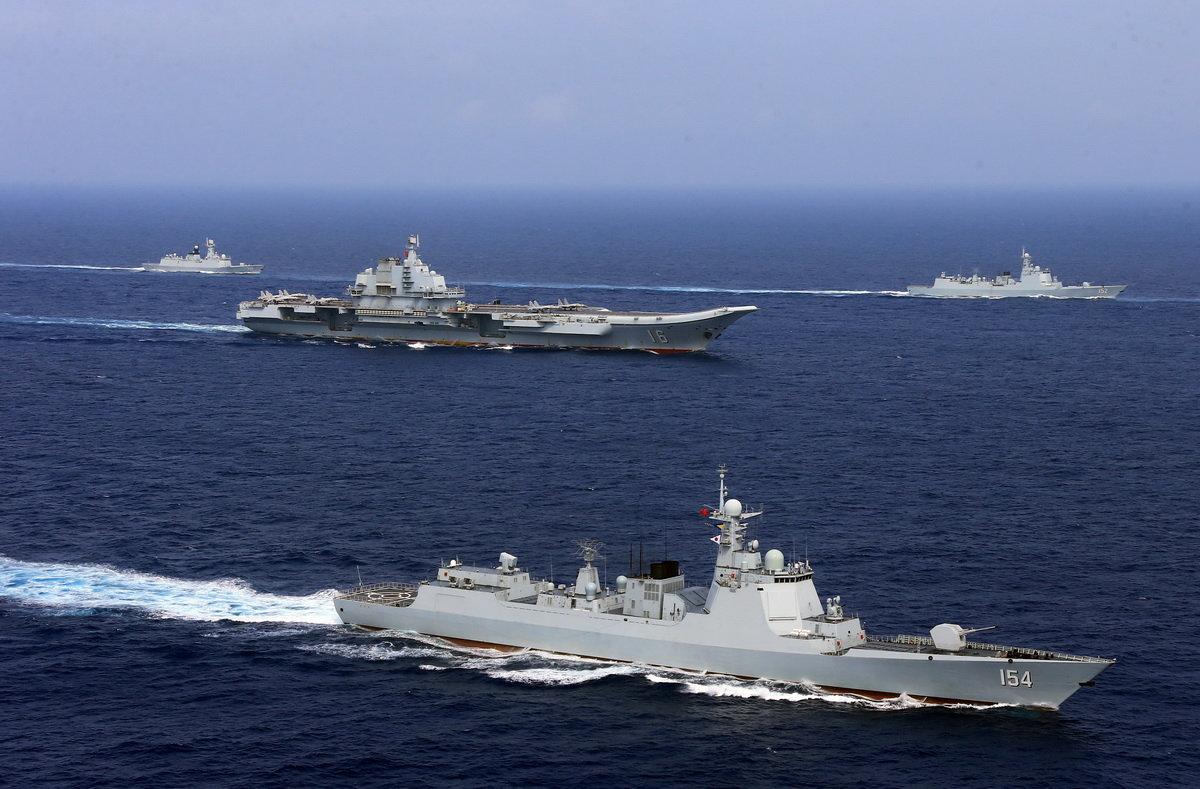
The aircraft carrier Liaoning and Chinese warships during a military exercise in the western Pacific.
First, while Southeast Asian countries have differing views on their relationship with China, neither Japan nor the United States can significantly influence those views.
For example, in the 2023 State of Southeast Asia survey report conducted by the ASEAN Research Centre at the Yusof Ishak Institute of Southeast Asian Studies (Singapore), 41.5% of respondents said that China remains the country with the greatest influence and strategic power in Southeast Asia, followed by the US (31.9%) and ASEAN (13.1%). While China maintains its leading position, its influence has significantly declined from 54.4% in 2022, due to the increasing political and strategic influence of the US and ASEAN.
The survey also highlighted that "respondents' support for the U.S. in Southeast Asia continues to rise (from 57% in 2022 to 61.1% in 2023) compared with 38.9% of respondents choosing China, widening the gap between the two powers." Meanwhile, nearly half of respondents said they "have little confidence" (30.8%) or "no confidence" (19%) that China "will do the right thing" to contribute to global peace, security, prosperity, and governance.
Furthermore, the survey revealed that "most ASEAN members – except Brunei, Cambodia, and Laos – have a higher level of distrust towards China than trust." Specifically, the level of distrust towards China in Myanmar is 80%, the Philippines 62.7%, Indonesia 57.8%, Thailand 56.9%, and Singapore 56.3%.
The differing attitudes expressed in this survey are similar to the 2022 ASEAN-China Survey, in which ASEAN countries had positive attitudes about economic relations with China but negative attitudes about political and security relations, for example, regarding the Code of Conduct in the South China Sea (COC). Only 27.4% of respondents expressed trust in China, while 42.8% did not respond and 29.6% responded negatively.
Thus, it is clear that Southeast Asian countries have diverse views on their relationship with China. However, this does not reflect Beijing's repeated assertions that the U.S. is instigating or influencing China's neighbors to "form alliances" or adopt "anti-China" stances.
Concerns about China
Similar to Southeast Asia, Japan and South Korea, while valuing their economic and political relationship with China, also harbor concerns about its behavior and policies.
The Japanese NGO Genron, which regularly surveys Japanese and Chinese citizens about their general perceptions, has reported that many Japanese recognize the importance of a stable economic and political relationship with China. However, Japanese respondents also expressed concerns about China's behavior and policies. These concerns include attempts at reunification with Taiwan by force, the implementation of the new National Security Law in Hong Kong, and economic pressure and disruption of supply chains.
Similarly, according to the Sinophone Borderlands Project (Palacky University in Olomouc, Czech Republic), a project measuring China's global impact, 81% of South Koreans expressed negative or very negative feelings about China, significantly higher than all 56 countries surveyed globally. Indirect support for the divided Korean Peninsula, the refusal to condemn North Korean attacks on South Korea—such as the shelling of a village on Yeonpyeong Island in 2010 or the sinking of the South Korean Navy's Pohang-class warship Cheonan that same year—and the unofficial embargo on South Korea in 2016 after it allowed the US to deploy the THAAD ballistic missile defense system, all contribute to concerns about China.
Therefore, according to Professor Nagy, Defense Minister Li's comments were not based on the perceptions of China's neighbors.
Concerns about China's economic coercion and gray zone strategy in the region coexist with a deep interest in maintaining strong economic ties with the country.
For China's neighbors, it is understood that their development and economies are linked to smart and selective economic integration with Beijing, maximizing their strategic autonomy and minimizing their chances of facing economic coercion and the weaponization of supply chains.
Beijing's militarization and its inevitable consequences.
Furthermore, according to Professor Nagy, Minister Li's comments regarding "sea and airspace" raise further questions about the extent of China's claims.
The argument that "the U.S. is tightening military cooperation in China's 'backyard'" is undermining the legitimate sovereignty claims of other countries over the seas and airspace claimed by China.
"Are the East China Sea and the South China Sea part of China's backyard? I'm sure Japan, Taiwan, and the Southeast Asian countries would certainly have a different view, like the US, Canada, the EU, Australia, and others, considering China's claims illegal under international law," Professor Nagy wrote.
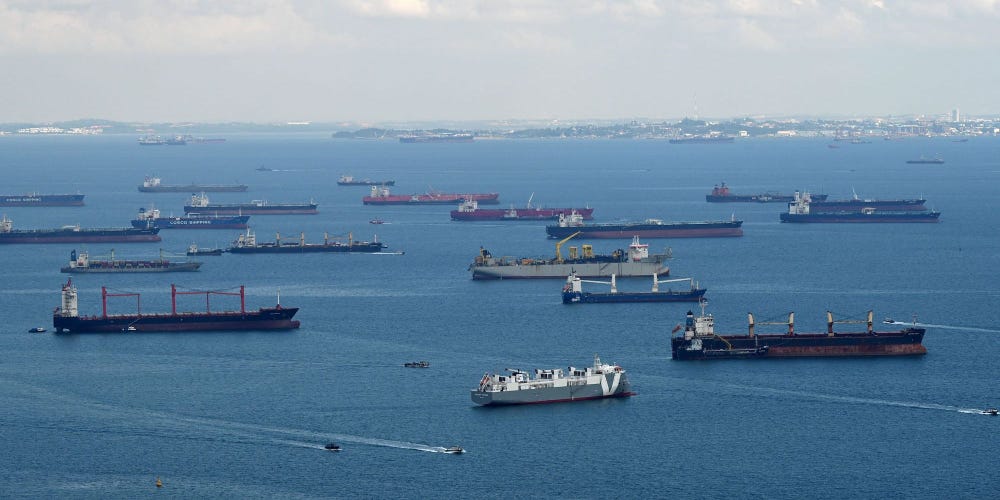
Ships in the Singapore Strait, which connects the South China Sea with the Malacca Strait. Peace and stability in the South China Sea help ensure the common interests of the region.
From the perspective of Japan, the Philippines, and Taiwan, their strengthening of defense ties with the US and strategic partnerships with countries like India and Australia are natural consequences of China's behavior.
For example, since joining the World Trade Organization (WTO) in 2001, Beijing's ongoing militarization efforts have not slowed down. From 2000 to 2010, China's military spending increased by at least 10% annually. The most recent increase was 7% for fiscal year 2022, bringing the defense budget to over $229 billion.
China has also deployed extensive anti-access/area denial systems to disrupt the asymmetrical advantages of the U.S. Navy, by positioning "carrier killer" systems and other offensive weapons along its eastern coast, thereby threatening the U.S.-backed security architecture that protects Washington's allies in the region.
Coupled with China's large-scale military exercises around Taiwan in August 2022 following Nancy Pelosi's (then Speaker of the US House of Representatives) visit to the island, these drills, involving land and sea assets such as the aircraft carriers Liaoning and Shandong, pose a serious risk to sea lanes along Taiwan, which are vital shipping lanes for Japan's imports, exports, and energy supplies.
For Southeast Asian countries like the Philippines, the deployment of cargo and military vessels in their nearshore waters also poses a corresponding threat.
The truth (which China finds difficult to accept) is that the Indo-Pacific and its shipping lanes are vital shared interests, contributing to peace, prosperity, and stability in the region.
Instead of engaging in a long-term strategy to reshape regional rules and structures, China should pay more attention to the growing anxieties of its neighbors.
Source link

































































































Comment (0)