


With their ability to flatter the figure and increase height, high heels are almost an indispensable accessory for women - Photo: QUANG DINH
However, according to doctors, wearing high heels for extended periods puts pressure on many parts of the body, especially the musculoskeletal system.
Ms. NVT (34 years old, residing in District 10, Ho Chi Minh City) complained that her height is quite modest, only about 1.50m. Therefore, when going out, Ms. T. prefers shoes with heels of 9-10cm to feel confident. Ms. T. said that because she wears high heels all the time, she often feels pain in her feet in the evenings.
High heels are an indispensable item, but...
To enhance her appearance, Ms. LTT (28 years old, residing in Go Vap District, Ho Chi Minh City) always has a shoe collection of various styles and heights ranging from 5-10cm. Due to the nature of her job, which involves frequent meetings with clients, Ms. T. also chooses high heels as an indispensable item for work and leisure.
Why do women like high heels? Dr. Trinh Quang Anh, a specialist in rehabilitation and obstetrics at the University Medical Center of Ho Chi Minh City, explains: "Because high heels make legs look longer. Wearing high heels causes the feet to bend backward, and the body to lean slightly forward, making the bust and hips appear fuller."
However, this posture causes the pelvis to rotate forward, which over time can lead to spinal and lower back pain.
When women wear high heels, the angle of their ankles changes, the body's axis of the knee and hip joints shifts, and even the spine must adjust to the new state to adapt. At this time, the body's center of gravity is no longer concentrated on the feet and heels as before, but entirely on the toes. However, when designing high heels, the closed toe area bends the toes, especially the big toe, causing the big toe to deform and curl inward.
Dr. Vo Hoa Khanh, head of the quality management department at the Ho Chi Minh City Orthopedic and Trauma Hospital, said that high heels are an indispensable fashion accessory for women, but high heels or heels that are too high (>10cm) put pressure on the feet, toes, ankles, knees, calf muscles, hips, and back.
Maintaining such an unbalanced posture for a long time can cause damage to these parts of the body. The higher and sharper the heel, and the more distorted the wearer's standing and walking posture becomes, the greater the damage.
Wearing high heels for extended periods can cause heel pain and plantar fasciitis. High heels, especially those that are both very high and stiff, increase pressure on the soles of the feet, particularly the heels. Over time, this can lead to heel pain due to plantar fasciitis and heel spurs.
Furthermore, wearing high heels for extended periods can cause inflammation of the metatarsophalangeal joint of the big toe, leading to deformity and misalignment of the big toe. The pointed toes of high heels trap the toes in a narrow space, gradually causing pain in the toe joints and deformities, especially the big toe. Inflammation and misalignment of the metatarsophalangeal joint of the big toe can affect the foot's appearance, and in some cases, surgery to correct the alignment of the big toe bone may be necessary.
Wearing excessively high heels alters the alignment of the lower leg and foot, putting pressure on the toes, making it easy to lose balance when walking quickly or when not used to wearing them. In particular, wearing high heels up stairs, in slippery environments, in the rain, or while riding a motorbike can easily lead to ankle sprains (ankle ligament strains).
Causes damage to the legs and nerves.
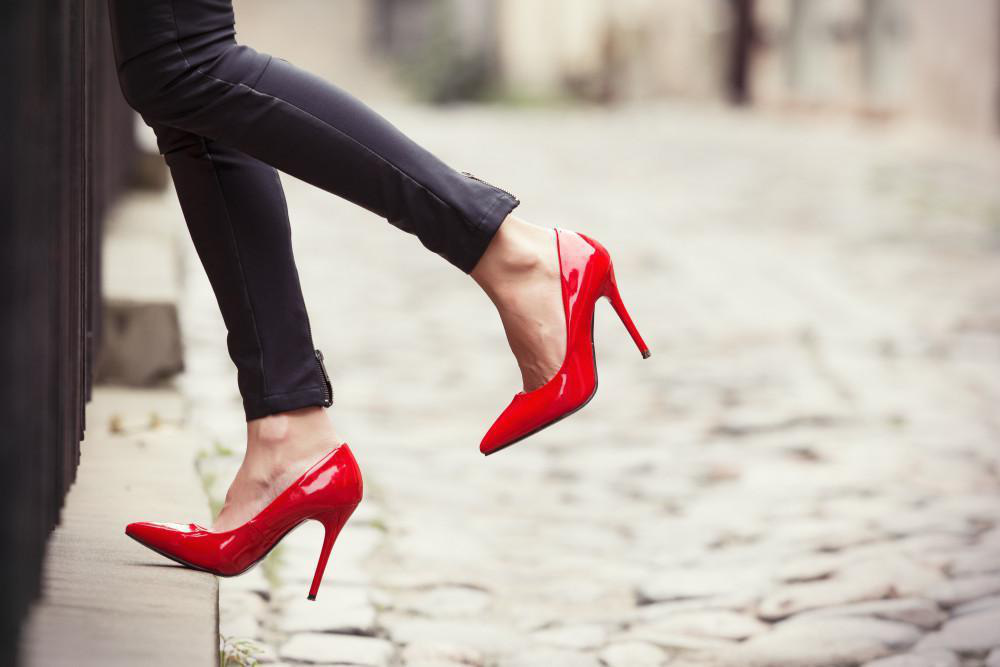
High heels enhance the figure but put pressure on the feet, toes, ankles, knees, calf muscles, hips, and back - Photo: Footdoc
Speaking to Tuoi Tre newspaper , Dr. Huynh Tan Vu - lecturer in the Traditional Medicine Department, University of Medicine and Pharmacy (Ho Chi Minh City) - said that normally our feet function like springs, helping to distribute weight evenly and absorb shock for the body when standing or walking.
When wearing high heels, most of the body weight is concentrated on the toe bones. The sudden shift from heel to toe forces the foot to arch and causes a jerky gait. Prolonged limping can lead to damage to the bones and nerves in the foot.
In addition, wearing high heels puts extra strain on the thigh muscles, increasing pressure on the knee joint. Meanwhile, the knee is the largest joint in the body, designed to allow for greater flexibility.
Regularly wearing high heels can increase pressure on the inner surfaces of the knees, quickly causing them to wear down and leading to osteoarthritis, resulting in foot pain that radiates down the tendons of the feet. Additionally, wearing high heels can increase the risk of injuries such as tripping, falling, or heel fractures due to strong impacts.
For women working in offices who frequently wear high heels, in addition to blood pooling causing foot pain, it also strains back muscles, putting pressure on the spine. Therefore, the risk of injury and pain in the back and shoulders increases.
Women, in particular, should avoid wearing high heels, as this can worsen their condition. The sciatic nerve is the largest nerve in the body, originating from the lumbosacral plexus, then running through the buttocks along the back of the thigh, down the back of the calf, to the heel and foot.
How to wear high heels safely?
Doctor Vu advises that, due to potential health risks, when wearing high heels, one should choose low-heeled or wedge shoes. This shoe design will help balance and distribute the pressure evenly across the feet.
Note that adding insoles inside your shoes can provide extra comfort. Rubber insoles are better because they absorb pressure well. Avoid wearing high heels and shoes with stiff soles.
Similarly, Dr. Khanh also advises girls under 18 not to wear high heels because at this age, their bones and joints are not yet fully developed, making them susceptible to damage to the meniscus and ligaments in the toes, ankles, and knees.
To prevent the negative effects of high heels, Dr. Khanh advises women not to wear excessively high heels, recommending heels under 7cm.
Women should only wear high heels when necessary, such as for work or parties, and should not wear them continuously or for extended periods. If you experience pain in your heels, toes, or calves, you should stop wearing high heels.
Choose shoes that fit well and are the right size, made from soft materials, open-toe shoes, and avoid pointed-toe high heels or shoes with narrow insoles to ensure enough space for your feet and toes. When wearing high heels, use soft insoles or socks to reduce plantar fasciitis.
Source: https://tuoitre.vn/tranh-he-luy-giay-cao-got-20241011081827412.htm


![[Video] Hanoi is determined to prevent and combat abuse and profiteering from the Health Insurance Fund.](/_next/image?url=https%3A%2F%2Fvphoto.vietnam.vn%2Fthumb%2F402x226%2Fvietnam%2Fresource%2FIMAGE%2F2026%2F01%2F25%2F1769304113922_1769261790932-jpg.webp&w=3840&q=75)


Comment (0)