

Although the traditional cultural identity of many ethnic minority groups is facing the risk of disappearing, the Dao community in Tra Chau village, Son Ha commune, Bao Thang district still preserves and maintains the values of their traditional weaving craft.
Together with the cultural officer of Son Ha commune, we followed the concrete road winding through the vast green cinnamon forests to reach the center of Tra Chau village.
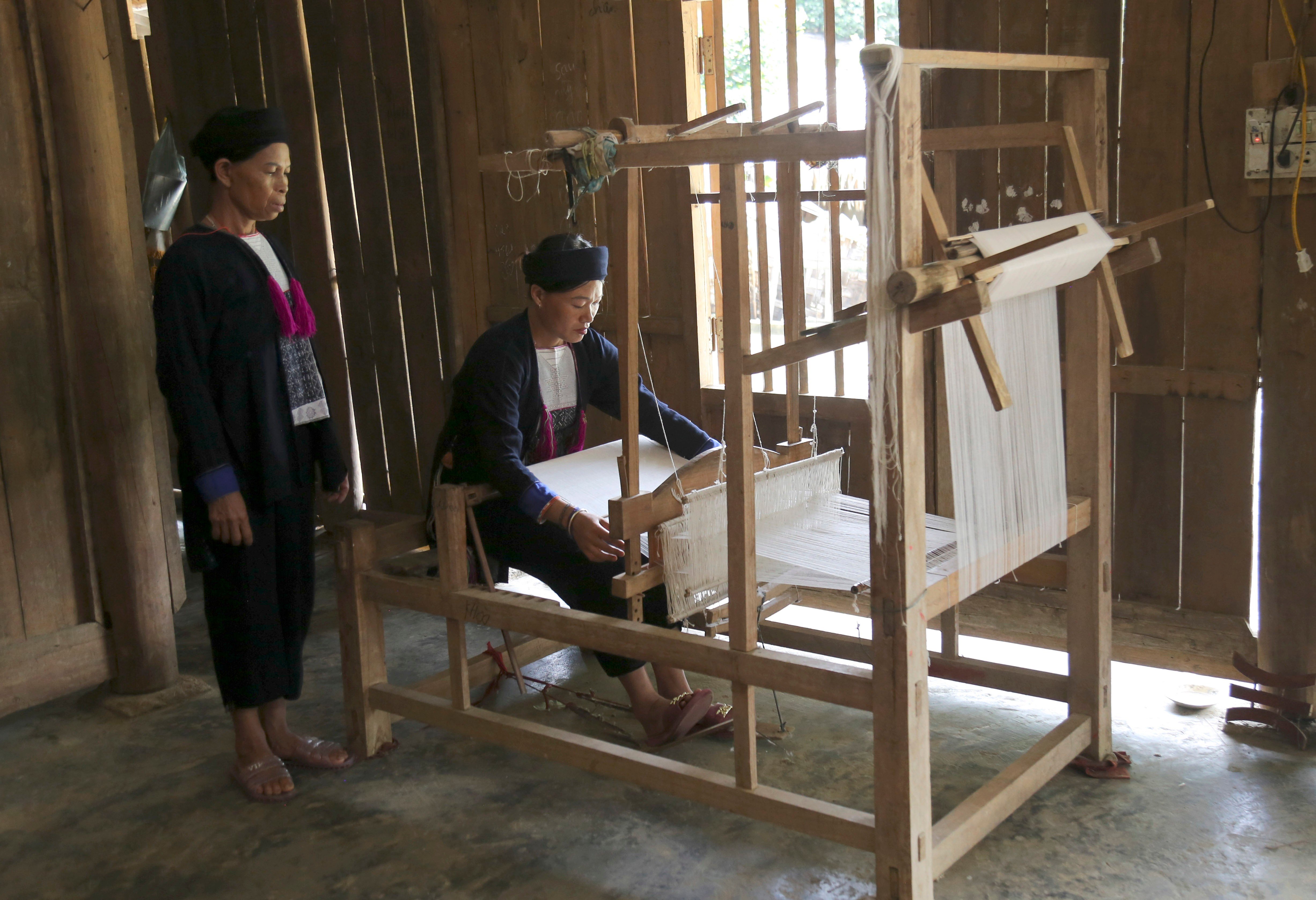
The craft of weaving in Tra Chau village has been passed down from generation to generation by local women.
To better understand the traditional weaving craft of the Dao people, we visited the family of Mr. Ban Van Quang, a specialist in Dao ethnic culture research. Mr. Quang is also a son of the Dao people, born and raised in Tra Chau village. Now 66 years old, he is a retired official who previously held positions such as Chairman of the People's Committee, Chairman of the People's Council, and Secretary of the Party Committee of Son Ha commune.
When we arrived at his house, Mr. Quang was sorting, drying, and copying ancient books. He still possesses several dozen ancient books written in Chinese characters. However, a few were damaged by floods, causing the ink to smudge, so Mr. Quang had to rewrite them. Mr. Quang studied Chinese characters and became familiar with Dao culture from a young age. Throughout his career, he didn't have much time to learn and practice calligraphy, so six years ago, after retiring, he devoted all his efforts to preserving and copying ancient books.
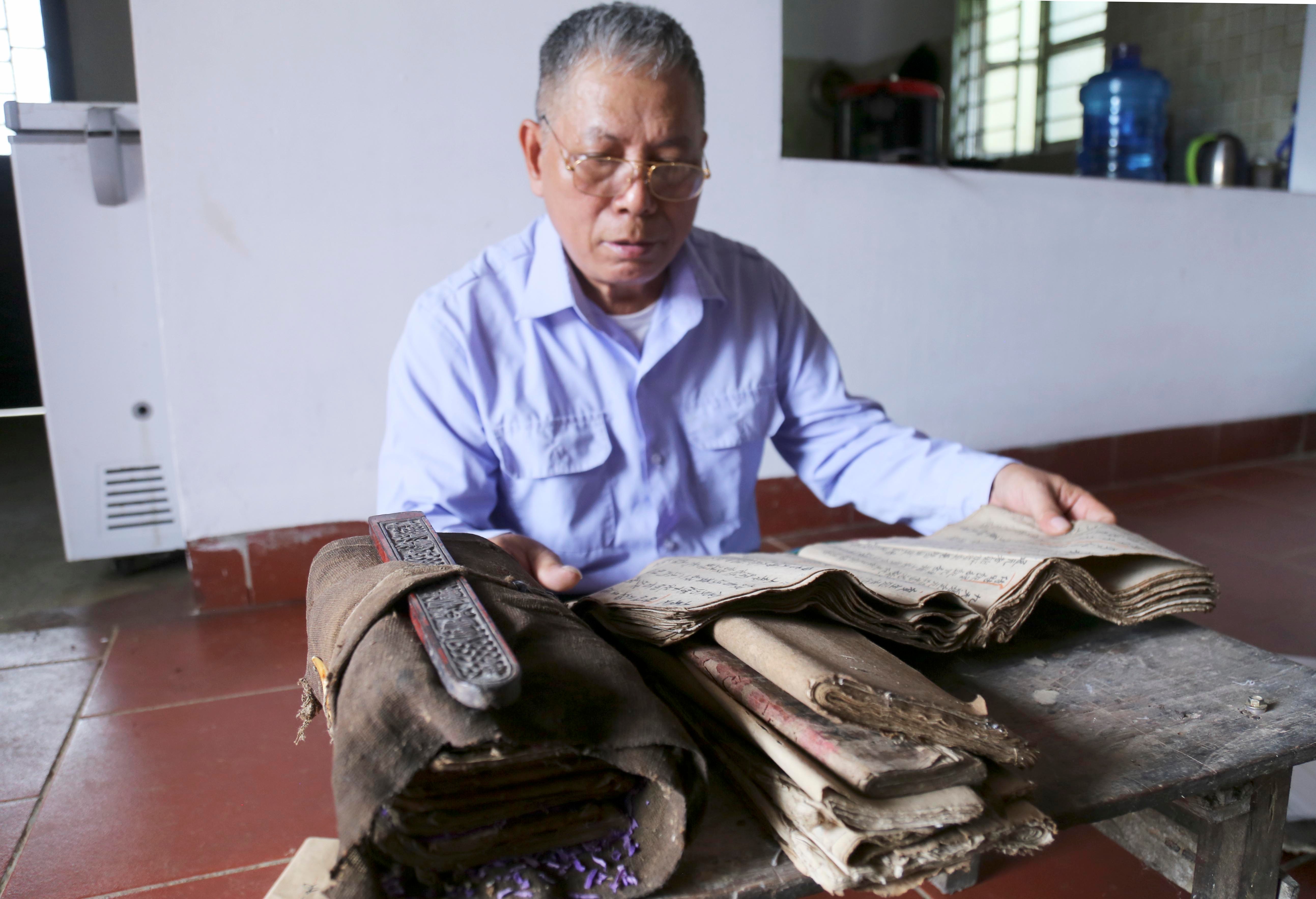
Mr. Ban Van Quang is knowledgeable about the traditional culture of the Dao ethnic group, including their weaving craft.
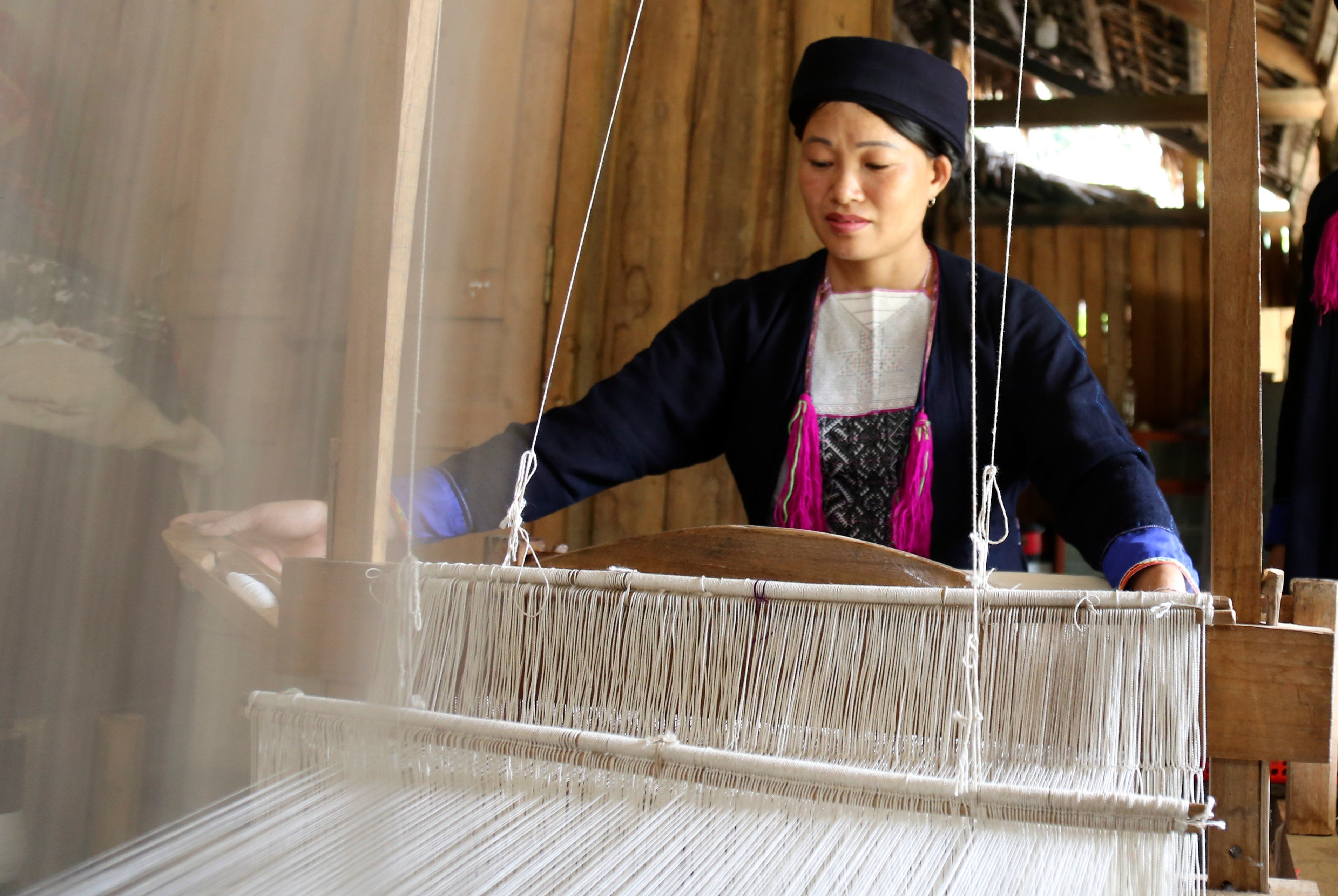
The threads of fabric continue to hang down in ivory-white curtains beside the loom every day.
Despite his busy schedule, Mr. Quang still dedicated enough time to give us a general overview of the weaving craft of the Dao ethnic group in Bao Thang, especially the people of Tra Chau village. Mr. Quang said that the Dao people, wherever they are, always have a strong sense of preserving their cultural identity, customs, traditions, traditional clothing, and weaving craft.
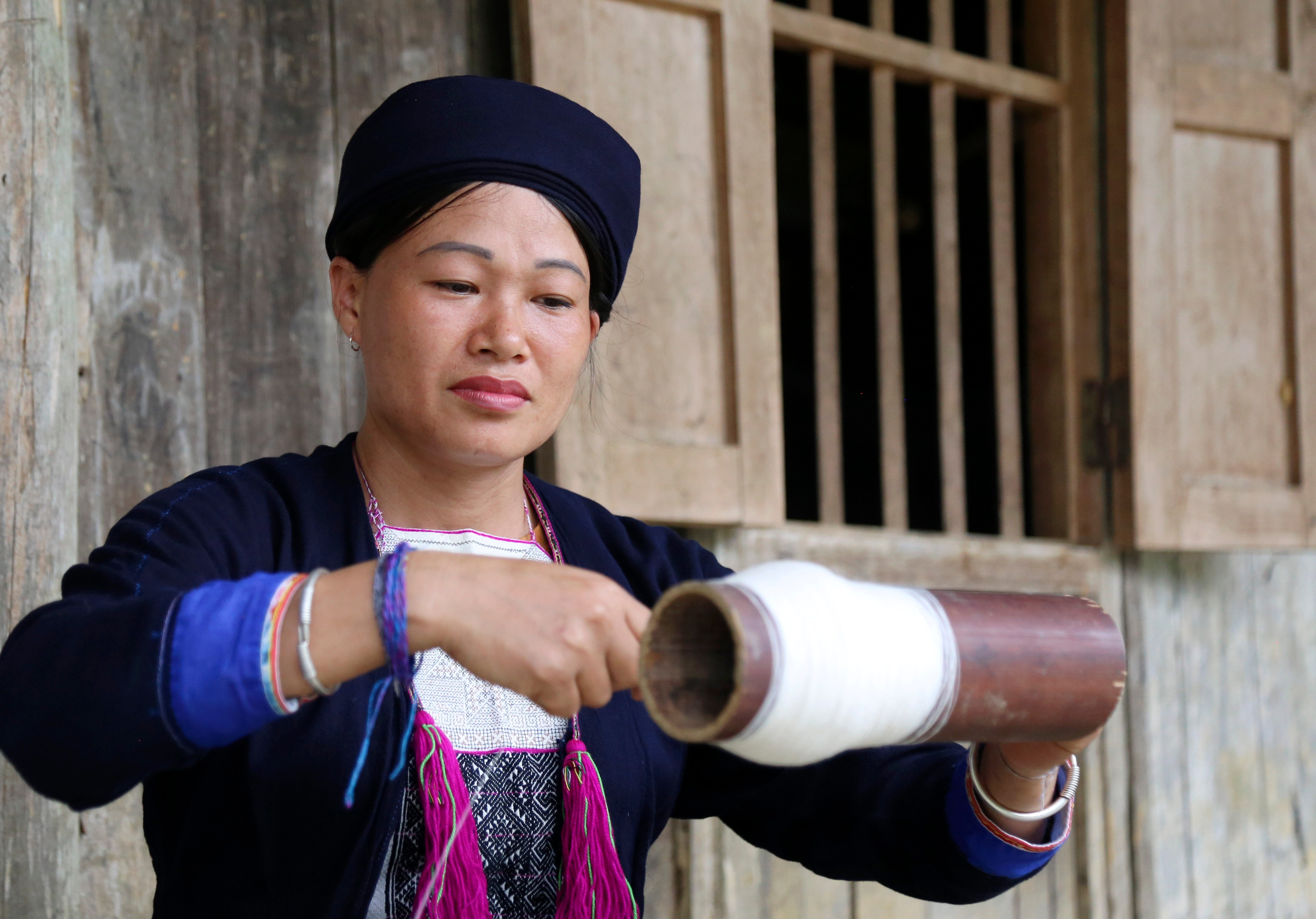
Twisting yarn.
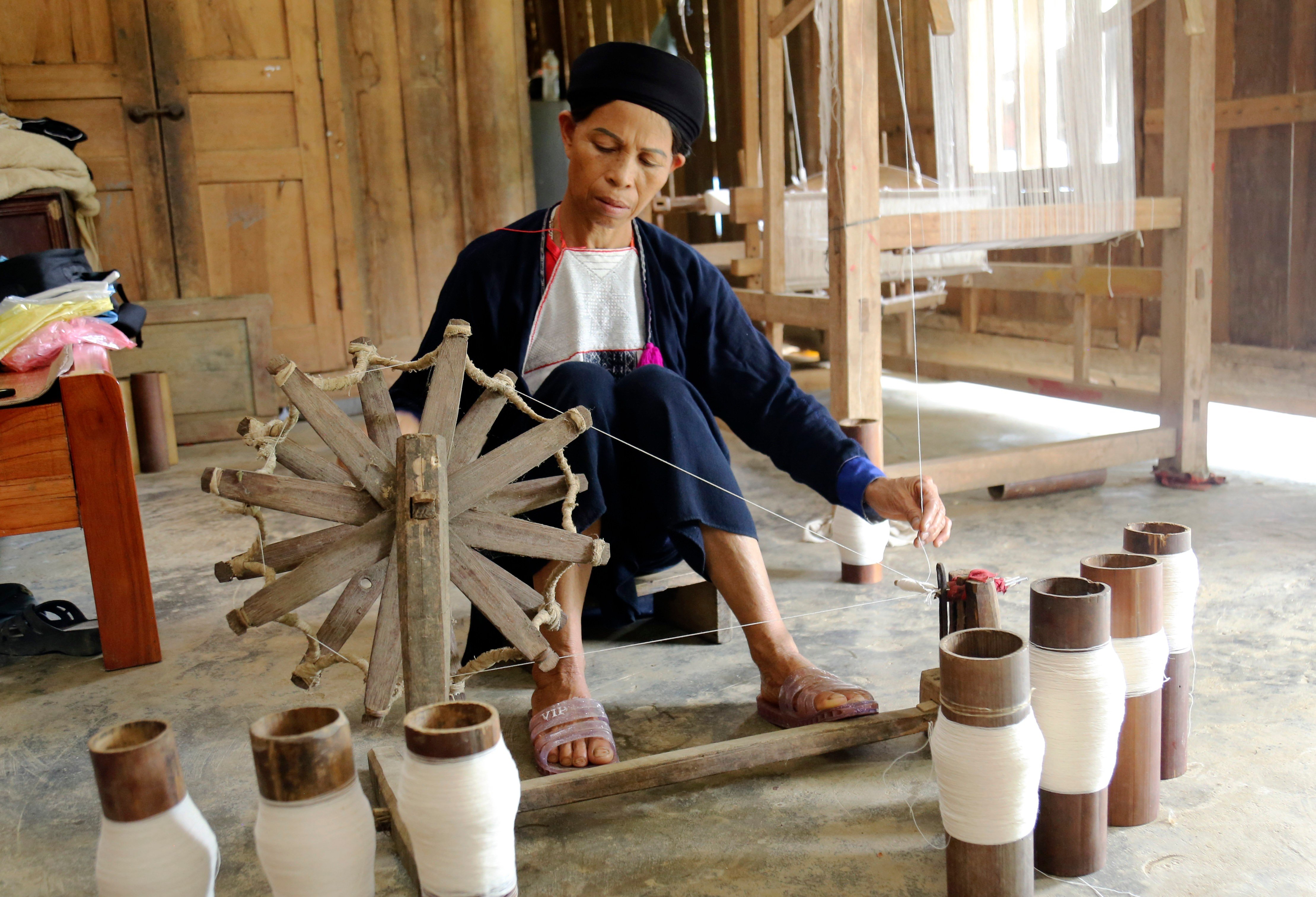
Each thread of fabric is a connection between the ancient and the modern, between preservation and development, between stillness and movement.
Mr. Quang added: In Bao Thang district, approximately 34.7% of households are Dao ethnic people (equivalent to 39,000 people), mainly Dao clans, residing primarily in Phu Nhuan commune, Son Ha commune, Tang Loong town, Pho Lu town... Among them, the Dao clans in Tra Chau village have preserved the traditional weaving craft the best. The entire village currently has about 50 weaving looms.
Following Mr. Quang's introduction, we went to the neighbor's house to meet Mrs. Dang Thi Khoa, 52 years old, one of the skilled weavers in Tra Chau. Mrs. Khoa placed her loom by the window – the best position to utilize natural light while weaving. On the loom was a roll of fabric she was working on. The ivory-white threads hung like thin wisps of smoke after each swift movement of the shuttle. The clicking and creaking sounds of the wood rubbing against each other made the rustic house amidst the cinnamon trees even more lively.
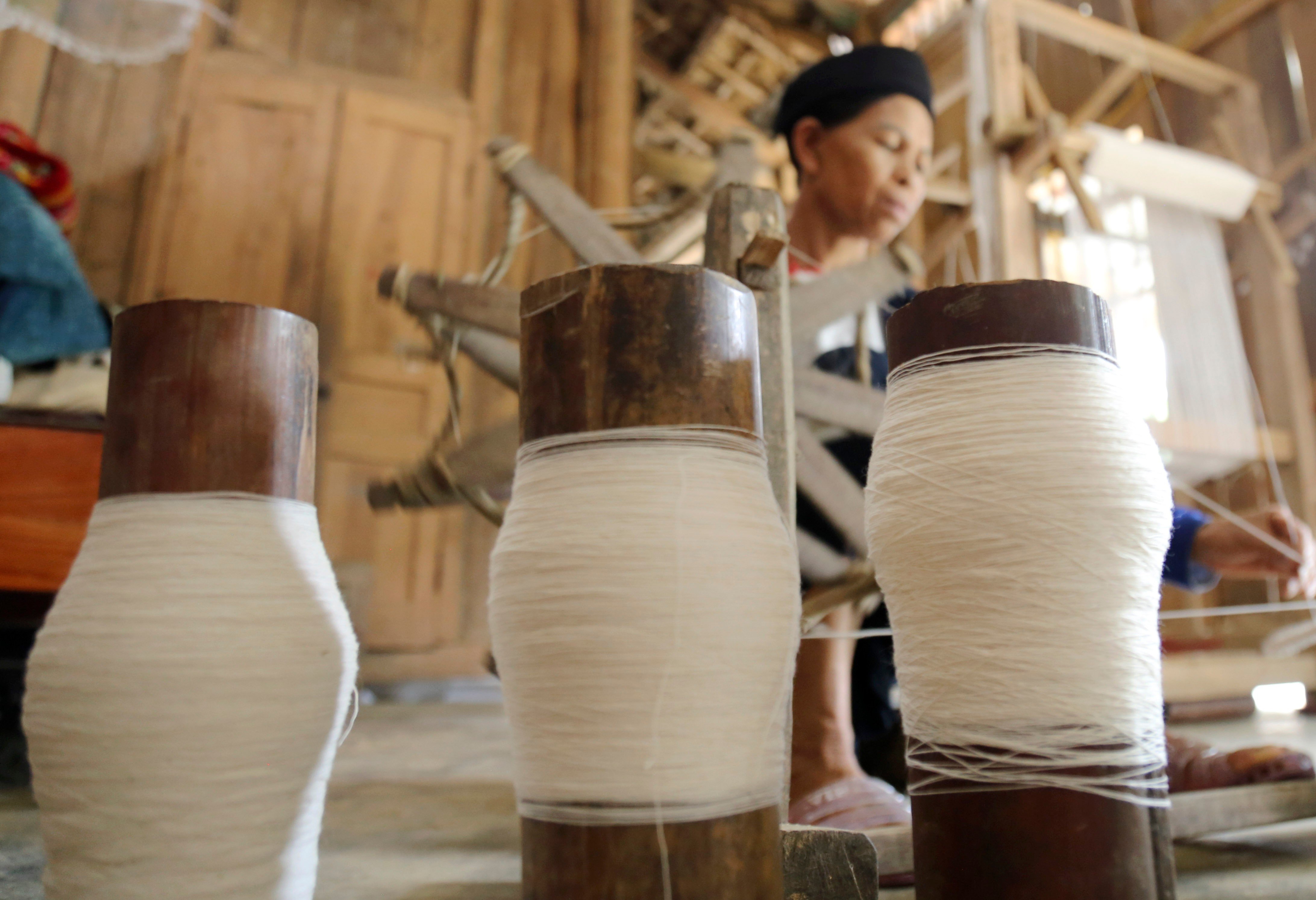
Weaving is a part of the Dao ethnic group's culture that they have preserved.
Mrs. Khoa's loom, used for decades, is old, but compared to the age of the spinning frame itself, it's still far less valuable. The loom, with its ebony-like color, has been passed down to Mrs. Khoa, the fourth generation. She considers it a family "treasure" and a symbol of generational significance. Mrs. Khoa explains that in the past, the Dao people in Tra Chau used to grow cotton, spin it, and make yarn, but now that yarn is readily available at the district market at a low price, cotton is no longer found in the fields of Tra Chau.
To produce woven fabrics on a loom requires many elaborate and meticulous steps such as boiling the yarn, sizing the yarn, twisting, pulling, and spinning. Each step, associated with diligence and strict adherence to rules, has its own set of prohibitions and taboos in the beliefs of the Dao people. For example, washing hands three times before working, not telling sad stories, and not scolding or speaking harshly to anyone nearby while weaving...
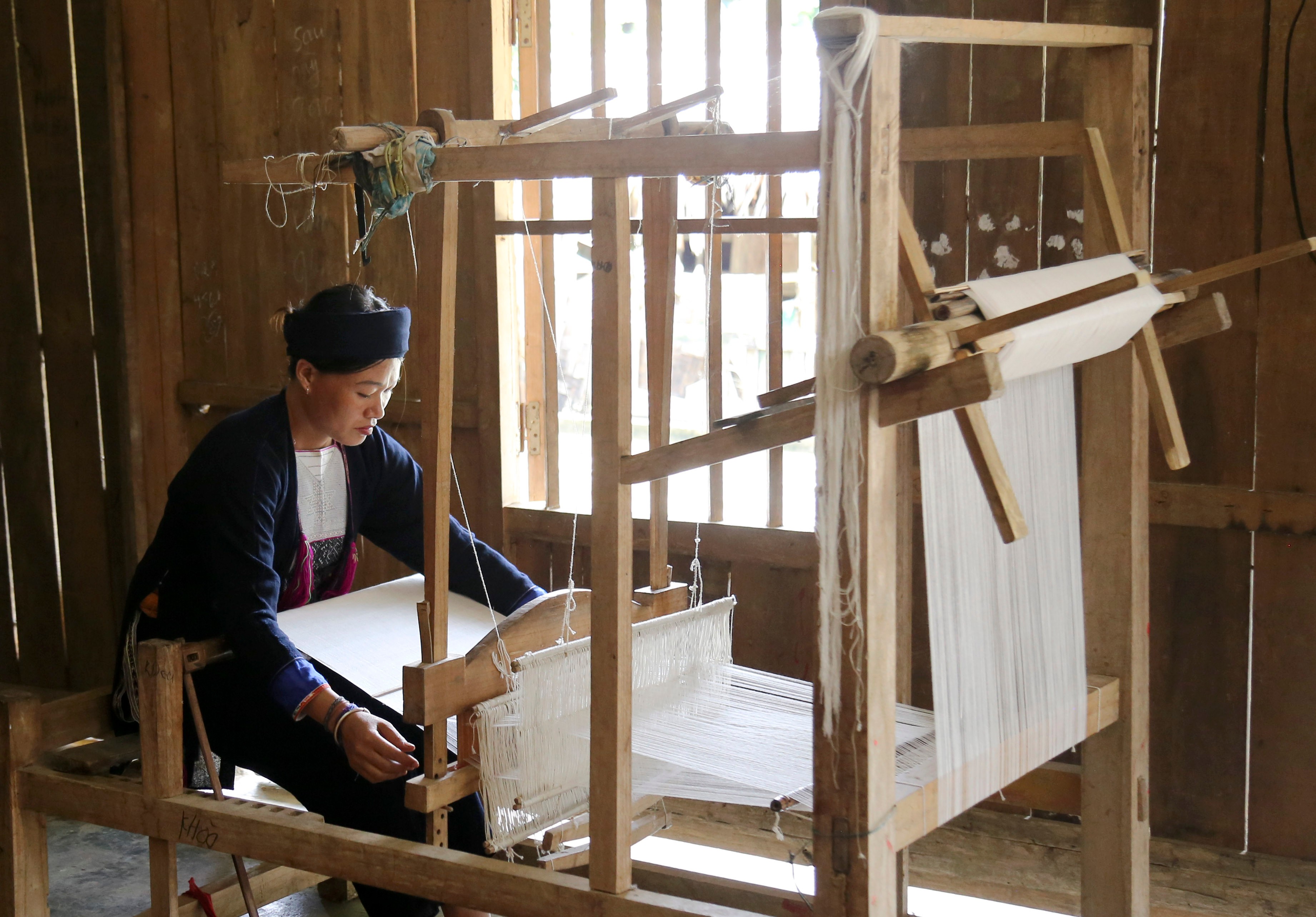
Threads of fabric hang like a curtain on the loom by the window.
For Dao women, in addition to their everyday clothing, girls of marriageable age must know how to weave, sew, or embroider at least two new sets of clothes to wear on their wedding day. Families with better economic conditions may sew and buy four new traditional outfits, changing into two different sets for the ancestral worship ceremony.
Like other households in the village, Mrs. Khoa's family preserves the traditional weaving craft partly to meet their own needs and partly to produce goods for sale to those in need. Nowadays, the people's beliefs have changed somewhat. Previously, Dao women were expected to know how to spin silk, weave, and embroider, but now, in some places, women buy ready-made woven fabric from people like Mrs. Khoa and then dye it with indigo, embroider patterns, and sew their own clothing. These changes haven't diminished the creaking sound of the looms in Tra Chau; by the window, the ivory-white threads still hang like thin curtains.
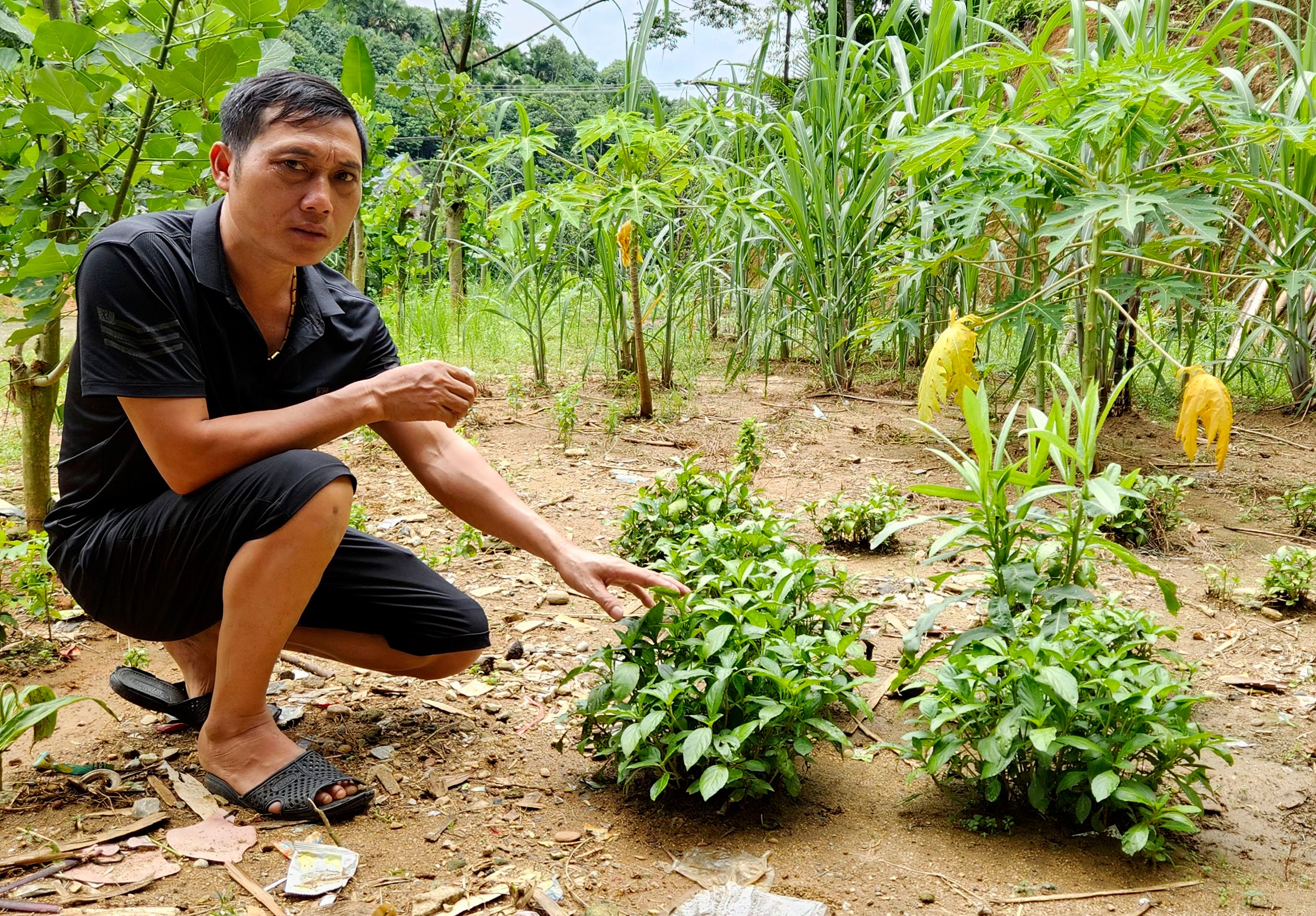
The people of Trà Trẩu cultivate herbs to use as raw materials for dyeing brocade fabrics with indigo.
Two years ago, the Ministry of Culture, Sports and Tourism issued Decision 783/QD-BVHTTDL recognizing the weaving craft of the Dao ethnic group in Bao Thang district as a national intangible cultural heritage. For the 114 Dao households in Tra Chau, this is a source of immense pride, as their traditional cultural identity will be preserved, protected, and effectively promoted in their daily lives, including the weaving craft.
Cao Cuong/Lao Cai Newspaper
Source: https://baophutho.vn/trang-nga-soi-to-tra-chau-220977.htm


![[Photo] Enchanted by the deciduous forest during the leaf-changing season.](/_next/image?url=https%3A%2F%2Fvphoto.vietnam.vn%2Fthumb%2F1200x675%2Fvietnam%2Fresource%2FIMAGE%2F2026%2F02%2F04%2F1770196861704_2066642_8ffd5f25c3c9433be0e644abe71613ae.jpeg&w=3840&q=75)


![[Image] A firsthand look at the "world's highest bridge" in China.](/_next/image?url=https%3A%2F%2Fvphoto.vietnam.vn%2Fthumb%2F1200x675%2Fvietnam%2Fresource%2FIMAGE%2F2026%2F02%2F05%2F1770258359911_01-cau-hoa-giang-995-jpg.webp&w=3840&q=75)




Comment (0)