

"On the occasion of Vietnam Law Day (November 9th) and the upcoming 11th anniversary of the National Assembly 's adoption of the 2013 Constitution, we must not forget the spirit of constitutional supremacy and always remember the hundred articles of the Constitution that 'inherit the divine rule of law'."
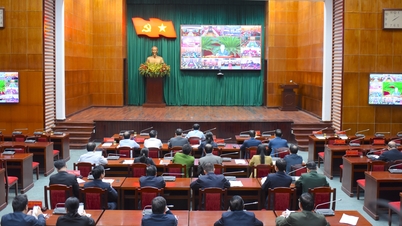
November 9th is Vietnam Law Day. Seventy-eight years ago, on September 11, 1946, the first Constitution of our country, drafted under the direct guidance of President Ho Chi Minh, was unanimously adopted by the First National Assembly. Choosing November 9th as Vietnam Law Day is very appropriate, reflecting the spirit of upholding the Constitution and the law. During his lifetime, while actively engaged in revolutionary activities to gain national independence, President Ho Chi Minh once prayed that the Constitution would be promulgated, with all its provisions guided by the divine power of law. His wish and his thoughts were wonderfully expressed in the 1946 Constitution, which served as the foundation for subsequent Constitutions. Guided by President Ho Chi Minh's ideology and building upon the Constitutions of 1946, 1959, 1980, and 1992, with the task of institutionalizing the Party's Platform and the people's will, our Constitutional Amendment Editorial Board, along with experts, scientists, National Assembly delegates, and relevant agencies and organizations, diligently researched and gathered opinions from the people nationwide. This enabled the Constitutional Amendment Committee, chaired by National Assembly Chairman Nguyen Sinh Hung, under the leadership of the Party Central Committee and the Politburo, and directly under General Secretary Nguyen Phu Trong, to submit the 2013 Constitution to the 13th National Assembly for approval. This is the Constitution of a new era of national development. The 2013 Constitution comprises 120 articles, each imbued with the spirit of the rule of law. The principle of the rule of law and the supremacy of the Constitution are most clearly and strongly expressed in the following regulations: - The Constitution is the fundamental law of the Socialist Republic of Vietnam, possessing the highest legal effect. - All other legal documents must conform to the Constitution. - Party organizations and members, state agencies, public officials, and all organizations and individuals must operate within the framework of the Constitution and laws. - In the Socialist Republic of Vietnam, human rights and civil rights in political, civil, economic, cultural, and social spheres are recognized, respected, protected, and guaranteed according to the Constitution and laws. Human rights and civil rights can only be restricted by law in necessary cases for reasons of national defense, national security, public order, social safety, social morality, and public health. - The National Assembly, its agencies, the President, the Government, the People's Courts, the People's Procuracy, other State agencies, and the entire People are responsible for protecting the Constitution. - The mechanism for protecting the Constitution is prescribed by law. **** In recent days, listening to General Secretary To Lam, other Party and State leaders, National Assembly deputies, the Minister of Justice , and the people speaking, discussing, and exchanging opinions on issues related to the Constitution, laws, and institutions in general, I once again felt the vibrant spirit of the Constitution, just as it did during the months and days of research, editing, and lively discussions of the 2013 Draft Constitution. 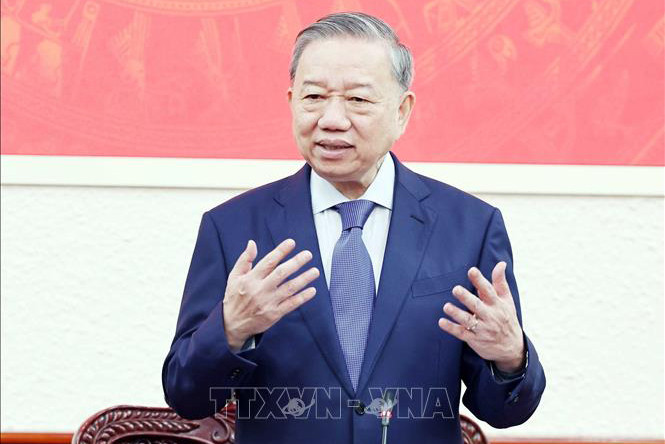
General Secretary To Lam speaks at a working session with the Party Committee of the Ministry of Justice on the morning of November 7th. Photo: Thong Nhat/TTXVN
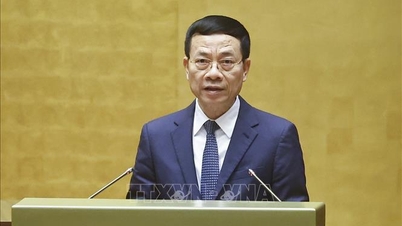
Generally speaking, the Constitution has been respected and strictly adhered to over the past period. Based on the provisions and spirit of the Constitution, our country has developed continuously, achieving comprehensive achievements in the fields of economics, society, culture, education, science, technology, environmental protection, national defense and security, foreign affairs, promoting and protecting human rights and civil rights, building and perfecting the socialist rule of law state of the people, by the people, and for the people... creating great and solid opportunities to prepare for a new era - the era of the Vietnamese nation's rise. However, it must be frankly acknowledged that there are still documents of state agencies, actions and deeds of organizations and individuals that need to be seriously considered in relation to their constitutionality. Meanwhile, besides the current decentralized mechanism for protecting the Constitution, we do not yet have a specialized, centralized mechanism for protecting the Constitution. There are situations where the application of constitutional provisions gives rise to differing interpretations or debates about the constitutionality of draft laws submitted to the National Assembly, but competent agencies, organizations, and National Assembly deputies have not exercised their right to request the Standing Committee of the National Assembly to interpret the Constitution for a unified understanding. In some cases, the National Assembly's agencies and the Ministry of Justice's assessment of constitutionality have been simplistic and formalistic, merely following procedures. Most recently, there was a debate between National Assembly deputies and the Minister of Planning and Investment regarding the provisions of the Public Investment Law (amended), specifically whether the delegation of authority over public investment projects—essentially public investment capital from the state budget—is related to the National Assembly's authority as stipulated in the Constitution. According to the Constitution, the National Assembly has the authority to decide on the state budget and allocate the central budget, including public investment capital. Following the explanation by the Minister of Planning and Investment, National Assembly deputies, while disagreeing, seemed unwilling or unaware of activating the process of requesting the National Assembly Standing Committee to clarify the relevant provision of the Constitution. A possible scenario is that if the National Assembly approves that provision of the draft law, its constitutionality will continue to be questioned because, in order to protect the Constitution, legal documents, including laws enacted by the National Assembly, must be regularly reviewed and assessed for their conformity with the Constitution. Vietnam Law Day on November 9th, and the upcoming 11th anniversary of the National Assembly's adoption of the 2013 Constitution (November 28, 2013 - November 28, 2024), reminds us not to forget the spirit of constitutional supremacy and to always remember the hundred articles of the Constitution that "inherit the divine rule of law."Vietnamnet.vn
Source: https://vietnamnet.vn/tram-dieu-phai-co-than-linh-phap-quyen-2340601.html


![[Image] Close-up of the newly discovered "sacred road" at My Son Sanctuary](/_next/image?url=https%3A%2F%2Fvphoto.vietnam.vn%2Fthumb%2F1200x675%2Fvietnam%2Fresource%2FIMAGE%2F2025%2F12%2F13%2F1765587881240_ndo_br_ms5-jpg.webp&w=3840&q=75)















































































Comment (0)