



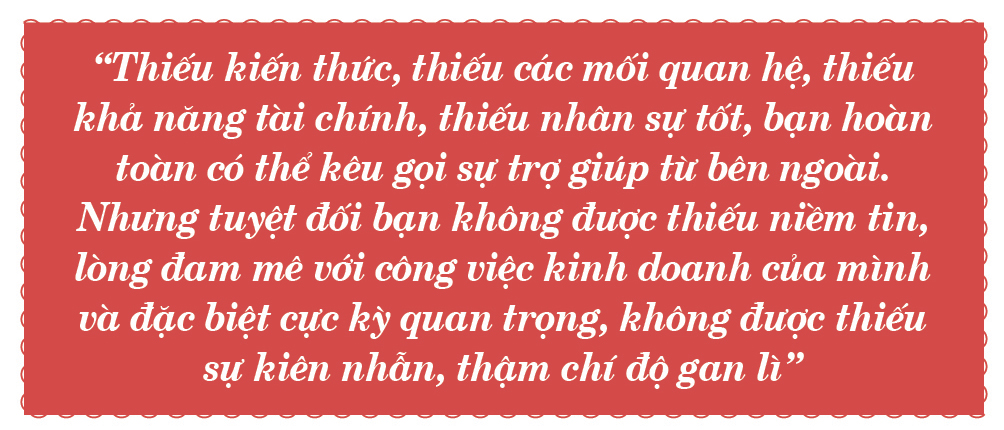
In 2012, Vu Hoai Thu, a Master of Communications and then Deputy Director of a well-known foreign media company in Vietnam, went on a business trip to the United States. This was normal for a busy woman, but what was unusual was that instead of resting, she read a magazine and was captivated by the story of two young men who started a mushroom business, to the point that it changed her life.
It's unclear how long the story of the two boys and the image of the little mushrooms haunted her, but all that's known is that one fine day she suddenly submitted her resignation, much to the astonishment of her colleagues and family. How could they not be surprised when her position at the time was the envy of many? And how could they not stop her when the path she chose to pursue was so new and so full of challenges?

“Like many people, my husband strongly objected. I don’t remember how many arguments I had to use to convince him, I only remember saying: 'Youth only comes once, I want to live with my passions and aspirations. In a few years, when I’m older and my inertia is too great, I won’t be able to do it anymore,' my husband reluctantly agreed,” Thu recounted.
She chose mushrooms, while her family chose safety. She had a point in wanting to pursue her passion and challenges, but her family was equally reasonable in wanting her to fully dedicate herself to her current work and her small family, which was preparing to welcome a second member. Many called her decision "reckless" and "dreamy," lacking in realism.
But for a woman accustomed to working by planning meticulously, it certainly wasn't a moment of emotional daydreaming – a weakness for most women.
The resignation letter has finally been submitted. She is entering a new chapter in her life at an age that is no longer young…


Having decided to dedicate herself to mushroom farming, she wasn't in a hurry to produce mushrooms or set up a factory. Her first thought was: "I have to go to school first," Thu recounted.
The more than 20-day course at the Center for Plant Biotechnology (Institute of Genetics) really helped her understand many things about mushrooms.
“When I decided to switch careers, I was just interested but didn't know where to start. But after that short course, I gained access to diverse information—information from people already involved in mushroom cultivation, from mushroom instructors, and especially information about the profession and the market,” Thu recalled.

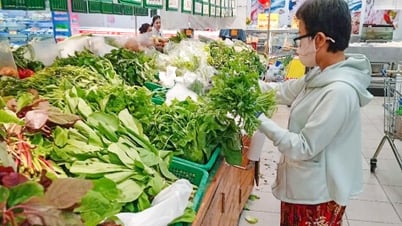
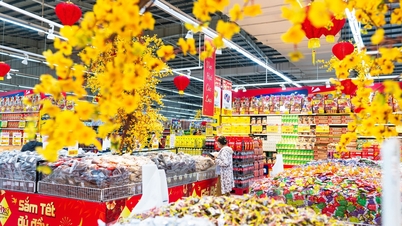
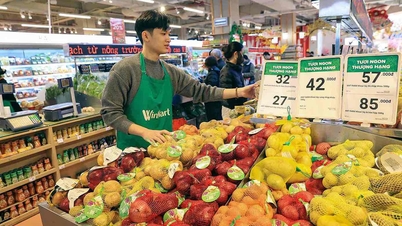
After completing the course, she became even more cautious with each step she took, not rushing into production but continuing to explore the market. She spent a lot of time wandering around supermarkets. Mushrooms were sold everywhere, but it was very rare to find mushrooms of Vietnamese origin; most were imported.
Questions flooded her mind: Why are mushrooms grown in such abundance but not distributed in major supermarkets? Why do we have to use imported products? Why and why? These questions helped her understand that the domestic market is incredibly promising and currently untapped.
This is the opportunity she needs to seize and quickly launch all her pre-planned projects. More importantly, "I've decided to focus solely on Vietnamese mushrooms because I believe that mushrooms grown in Vietnam are in no way inferior to imported varieties; it's just that consumers aren't yet aware of them, and producers aren't confident enough to invest in them."
The more detailed her plans, the faster she acts, which is the surprising quality that always sparks curiosity and interest in those who meet her. Instead of producing mushrooms herself, she chose to become a crucial link in the distribution chain – a commercial distributor of mushrooms. She traveled throughout the country, including provinces like Thai Nguyen, Phu Tho , Ha Nam, Nam Dinh, Thai Binh, and Da Lat, to select partners.
Furthermore, in addition to the three basic mushroom varieties traditionally grown in Vietnam—oyster mushrooms, button mushrooms, and straw mushrooms—she has discussed with partners the possibility of producing several more specialty mushroom varieties, aiming to launch over a dozen types of 100% "made in Vietnam" mushrooms onto the market.
And surprisingly, mushroom products have been given a new look, proudly occupying the most prominent and eye-catching positions in almost all supermarkets and stores in Hanoi .
Ly Tuong Fresh Mushrooms debuted in early 2013, less than a year after she quit her job to have a child...
She shared: Many entrepreneurs keep deliberating. They think and analyze, wondering when they're "ready." You have to know when it's "enough" to decide to act immediately, just dive in and do it, make corrections as you go, if you make mistakes, try again. Always prepare for the worst-case scenario, both mentally and financially.

When the first fresh mushroom products hit the shelves, she began a new plan for herself, also the second "branch" that she had envisioned when choosing the company name: the processed food business.
Of course, it's still mushrooms – the food that has fascinated and captivated her.
But it's not as easy as growing fresh mushrooms. When distributing fresh mushrooms, you can set standards for producers to follow, you buy them, and then shape and present the mushrooms to consumers . Processed mushroom products, however, are different. No one has ever made them before, meaning there's no recipe and no market.
“At that moment, I realized two things: I would be the first to enter the market and I would also have an advantage in distribution. But that was also a huge challenge, having to accept the fact that because it was new, it would be difficult to gain acceptance,” she calculated.
As she predicted, although it was a one-stop shop, selling wholesale wasn't easy. Mushroom floss, mushroom pate, mushroom sausage, mushroom soup powder, mushroom spring rolls, mushroom patties... all were completely new concepts to consumers. Some were excited to explore them, while others were hesitant and skeptical.
Not to mention the Vietnamese consumer's preference for fresh food and their aversion to processed foods; this was a solid "iceberg" that she determined from the beginning to "break" through the quality of her products.
And that journey, for her, is a long story.
With each new product launched and put on the market, she anxiously awaits the reaction, "Some people praise it for being unique, but others frankly criticize it for not being tasty or interesting... I accept it all."
As mentioned above, Hoai Thu's perfectionism sometimes gets her into trouble. She sets herself the goal of launching about 10 new products each year. Upon hearing this, I immediately recognized it as a formidable obstacle, and she herself acknowledges this. Proof of this is that many of her products are still struggling to win over consumers. She even had to reluctantly discard some products because they weren't well-received.
In the near future, mushroom fish sauce, cordyceps mushrooms soaked in honey… are the newest “warriors” that she hopes can conquer the market… They might be the most elite warriors, or they might have to be temporarily suspended due to their high price and niche appeal. But what does it matter when the owner of these products is someone who is not afraid to face difficulties, and even always “plans” in advance for her own failures.
Source






























































Comment (0)