

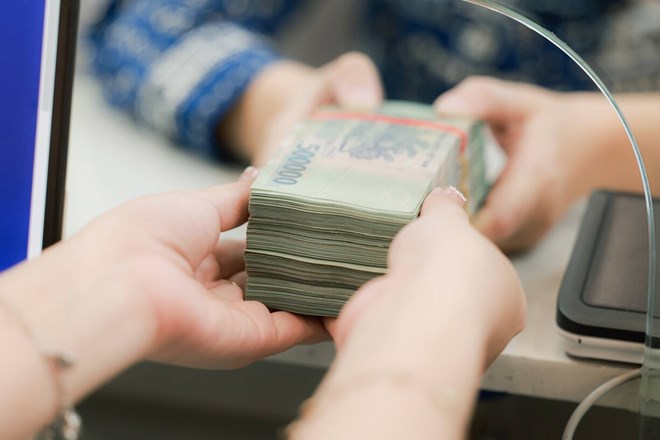
According to the State Bank of Vietnam (SBV), credit growth across the entire banking system reached 6% by the end of the second quarter.
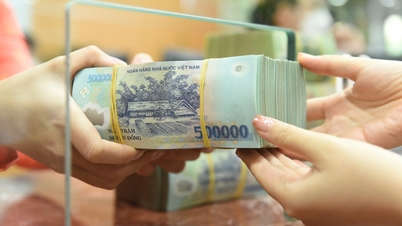
Credit growth surged in June alone. According to data recorded at the end of May, the overall credit growth rate across the system reached only 3.43%. Thus, in just one month, 360,000 billion VND of credit was disbursed, bringing the total credit to nearly 14.4 million billion VND.
This is an impressive breakthrough, raising expectations for the entire industry to achieve its 15% credit growth target this year, especially considering that credit growth was negative in the first two months of the year.
However, this growth rate has led the public to question the quality of credit.
As you may recall, at the press conference summarizing the work of the first six months of the year, Deputy Governor of the State Bank of Vietnam, Dao Minh Tu, stated that due to the negative impacts of the COVID-19 pandemic, non-performing loans (NPLs) have tended to increase, with on-balance sheet NPLs at nearly 5%. Meanwhile, potential NPLs, on-balance sheet NPLs, and loans sold to VAMC reached approximately 6.9%.
A representative from the State Bank of Vietnam stated that bad debt is a problem for the economy as a whole, not a weakness of the banking sector.
"To resolve bad debts, both banks and customers must take responsibility for the debt. The State Bank of Vietnam will take measures to improve credit quality and ensure that bad debts are controlled at a safe level," said the Permanent Deputy Governor of the State Bank of Vietnam.
From the banks' perspective, according to the financial reports of 29 commercial banks up to the end of Q2/2024, the total outstanding credit reached over 12.4 million billion VND. This figure increased by approximately 7.3% compared to the end of 2023.
According to expert Le Hoai An - CFA Founder of IFSS and co-founder of WiResearch, the 27 commercial banks are classified into four main groups based on asset size and customer base, including state-owned banks, banks specializing in corporate lending, banks specializing in personal lending, and other groups.
Although the Big 4 banks still lead in customer lending, the credit growth rate is quite low, indicating that these banks are being rather cautious during the first six months of the year.
Mr. An stated, "The group of banks specializing in corporate lending consistently shows more outstanding credit growth and becomes the main driving force for credit across the entire banking industry."
Banks lending to businesses experienced high credit growth rates, such as LPBank, HDBank , and Techcombank, with increases of 15.2%, 13.3%, and 14.16% respectively.
"Although real estate loans still account for nearly 34% of Techcombank's portfolio, given the context of a real estate market that has not fully recovered, the bank has diversified its loan portfolio development to include industrial, science and technology, and construction sectors, helping to maintain good growth."
HDBank expanded its loan portfolio in the construction sector with a growth rate of 43.5% compared to the end of 2023, but the bank's main driving force came from the wholesale and retail sector, with a high proportion of loans and growth of nearly 28%.
"For LPBank, one-quarter of its portfolio is dedicated to the wholesale sector with a growth rate of over 25%, while the construction sector, accounting for nearly 15%, also showed a growth rate of 15.7% compared to the end of 2023," expert Le Hoai An and colleagues stated.
Notably, according to experts, although personal lending remains challenging this year, banks that favor personal lending, such as ACB, VPBank, and TPBank, still achieved positive credit growth by the end of the second quarter.
According to Mr. An, the reason is that these banks have shifted their lending structure, expanding lending to small and medium-sized enterprises, taking advantage of opportunities from the business market.
By the end of the second quarter, ABBank was the only institution to record negative credit growth. Loan balances decreased to just over 91,000 billion VND, a 7.2% decrease compared to the end of the previous year.
The flow of credit into production and business activities is a welcome development. However, the credit growth target is still far from the target set by the State Bank of Vietnam for the whole year.
Notably, by the end of July 2024, credit growth across the entire system had slowed down, compared to the end of 2023, with a growth rate of 5.66%, equivalent to nearly 14.33 trillion VND.
Regarding the task of credit growth in the last six months of the year, the State Bank of Vietnam stated that it will manage the growth of credit volume and structure appropriately, meeting the credit capital needs of the economy to contribute to controlling inflation and supporting economic growth.
The State Bank of Vietnam will continue to boost credit to key sectors that are the driving force of the economy. It will continue to promote specific credit programs and policies; remove difficulties for businesses and individuals; and at the same time, strictly control credit to sectors with potential risks… It will also continue to review and improve the legal framework to create favorable conditions for the provision and access to bank credit.
Source: https://laodong.vn/kinh-doanh/tin-dung-tang-dot-bien-von-chay-vao-dau-1378898.ldo






























































![[Photo] General Secretary To Lam meets with voters in Hanoi.](https://vphoto.vietnam.vn/thumb/402x226/vietnam/resource/IMAGE/2025/12/15/1765783098527_image.jpeg)































Comment (0)