

At the workshop, delegates emphasized that coastal and island tourism has been and continues to be a type of tourism that is being invested in, exploited, and developed, and is considered an important task contributing to making tourism a key economic sector.
Coastal and island tourism also contributes to promoting the development of many other economic sectors, creating more jobs for society, especially in coastal areas, ensuring the effective exploitation of the potential and advantages of the sea and islands while ensuring national security and defense.
The workshop was held in Can Gio district, a locality with a breakthrough economic development orientation aiming to “develop key economic sectors such as tourism, ecotourism, and resorts; connect with international tourism routes through the international passenger port on the Saigon-Vung Tau waterway; support the implementation of the Can Gio coastal tourism urban area expansion project according to the approved plan. The goal is to reach a total of 49 million tourists visiting Can Gio during the 2021-2030 period, with an average annual growth rate of 12.5%.”
This is a great opportunity for Can Gio district to become a world- class resort city by 2030. From now until 2030, there will be many issues to discuss, many things to do, and much determination and social consensus needed to awaken the long-dormant potential of the Can Gio region.
According to the delegates, Ho Chi Minh City is facing challenges in socio-economic development. Therefore, developing the marine economy is essential to help the local economy take off, enabling the city to become less dependent on the land-based economy and expand its economic potential from the coastal area of Can Gio district.
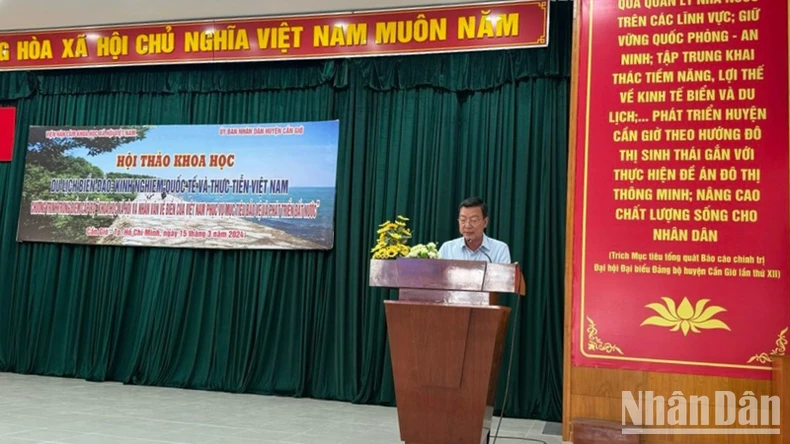 |
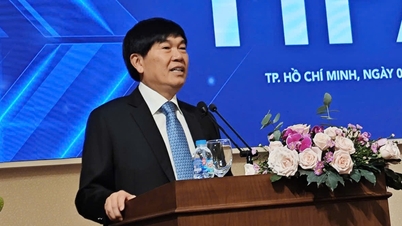
Delegates speaking at the workshop. |
Located approximately 50km southeast of the city center, Can Gio District boasts a 23km coastline and a natural area of over 71,300 hectares, with large mangrove forests and waterways accounting for 70% of the district's total natural area. Its unique geographical location and abundant natural resources have earned Can Gio the nickname "the green lung" of Ho Chi Minh City, possessing numerous advantages and immense potential for promoting marine economic development.
Furthermore, as a key waterway gateway for Ho Chi Minh City, strategic planning for maritime affairs and national defense and security in Can Gio District is always of paramount importance.
The workshop was organized with the aim of sharing experiences and discussing challenges, opportunities, and solutions for economic sectors to participate in the development of ecotourism, community tourism, and high-quality coastal resort areas in coastal regions, including Can Gio district.
At the same time, we propose solutions for building, developing, and diversifying world-class marine tourism products, product chains, and brands based on biodiversity conservation, promoting the unique natural, cultural, and historical heritage values of various regions, and connecting with international tourism routes to make Vietnam an attractive destination for the world.
Source

![[Photo] President Luong Cuong and his wife attend the Spring Homeland Art Exchange Program 2026](https://vphoto.vietnam.vn/thumb/1200x675/vietnam/resource/IMAGE/2026/02/08/1770565939066_ndo_br_1-6752-jpg.webp)







![[Photo] President Luong Cuong and his wife attend the Spring Homeland Art Exchange Program 2026](https://vphoto.vietnam.vn/thumb/402x226/vietnam/resource/IMAGE/2026/02/08/1770565939066_ndo_br_1-6752-jpg.webp)





























Comment (0)