

Phu Tho – a land that embodies and preserves unique cultural heritage values, is the cradle of the nation, the place where the Hung Kings founded the Van Lang Kingdom. The province currently has 324 state-ranked relics, including one special national historical relic, Hung Temple, 73 national historical relics, 250 provincial relics, five national treasures, and 14 national intangible cultural heritages. Among these, Phu Tho Xoan singing and the Hung King worshiping belief in Phu Tho have been inscribed by UNESCO as representative intangible cultural heritage of humanity.
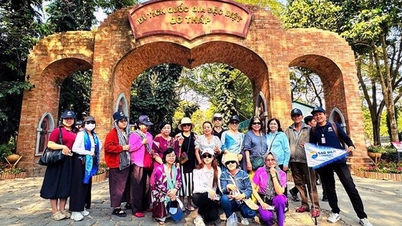
As part of the "I Love Vietnam" project, Phu Tho province selected three outstanding historical and cultural relics: the Au Co Mother Temple, Hung Lo Communal House, and Tam Giang Temple. These are all unique cultural relics associated with the Hung King era and the founding of the nation.
Au Co Mother Goddess Temple
The Temple of Mother Au Co, located in Hien Luong commune, Ha Hoa district, is a valuable historical and cultural site with a long history, closely associated with the legend of Au Co and Lac Long Quan. Over more than five centuries, the Temple of Mother Au Co has been recognized as a national temple three times by different dynasties of the Vietnamese State.
In the 15th century, the Le Dynasty bestowed imperial decrees and ordered the construction of the large temple as it stands today. In the 19th century, the Nguyen Dynasty once again bestowed imperial decrees recognizing the Au Co Mother Temple. In 1991, the Au Co Mother Temple was granted national historical and cultural relic status by the Ministry of Culture and Information.
The Au Co Mother Goddess Temple, highly valued for its architectural and artistic merit, is built on a large, elevated plot of land in the middle of a field, facing due south. To the left is the Loan Well, and to the right is the Phuong Well. The temple is constructed in the shape of the Vietnamese character "Đinh," with very elaborate carvings. The upper sanctuary, 2.2 meters high, houses the altar dedicated to the Mother Goddess.
According to legend, on the 7th day of the first lunar month, the fairy Au Co descended to earth, met and married Lac Long Quan, and gave birth to a hundred eggs, which hatched into a hundred sons. Fifty sons followed Mother Au Co to the mountains; the eldest son became king, taking the title Hung Vuong, naming the country Van Lang, and establishing his capital in Phong Chau. The remaining 49 sons continued with Mother Au Co through various other regions.
Upon arriving at Hien Luong commune, Ha Hoa district, Mother Au Co found the place picturesque, with beautiful nature and fertile land, so she settled there, teaching the people to cultivate rice, grow mulberry trees, raise silkworms, and weave cloth. When the village was stable and the people knew how to cultivate the land for their livelihood, Mother Au Co chose the 25th day of the 12th lunar month to fly back to heaven with the celestial maidens, leaving behind a strip of pink silk under a banyan tree.
It was here that the people erected a shrine to worship her, offering incense and prayers for generations. Since then, every year on the 7th day of the first lunar month – the day of the Mother Goddess's transformation – the people of Hien Luong hold a festival to offer sacrifices and organize activities to remember and express gratitude for the merits of the Holy Mother Goddess to the local people. The worship of Mother Au Co gradually became a belief of the people here and an important spiritual need alongside the worship of ancestors and the Hung Kings.
The ritual at the Au Co Mother Goddess Temple is the largest religious practice of the year, with many spiritual activities organized and performed by the residents of Ha Hoa and Hien Luong, a tradition that has been passed down in Hien Luong for a long time. The activities take place over three days, from the 7th to the 9th of January, with the main celebration on the 7th.
Traditionally, offerings to Mother Au Co consist only of vegetarian food and fruits, so the preparation is not overly complicated. However, among the offerings, there is one special, indispensable item that has become a unique feature of this festival: Honey Cake – also known as vegetarian cake – which is prepared with great care every year. According to legend, Mother Au Co taught her youngest daughter, the King, how to make this cake, and also taught the villagers of Hien how. Therefore, every year, the villagers prepare exactly 100 honey cakes to offer to Mother Au Co, symbolizing the 100 cakes representing the 100 children of Mother Au Co and Father Lac Long Quan.
In 2017, the worship of Mother Au Co was included in the list of national intangible cultural heritage by the Ministry of Culture, Sports and Tourism; the statue of Mother Au Co, with its unique and one-of-a-kind value and significant historical and cultural importance, was recognized as a national treasure by the Prime Minister in 2020.
Hung Lo Temple
Hung Lo Temple, also known as Xom Temple, is located in Hung Lo commune, Viet Tri city, Phu Tho province, and is dedicated to the 18th Hung King. The temple was built in the 17th century in the center of the commune, on a low hill called Con Cua Hill (Crab Hill). According to elderly residents of Hung Lo, the temple was built on the shell of a crab. The temple faces west, overlooking Nghia Linh mountain where the Hung King's tomb is located. Next to the temple is a lake, and surrounding it are densely populated villages, creating a picturesque landscape.
 |
A panoramic view of Hung Lo communal house. |
Hung Lo Temple is built in the shape of the Chinese character "二" (two), consisting of a front hall and a main hall, with a dragon pavilion in the middle. The front hall has 7 bays and 2 side rooms. The main hall has 3 bays with a veranda running around it. The four pillars are all carved with scenes, and the beam ends of the front veranda are carved with dragons holding pearls in their mouths. The roof is covered with moss-covered curved tiles, adding to its ancient appearance.
According to the temple's genealogical records, King Kinh Duong Vuong reigned for 215 years and lived to be 260 years old, succeeding Lac Long Quan. Lac Long Quan married Au Co and they gave birth to a hundred eggs, which hatched into 100 sons. When they grew up, 50 followed their mother to the mountains, 49 followed their father to the sea, leaving the eldest son behind to become king, Hung Quoc Vuong, who named his country Van Lang and established his capital in Phong Chau.
The Hung Dynasty ruled for 18 generations. The 18th Hung King had no sons, only two daughters, Tien Dung and Ngoc Hoa. Tien Dung married Chu Dong Tu, and Ngoc Hoa married Tan Vien. When the 18th Hung King died, the people of Hy Cuong built a temple in his honor on Hung Mountain. The people of Hung Lo also worship the deceased Hung King and annually carry his effigy to Hung Temple on the anniversary of the Hung King's death.
Every year, Hung Lo communal house holds 12 days of festivities, including 3 main days: the 7th day of the first lunar month (the communal house prayer festival); the 10th day of the third lunar month (the Hung Temple Festival with a palanquin procession); and the 12th day of the ninth lunar month (the village's traditional feast).
 |
International tourists enjoy experiencing Xoan singing at Hung Lo communal house. |
Every year, on the 10th day of the third lunar month, while descendants from all over the country make pilgrimages to their ancestral roots, the people of Hung Lo village also eagerly prepare for their village festival. The procession of palanquins to Hung Temple is organized meticulously and solemnly.
With these values, Hung Lo Temple was classified as a National Monument in 1984, and the Hung Lo Temple Festival was included in the list of National Intangible Cultural Heritage in 2021. Currently, Hung Lo Temple has become a community cultural tourism destination in Phu Tho province.
Tam Giang Temple
Tam Giang Temple is part of the Tam Giang Temple and Dai Bi Pagoda national historical and cultural relic complex in Bach Hac ward, Viet Tri city. The temple is located on the left bank at the confluence of three rivers: the Red River, the Lo River, and the Da River, traditionally known as the Hac confluence. This is a beautiful scenic spot in the ancestral land, attracting many tourists and pilgrims.
The Tam Giang Temple and Dai Bi Pagoda National Historical and Cultural Relic Complex is a complete and unified complex comprising: Tam Giang Temple, Mau Temple, Dai Bi Pagoda, the footprints of the Earth God Cao Quan Bach Hac Dai Vuong, the boat racing dock, the statue of Chieu Van Vuong Ta Thanh Thai Su Tran Nhat Duat, and a bas-relief depicting 18 representative pagodas of Vietnamese Buddhism.
 |
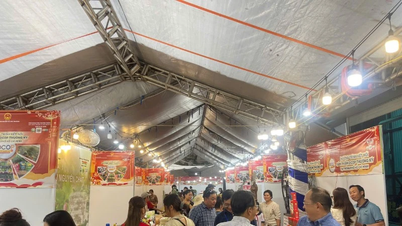
People enjoy the experience of learning about culture through wireless connectivity. |
Tam Giang Temple is dedicated to the legendary historical figure from the Hung King era, the god Tho Lenh. He was the village god and the god of the Bach Hac River who traveled the land searching for precious remedies to cure diseases for the people. After his death, he continued to provide spiritual assistance to generals in fighting foreign invaders and defending the country.
He and his half-brother Thach Khanh competed in a river crossing race, and he won. Ly Thuong Minh, the Admiral of Phong Chau, erected a statue of him in his honor at Thong Thanh Quan (Tam Giang Bach Hac Temple). The footprints of the deity can still be seen in front of the temple and at Ben Got.
Tam Giang Temple was classified as a National Monument in 2010. In 2019, the Bach Hac Festival was included in the list of National Intangible Cultural Heritage. The Bach Hac Community Cultural Tourism Site was recognized by the People's Committee of Phu Tho Province in 2023.
Source: https://nhandan.vn/tim-hieu-van-hoa-vung-dat-to-qua-du-an-yeu-lam-viet-nam-post867957.html






































Comment (0)