

Sixteen ministries, departments, and localities have proposed increasing the personal income tax (PIT) deduction by 1.5 times the current level, citing that the current rate is no longer appropriate to the current reality.
The Ministry of Finance has also submitted a proposal to develop a draft Law on Personal Income Tax (replacement). Giao Thong Newspaper interviewed Mr. Nguyen Van Duoc, General Director of Trong Tin Accounting and Tax Consulting Company, and Standing Member of the Vietnam Tax Consulting Association, about this issue.

Mr. Nguyen Van Duoc.
Many regulations are outdated.
What are the biggest shortcomings in the current personal income tax policy, sir?
In my opinion, there are five main groups of problems that have revealed shortcomings and have been extensively discussed in recent years.
The first problem is that the personal allowance deduction is outdated. Since the Personal Income Tax Law came into effect, it has been adjusted three times.
The most recent adjustment was in 2020, but the current personal allowance (11 million VND/month for taxpayers and 4.4 million VND/month for dependents) has not kept pace with the rising cost of living and inflation.
In particular, the method of mechanically adjusting the personal allowance by multiplying the unadjusted allowance by the increase in the consumer price index (CPI) makes the law always outdated compared to reality.
The second problem is that the progressive tax structure is unreasonable due to the large number of tax brackets. The personal income tax system has 7 tax brackets, with the spacing between the brackets not being truly reasonable.
This could lead to a situation where workers face high tax rates even with a slight increase in income, failing to incentivize tax revenue from high-income earners.
Furthermore, the law does not fully cover new sources of income and does not properly regulate the nature of transactions and income.
Revenue from digital assets, financial investments, and new business models is not clearly defined, leading to difficulties in tax management and inadequacies in determining fair tax obligations.
Many argue that adjusting taxes based on the CPI is too rigid. What is your opinion on this?
That's right. Because only adjusting policies when the CPI increases by over 20% might result in policies not responding quickly enough to reality.
Furthermore, the tax policy does not ensure fairness among income groups, as the tax calculation method is inadequate, with some income sources from financial investments or real estate subject to lower tax rates compared to income from salaries.
What is an appropriate personal allowance/deduction amount?
The Ministry of Finance has submitted a proposal to develop a draft Law on Personal Income Tax (replacement), suggesting that consideration be given to the Government to regulate the level of personal allowances to ensure flexibility and autonomy. Do you think this is reasonable?
I strongly agree with this proposal. The personal allowance should be adjusted promptly to reflect inflation and average income.
Therefore, the personal allowance should still be calculated primarily based on the CPI, plus a number of other macroeconomic indicators, the key being to accurately reflect the true living standards and income of taxpayers.

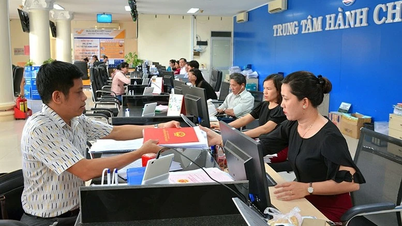
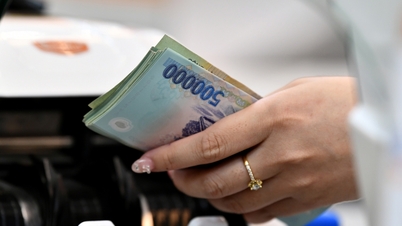
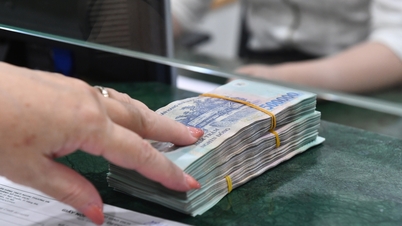
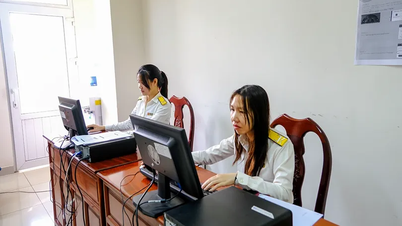
The current personal allowance is not keeping pace with the rising cost of living and inflation (illustrative image).
In other words, the method and basis for establishing personal allowance deductions should be adjusted to align with urban living standards, creating benefits for mountainous and rural areas to keep pace with cities.
Specifically, regarding the amendment to the CPI regulations, a change of just 5% to 10% would allow the government to adjust the personal allowance deduction, instead of the 20% requirement. This regulation would make policy more responsive and better suited to practical realities.
In addition, it is necessary to include expenses that taxpayers must incur for education, healthcare, etc., similar to charitable and humanitarian contributions that are currently deductible.
I believe that a suitable personal allowance could be around 15-18 million VND per month. This is also the level that many ministries, departments, and localities have recommended.
So what about the progressive tax system? How will it need to be changed, sir?
In fact, compared to many countries in the region, the seven-tiered tax system is considered too complex, increasing administrative procedures and making calculations difficult.
In addition, the gap between tax brackets does not accurately reflect the actual income levels of workers.
Furthermore, those earning around 20-30 million VND/month are subject to a tax rate of 20-25%, even though this is still considered a middle-income group, not necessarily wealthy.
In particular, tax brackets have not been adjusted in a timely manner to reflect economic fluctuations, leading to a situation where taxpayers easily fall into a higher tax bracket simply because their salaries increase due to inflation, even though their living standards do not improve.
Therefore, it is necessary to revise the tax brackets to reduce them from 7 to 5 for easier calculation.
At the same time, the rate of tax jumps should be adjusted to be slower in lower tax brackets and faster in higher tax brackets to reduce the tax burden on low- and middle-income earners while still ensuring budget revenue through additional collection from high-income earners.
Don't hesitate any longer.
According to him, what are the key points that need careful consideration to ensure fairness when amending the law?
The law needs to adjust tax calculation methods to reflect the nature of income; taxes should only be paid if income is earned, and the higher the income, the greater the tax payable.
Therefore, it is necessary to revert to the declaration-based tax calculation method for income from real estate transfers, income from securities and capital investments of non-resident individuals, business income, etc., to ensure that tax policies do not distort the market.
In addition, it is necessary to increase the tools to accurately and fully control taxpayers' income across all income categories, from salaries and wages to business income and other income such as real estate transfers, securities, and capital transfers.
Another important point is the need to develop modern personal income tax policies and management based on the application of science, technology, and artificial intelligence, increasing voluntary compliance with the law.
In other words, it is necessary to improve the infrastructure, supporting software, and regulations and policies that are consistent, scientific, and appropriate to practical realities and relevant laws.
The shortcomings have been evident for a long time. The draft Personal Income Tax Law, intended to replace the current one, will be discussed by the National Assembly in the October 2025 session. If it is passed in the May 2026 session, it could only be implemented in 2027. Is it necessary to have a solution to adjust it sooner, sir?
It is very necessary and urgent. To expedite implementation, the Government could submit to the National Assembly a separate resolution to adjust some important regulations, such as the personal allowance deduction, during the next session, instead of waiting for the entire law to be passed.
However, the Ministry of Finance has repeatedly argued that the decision not to adjust the CPI is legal because the CPI has not exceeded 20% since 2020.
Furthermore, the current tax deduction for taxpayers is 11 million VND/month, which is 2.2 times higher than the average per capita income (4.96 million VND/month), while in many countries, this ratio is usually less than 1. What are your thoughts on this?
In fact, from 2020 to the end of 2024, the CPI increased by nearly 16%. This means taxpayers are suffering significant losses. Therefore, waiting for the entire law to be passed in 2027 is quite a long time, given the urgent nature of the aforementioned shortcomings.
From 2020 to the present, due to the impact of the pandemic, the prices of goods, healthcare, and education have increased significantly, while workers' wages have shrunk or increased with inflation, making life increasingly difficult. Therefore, these inadequacies need to be addressed promptly and should not be allowed to persist any longer.
The law stipulates that the CPI must increase by more than 20% before the tax deduction can be adjusted, but in reality, this threshold is no longer appropriate.
Workers, ministries, departments, and localities have all spoken out, and the Ministry of Finance needs to come up with a solution as quickly as possible.
Thank you, sir!
Proposal to increase the personal allowance.
The Ministry of Finance has just requested the Ministry of Justice to appraise the Government's submission on drafting a new Personal Income Tax Law.
One important aspect that the Ministry of Finance is planning to revise and supplement is the progressive tax rate schedule for income from wages and salaries after 15 years of application.
In its impact assessment report, the Ministry of Finance stated that there is a view that the current tax schedule is unreasonable, with 7 tax brackets being too many, and the gaps between brackets being too narrow, leading to jumping tax brackets when aggregating income into a year, thus increasing the amount of tax payable.
According to the Ministry of Finance, after reviewing the current tax structure and studying the trend of improving living standards in the coming years, as well as international experience, Vietnam may consider reducing the number of tax brackets in the current tax schedule from 7 to a more appropriate level; along with that, consider widening the income gap within the tax brackets, ensuring a higher level of regulation for those with higher incomes in the tax brackets.
In their comments on the proposed draft Law on Personal Income Tax (replacement), many ministries, sectors, and localities suggested increasing the personal allowance for taxpayers with income from wages and salaries to 18 million VND/month, and for dependents to 8 million VND/month.
At the same time, additional deductions are added to support the costs of education, healthcare, housing, voluntary social insurance, and investments in human development; additional deductions are also added to support special cases such as single-parent workers or those with relatives suffering from serious illnesses…
Source: https://www.baogiaothong.vn/thue-thu-nhap-ca-nhan-loi-thoi-sua-the-nao-192250213215938082.htm





![[Video] Sunset at Lap An Lagoon – Where the sun sets over the fishing nets](https://vphoto.vietnam.vn/thumb/1200x675/vietnam/resource/IMAGE/2026/05/31/1780192137701_beach-landscape-sea-water-nature-grass-745871-pxhere-com.jpeg)
















![[Video] Sunset at Lap An Lagoon – Where the sun sets over the fishing nets](https://vphoto.vietnam.vn/thumb/340x192/vietnam/resource/IMAGE/2026/05/31/1780192137701_beach-landscape-sea-water-nature-grass-745871-pxhere-com.jpeg)















































































Comment (0)