

Food safety concerns
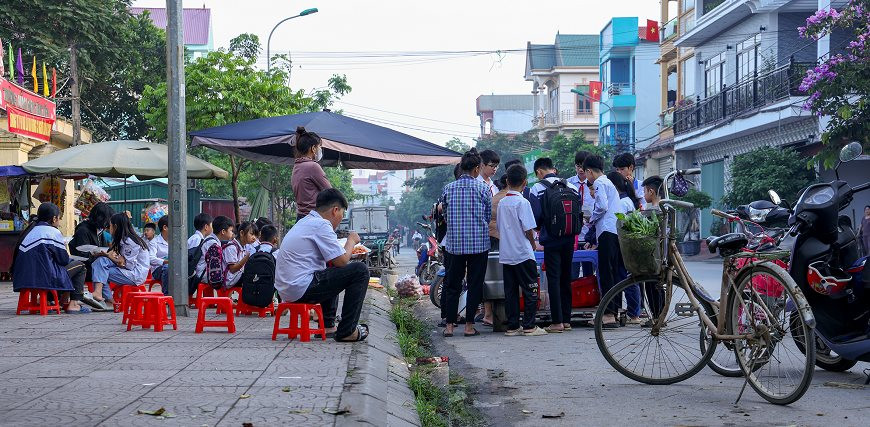
On April 5th, many students had breakfast in front of a school gate in Nha Trang City, consisting of shredded chicken rice, chicken hamburgers, and baguette sandwiches. After going to class, they showed symptoms of stomach pain and nausea and were subsequently taken to the emergency room.
On the same day, the head of the Lam Dong Provincial Department of Health confirmed that 30 middle school students had to be hospitalized for health checks after eating strange candy purchased in front of their school gate, experiencing symptoms such as headaches, stomachaches, and nausea. Initial findings indicate that the students did not suffer from common food poisoning. They exhibited mild symptoms of hysteria: fatigue, shortness of breath, difficulty breathing, and aches and pains. This condition is often manifested by motor disorders, sensory disorders, and mental disorders. Authorities have taken samples of the candy for testing and have submitted a report to higher-level authorities requesting verification.
Previously, on April 3rd, 19 students in Vinh Long suffered poisoning and had to be hospitalized after buying "fart bombs" (of foreign origin) from outside the school grounds to play with. This is a banned substance, yet it is still easily bought and sold by students outside the school gates.
On March 20th, several third and fourth grade students in Tra Cu, Tra Vinh province, bought 11 exploding balloons, also known as stink balloons. They brought these balloons to class and used their hands to inflate them, causing them to explode. Around 7 a.m., teachers entered the classroom and found 21 students exhibiting symptoms of vomiting and headaches, prompting them to be taken to the hospital for emergency treatment.
Remember back in late December 2023, many students in Hanoi had to be hospitalized for health checks after eating candies with foreign language labels on their packaging. Immediately afterward, the Hanoi Department of Education and Training (DOET) directed the leaders of the DOETs in 30 districts, towns, and affiliated schools to strengthen management and ensure food safety and hygiene in schools. Schools then issued notices and sent messages to all parents to warn them about the strange candy in particular, and to be aware of food, snacks, and toys of unknown origin around school gates to remind their children and ensure their health.
However, nowadays many families don't let their children eat breakfast at home but instead take them to the school gate to buy food or give them money to buy breakfast themselves. With the money in hand, some children eat smaller portions and save the rest to buy snacks, toys, etc. The proliferation of food stalls and street vendors with pushcarts around school gates is a common sight at most schools today.
Tighten management
Concerned about food safety and the health of students, local education departments have issued numerous documents to the Departments of Education and Training and schools in their areas, directing them to coordinate with local authorities in reminding and prohibiting street vendors in front of school gates; and to effectively manage students during recess. At the same time, they are educating parents and students about choosing safe food, identifying and reporting to schools and management agencies about the sale of food with unclear origins, without proper labeling, or without clear expiration dates.
However, to effectively manage food safety conditions in this type of establishment and ensure the health of students, it requires not only the education sector but also the decisive involvement of relevant authorities. Specifically, the Health Department, the Economic Department, and the Market Management Department need to coordinate with local authorities to strengthen inspections and urge street vendors to comply with food safety regulations, and strictly handle violations according to the law.
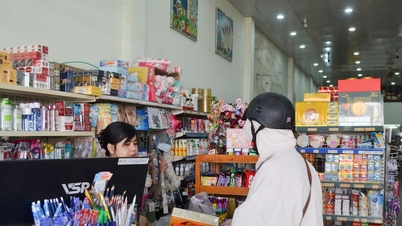
Specifically, it is prohibited to sell snacks and other food items of unknown origin, without clear labeling, or without a clear expiration date; the display of goods must ensure that it is free from dust, insects, and harmful animals, and does not cause traffic safety or public order hazards. In addition, regular inspections and monitoring of food safety conditions at street food vendors in front of schools will be conducted, and violations will be strictly dealt with according to regulations.
According to Dr. Nguyen Tung Lam, Chairman of the Hanoi Educational Psychology Association, to minimize students' consumption of low-quality snacks sold outside school gates, authorities need to intensify inspections and strictly penalize any violations of food safety and hygiene regulations. Simultaneously, schools, teachers, and families need to cooperate in raising students' awareness of the dangers of consuming snacks of unknown origin outside school gates, thereby protecting their own health.
Students need guidance to understand food safety and hygiene, avoiding harmful snacks and toys. Instead, they should use food products with clear labels, quality standards, and established brands. Parents should also refrain from allowing their children to bring money to school, which would reduce the risk of buying snacks of unknown origin sold outside school gates.
Source



![[Photo] Young people of the Dong Thap Border Guard actively participate in "March Border Month" activities.](https://vphoto.vietnam.vn/thumb/1200x675/vietnam/resource/IMAGE/2026/03/23/1774248483508_ndo_tl_dt3-jpg.webp)
![[Photo] The Prime Ministers of Vietnam and Russia witness the signing ceremony on cooperation in building a nuclear power plant.](https://vphoto.vietnam.vn/thumb/1200x675/vietnam/resource/IMAGE/2026/03/23/1774278492322_vna-potal-hai-thu-tuong-viet-nam-va-nga-chung-kien-le-ky-ket-hiep-dinh-ve-hop-tac-xay-dung-nha-may-dien-hat-nhan-8658380-jpg.webp)













































































Comment (0)