

On the afternoon of March 25th, at the University of Civil Engineering, the Ministry of Education and Training (MOET) organized a scientific workshop on technology transfer activities in higher education institutions to create priority technology products in the context of the Fourth Industrial Revolution: Current situation and solutions. Deputy Minister Nguyen Van Phuc chaired the workshop.
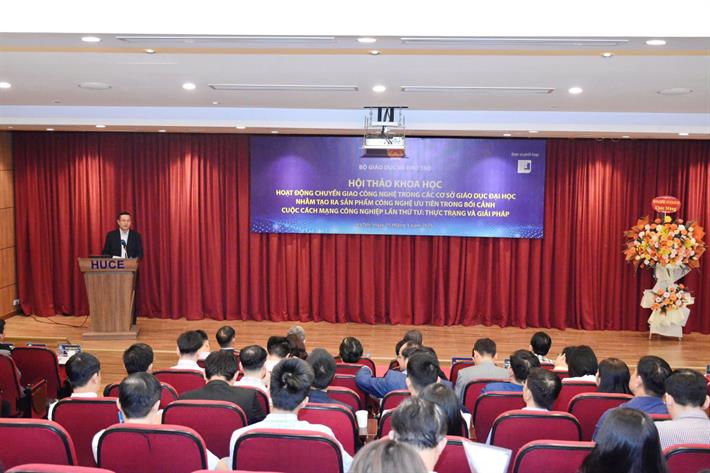 |
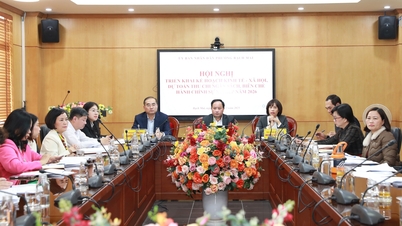
Conference scene
The workshop was attended by leaders of units under the Ministry of Education and Training, experts, scientists, leaders of Departments of Education and Training, higher education institutions, and international organizations.
The workshop aims to assess the current situation and propose solutions and directions for technology transfer activities in higher education institutions to create priority technology products in the context of the Fourth Industrial Revolution; to provide scientific arguments as a basis for developing and advising on policies for technology transfer activities in higher education institutions; and to assess the current situation and propose the development and implementation of artificial intelligence (AI) applications in education to optimize the teaching and learning process.
In his opening remarks at the workshop, Deputy Minister Nguyen Van Phuc stated: The Party and State of Vietnam have implemented numerous policies and initiatives to promote the application and development of science and technology, foster innovation and digital transformation, and proactively participate in the Fourth Industrial Revolution. Higher education institutions will be significantly impacted and influenced by these policies.
On December 22, 2024, the Politburo issued Resolution No. 57-NQ/TW on breakthroughs in the development of science, technology, innovation, and digital transformation of the nation. The resolution emphasizes that the development of science, technology, innovation, and digital transformation is a decisive factor in the development of nations; it is a prerequisite and the best opportunity for Vietnam to develop into a prosperous and powerful country in the new era – the era of national progress.
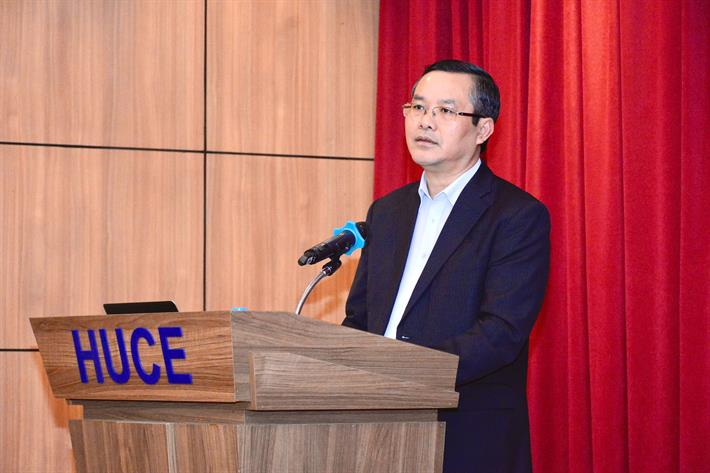 |
Deputy Minister Nguyen Van Phuc delivered a speech at the workshop.
Based on that, the Government also issued Resolution No. 03/NQ-CP on the Government's Action Program to implement Resolution No. 57-NQ/TW of the Politburo on breakthroughs in the development of science, technology, innovation and national digital transformation. The National Assembly issued Resolution No. 193/2025/QH15 on piloting a number of special mechanisms and policies to create breakthroughs in the development of science, technology, innovation and national digital transformation. The Ministry of Education and Training also issued a plan to implement Resolution No. 57-NQ/TW.
"It can be said that many groundbreaking policies on science, technology, and innovation development are receiving attention, including promoting the transfer and commercialization of research. Many related policies are also being reviewed and adjusted in the spirit of innovation, creating an important and favorable legal framework to promote development," the Deputy Minister said.
Emphasizing the rapid development of artificial intelligence and its profound impact on everyone's lives, the Deputy Minister stated that it is necessary to maximize the achievements and positive impacts that artificial intelligence brings in teaching and learning activities, in education management, and especially in training human resources for the country.
Regarding the Ministry of Education and Training's orientation for developing a strategy to apply AI in education and training in the coming period, Deputy Director of the Department of Science, Technology and Information Nguyen Son Hai stated: The purpose of the strategy is to leverage advancements in science and technology and innovation, especially AI technology, to guide its application in education in a comprehensive, synchronized, and sustainable manner; contributing to promoting innovation and strengthening the nation's position in the field of AI. Simultaneously, it aims to improve and modernize the education system; optimize resources, enhance the effectiveness and efficiency of education and training; improve digital skills for learners, and create a foundation for developing high-quality human resources to serve national development.
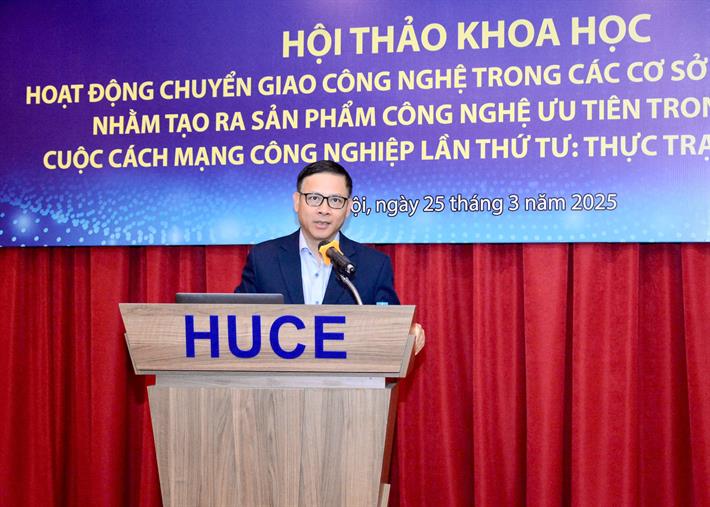 |
Deputy Director of the Department of Science, Technology and Information Nguyen Son Hai presented a report at the workshop.
According to Deputy Director Nguyen Son Hai, the goal in the coming period is to develop AI application capabilities for learners, teachers, and education administrators, aiming to personalize teaching, learning, and assessment; and improve the effectiveness and efficiency of education management. The aim is to gradually apply AI effectively and responsibly in work, and to sustainably apply AI by developing an AI ecosystem for Vietnamese education.
At the workshop, experts, scientists, representatives from higher education institutions, and organizations shared and exchanged experiences on technology transfer activities, especially on priority technologies for development in the current period, and the use of AI in education, training, and scientific research.
Affirming the timeliness of the Ministry of Education and Training in organizing the workshop, which was appropriate, relevant, and practical, and had a significant impact on the system of universities and colleges in the education system, Professor Nguyen Thanh Thuy, from the University of Technology, Vietnam National University, Hanoi, suggested that it is necessary to identify "core" technologies, priority technologies, and strategic technologies appropriately, in accordance with the State's orientation, in order to invest accordingly.
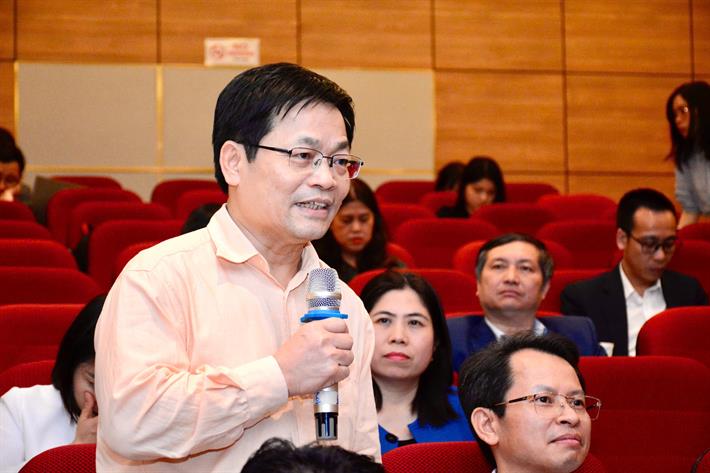 |
Professor Nguyen Thanh Thuy, from the University of Technology, Vietnam National University, Hanoi, shared her insights at the conference.
To further promote the development of science and technology and its practical application, according to Professor Nguyen Thanh Thuy, the ecosystem of research institutes, universities, and businesses is crucial. Behind a university, there needs to be a large corporation to support and encourage it, or a reasonable mechanism to promote startups. It is essential to train scientific leaders, including top PhDs, who can quickly produce products to solve major problems.
Associate Professor Mac Thi Thoa from Hanoi University of Science and Technology believes that a long-term investment strategy is needed, along with the support of businesses and international cooperation, to address specific requirements. This will enable scientists to refine their products and connect research with applications. It will also create a favorable environment for lecturers and students to maximize their creative potential.
Sharing his thoughts on the application of Industry 4.0 in training activities, Associate Professor Ly Hai Bang from the University of Transport Technology said: The university has researched and developed an intelligent platform based on "AI agents" to comprehensively support students in their learning process; develop soft skills, creative thinking, and personalized learning (AI tutoring); integrate AI to track learning progress; and automatically assess student capabilities…
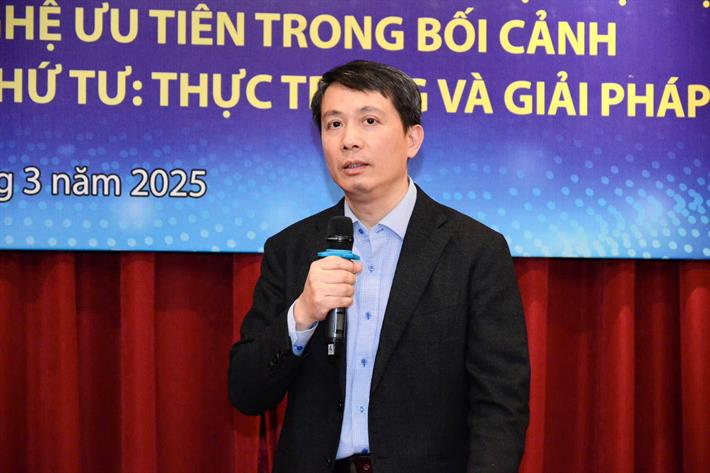 |
Director of the Department of Science, Technology and Information Pham Quang Hung speaks at the workshop.
Thanking the delegates for their contributions, Deputy Minister Nguyen Van Phuc expressed his hope that the units would continue to cooperate with the Ministry of Education and Training in the coming time regarding the very important and urgent issues discussed at the workshop.
According to the Deputy Minister, higher education institutions not only create new knowledge and contribute to the body of human knowledge, but also apply it in practice, serving the development of the country.
Emphasizing the importance of scientific and technological development in the new context, new phase, and new era, the Deputy Minister stated that higher education institutions need to prepare thoroughly from now on, improve their governance and management capabilities, quickly absorb global achievements, and build a unique foundation to effectively implement research results and applications in practice.
Source: https://moet.gov.vn/tintuc/Pages/tin-tong-hop.aspx?ItemID=10403
![[Photo] Two flights successfully landed and took off at Long Thanh Airport.](/_next/image?url=https%3A%2F%2Fvphoto.vietnam.vn%2Fthumb%2F1200x675%2Fvietnam%2Fresource%2FIMAGE%2F2025%2F12%2F15%2F1765808718882_ndo_br_img-8897-resize-5807-jpg.webp&w=3840&q=75)

































































Comment (0)