

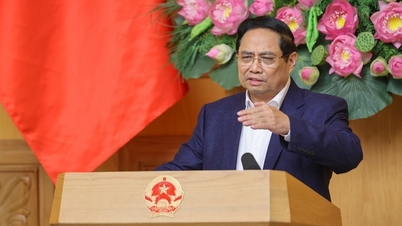
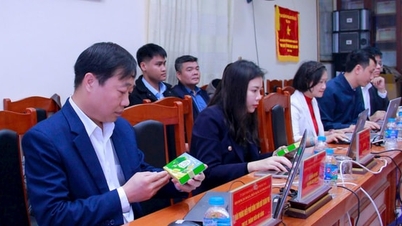
On the morning of July 20th in Hanoi , Prime Minister Pham Minh Chinh chaired the first meeting of the Red River Delta Regional Coordination Council.
Attending the conference were Hanoi Party Secretary Dinh Tien Dung, Ministers of the Ministries of Planning and Investment, Construction, Industry and Trade, Information and Communications, Science and Technology, and Natural Resources and Environment; members of the Central Committee of the Communist Party of Vietnam, and representatives of leaders from central and local departments, ministries, and agencies. Representing Vinh Phuc province was Ms. Hoang Thi Thuy Lan, member of the Central Committee of the Communist Party of Vietnam, Secretary of the Provincial Party Committee, Chairwoman of the Provincial People's Council, and Head of the Provincial Delegation to the National Assembly.
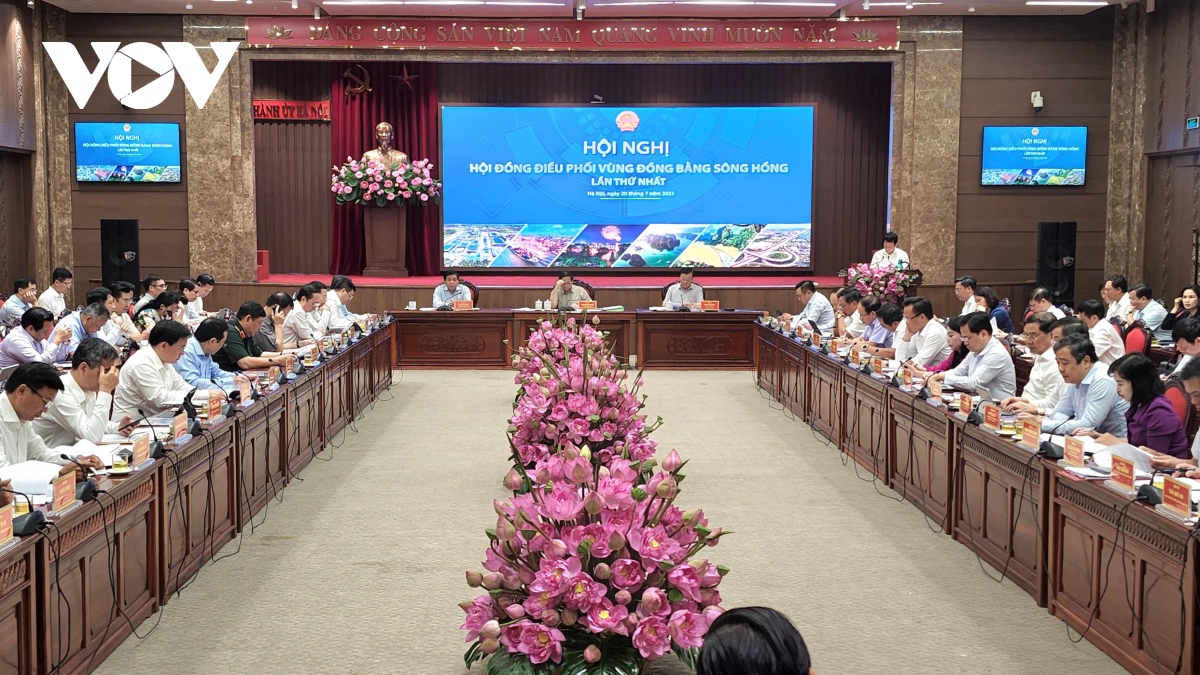
At the conference, the Ministry of Planning and Investment announced Decision No. 826/QD-TTg dated July 11, 2023, of the Prime Minister on the establishment of the Red River Delta Regional Coordination Council, comprising ministers, leaders of ministries, and chairmen of the People's Committees of provinces and cities in the region, with the Prime Minister continuing to serve as the Chairman of the Council.
Accordingly, the Regional Coordination Council is defined not as an administrative level but as an effective organizational model for considering and deciding on important regional issues, contributing to resolving shortcomings that a single locality in the region cannot address, and at the same time resolving issues that have not reached consensus or are beyond the decision-making authority of ministries, sectors, and localities in the region.
Decision 826 on the establishment of the Red River Delta Regional Coordination Council outlined 11 tasks and powers of the Regional Coordination Council, emphasizing that coordination must ensure the principles of consensus, equality, openness, transparency, and compliance with legal regulations.
At the same time, Decision 45 on the promulgation of the Regulations on the operation of the Regional Coordination Council stipulated 7 coordination methods regarding: Planning and implementation; Investment and development; Training and employment; Building mechanisms and policies; Addressing regional linkage issues; Regional linkage coordination plan; and Regional information system database.
Reporting at the conference, Minister of Planning and Investment Nguyen Chi Dung stated that, despite its significant contribution to the national economic growth, the development of the Red River Delta region has been facing numerous challenges and still reveals many limitations and weaknesses, such as: Uneven development among localities, growth heavily dependent on capital and labor; an unsustainable budget revenue structure; some localities overly reliant on a few large-scale foreign direct investment (FDI) projects; industrial zones lacking linkages and failing to form industry clusters; and an unbalanced and unsustainable urban development system with many shortcomings.
In addition, land and resource management still have many limitations; environmental pollution is becoming increasingly complex, especially wastewater and hazardous waste; traffic congestion is a problem; the overcrowding of central-level hospitals in Hanoi has not been resolved; linkages and cooperation between localities in the region are not close and ineffective, especially regarding labor, consumer markets, and transportation connectivity, etc.
Therefore, Resolution No. 30-NQ/TW dated November 23, 2022, of the Politburo on socio-economic development and ensuring national defense and security in the Red River Delta region until 2030, with a vision to 2045, clearly states the need to "build a sufficiently strong regional linkage institution, ensuring effective coordination and linkage for regional development" in order to innovate the way of operation, coordination, and linkage methods between localities in the region to maximize the potential and strengths of each locality in the region.
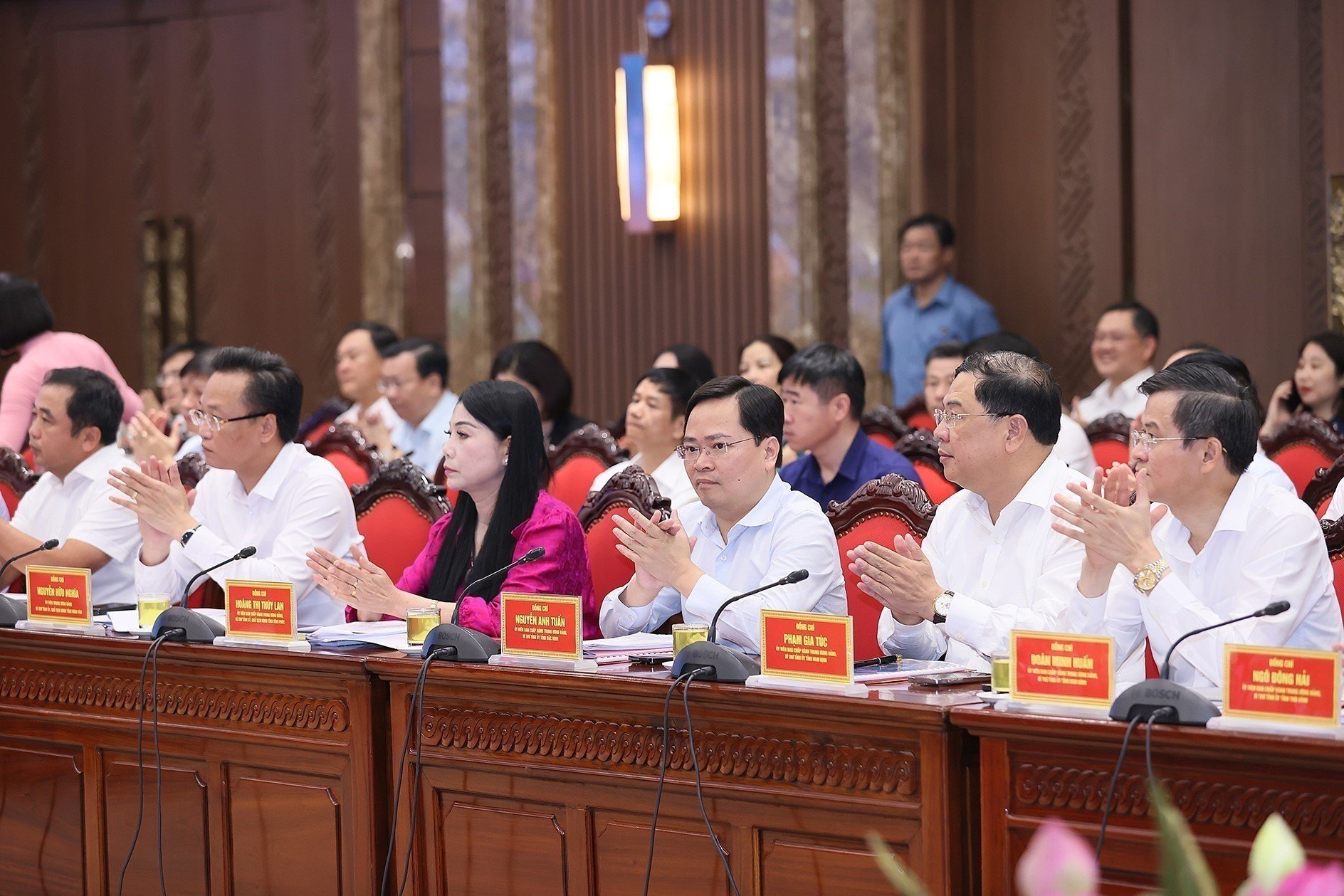
Accordingly, the Red River Delta region is oriented to become a rapidly and sustainably developing region with a rational economic structure, deeply rooted in national cultural identity; modern industry and services, and high-tech, organic, green, and circular agriculture with high economic value; becoming a national center for education and training of high-quality human resources; leading in the development of science and technology, innovation, digital economy, and digital society; with a synchronous, modern socio-economic infrastructure, smart cities, and high connectivity.
Environmental pollution, traffic congestion, and flooding have been largely resolved. Hanoi, the capital city, has become a "Cultural, Civilized, and Modern" hub, a driving force for regional and national development, striving to reach the level of capitals in developed countries in the region.
Strategic thinking, long-term vision
At this conference, leaders of ministries, sectors, and localities will discuss and develop the Red River Delta Regional Planning for the period 2021-2030, with a vision to 2050, with a strategic mindset and long-term vision, ensuring linkage, synchronization, unity, efficiency, and sustainability. The focus will be on promoting the development of modern industry and services, and high-efficiency, organic, and circular agriculture based on the strong application of science and technology; digital transformation, development and application of science and technology, innovation, and training of high-quality human resources.
The meeting discussed and provided feedback on several planning orientations for the development of the Red River Delta region until 2030, with a vision to 2050. The Ministry of Planning and Investment projected the development of the Red River Delta region with three major orientation groups: Organizing the region's development space in conjunction with four economic corridors - four dynamic regions, urban areas and growth poles - and two economic sub-regions; Developing eight key sectors and fields, focusing on the development of modern industries with competitive advantages for the region; and high-tech service sectors such as tourism, information technology, finance and banking, logistics, education and training, and healthcare, linked to the development of science, technology, and innovation.
Along with that, the region's infrastructure will be developed, with a focus on developing key inter-regional transportation infrastructure such as: inter-regional and intra-regional expressways, Ring Road 4, Ring Road 5 – Capital Region, high-speed railway lines, seaports, airports, etc.
Research mechanisms and policies to effectively mobilize resources from all economic sectors for investment in regional infrastructure development, especially transportation infrastructure; decentralize authority to localities to proactively implement inter-regional connectivity projects; research the establishment of a Regional Infrastructure Development Fund to invest in inter-regional projects; research and propose allowing the issuance of international bonds or ODA loans to invest in the synchronized development of Hanoi's urban railway lines; or allow the application of Transport-Oriented Development (TOD) urban development models for inter-regional urban railways, high-speed railways, and major regional transportation axes linked to economic corridors, in order to maximize underground space, expand development space, and address issues of dense urban areas such as traffic congestion, flooding, and environmental pollution.
Focus investment on developing the seaport system in the region, coupled with the construction of a modern warehousing and logistics system. Develop the Hai Phong – Quang Ninh area into a modern maritime economic center; Hai Phong city into an international logistics hub, linked with the development of a free trade zone in Hai Phong; develop the coastal economic corridor of Quang Ninh – Hai Phong – Thai Binh – Nam Dinh – Ninh Binh, connected with expressways and coastal roads to form modern industrial and urban zones. Link coastal industrial and economic zones for cooperative development, gradually forming clusters of supporting industries in the electrical and electronics sectors, instead of competing and eliminating each other.
Focus on fundamentally addressing environmental issues, especially waste, emissions, and pollution in rivers, as well as flooding in Hanoi, Hai Phong, and other major cities. Discuss and determine the location and scale of centralized regional solid and hazardous waste treatment facilities; attract investment and socialize resources to improve and restore environmental quality in the Nhue and Day river basins and the Bac Hung Hai irrigation system. Plan and establish mechanisms and policies to relocate and build new hospitals and universities in neighboring localities to reduce pressure on social infrastructure and traffic congestion in Hanoi.
Research and propose mechanisms and policies for the development of the southern sub-region of the Red River Delta, especially regarding access to resources for infrastructure development; attracting investment with a development orientation for the southern Red River Delta sub-region, focusing on several areas such as: high-tech, organic, and circular agriculture; agricultural product preservation and processing industries, supporting industries; renewable energy; development of ecological industrial parks and coastal economic zones; ecotourism, resort tourism, and spiritual tourism.
Focus on developing the Red River Delta region into a leading national center for science and technology, innovation, and digital transformation. Effectively connect with the established National Innovation Center's innovation ecosystem, linking it to the development of a regional innovation center in the Red River Delta, as well as startup, innovation, and artificial intelligence hubs in Hanoi, Hai Phong, and Ha Nam.
Hanoi will take over the Hoa Lac High-Tech Park, so it is necessary to research and propose solutions and policies to enhance the effectiveness of the High-Tech Park's operations in conjunction with research institutes and universities in the city, to become a science and technology and innovation center for the region. Research and development of a high-tech park in Ha Nam should follow a suitable roadmap, focusing on artificial intelligence, automation, and biotechnology.
The study proposes specific mechanisms for the Red River Delta region. Currently, the Ministry of Justice is coordinating with Hanoi City to develop the revised Capital City Law, which includes 80 new, breakthrough policies for the city to develop Hanoi into the central hub for politics, culture, education, science and technology, and healthcare in the region. For the region, it is proposed to study several mechanisms and policies focusing on the following areas: Developing modern transportation infrastructure (expressways, urban railways), logistics, port logistics services, and free trade zones linked to the port system; Managing the construction and development of smart urban infrastructure and environmental protection; Promoting the development of science and technology and digital transformation, innovation; Preserving, conserving, and promoting culture and history in conjunction with tourism development.
Discuss key inter-regional project categories to prepare for the 2026-2030 period, as well as the principles and criteria for project identification and resource allocation for implementation.
Focus on training and developing high-quality human resources. The Red River Delta region has the advantage of currently being a leading center for healthcare, education and training, science and technology with a skilled intellectual workforce and is a cradle for producing, training, and supplying human resources for the whole country. Many prestigious universities, research centers, and vocational training institutions are concentrated in Hanoi, therefore, solutions are needed to train and develop the region's human resources.
Research should be conducted on establishing a regional data center, improving and sharing a common database system among provinces and cities within the region, especially in the areas of environment, land management, investment attraction, and socio-economic development indicators, to serve effective, accurate, and timely regional coordination and linkages.
According to vov.vn
Source link

![[Photo] Prime Minister Pham Minh Chinh receives Lao Minister of Education and Sports Thongsalith Mangnormek](/_next/image?url=https%3A%2F%2Fvphoto.vietnam.vn%2Fthumb%2F1200x675%2Fvietnam%2Fresource%2FIMAGE%2F2025%2F12%2F16%2F1765876834721_dsc-7519-jpg.webp&w=3840&q=75)
![[Image] Leaked images ahead of the 2025 Community Action Awards gala.](/_next/image?url=https%3A%2F%2Fvphoto.vietnam.vn%2Fthumb%2F1200x675%2Fvietnam%2Fresource%2FIMAGE%2F2025%2F12%2F16%2F1765882828720_ndo_br_thiet-ke-chua-co-ten-45-png.webp&w=3840&q=75)
![[Live] 2025 Community Action Awards Gala](/_next/image?url=https%3A%2F%2Fvphoto.vietnam.vn%2Fthumb%2F1200x675%2Fvietnam%2Fresource%2FIMAGE%2F2025%2F12%2F16%2F1765899631650_ndo_tr_z7334013144784-9f9fe10a6d63584c85aff40f2957c250-jpg.webp&w=3840&q=75)

![[Photo] Prime Minister Pham Minh Chinh receives the Governor of Tochigi Province (Japan)](/_next/image?url=https%3A%2F%2Fvphoto.vietnam.vn%2Fthumb%2F1200x675%2Fvietnam%2Fresource%2FIMAGE%2F2025%2F12%2F16%2F1765892133176_dsc-8082-6425-jpg.webp&w=3840&q=75)



































![[Live] Closing Ceremony and Award Presentation for the "Impressive Vietnam Tourism" Video/Clip Creation Contest 2025](https://vphoto.vietnam.vn/thumb/402x226/vietnam/resource/IMAGE/2025/12/17/1765974650260_z7273498850699-00d2fd6b0972cb39494cfa2559bf85ac-1765959338756946072104-627-0-1338-1138-crop-1765959347256801551121.jpeg)



















Comment (0)