Imbalance first, balance later.
 Báo Thanh niên•19/12/2024
Judging from outward appearances, this implies that the new Sri Lankan President Anura Kumara Dissanayake prioritizes India in his foreign policy, a stark contrast to his predecessors over the past several decades.
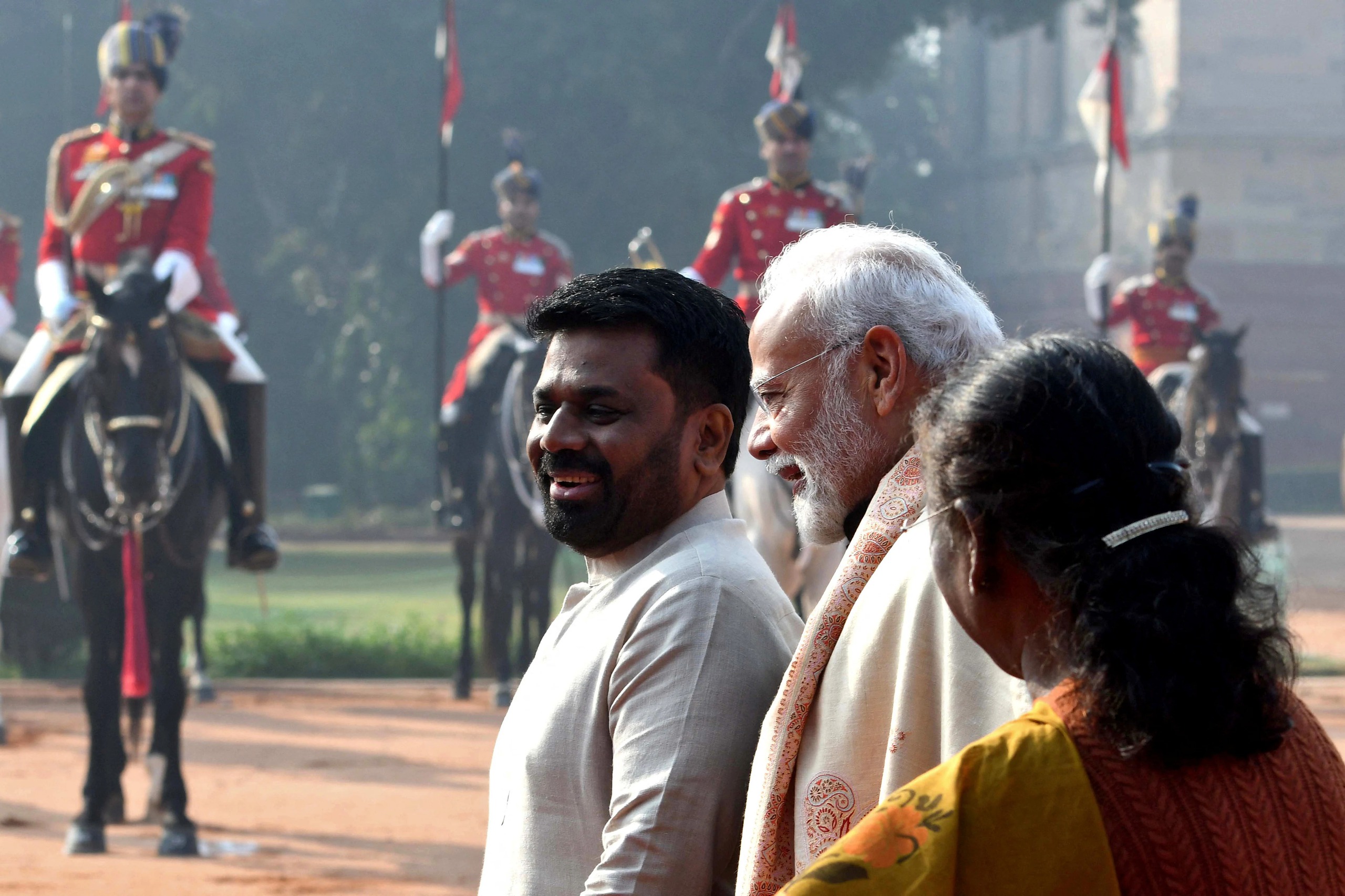
Sri Lankan President Anura Kumara Dissanayake (left) stands alongside Indian Prime Minister Narendra Modi.
You may also like
Following the devastating earthquake: Venezuela experiences strong aftershocks, oil rig explodes.TPO - An oil rig explosion occurred in Apure state (Venezuela), as rescue forces race against time to deal with the aftermath of last week's double earthquake that killed nearly 1,500 people.
China adds 20 Japanese entities to its export control list.On June 29, China's Ministry of Commerce announced the addition of 20 Japanese entities, including several large corporations, to its blacklist aimed at controlling the export of dual-use goods.
Over 800 elderly people were scammed by a scheme offering high interest rates on burial plots.CHINA - With the promise of buying back burial plots after 1-5 years with interest rates of 8-15% per year, a funeral service company in Inner Mongolia defrauded more than 70 million yuan (approximately 273 billion VND) from 800 people, mostly those over 60 years old.
For Sri Lanka, as well as for the outside world , prioritizing India means no longer prioritizing China. Dissanayake's recent predecessors have all leaned toward China, whether willingly or not, and have been quite skewed toward China. The new Sri Lankan president is no different. Before embarking on his trip to India, Dissanayake planned a visit to China early next year. This is a case of prioritizing India first, then balancing it later. The difference between Dissanayake and his predecessors lies in the fact that he prioritized India first and then built a balance with China, whereas his predecessors did the opposite.
Mr. Dissanayake shifted his stance, recognizing that only New Delhi, not Beijing, could help Sri Lanka escape its current severe socio -economic crisis. And while China remains very important to Sri Lanka, "distant water cannot extinguish a nearby fire."
For New Delhi, the change in Sri Lankan president has presented a rare opportunity to win over and bind its neighbor to a strong cooperative relationship with India. Sri Lanka is particularly important to India because currently, Nepal, Bangladesh, and Maldives all prioritize China first and balance it with India later.

Vietnam encourages US businesses to expand investment in high technology.On the morning of June 26th, at the Government Headquarters, Deputy Prime Minister Ho Quoc Dung received Mr. Jeff Place, Supply Chain Director of Coherent Group (USA). During the meeting, the Deputy Prime Minister affirmed that Vietnam encourages US businesses to expand investment, especially in high-tech, innovation, and semiconductor industries.

Encourage U.S. businesses to expand investment in high-tech sectors.Deputy Prime Minister Ho Quoc Dung said that Vietnam welcomes US businesses to continue expanding their operations in Vietnam, especially in high-tech industries and sectors with high added value.

Vietnam and the United States strengthen cooperation in addressing the consequences of war.VTV.vn - On June 22, General Secretary and President To Lam received Acting Secretary of the US Navy Hung Cao.
In the practical context of international relations, imbalance is easy to achieve and balance is difficult; achieving balance after imbalance is even harder.
Source: https://thanhnien.vn/thien-lech-truoc-can-bang-sau-185241219002830569.htm
![[Image] A look back at the capital's preparations for the century-long master plan.](https://vphoto.vietnam.vn/thumb/1200x675/vietnam/resource/IMAGE/2026/06/29/1782750453122_quy-hoach-100-nam-minh-duy-1-2118-jpg.webp)
![[Photo] General Secretary and President To Lam works with the Party Committee of the Government on the work of preventing and combating storms, floods, extreme natural disasters and climate change.](https://vphoto.vietnam.vn/thumb/1200x675/vietnam/resource/IMAGE/2026/06/29/1782729441945_a1-bnd-0385-9454-jpg.webp)
![[Photo] National Assembly Chairman Tran Thanh Man attends the Conference to announce the Master Plan for Hanoi Capital City with a 100-year vision.](https://vphoto.vietnam.vn/thumb/1200x675/vietnam/resource/IMAGE/2026/06/29/1782709639728_ndo_br_1-jpg.webp)
Trending by Category




Most Read
Google Trends







Same author
Canada makes history.


The World Cup is never boring.



















![[Image] Building an elevated road through the Ma Da forest.](https://vphoto.vietnam.vn/thumb/402x226/vietnam/resource/IMAGE/2026/06/29/1782724737750_anh-man-hinh-2026-06-29-luc-16-18-43.png)