

It can be affirmed that emulation movements have created momentum, determination, and motivation for officers and soldiers throughout the army to overcome difficulties, enthusiastically compete to achieve accomplishments, and successfully fulfill assigned tasks.
However, alongside this, the situation of launching emulation campaigns with grandiose content and impressive signing ceremonies, but in reality "launching without action," still persists in many agencies and units, causing waste of money and time, and leading to counterproductive results. What solutions are needed to prevent this situation?
To effectively carry out emulation and reward activities and the "Determined to Win" emulation movement, cadres at all levels in various units have correctly recognized the position and importance of this work. Consequently, they have proactively strengthened emulation councils (teams) at all levels according to the correct structure and composition; supplemented regulations and rules on emulation and reward work; and developed plans and guidelines for emulation activities that closely match the characteristics of the tasks and practical situation of each agency and unit. The responsibility of Party committees and unit leaders for emulation and reward activities has been enhanced; political commissars, political officers, and political agencies at all levels have effectively played their core role, proactively advising and proposing many policies and measures to lead and direct the renewal of content and diversification of forms; ensuring that the emulation movement is always implemented synchronously, in the right direction, and takes place enthusiastically and widely.
 |
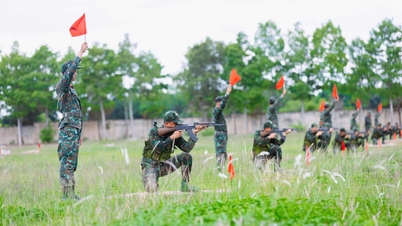
| Officers and soldiers of Regiment 8 (Division 395) are competing to excel in training and achieve high results. |
However, in practice, the implementation of emulation activities in some agencies and units at certain times remains superficial and half-hearted, with grandiose launches but inconsistent maintenance, leading to stagnation of the movement. In some cases, agencies and units set emulation targets and content in a rigid, mechanical way, not aligned with their tasks and capabilities... According to Lieutenant Colonel Nguyen Ngoc Triu, Head of Political Affairs of Brigade 242 (Military Region 3): “Organizing emulation in this way not only wastes money and lowers the position and role of emulation and reward work, but also reduces the motivation and will to strive of officers and soldiers. These units usually have low performance in carrying out their tasks.”
To address this situation, Colonel Le Van Dang, Political Commissar of Brigade 454 (Military Region 3), suggested that when launching emulation movements, agencies and units should clearly define the theme with specific content and targets, closely adhering to key political tasks and important, urgent work. The focus should be on effectively implementing the "three breakthroughs" outlined in the Resolution of the 11th Party Congress of the Army; aiming to decisively overcome weaknesses and resolve difficulties in training, combat readiness, building a regular army, discipline training, exercises, competitions, and sports events. The emulation process must effectively utilize the role of the emulation council (or group) in maintaining order, conducting daily and weekly checks and evaluations; and combine this with effective preliminary and comprehensive reviews, drawing lessons learned, and promptly correcting shortcomings and deficiencies.
As a leading unit and consistently at the forefront of the Emulation Movement for Victory in Military Region 3, Colonel Bui Xuan Binh, Head of Political Affairs of Division 395, shared his experience: “The most important thing is to promote the role and responsibility of Party committees and leading cadres at all levels in organizing emulation activities. This will overcome the mindset of neglecting the issue, considering emulation activities as solely the responsibility of political agencies and political officers. In addition, emulation must be linked with rewards; when evaluating and awarding commendations, it must be objective, impartial, and fair, recognizing the right people for the right work; and the results of emulation should be the most important criterion for assessing the capacity and qualifications of cadres and Party members, as well as the quality of task completion of each agency and unit.”
Text and photos: NGUYEN TRUONG
Source
![[Photo] Ba Lang An Lighthouse - the "eye of the sea" amidst the "rock museum" of Quang Ngai province.](https://vphoto.vietnam.vn/thumb/1200x675/vietnam/resource/IMAGE/2026/05/29/1780038698840_anh-man-hinh-2026-05-29-luc-14-10-42.png)



![[Image] Pleasant weather helps students enter the 10th grade entrance exam with confidence.](https://vphoto.vietnam.vn/thumb/1200x675/vietnam/resource/IMAGE/2026/05/29/1780034401612_ngay-1-thi-lop-10-minh-duy-8-5009-jpg.webp)

































































Comment (0)