


Hidden deep beneath the lush green canopy of Xuan Lien National Park are "warriors" who silently protect and strive to bring the treasures of the wilderness closer to us.
After several postponements, we finally joined the forest rangers at Xuan Lien National Park in Thuong Xuan district, Thanh Hoa province, on a forest patrol and set up animal camera traps to comprehensively assess biodiversity in order to support the protection and conservation of the Xuan Lien National Park ecosystem - one of the giant "green treasures" in Thanh Hoa.
Diverse, unique
Xuan Lien National Park is located about 60 km west of Thanh Hoa city center, spanning across several communes in Thuong Xuan district.
Although the national park is very diverse and unique, the area with abundant forest is concentrated in the two communes of Bat Mot and Yen Nhan, bordering Laos, more than 60 km from the park's headquarters, making travel extremely difficult.
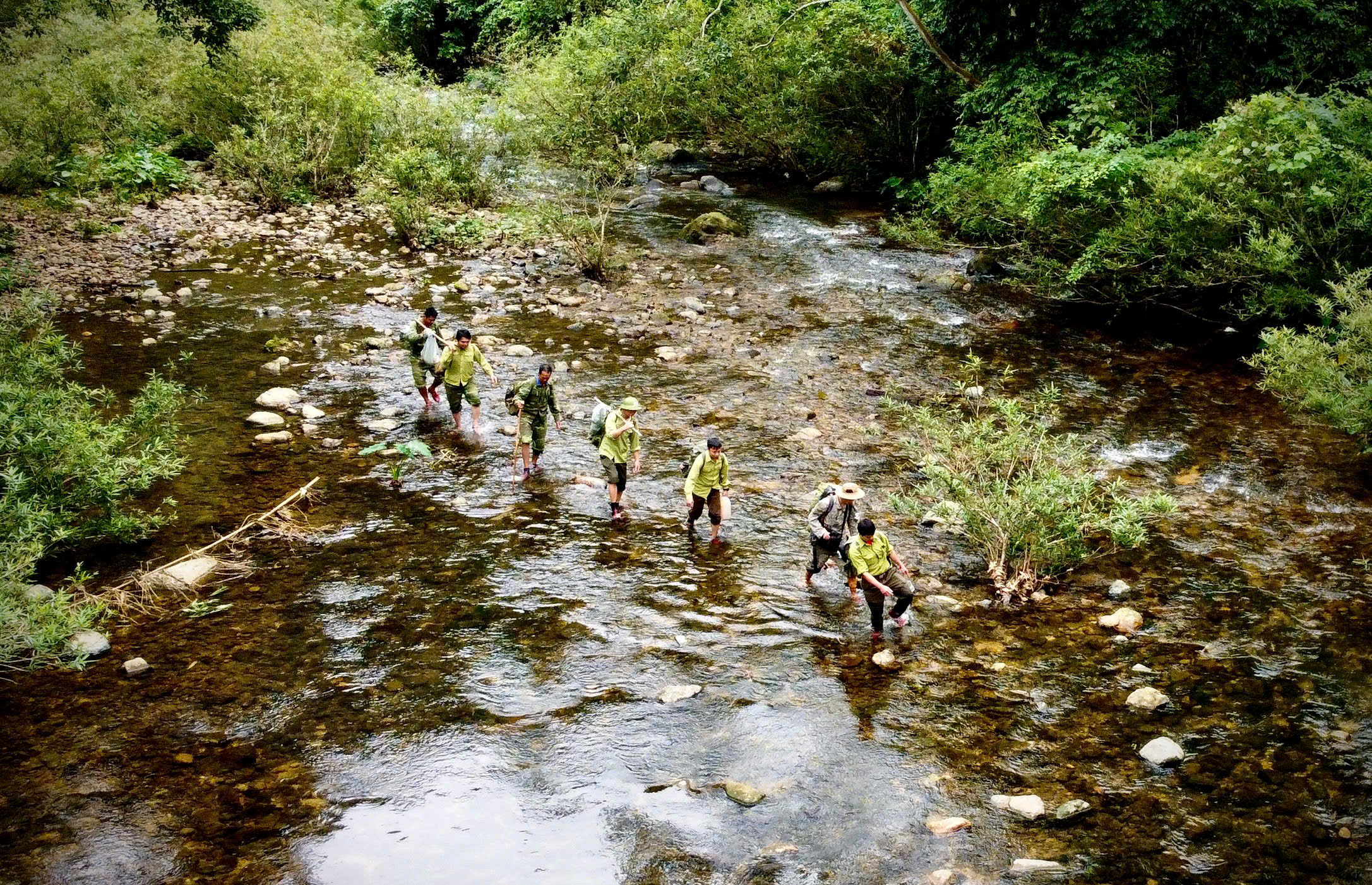
The journey through the jungle and across streams during a photo trap-setting trip by reporters and the silent "warriors" of Xuan Lien National Park.
To follow the camera trap setters, we had to stay overnight at the Phong Village Forest Ranger Station (Bat Mot Commune). The next morning, while the early morning mist still hung over the area and the village was still asleep, Mr. Nguyen Mau Toan - an officer of Xuan Lien National Park - urged us to set off. "The journey to the camera trap area is deep in the forest, the path is all climbing mountains and crossing streams, it takes half a day to get there. Therefore, we have to leave very early," Mr. Toan said.
On this trip to the forest, besides Toan, a camera trap expert, our team of reporters also included five members of the Phong village forest protection team. Our supplies included specialized camera traps, rice, dried fish, meat, instant noodles, cooking utensils, medicine… enough for a group of about 8-10 people to eat and stay for about a week in the deep forest.
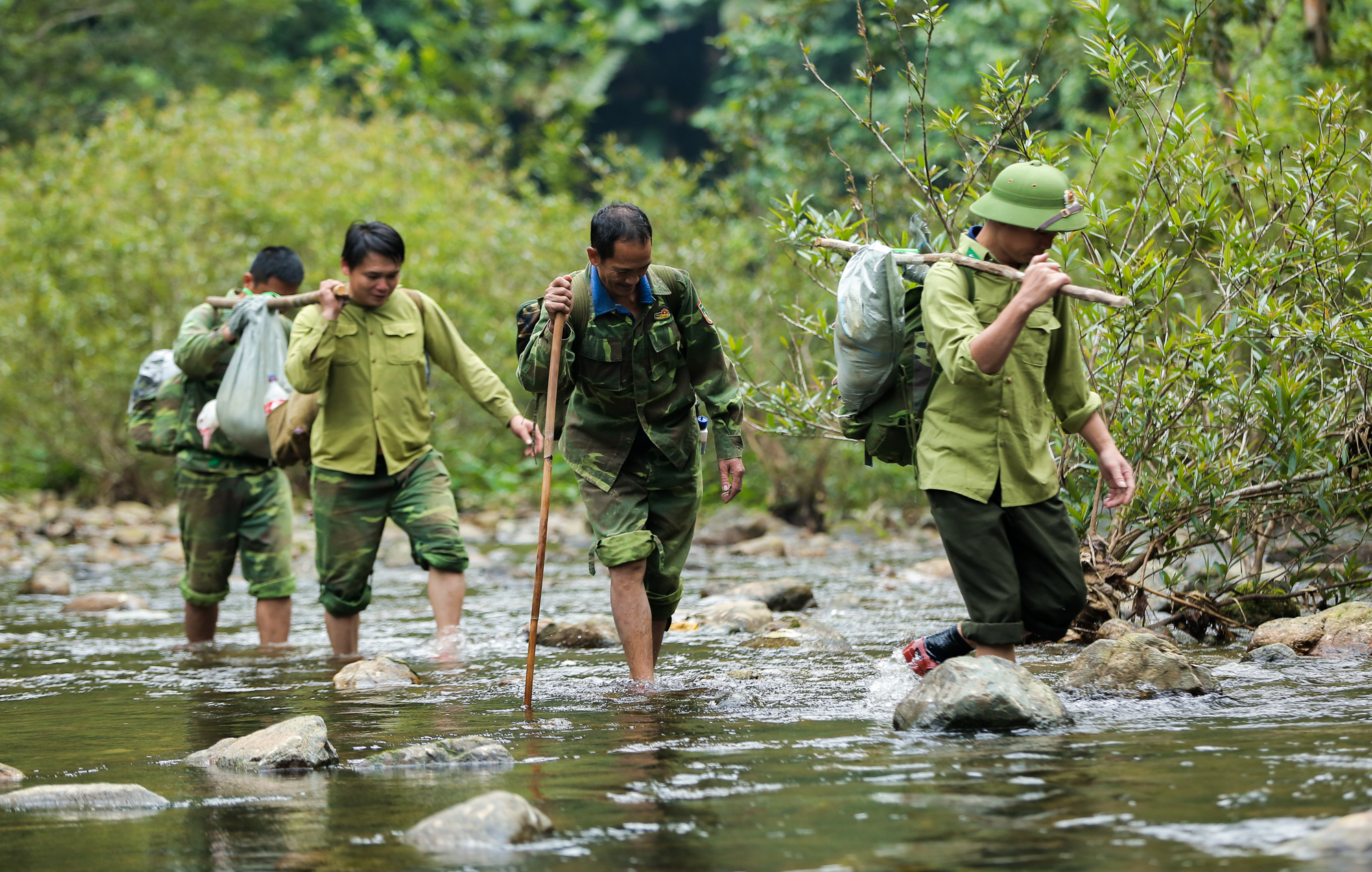
After being driven to the edge of the forest by the forest rangers at Phong village, our journey through the jungle and across streams to find traces of wild animals began. Only by directly participating with these "warriors" in the vast wilderness can one truly appreciate their silent sacrifices. Amidst the immense mountains and forests, the group climbed steep slopes winding around hills and waded through streams with jagged rocks. This journey repeated itself along increasingly treacherous and remote paths.
As they ventured deeper into the dense forest, the trails almost disappeared, replaced by a canopy of trees. Some used machetes to clear a path, while others used GPS to find their bearings. Fortunately, the group consisted of experienced trekkers, so after many hours of searching under the forest canopy, they finally reached their encampment: a small, corrugated iron-roofed house perched precariously beside a stream.
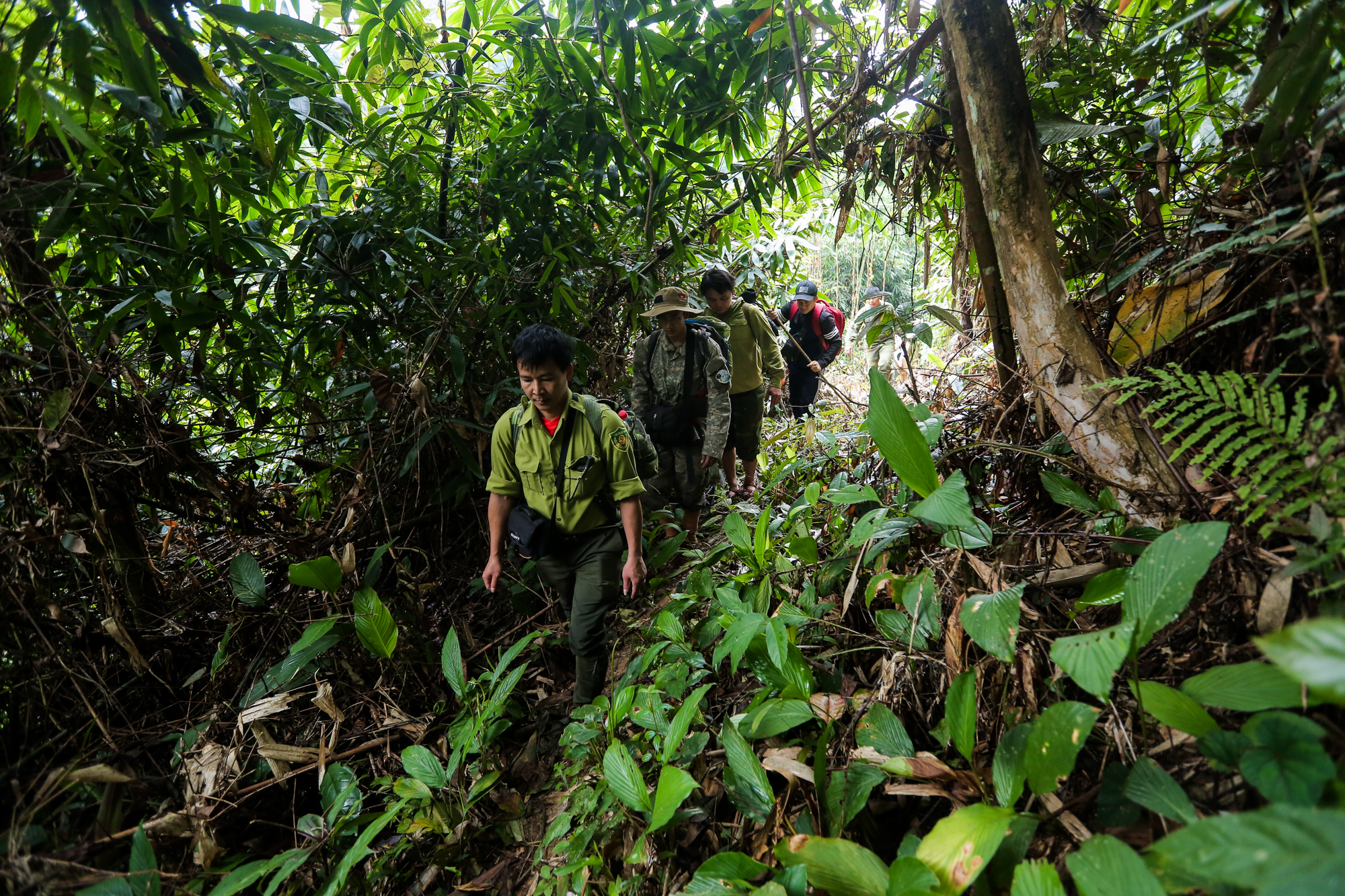
Without needing to be told, everyone pitched in. Some prepared food and drinks for the group. Others checked the equipment. Still others looked around in all directions to gather information and assess the situation. According to Toan, the resting area was near a stream, convenient for resting, eating, and washing.
"We thoroughly surveyed this location because it's situated in the heart of Xuan Lien National Park, with few people around, making it a place where many animals frequently pass through. Moving around to set up camera traps and reach other guard posts is also convenient," said Toan.
"Animal photographer"
Having just put down his backpack, weighing dozens of kilograms and containing personal belongings and 30 camera traps, Lầu A Ký (born in 1996, from Lào Cai province), a camera trap expert at the Center for Nature Conservation and Development (CCD), immediately got to work.
First, he waded along the stream, then climbed up the mountainside, meticulously searching for tracks and trails to determine suitable locations for setting camera traps. On this trip, Mr. Ky planned to spend 10 days in the forest to complete the installation of 30 camera traps. Besides him, another group also set 55 camera traps in various locations.
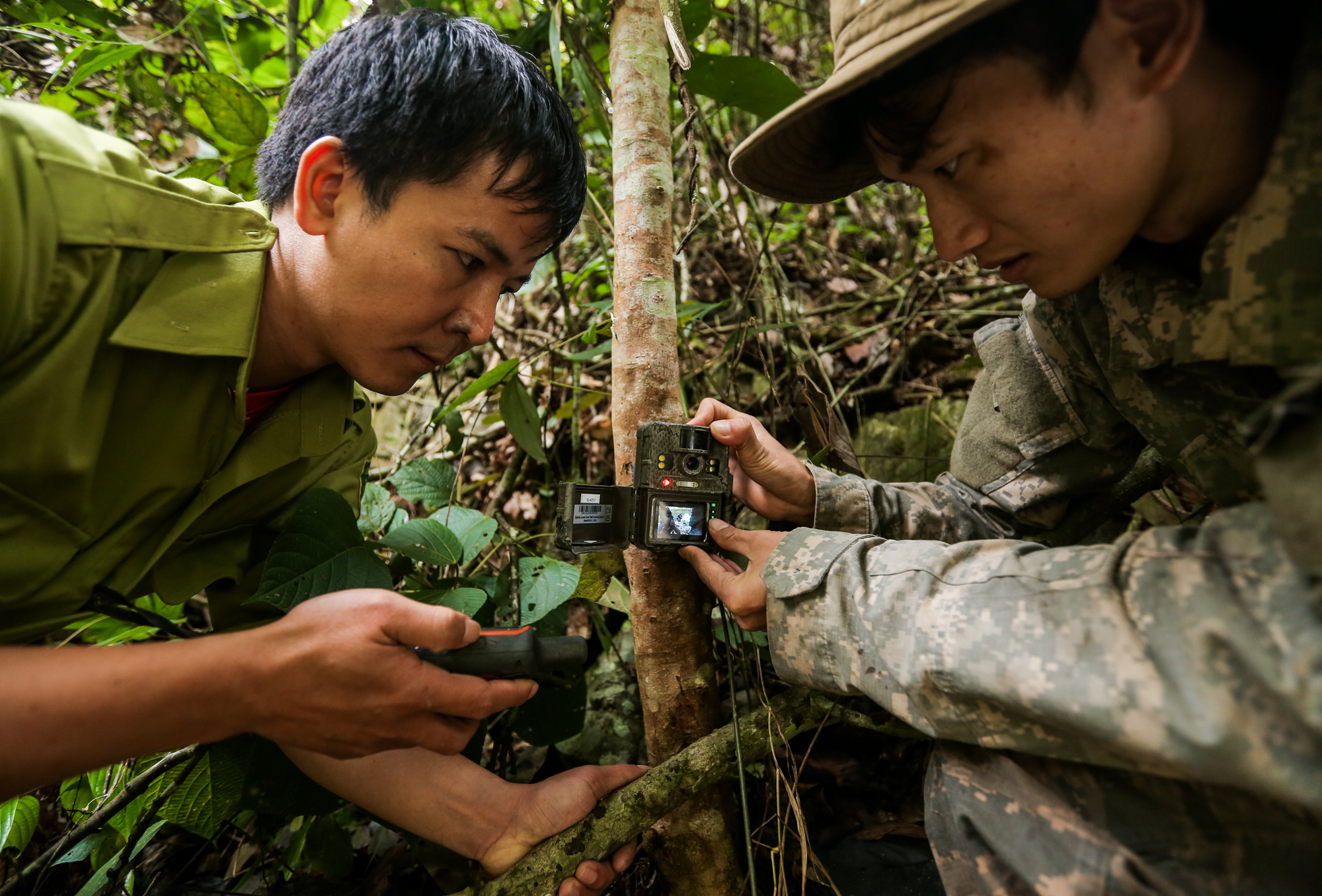
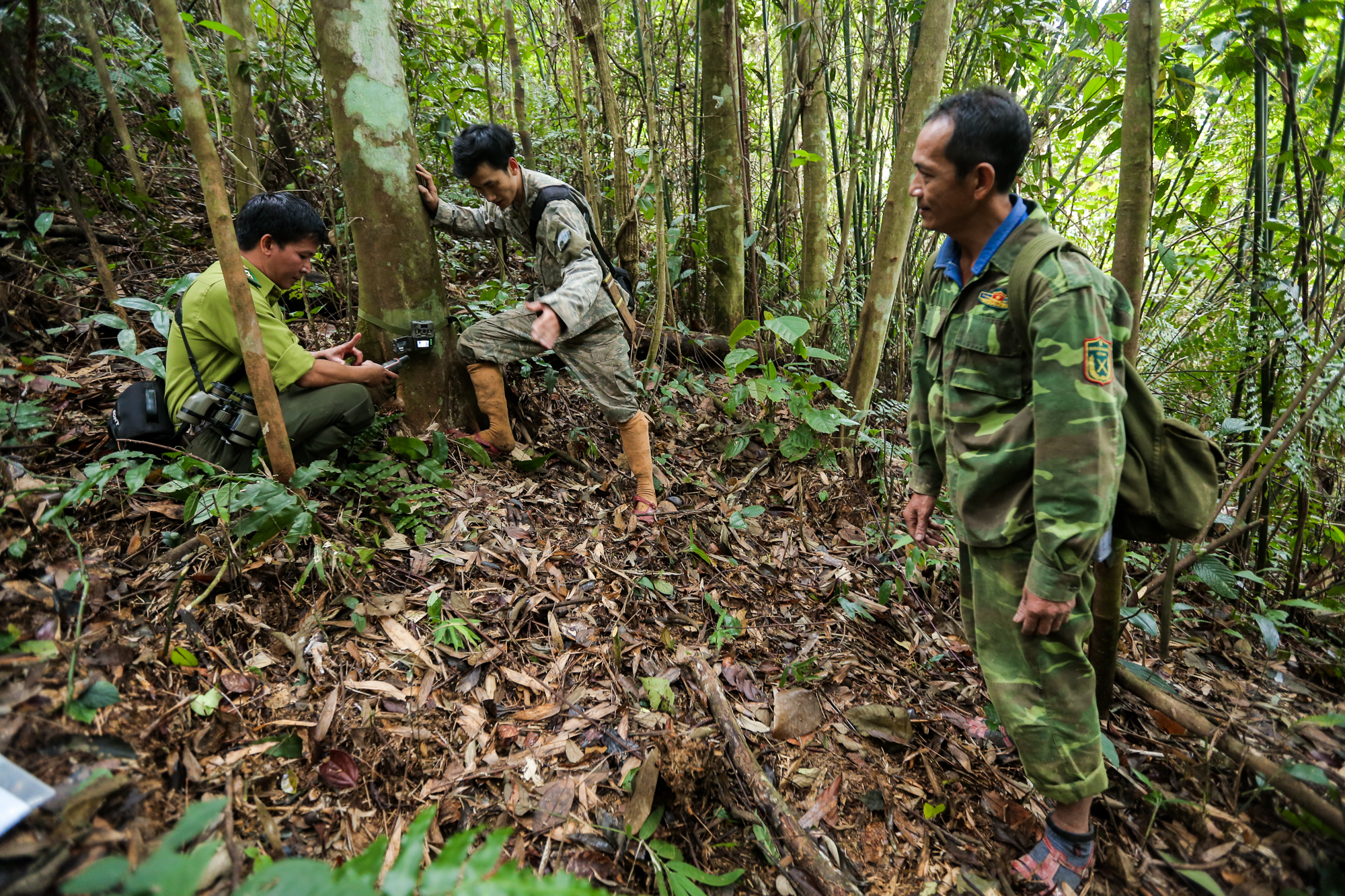
Authorities at Xuan Lien National Park are setting up camera traps.
According to Mr. Ky, setting camera traps is not an easy task, as it often requires difficult and treacherous locations. To achieve the best results, it's necessary to patrol the forest, record observations on the ground, and identify areas where animals frequently pass through. Only after thorough surveying can the traps be set. Detecting trails, footprints, animal droppings, or crab and snail shells is crucial and determines the success or failure of the camera trap setup.
Camera traps are usually placed in fixed locations, such as near streams, in trees, or in rock crevices, depending on the habits and habitat of each species. However, according to Mr. Ky, the trap placement area must be open and avoid direct sunlight to prevent glare. The process of setting the traps requires clearing vegetation so that the camera can capture many moments. This is because the unit only returns to collect the results about 2-3 months after setting the traps.
Despite his young age, Ky has been involved in camera trapping for five years. He says he has tracked the footprints of wild animals throughout most national parks and nature reserves in Vietnam. Each place has its own difficulties, but the common thread is working deep in the forest under extremely harsh living conditions. However, for him, Xuan Lien National Park is a place that has left him with many fascinating experiences.
"I've been to national parks like Cat Tien ( Dong Nai ), Vu Quang (Ha Tinh), Cuc Phuong (Ninh Binh), Ben En (Thanh Hoa)... but none have impressed me as much as Xuan Lien, with its unique and diverse forest ecosystem, many areas almost untouched by human activity. This also presents a huge challenge for us, because the roads are difficult, the mountains are high, and there are many rivers and streams, but it's very important for setting up camera traps, because the fewer people who visit, the more animals will live there," said Mr. Ky.
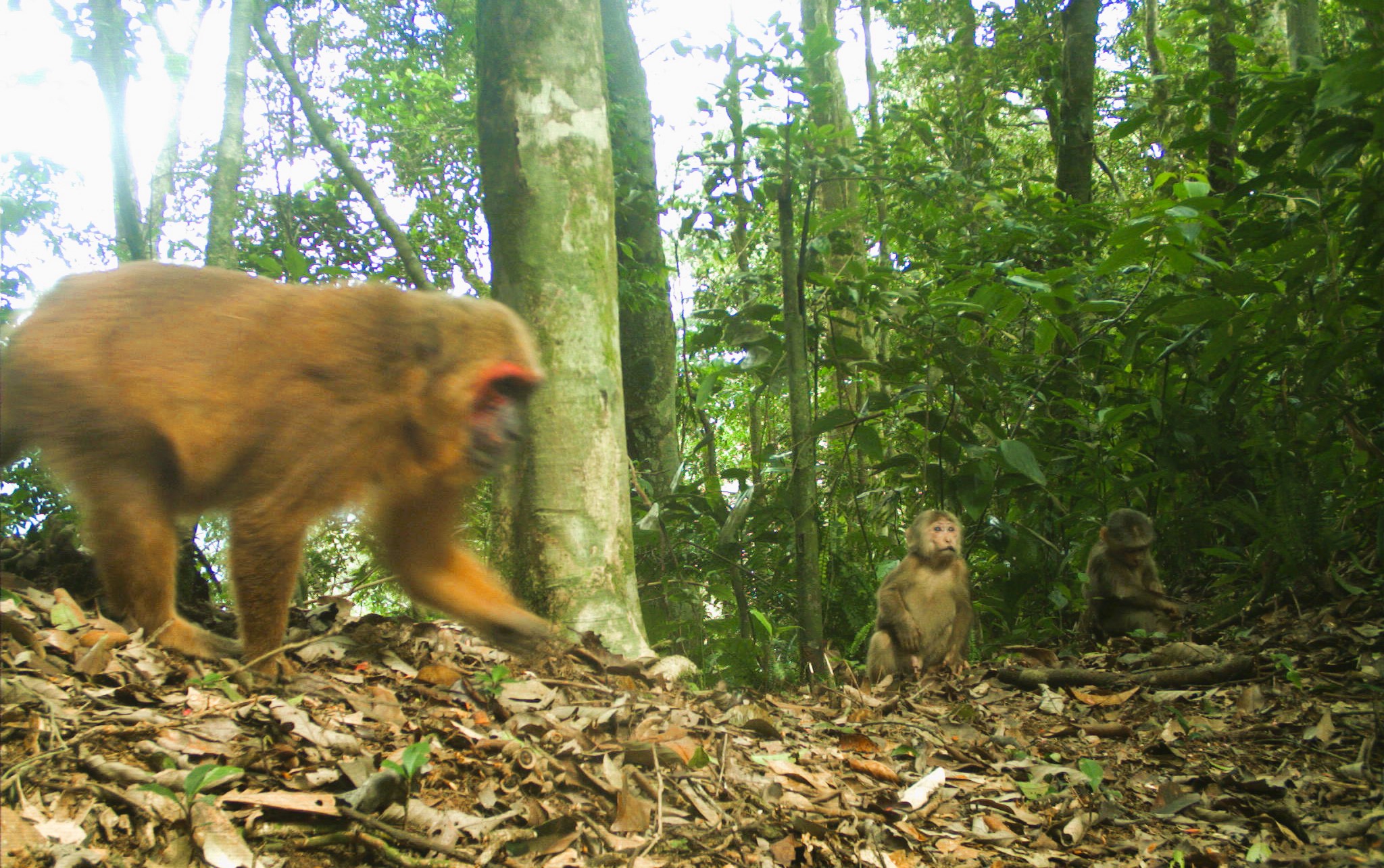
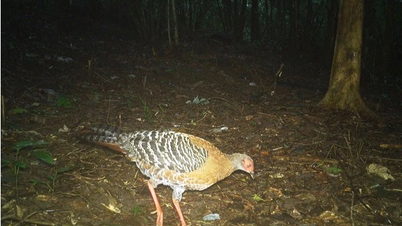
Animals were recorded using camera traps.
This is the second time Mr. Ky has participated in setting up camera traps in Xuan Lien National Park. The first time was in 2022, when the unit set up 37 traps. This year, the number of camera traps will be larger, exceeding 85, in various locations.
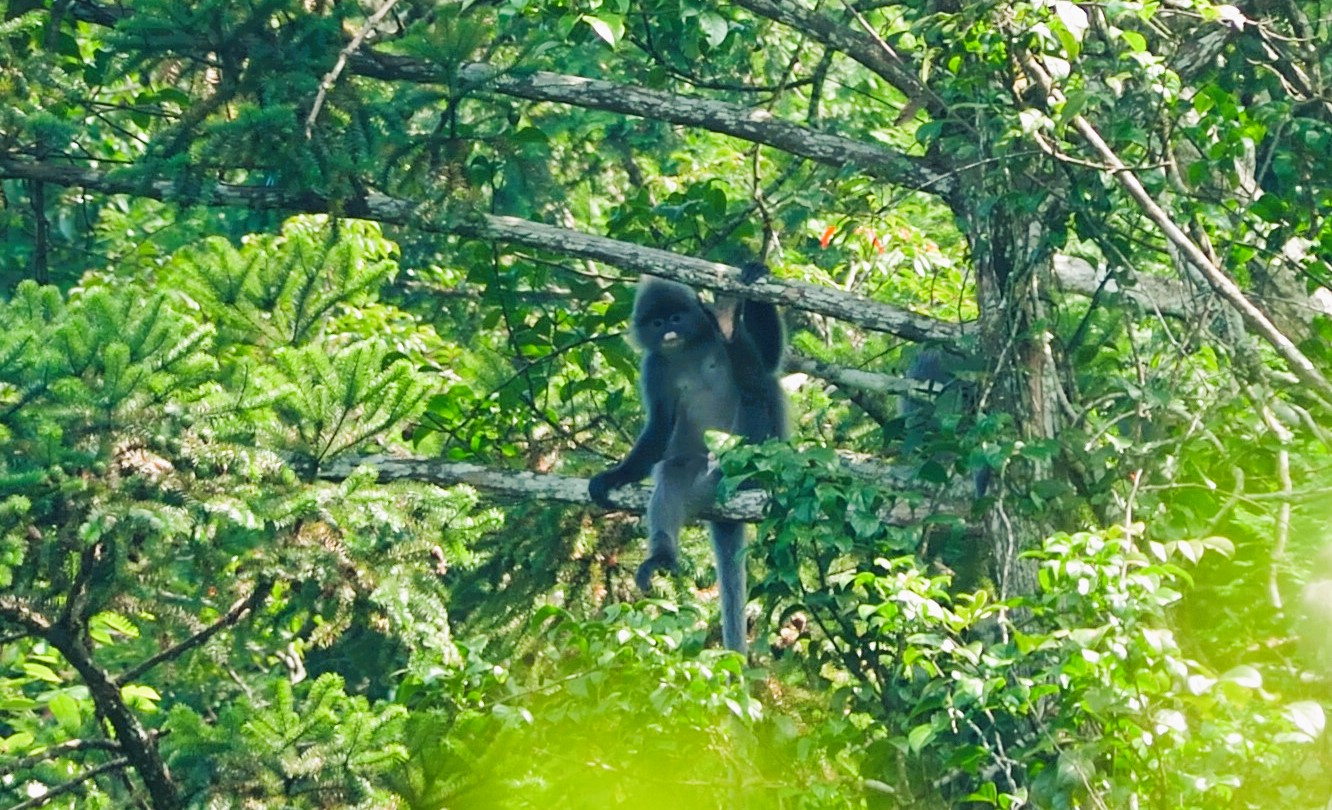
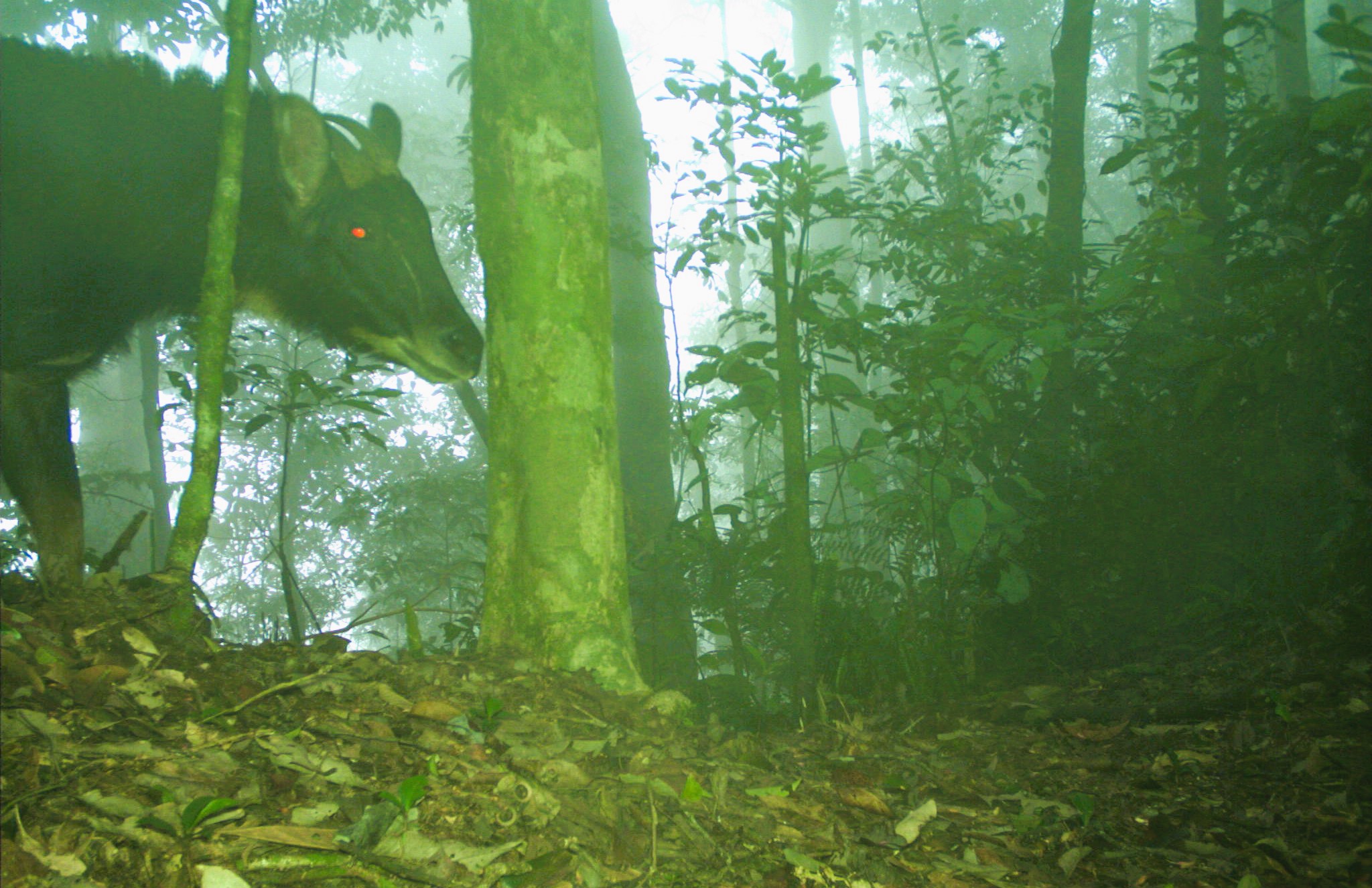
"In 2022, we captured images of the local fauna. Through camera traps, we recorded the presence of many rare animals such as deer, civets, pheasants, mountain goats, junglefowl, red-faced monkeys, gray langurs, slow lorises… This shows that the ecosystem in Xuan Lien is very diverse. These are invaluable films for the conservation and protection of biodiversity," Mr. Ky shared.
According to Mr. Nguyen Mau Toan, through field investigations in Xuan Lien, many white-cheeked gibbons (a rare primate species listed in the Red Book) are found living there. However, the exact number of troops and individuals has not yet been recorded. After obtaining the images we captured, we determined that there are at least 64 troops of white-cheeked gibbons in Xuan Lien, with approximately 180 individuals, making it the largest white-cheeked gibbon population in Vietnam," Mr. Toan enthusiastically stated.
Deeply indebted to the forest.
Having spent 16 years working in the forest, Nguyen Mau Toan doesn't remember how many times he's slept there. There have been times he faced danger, but for him, each trip is an unforgettable experience. He says that if he didn't love the forest and nature, it would probably be difficult for him to stay in this profession until now.
"Xuan Lien forest is extremely treacherous. Once you're deep in the forest, the whole world is left behind the canopy; only the team members can look out for each other until the mission is completed and they can safely exit the forest," Toan shared.
As a member of the forest protection team, Mr. Lang Van Nui (born in 1980, residing in Bat Mot commune) said that during patrol trips, they encountered heavy rain, rising streams, making it impossible to leave the forest, food supplies ran out, and all communication with the outside world was cut off. At that time, they had to fend for themselves, searching for trees and fruits in the forest to improve their meals for the day. Because they were born and raised in the forest, and especially through each trip, their survival skills were honed. Therefore, despite many arduous and dangerous trips, they always overcame the challenges.
Having joined the forest protection team from its early days, Mr. Lang Van Cuong (born in 1973, residing in Bat Mot commune) is one of its core members. Besides inspecting, detecting, and promptly preventing acts of forest destruction, he also actively assists the forest rangers in setting up camera traps. Thanks to his familiarity with the terrain and forests, he has found many traces of various animal species, contributing to the success of camera trap setups and the acquisition of valuable footage.
Mr. Cuong said that in the past, the village relied on the forest for its livelihood, and he himself had participated in clearing forests for farming, felling trees to sell, and hunting wild animals. However, since joining the forest protection team and seeing the great importance of protecting the forest, he has enthusiastically participated.
"I feel I have a responsibility to protect the remaining forests in Xuan Lien, because of what I and many others in the village have done to the forest," Mr. Cuong confided.
Five civet species listed in the Red Book have been identified.
According to a report from Xuan Lien National Park, through field surveys and camera trapping, in addition to documenting the diversity of the fauna here, authorities have also identified the presence and habitat of five civet species listed in the Vietnamese Red Book, including: the northern banded civet, the masked palm civet, the palm palm civet, the crab-hooked civet, and the marbled civet.
Based on the above results, in order to protect rare civet species, Xuan Lien National Park is stepping up propaganda and raising awareness among the community and local authorities in 11 buffer zone villages about the conservation of civet species. At the same time, it is developing field surveys of habitats to build a database of maps on the population, distribution, and habitats of civet species.
Source: https://nld.com.vn/theo-chan-doi-bay-anh-thu-rung-196250329212438729.htm

























































































Comment (0)