

HA NAM - In the context of a constantly changing market, for safe vegetable products to gain a foothold, producers need to organize production for sale rather than just producing and selling.
HA NAM - In the context of a constantly changing market, for safe vegetable products to gain a foothold, producers need to organize production for sale rather than just producing and selling.
Thanks to its persistent efforts in developing safe vegetable production, over the years, Lien Hiep Safe Agricultural Products Cooperative (Thi Son commune, Kim Bang district, Ha Nam province) has transformed from a vegetable farm into one of the leading cooperatives in the province in directly supplying high-quality vegetables.
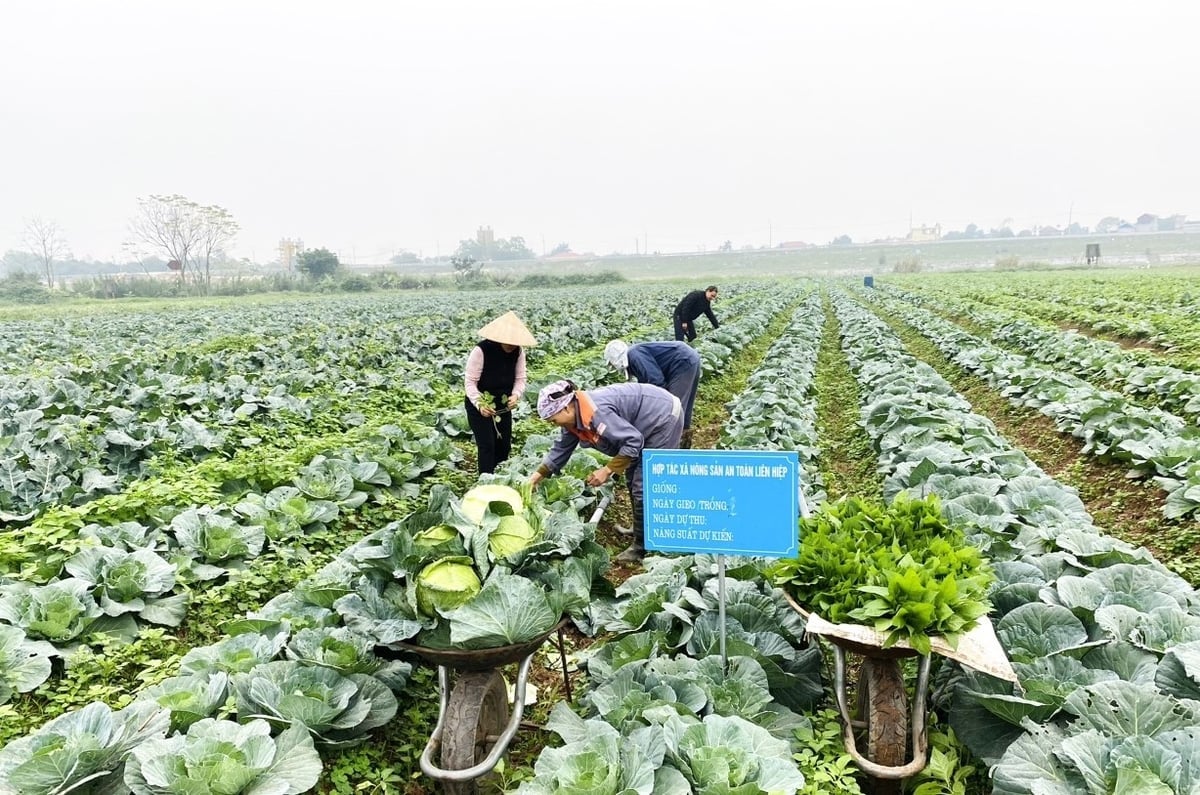
Thanks to their persistent efforts in producing safe vegetables, the products of Lien Hiep Safe Agricultural Products Cooperative have easily made their way into government agencies, schools, and collective kitchens. Photo: Trung Quan.
"Every day, the cooperative supplies vegetables to 12 schools, 4 canteens, 4 collective kitchens, 2 food stores, and several other units in Hanoi ," Mr. Pham Hoang Hiep, Director of the cooperative, proudly told us about his customer base.
When asked about his journey to current success, Mr. Hiep shared that he and his wife both graduated with degrees in agricultural engineering and worked at large organizations involved in research and production of plant varieties. However, the dream of owning an agricultural farm motivated the couple to leave the city and return to their hometown to start their own business.
In 2016, with his accumulated capital, Mr. Hiep leased 5 hectares of farmland from non-farming households along the Day River to produce vegetables and fruits. Based on his knowledge and experience gained from years of research, he believed that if he produced his products using conventional methods and chemical inputs, his farm would sooner or later face the situation of "bumper harvest, low prices," becoming completely dependent on traders, and incurring high investment costs as the soil quickly depleted nutrients; the living environment and water sources would also become polluted.
Therefore, in 2018, he established a cooperative and invested in building a 100m2 greenhouse to proactively manage seedling production, facilitate the application of safe vegetable production standards, VietGAP, and technical solutions to minimize the impact of the environment and pests on the area of commercial vegetable cultivation.
For areas without roofing, he uses Japanese non-woven fabric, nylon film, installs a water treatment system, and sprinkler irrigation; he does not use pesticides or chemical fertilizers, prioritizing the use of composted manure using new methods and biological products to control pests and diseases...
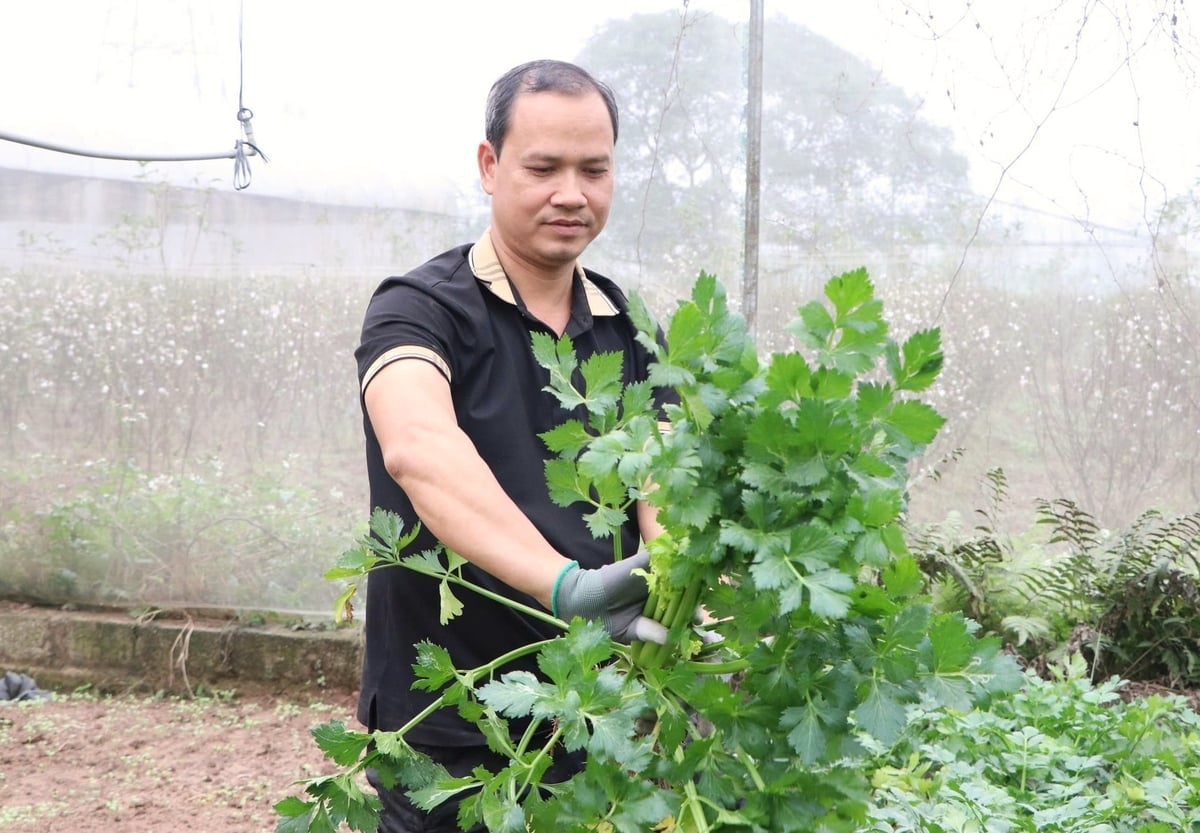
According to Mr. Pham Hoang Hiep, Director of Lien Hiep Safe Agricultural Products Cooperative, producing safe vegetables is difficult, but maintaining it is even more challenging. Photo: Trung Quan.
Thanks to diligence and seriousness in every stage of production, the cooperative's farming activities have been going smoothly. In the winter of 2019, with the support of the Ha Nam Agricultural Extension Center, the cooperative built a model for producing cabbage according to GlobalGAP standards and successfully exported nearly 100 tons to the Japanese market.
By 2022, the cooperative continued its strong transformation in the production and consumption of safe vegetables by accessing the Project to Strengthen the Value Chain of Safe Crops in Northern Provinces of Vietnam, implemented by the National Agricultural Extension Center and the Japan International Cooperation Agency (JICA).
Japanese experts and agricultural extension officers have supported the cooperative with new farming techniques, utilizing agricultural and livestock by-products to make organic fertilizer, and improving marketing capabilities and market analysis. Based on expert advice, the cooperative focuses on producing products in demand to facilitate sales and brand development, upgrades its processing and packaging facilities, and provides products directly to consumers to control the supply chain and increase value.
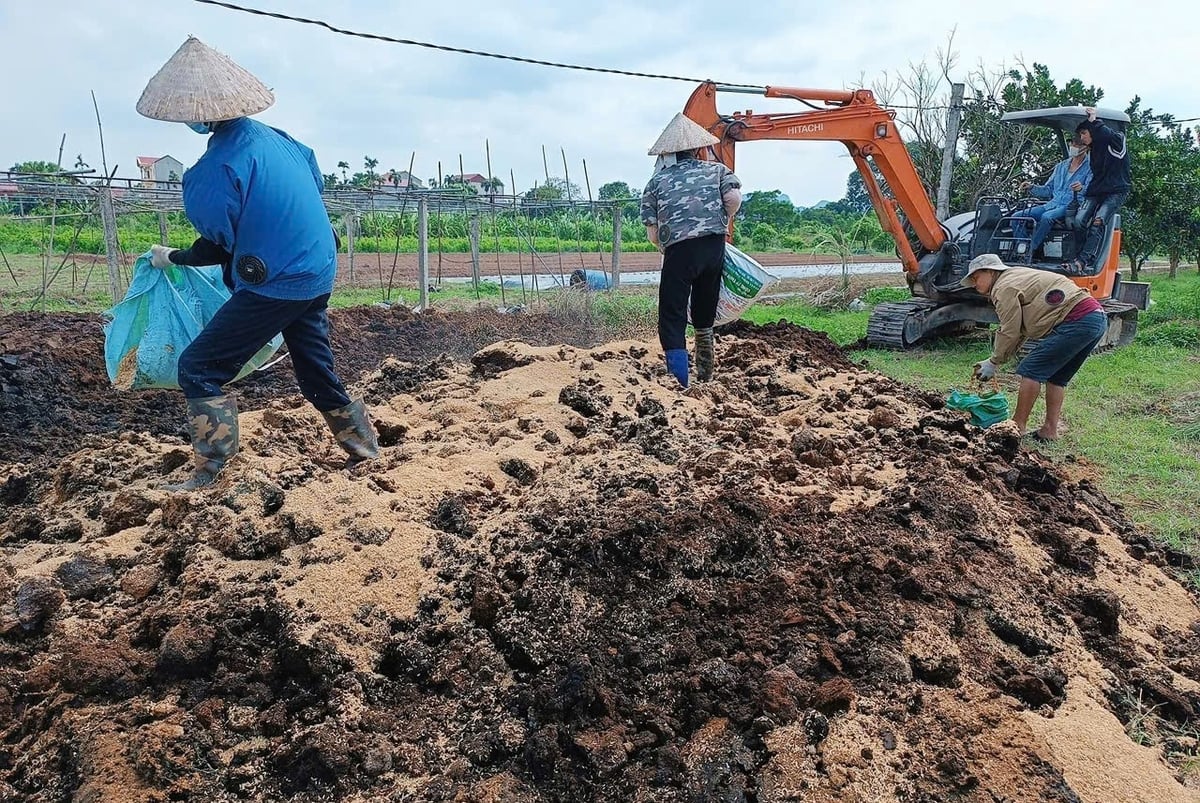
The cooperative utilizes livestock waste to make organic fertilizer according to expert guidance. Photo: Trung Quân.
According to Mr. Hiep, the project acts like a "magnifying glass," helping the cooperative gain a deeper understanding of farming techniques and the essence of good production practices. Once they understand and master each stage, the supply chain operates smoothly. The clearest evidence is that, within a limited area, the cooperative can continuously cultivate 20 types of vegetables, ensuring a sufficient supply of quality products for partners and creating jobs for over 10 local workers with an average income of 6-7 million VND per month.
“Amidst the successes, there have been many times when my wife and I cried because our vegetable crops were completely lost. Producing safe agricultural products is difficult, but maintaining that safety is even harder. In the context of unpredictable climate change and a limited market for these products, if we don't seize opportunities and become complacent, we will sooner or later fail,” Mr. Hiep confided.
Source: https://nongsanviet.nongnghiep.vn/thay-doi-tu-duy-tiep-can-thi-truong-cho-san-pham-rau-an-toan-d423440.html






















































Comment (0)