

"Mê bồ" is the name given to a handcrafted product made from bamboo, reed, or cane, which is split into long strips and woven together into large panels of predetermined dimensions. In the past, "mê" was a common sight in any home in the Mekong Delta, especially in Hau Giang province . From being used by farmers to store rice, it has evolved into a popular material for house walls.
In the past, the entire Hamlet 4 practiced this craft, and the products sold well. However, over time, the craft is no longer as thriving as before, and many people have had to abandon it and leave their hometown to find work elsewhere. Currently, only a few households in the hamlet remain, striving to preserve and teach the craft to their children and grandchildren. Every day, diligent hands continue to keep the traditional weaving craft alive.
Upon arriving in Hamlet 4, we were introduced by locals to visit the households that traditionally weave bamboo baskets. In conversation with us, Mrs. Quách Thị Hiệp (60 years old) shared that since she married into the family, she has seen her family and neighbors in the hamlet practicing this craft. And so, Mrs. Hiệp has been closely associated with the sounds of bamboo splitting, the weaving of bamboo baskets, and the bustling atmosphere of the village during its heyday.
Mrs. Hiep recalled: "Since I got married and moved to the hamlet, I saw my parents working, so I learned how to whittle the bamboo strips. Gradually, I got used to it and started doing it myself. There were all sizes available. 1.1m x 6.8m, 1.1m x 5m was the inner dimensions, and 80cm was 6.8m, 50cm was also available. If people were building walls, we would make them to whatever size they ordered."
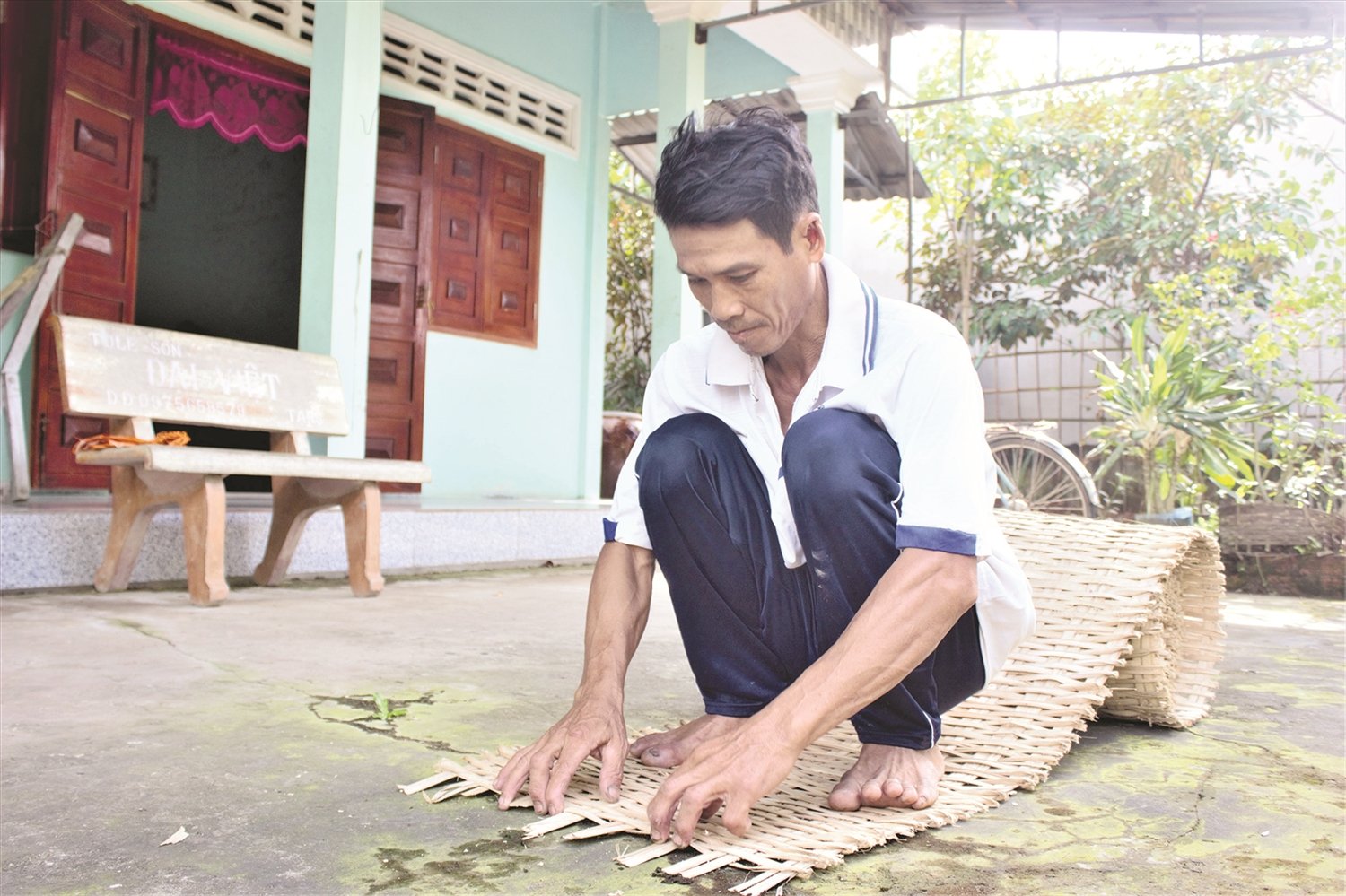
Having worked in this trade since she was young, Mrs. Hiep can estimate how many bamboo strips can be split just by looking at a bamboo stalk. Previously, all the steps were done manually. Now, many households with the means have purchased machines to assist in splitting bamboo, thus increasing productivity.
To complete a woven bamboo mat, many steps are involved, with clearly defined tasks, each with its own challenges. Typically, strong men are responsible for splitting bamboo and shaping the strips, while women weave the mats with their skillful hands.
Ms. Le Thi Tam, a resident of the craft village, shared: "If you know how to split the wood, it's easy, but if you don't, it's difficult. It's very hard work! When I first started, I cut my hands a lot. But I had to persevere, because this is the only craft I have; there's no other way."
The ups and downs of the weaving craft
According to those who have persevered in the craft to this day, bamboo baskets are now mainly used for construction projects, drying goods, and drying candied fruits during the Tet holiday... Because it is a handicraft, there are no time constraints, so as soon as household chores are finished, they can start working.
In recent years, there have been times when prices were low, raw materials were scarce, and sometimes we had to search far and wide to find them. Often, we ended up losing money, so very few people are still sticking with this craft. Even children nowadays are less interested in this traditional work.
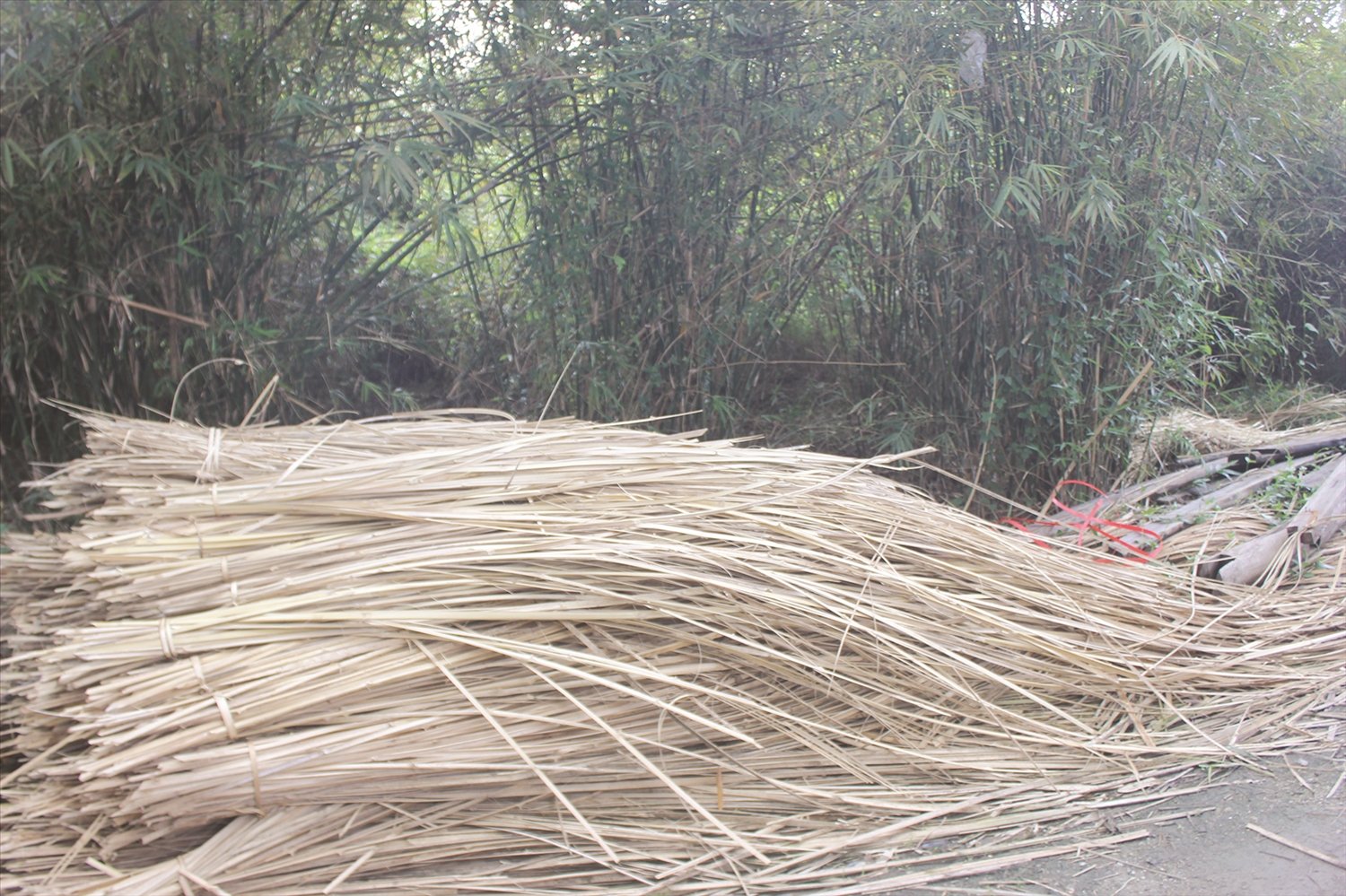
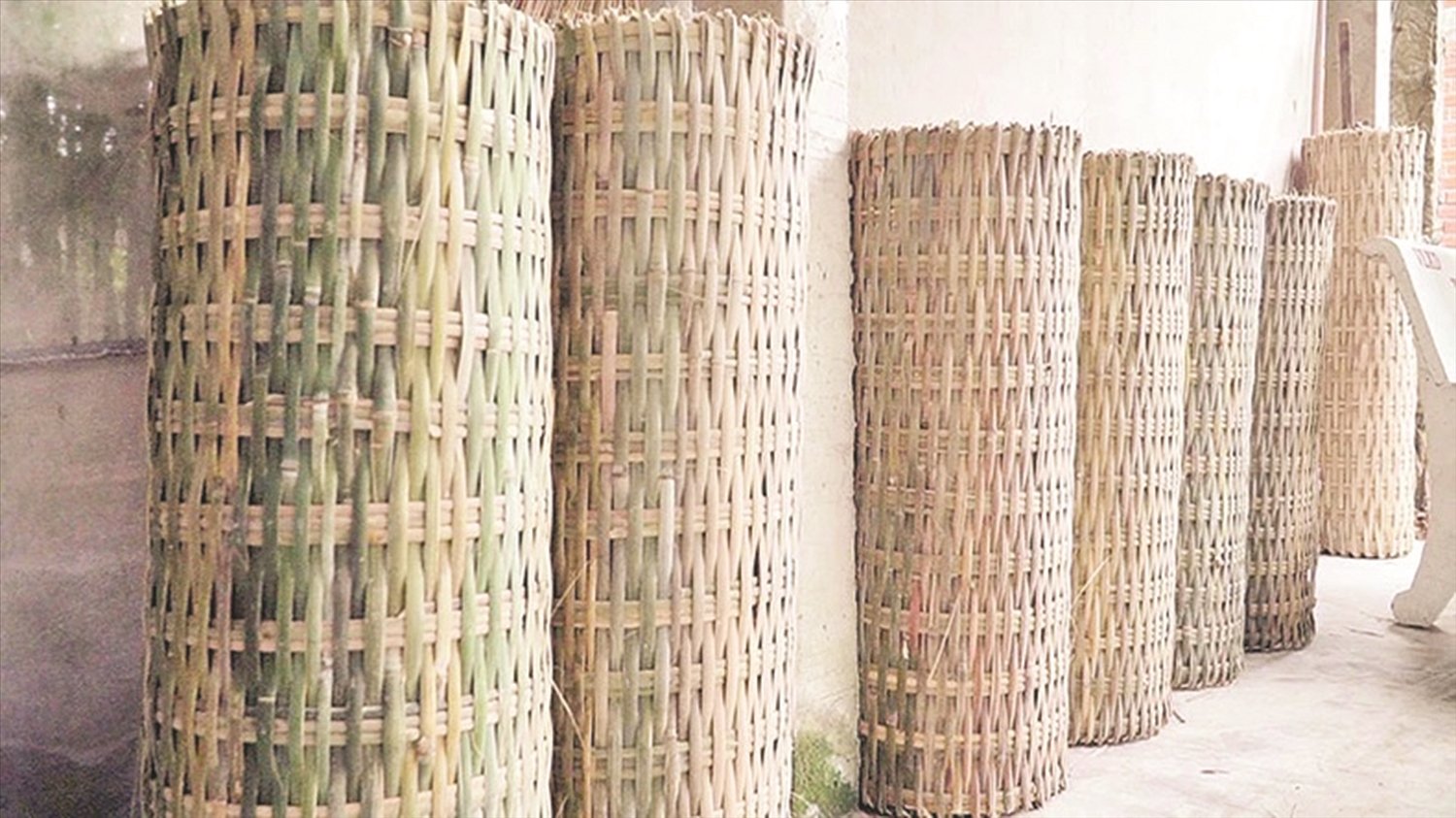
Mr. Do Hoang Phong (50 years old) expressed: "This profession will probably disappear completely someday. When we were young, we would split the bamboo strips and hire them to strip the fibers for 500-1,000 dong per bundle. Now they're all studying, they don't help us strip the fibers like they used to. When I get old, I think nobody will buy them anymore."
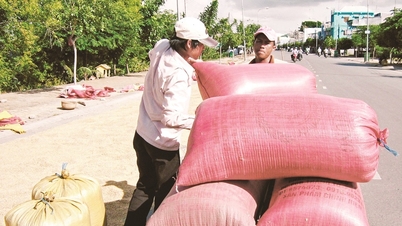
Over time, nowadays, most farmers, after harvesting, store their rice in warehouses or sacks, no longer using traditional rice storage bins, so the demand for this product is no longer as high as before. However, even though it's a secondary occupation, people haven't abandoned it. The vitality of the rice sieve remains. Now, people use it to line the floors of barges for transporting rice, drying rice, drying noodles, drying fruit, drying rice paper, etc. Based on orders, the rice sieve products are collected directly from farmers, eliminating the need to transport them to other places for sale.
With the changing times, like other crafts, the craft of weaving bamboo baskets needs to adapt to the new situation, both as a way to innovate and as a way to preserve the traditional craft passed down by our ancestors.
To promote the values brought about by traditional craft villages, including the bamboo weaving village in Hamlet 4, Hau Giang province has implemented Government Decree No. 52 dated April 12, 2018, on the development of rural industries in localities throughout the province. Simultaneously, regulations and policies supporting investment in the development of craft villages and rural industries in the province have been established. It is hoped that this policy, along with the determination of the people to preserve traditional crafts, will create a new impetus for the development of craft villages, making a positive contribution to the construction and development of agriculture and rural areas.
Hau Giang: This morning, the 4th Congress of Ethnic Minority Representatives of Hau Giang Province – 2024 officially opened.






























































Comment (0)