Heritage•25/02/2025
Regarding the name "tò he," it may have come from the fact that in the past, some people used to mold dough into the shape of a tò te horn to attract customers' attention.





Over time, the "to te" sound from the horn became familiar, associated with those who made clay figurines, and was corrupted into the name "to he".


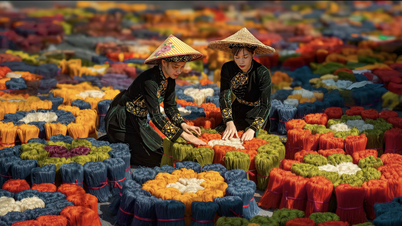
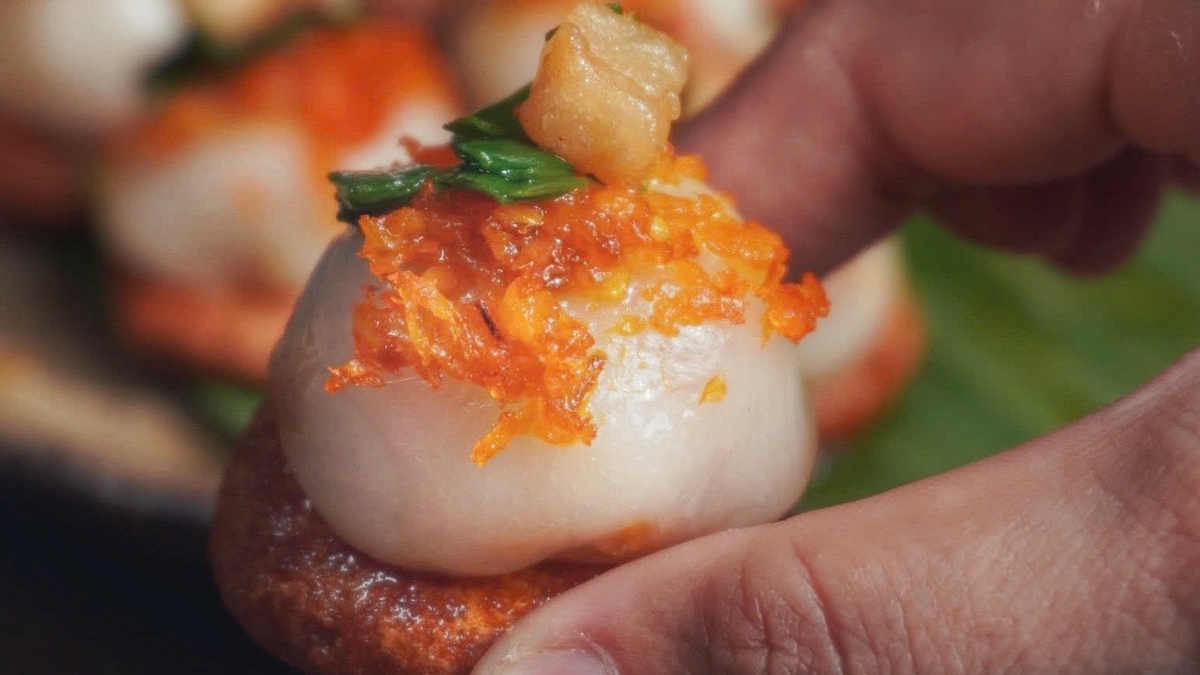
The main ingredient for making tò he (traditional Vietnamese figurines made from glutinous rice) is rice flour mixed with a small amount of glutinous rice in a ratio of 10 parts rice to 1 part glutinous rice. This mixture is thoroughly mixed, soaked in water, then ground into a fine paste, boiled until cooked, and kneaded quickly. Afterwards, the dough is formed into small balls and each ball is dyed a different color.





The four primary colors are yellow, red, black, and green. As for pigments, the long-time artisans of Xuan La village always prefer to use natural colors, mainly derived from edible leaves or vegetables. For example, red can be obtained from gac fruit, yellow from turmeric, and green from melaleuca leaves or galangal leaves...
Heritage Magazine


![[Photo] General Secretary and President To Lam works with the Party Committee of the Government on the work of preventing and combating storms, floods, extreme natural disasters and climate change.](https://vphoto.vietnam.vn/thumb/1200x675/vietnam/resource/IMAGE/2026/06/29/1782729441945_a1-bnd-0385-9454-jpg.webp)

![[Image] A look back at the capital's preparations for the century-long master plan.](https://vphoto.vietnam.vn/thumb/1200x675/vietnam/resource/IMAGE/2026/06/29/1782750453122_quy-hoach-100-nam-minh-duy-1-2118-jpg.webp)